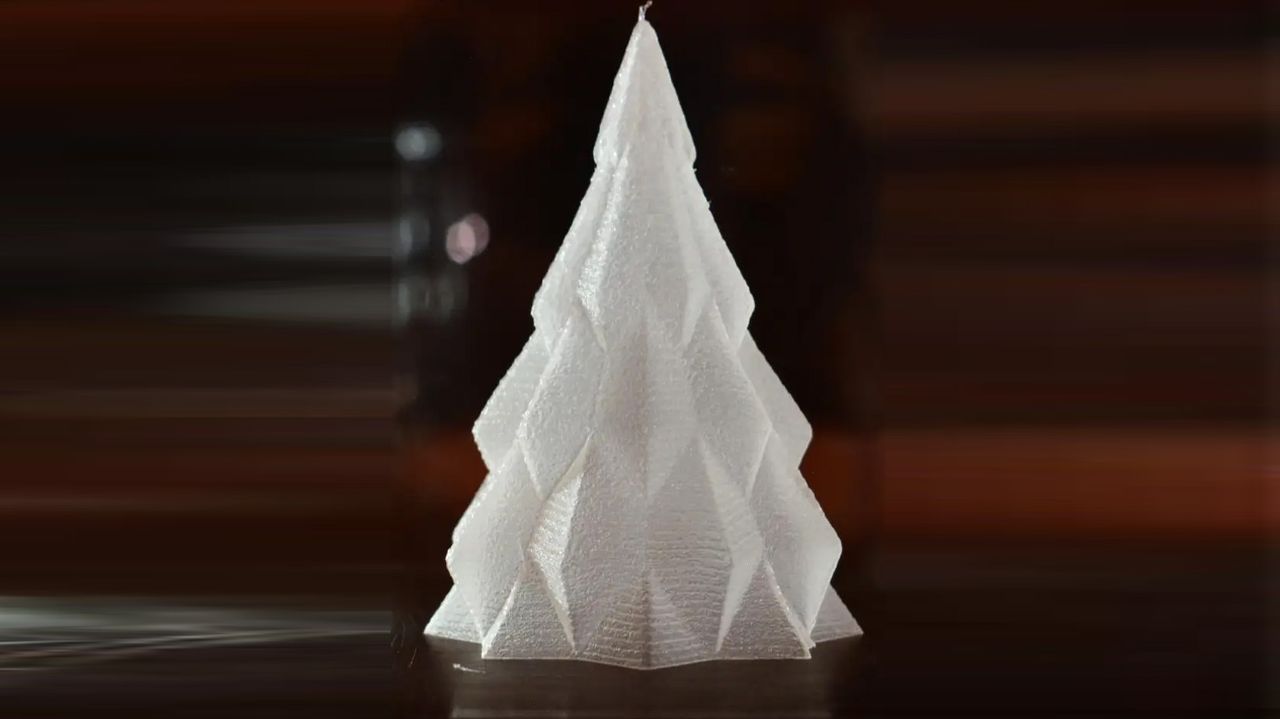
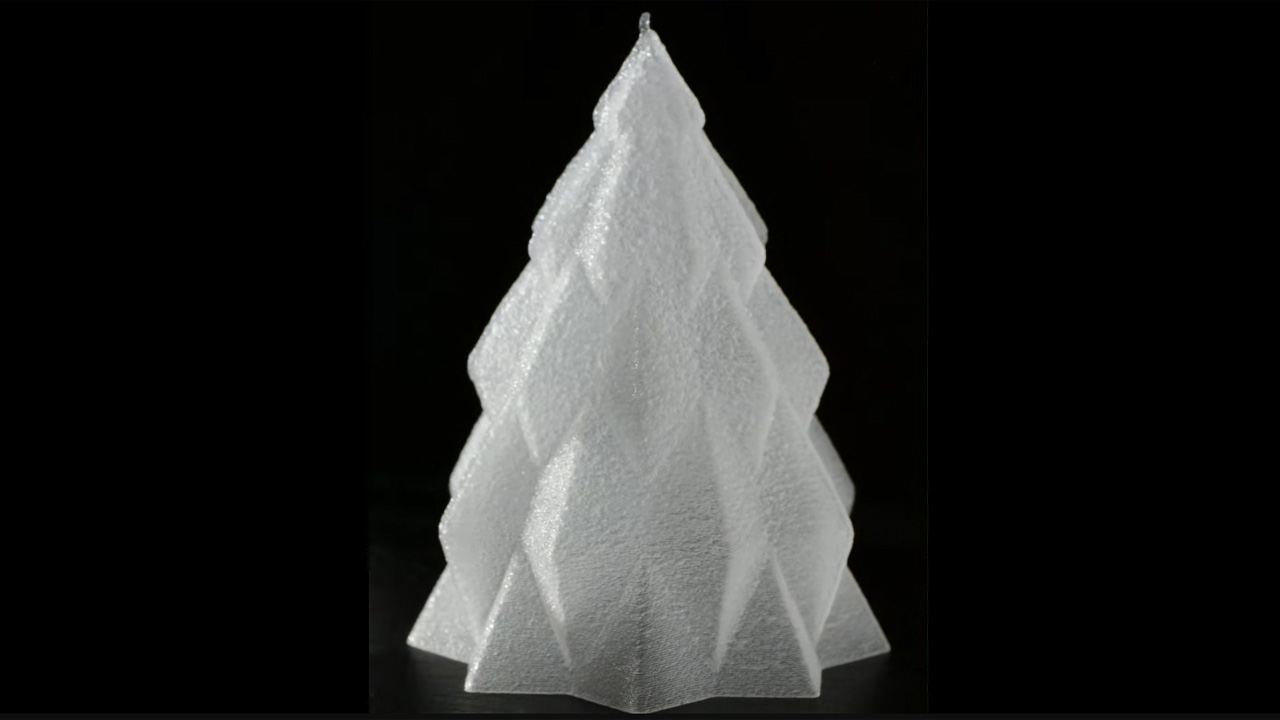
Christmas is right on our porch, and many of us have already started sharing the newest decorations that are shareworthy. One such example is coming from the University of Amsterdam, where a team of physicists has 3D printed a Christmas tree entirely out of ice. Researchers Menno Demmenie, Stefan Kooij and Daniel Bonn have devised a technique to 3D print intricate ice sculptures without external refrigeration. Instead, they have used water and a vacuum chamber to make this possible.
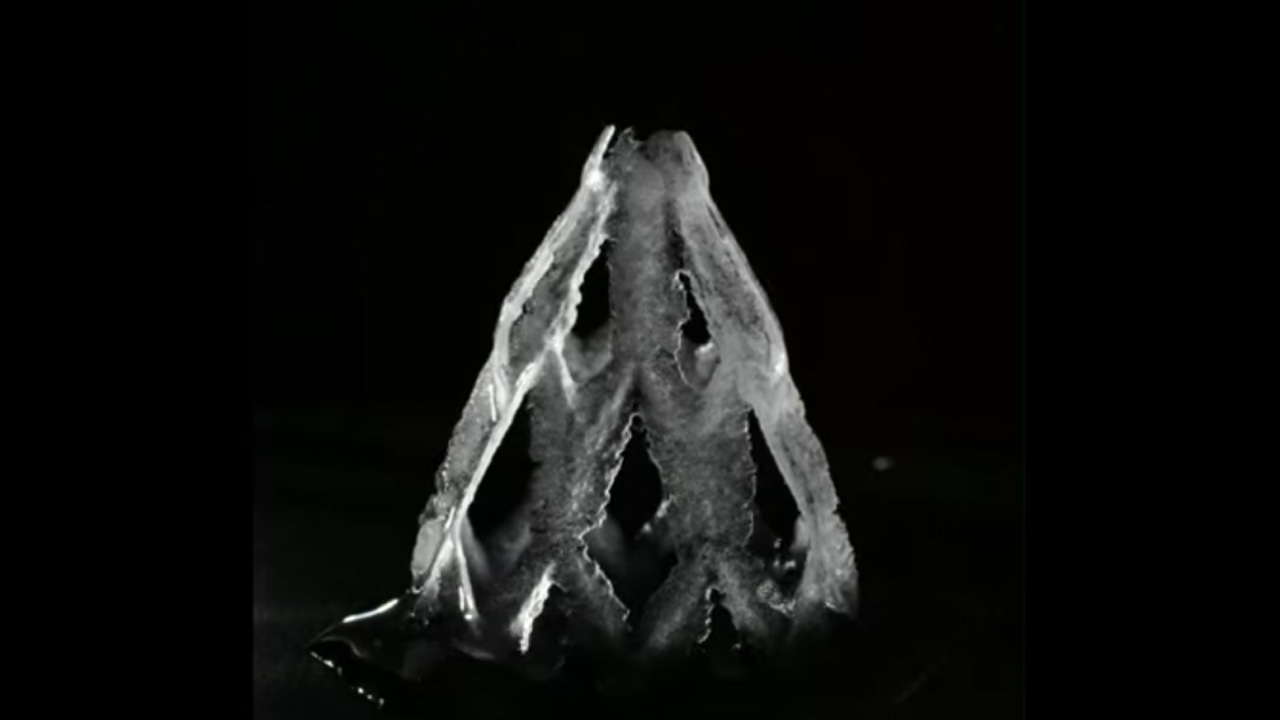
This is an additive manufacturing method that is quite interesting and useful in other applications as well. They have shared time-lapse videos, where you can watch the process of printing a micro Christmas tree and how it melts again when the vacuum pump is turned off.
At the core of this 3D printed ice Christmas tree is the evaporative cooling technique that mammals also use to regulate their body temperature. The tree is printed in a low-pressure vacuum chamber where water evaporates quickly even at room temperature, thereby creating the intricate structure.
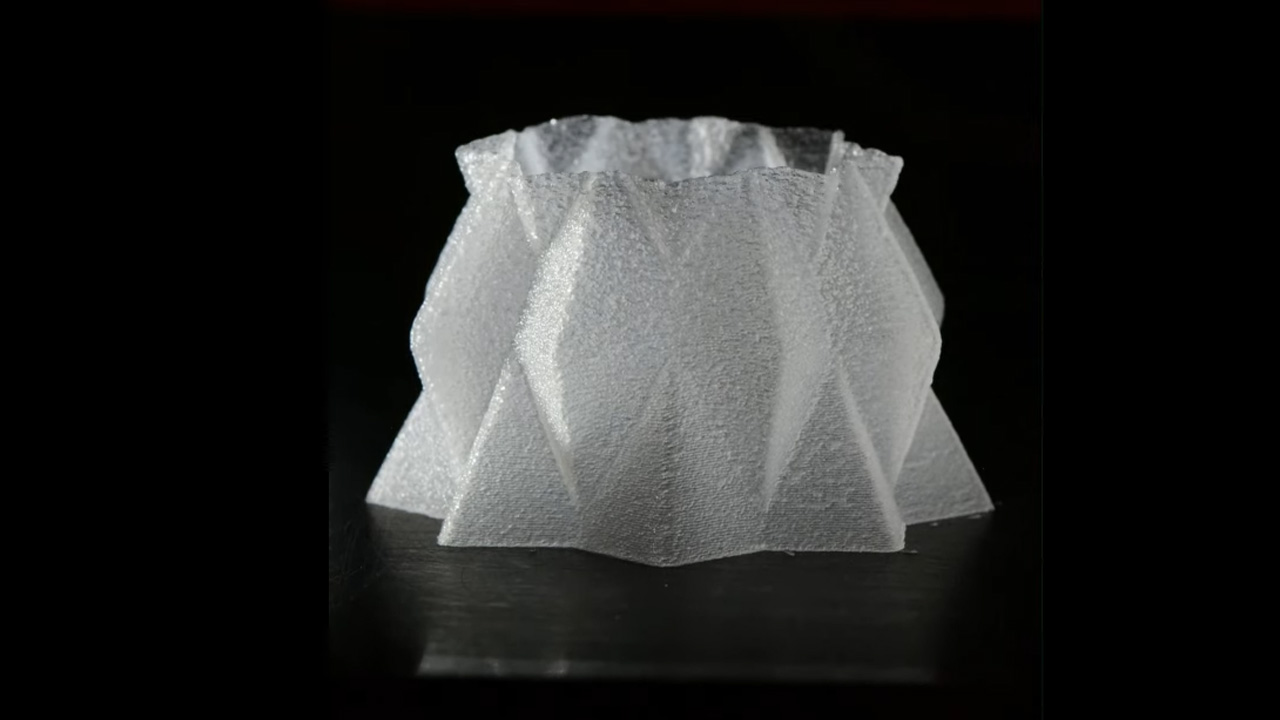
As water evaporates, it carries away heat, making the remaining water colder and colder until it drops below 0°C while still maintaining its liquid state. When the ultra-thin stream that is about as thin as a human hair touches the ice layer, it freezes instantly. This way, the entire Christmas tree structure is formed with the ice particles. The 3D printer inside the transparent vacuum chamber allows you to view phase transitions, heat transfer, and the role of pressure in real time.
The physicists have 3D printed the Christmas tree ice sculpture layer by layer, complete with branches and ornaments. They have not used any support material, so it is a kind of no-waste project. It took them about 26 minutes to finish this 8-centimetre-tall tree. As soon as you turn off the vacuum pump, the tree melts neatly back into clean water, leaving behind no wastage.
Also Read: Ruth Amos 3D Printed Classic LEGO Christmas Tree Piece by Piece Into a 6-Foot Wonder
The evaporative cooling method is applicable not only to create frozen ornaments for the Christmas season, but it can also be used for various other scientific applications. In biology, we can use pure ice shapes to help build tissues. In microfluidics, melting the ice makes tiny, complex channels. Researchers also think this technique could be useful on Mars, with the possibility of building structures using the planet’s own water.




Via: UVA