The London-based studio Khan Bonshek reimagines the iconic Pyramid House as a modern family house. Touted as an iconic landmark of Milton Keynes, UK, the 20th century experimental architecture is famous for its uncanny triangular shape and striking dual identity. Its defensive, opaque façade unfolds into a glazed, light-filled garden retreat that maintains a fluid connection between outdoors and indoors.
Cardiff-based Wigley Fox Architects designed and built the experimental Pyramid house in 1981 for the ‘Homeworld 81’ exhibition to showcase its energy-efficient architecture. Following its sale to a couple through The Modern House, the pyramid-shaped house underwent renovation for modern living.
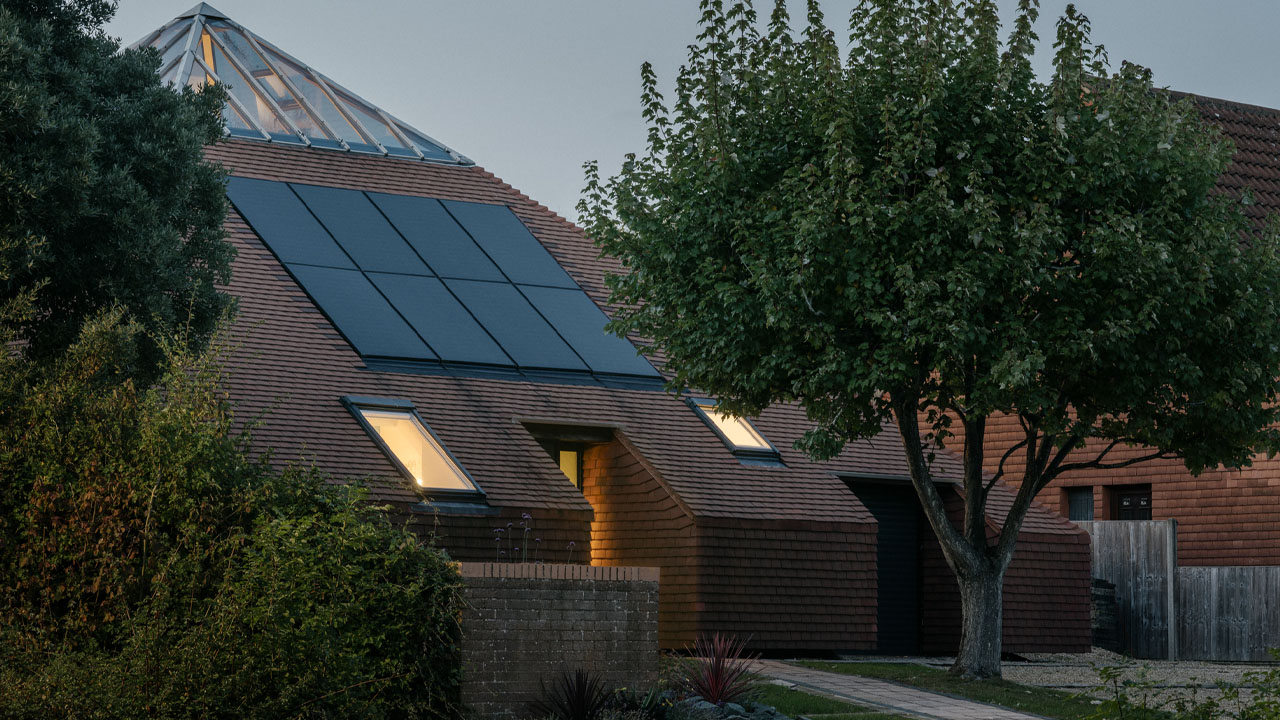
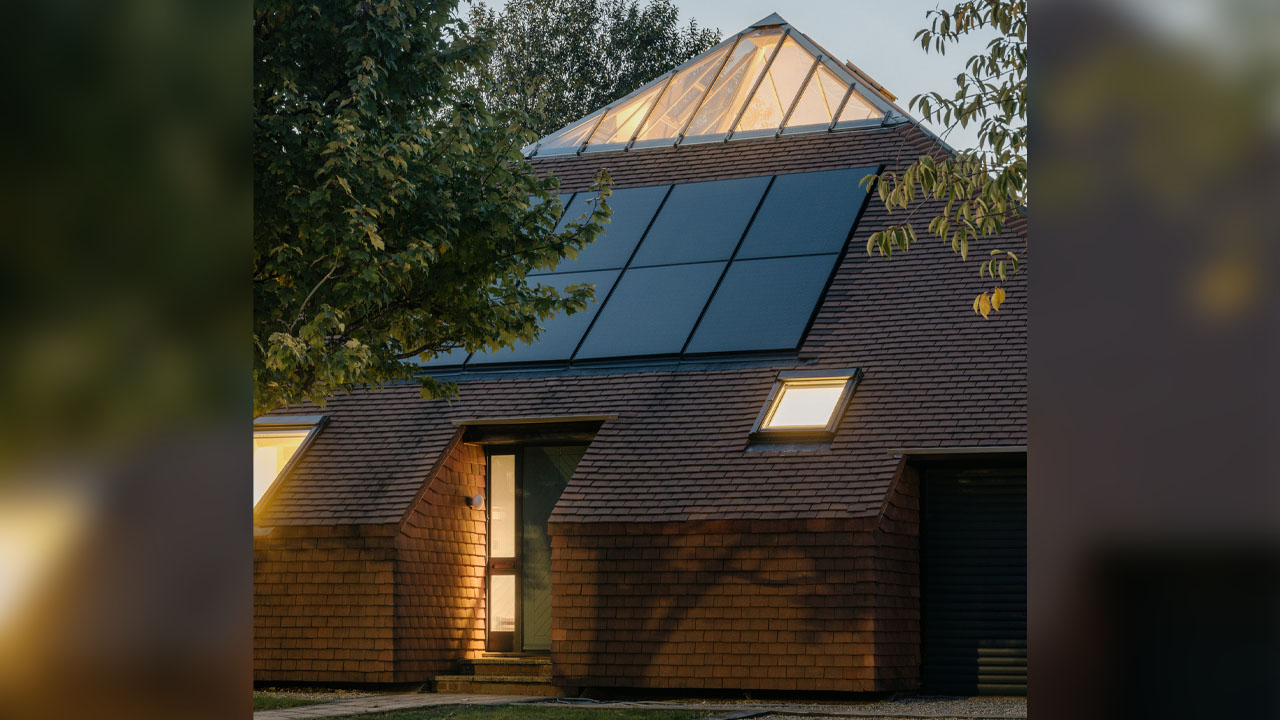
The most eye-catching feature of the uncanny triangular structure is its sharp angular form with a red clay shingled façade. Its street-facing front looks like a closed, protective shell that provides strict privacy to its porous, garden-facing rear. Unlike the regular house, the street-facing front does not have large windows or a decorative entrance. Instead, it has a closed-off front with a transparent rear façade.
The architect Mark Bonshek put forward an idea to utilize the dead space created through the sharply angled roof and modernize its interior while preserving its distinct postmodern identity. He addressed the heating issue in the original structure by adding a modern automated ventilation system and a mechanical cooling system.
Bonshek installed new glazed window frames and flush-mounted them on its monolithic shingled façade to enhance its sculptural appeal. He also refined the pyramidal skylight to make the sunlight reach deeper into the interior. The semi-soft and hard landscape was changed into a large, light-colored gravel driveway with a walkway, leading to the recessed entrance.
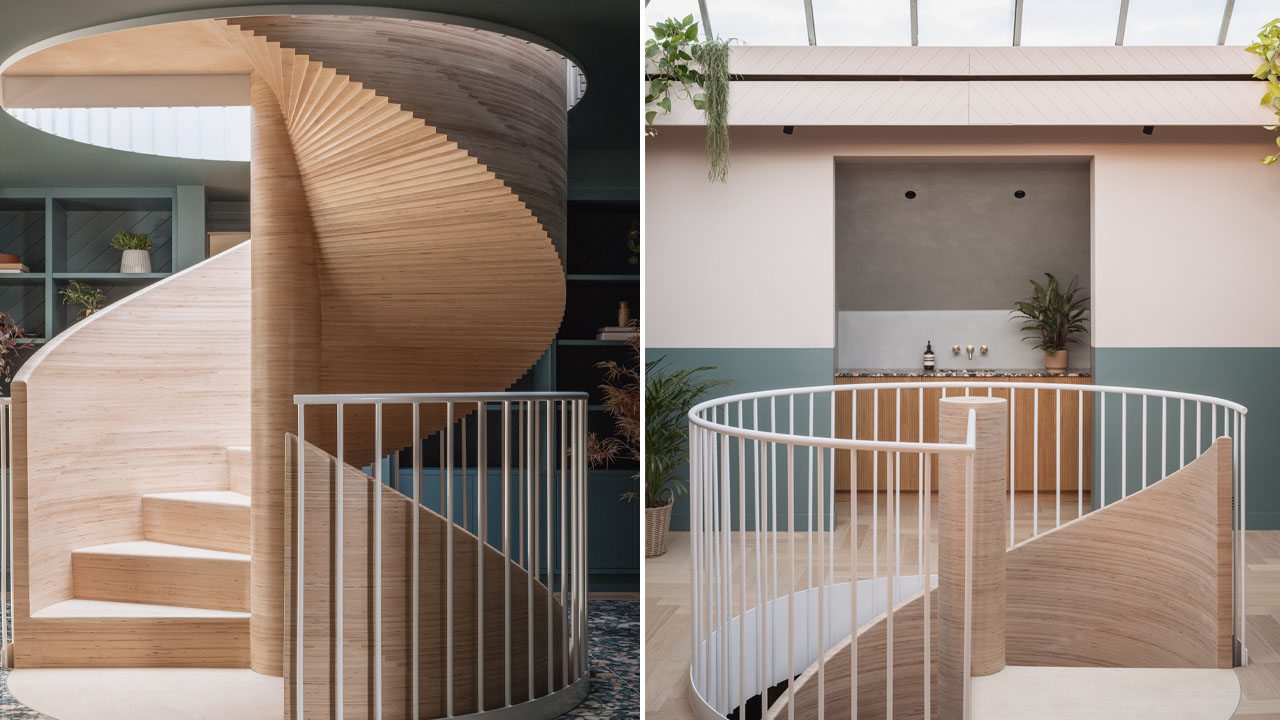
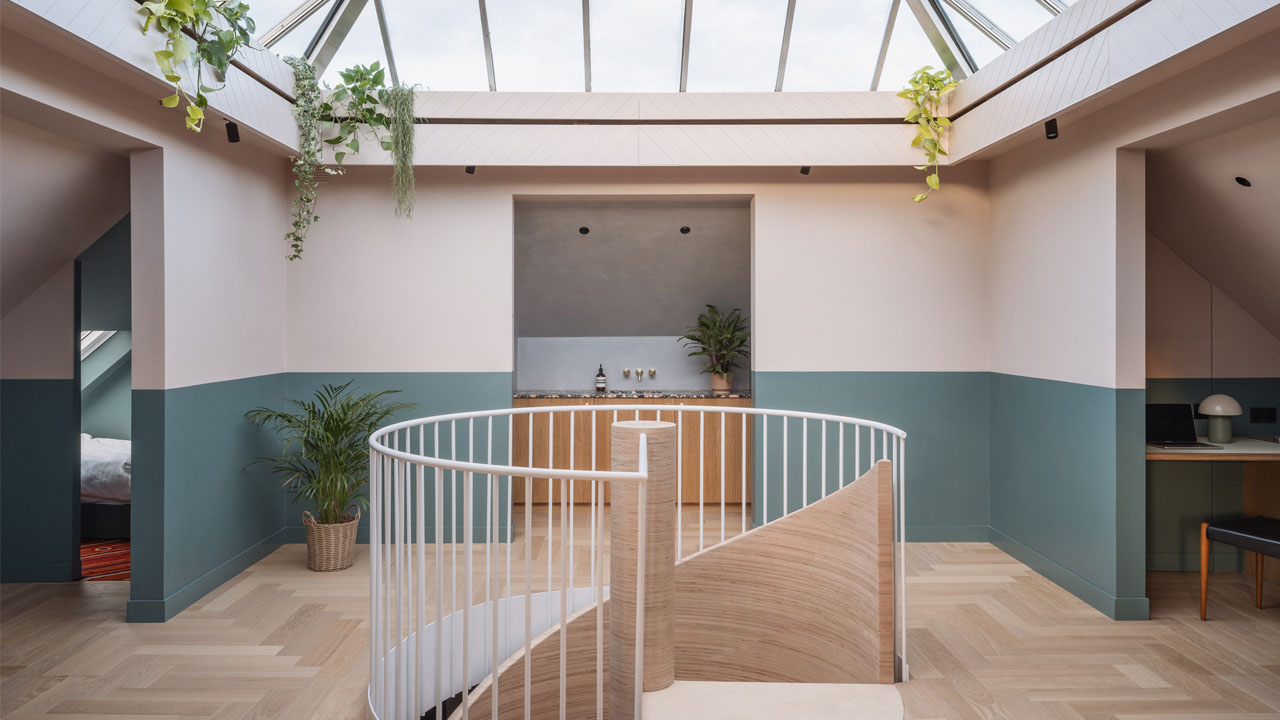
The interior received a significant transformation where the studio turned its unconventional floor plan into an open, fluid layout. Since the different zones in the pyramid structure were like fragmented pieces, Bonshek installed a spiral staircase to join them.
This staircase, made with several pieces of milled birch ply, became the captivating focal point of the entire interior. Placed beneath the glazed pyramid skylight, the natural light cascades through the steps, making the staircase look like a gleaming centerpiece. Since the wall partitions were removed to make the interior spacious, the sculptural staircase remains visible from every corner of the house.
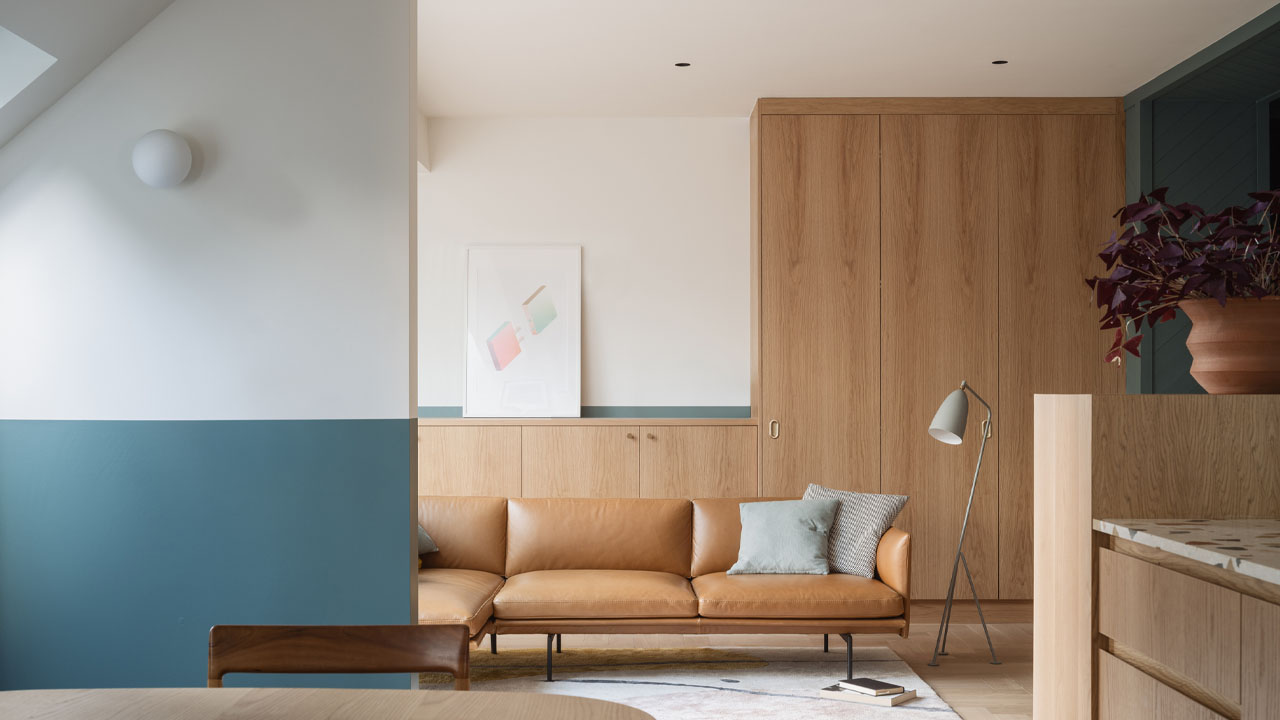
The blue and green color palette of the interior balances the red hue of the shingled exterior of the pyramid house. The architects installed the natural terrazzo on the ground floor and light-toned oak timber on the upper floors to enhance the postmodern aesthetics of the triangular house.
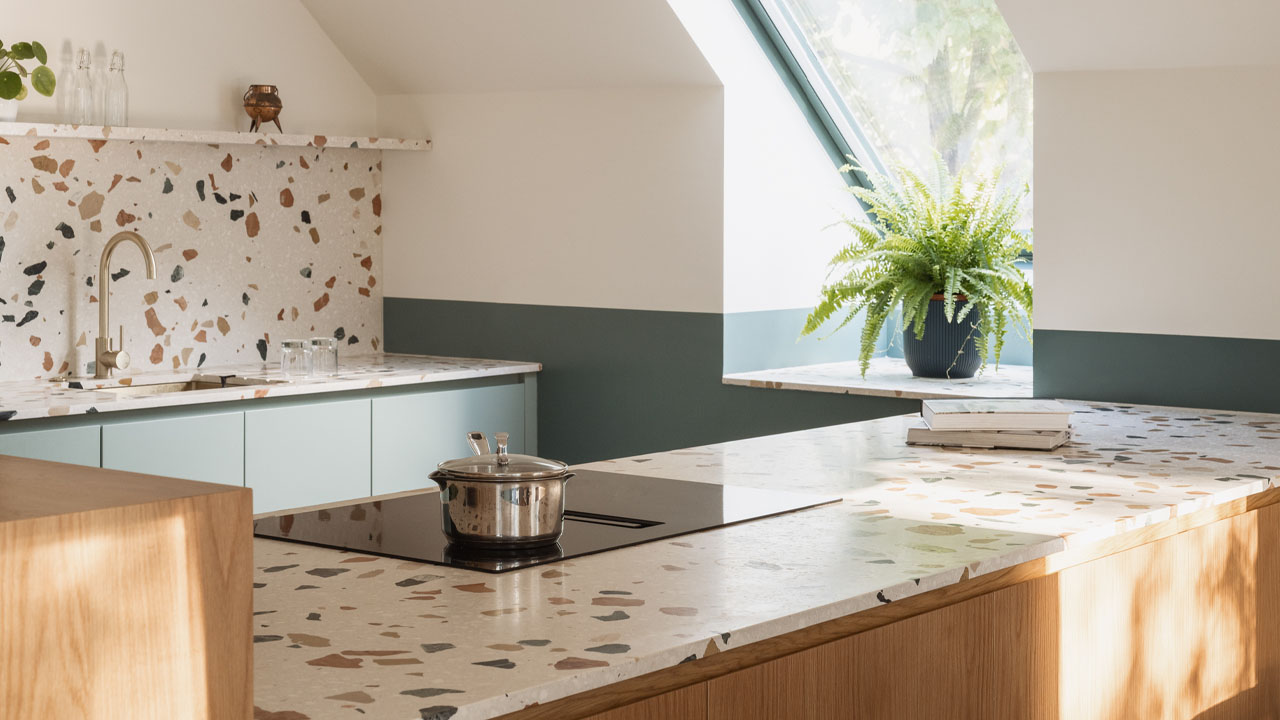
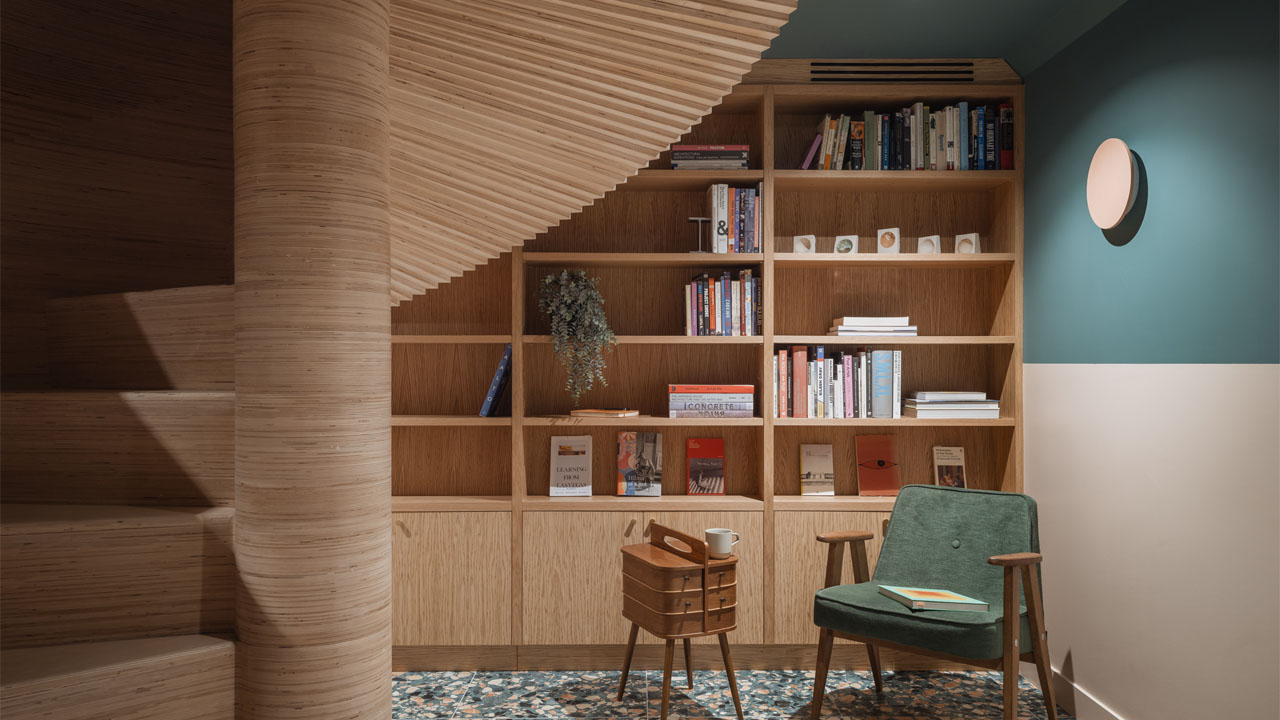
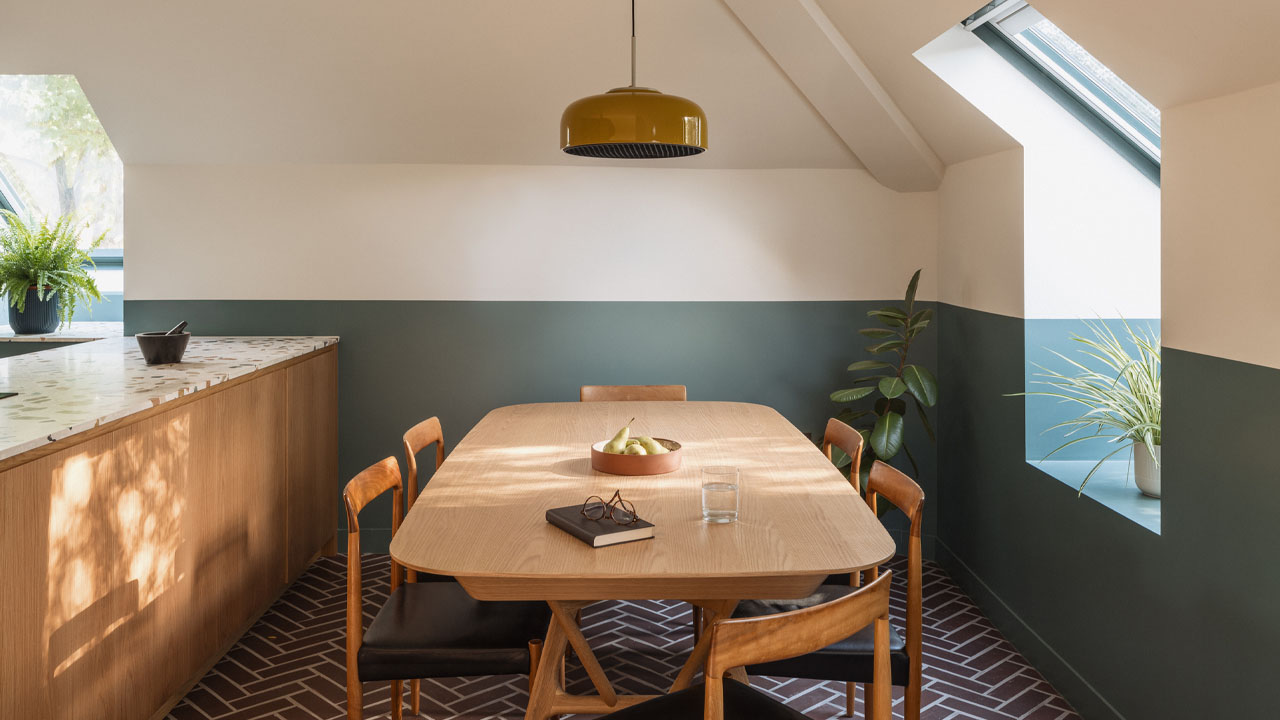
The living zone, a library, a kitchen, and a dining area are located around the staircase on the ground floor. The kitchen features a bold, multi-colored terrazzo countertop and backsplash, creating a jewel aesthetic that instantly grabs attention. The dual-toned cabinetry features a warm-wood oak lower cabinet with a pastel blue perimeter cabinet, imparting a cool tone to the kitchen.
Also Read: Dedraft Transforms Edwardian Garden Villa Into Quiet Luxury With Honest Contemporary Design
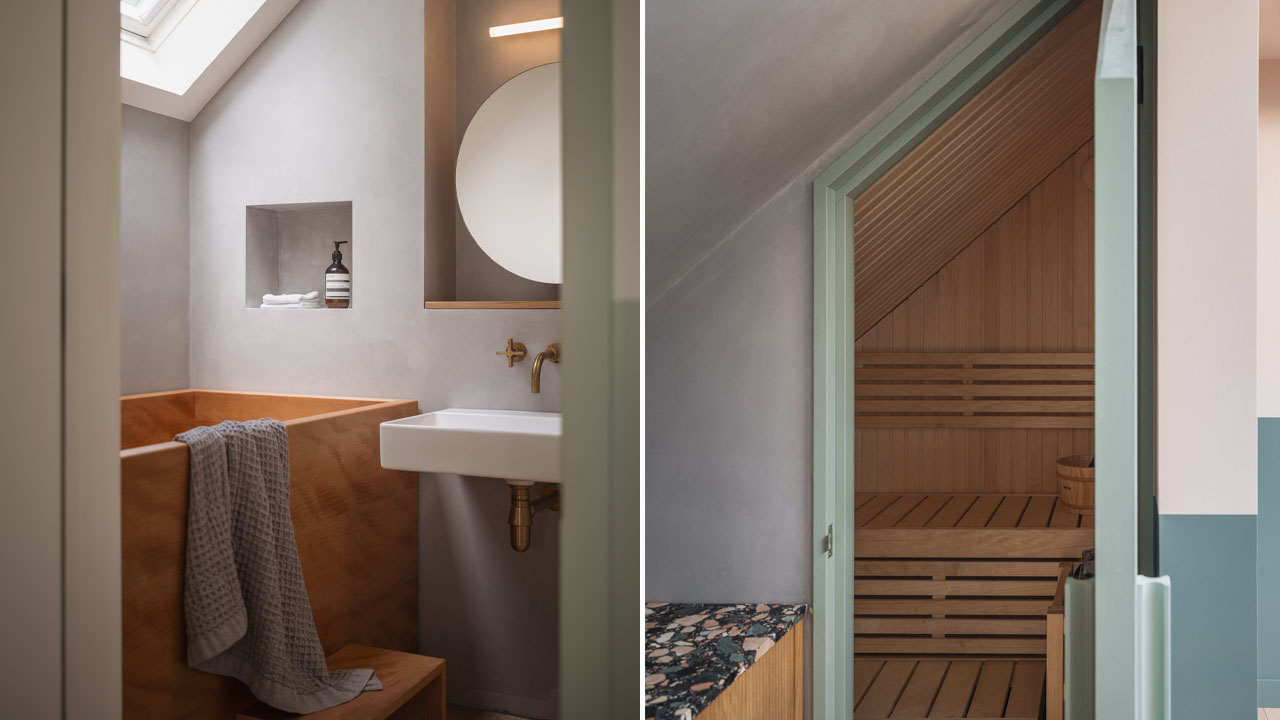
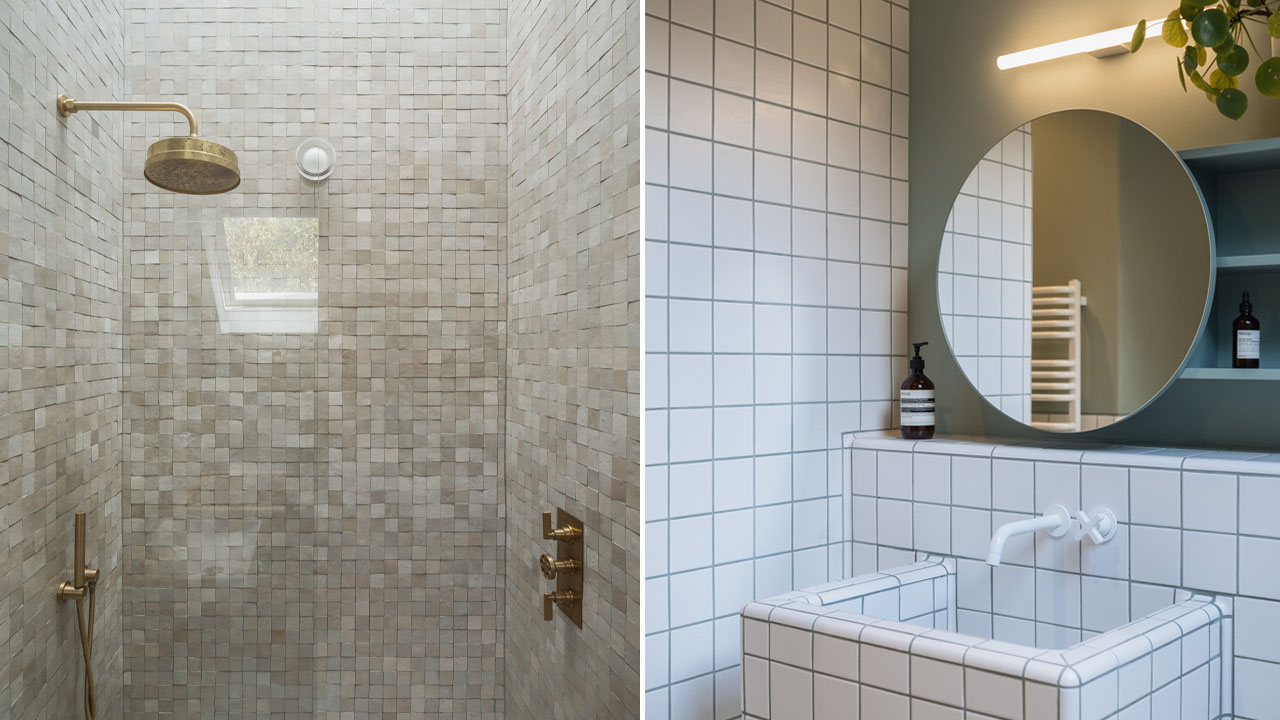
The first floor includes a sleeping zone and a bespoke sauna at the owners’ behest. The second floor features two guest sleeping pods, sitting areas, office workspace, and facilities, including a wet room and a powder room. To access the garden, you can use the stairs outside the second floor or through the ground floor via the glazed sliding door.
The renovation of the iconic Pyramid House transformed it into a modern urban haven with full-fledged privacy. The most unique aspect of this project is how the architects managed to build a functional living space inside the triangular structure despite its sharp angles and steep slopes, without altering the original design. They proved that it is possible to turn an experimental building into a family house without losing its unique identity.

Via: Wallpaper