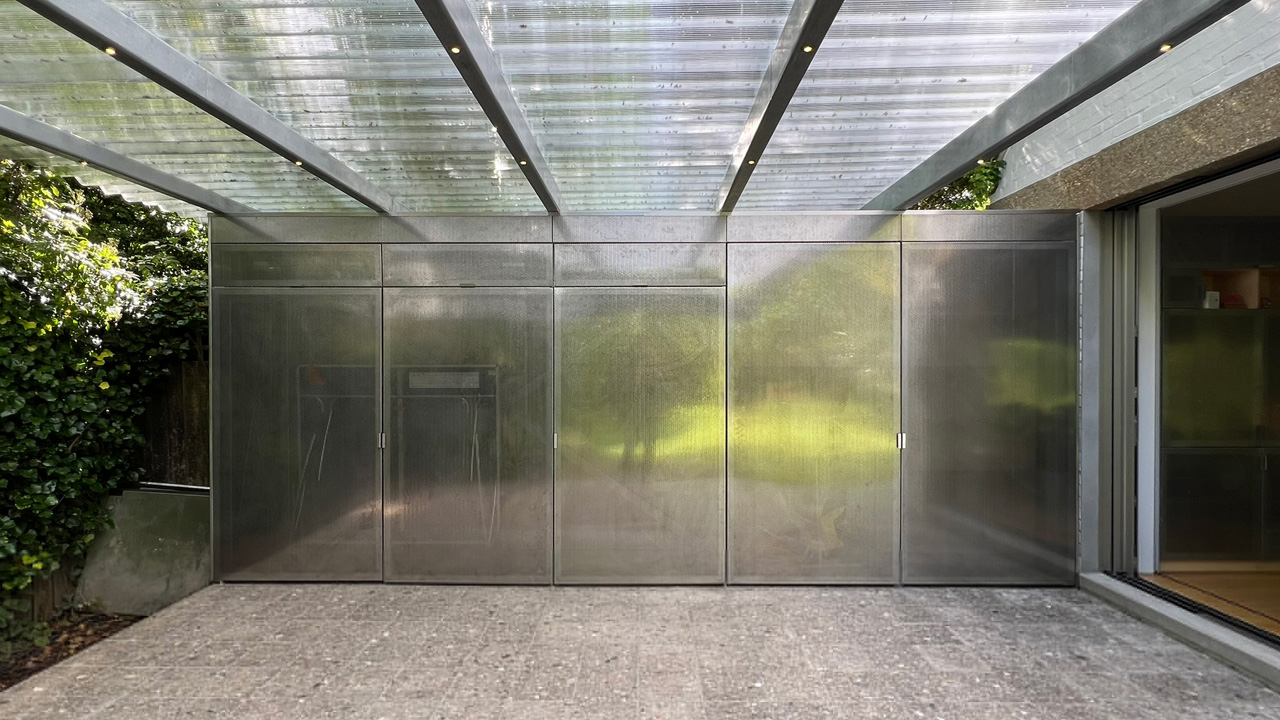
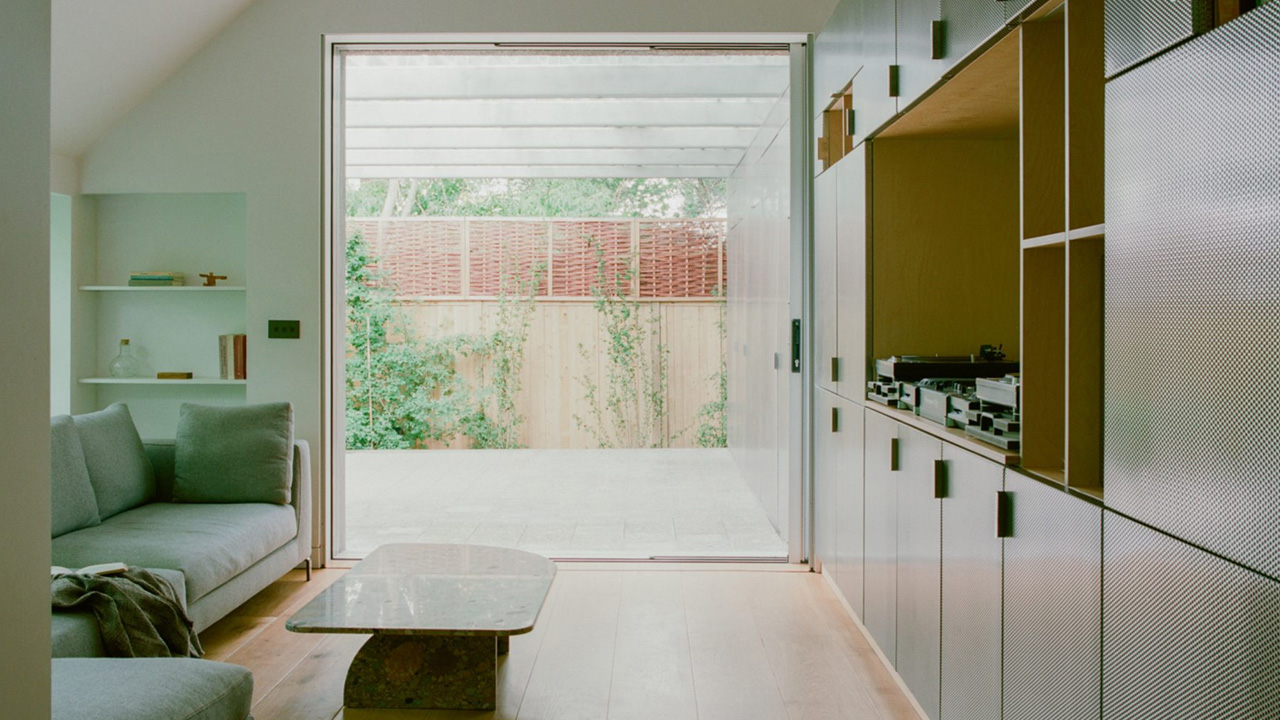
Neiheiser Argyros designed the Exeter Road Pavilion to give a new architectural identity to a garden outbuilding in London. The architect kept the original outbuilding intact by enclosing it with a metal shell for storing valuable objects. This enclosed metal chamber sits like a rectangular, steel cabinet of curiosities under the translucent canopy. He also created a special, semi-open sheltered area beside the metal chamber to enhance the garden space for displaying interesting objects.
The duality of the Exeter Road Pavilion is the most distinct feature of the architectural structure. The original garden outbuilding, clad in steel sheet, forms an opaque metal chamber. It works like a closed storage room where the client wanted to keep his valuable items. This metal cladding transforms the outbuilding into a sculptural object while providing solid protection.
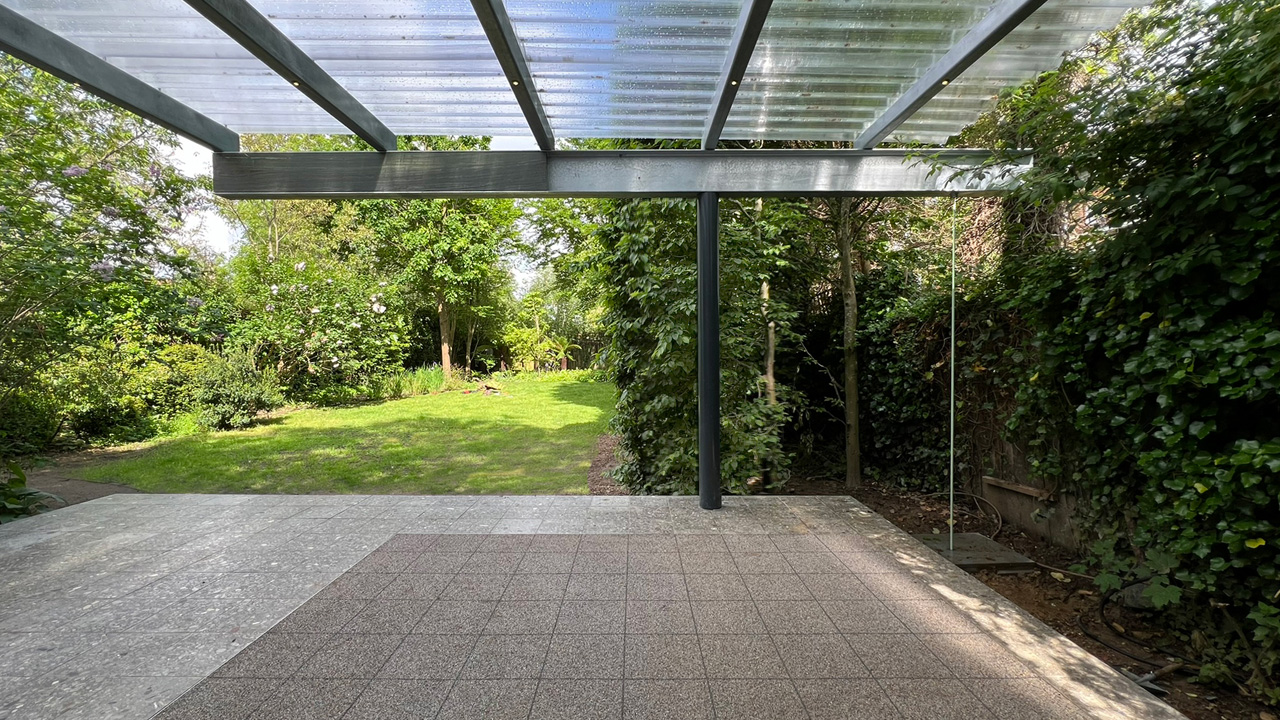
The semi-open sheltered pavilion situated right next to the enclosed room acts like an intermediate zone, connecting the garden with the interior of the house. It is more open and accessible compared to the enclosed pavilion. The semi-open shelter contrasts with the enclosed area, making it stand out. This smooth transition between closed and open areas, opaque and transparent, is the core idea of this impressive architecture.
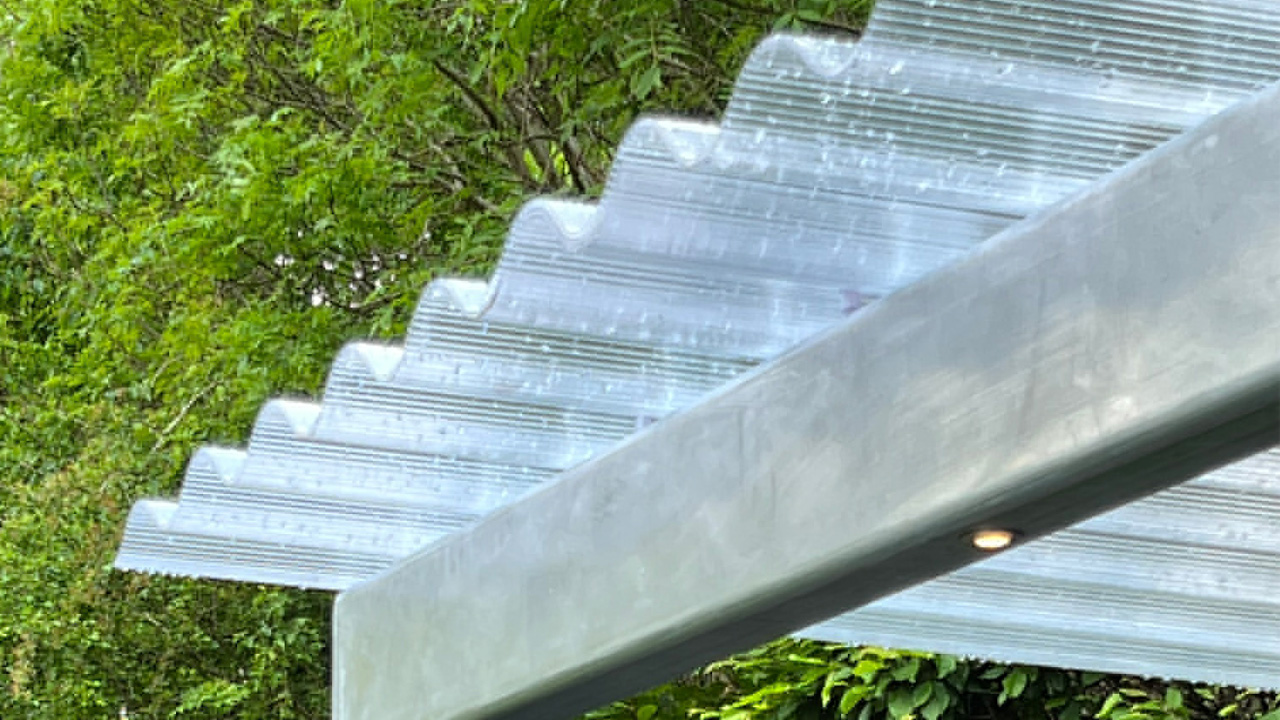
Another unique feature of the Exeter Road Pavilion is the use of a translucent, steel-framed canopy made from corrugated polycarbonate sheets. The architect created a clear spatial transition by intentionally interrupting the roof, giving the closed and semi-open pavilions their own unique identities. It helps preserve the airy feeling of the open pavilion.
The shadow gap in the canopy serves another purpose as well. The project features a layered spatial concept. The architect wanted to show different layers with this small separation. The fully enclosed metal-clad outbuilding forms a private space. The semi-open pavilion becomes a transitional space, and the garden area forms an exterior space. This concept reduces bulkiness and maintains structural independence.
The Exeter Road Pavilion transformed a garden outbuilding into a designer, architectural structure. The duality formed by the redesigned outbuilding, semi-open pavilion, is the most interesting part of the project. The enclosed area makes visitors curious about the valuable and interesting objects hidden inside, while the semi-open pavilion offers a smooth transition between interior and garden space. The architect proved that it is possible to create something unique and impactful out of a small outbuilding.

Via: Dezeen