Maybe you’ve decided that you’d like to have reverse osmosis water at home. Why don’t you pour some water into a reverse osmosis jug and enjoy pure, fresh water? Well, it’s not that simple. Reverse Osmosis (RO) requires a certain amount of pressure; you won’t find a simple reverse osmosis filter. And if you want the reverse osmosis water to be distributed all over your house, you commit yourself to buying a completely new home RO water filter system.
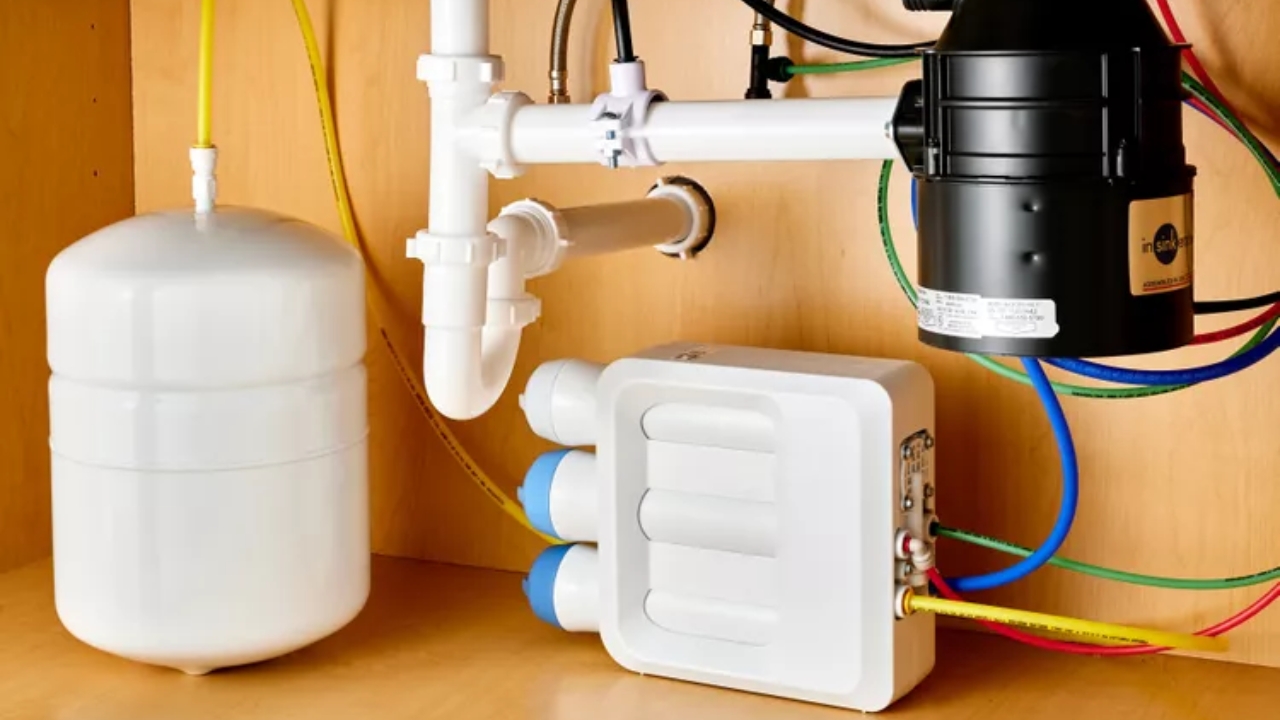
But if you only want reverse osmosis water for drinking or cooking, that doesn’t mean you’ve committed to turning your basement into a mini reverse osmosis plant. Your first smaller-scale option is an under-sink system. A reverse osmosis unit is connected to the water supply under your sink, where the water passes through three to five filters to achieve purity.
The filtered water is stored in a storage tank (also under the sink). A separate tap is then installed on your countertop, fed from the storage tank after the filters. You may be a little nervous about installing a complete faucet and water system (or maybe nervous that your landlord won’t be thrilled with your DIY ingenuity).
There are also reverse osmosis countertop filters, which allow you to connect a small filtration unit directly to your sink. Simply connect the “power” line to the tap, turn on the tap, and the water is filtered through a small system that is small enough to fit next to the microwave.
But the smaller RO filters may not be ideal for everyone. Keep in mind that countertop systems can be quite slow because of the lower flow taps, and will cost at least $150, not to mention the cost of changing the filters (about $30) every few months.
What is Reverse Osmosis?
If you want drinking, cooking, and bathing water as pure as possible, it is likely with a reverse osmosis filter system at home. A typical RO system is installed under the sink, or where the water enters the house, so all the water that goes around the house is filtered for contaminants.
Reverse osmosis is a water purification process that uses a semi-permeable membrane to remove unwanted substances, molecules, ions, and larger particles from water, making it safe for drinking.
RO is also a process that makes desalination (or the removal of salt from seawater) possible. Beyond that, reverse osmosis processes are used for recycling, wastewater treatment, and can even produce energy. Reverse osmosis is also one of the few ways we can extract certain minerals or chemicals from a water supply.
Some water sources have extremely high levels of natural fluoridation, which can lead to fluorosis of the enamel (mottled teeth) or much more severe skeletal fluorosis (an actual curving of a person’s bones or skeleton).
Using reverse osmosis, fluoride or other impurities can be filtered out on a large scale in a way that an activated carbon filter (such as the one most commonly found in homes) cannot.
Our Top Picks for Best Home RO Water Filter Systems
- Best Durability: APEC Water Systems RO-90 Ultimate Series 6-Stage RO System – $230
- Best UV Sterilization: Express Water Alkaline Ultraviolet Reverse Osmosis Water Filtration System – $260
- Best Easy Installation: APEC Water Systems ROES-PH75 Essence Series 6-Stage Alkaline RO System – $270
- Best Capacity: iSpring RCC7AK 6-Stage Under-Sink Reverse Osmosis Water Filter System – $200
- Best Technology: Home Master TMAFC Artesian Full Contact Undersink Reverse Osmosis System – $290
- Best Service Life: Express Water RO5DX 5-Stage Reverse Osmosis Water Filtration System – $190
- Best Compact: HBN Tankless Reverse Osmosis Filtration System – $290
- Best Accessories: Waterdrop G3P800 Undersink Reverse Osmosis Water Filtration System – $200
- Best Performance: Geekpure 5-Stage Reverse Osmosis Water Filtration System – $150
- Best Reliable: FS TFC5-88 Reverse Osmosis Water Filtration System – $140
Comparison of Best Home RO Water Filter Systems
| Product Name | Special Feature | Capacity | Price |
| APEC Water Systems RO-90 Ultimate Series 6-Stage RO System | Reduce TDS | 90 G/day | $230 |
| Express Water Alkaline Ultraviolet Reverse Osmosis Water Filtration System | Reduce TDS | 4 Gallons | $260 |
| APEC Water Systems ROES-PH75 Essence Series 6-Stage Alkaline RO System | Heavy Duty, Reduce TDS | 75 G/day | $270 |
| iSpring RCC7AK 6-Stage Under-Sink Reverse Osmosis Water Filter System | Reduce TDS | 75 G/day | $200 |
| Home Master TMAFC Artesian Full Contact Undersink Reverse Osmosis System | 4.5 second Fill Rate, 7-stages, 8.5″ carbon contact per pass, Patented 2-pass remineralization system | 2000 Gallons | $290 |
| Express Water RO5DX 5-Stage Reverse Osmosis Water Filtration System | Reduce TDS | 4 Gallons | $190 |
| HBN Tankless Reverse Osmosis Filtration System | 600GPD high capacity, 8-stage Filtration, Tankless | 600 Gallons | $290 |
| Waterdrop G3P800 Undersink Reverse Osmosis Water Filtration System | Tankless | 450 Gallons | $200 |
| Geekpure 5-Stage Reverse Osmosis Water Filtration System | 5-Stage Reverse Osmosis RO Drinking Water Filter System with Extra 7 Filters | 2.8 Gallons | $150 |
| FS TFC5-88 Reverse Osmosis Water Filtration System | Reduce TDS | 100 Gallons | $140 |
Best of Home RO Water Filter Systems
APEC Water Systems RO-90 Ultimate Series 6-Stage RO System

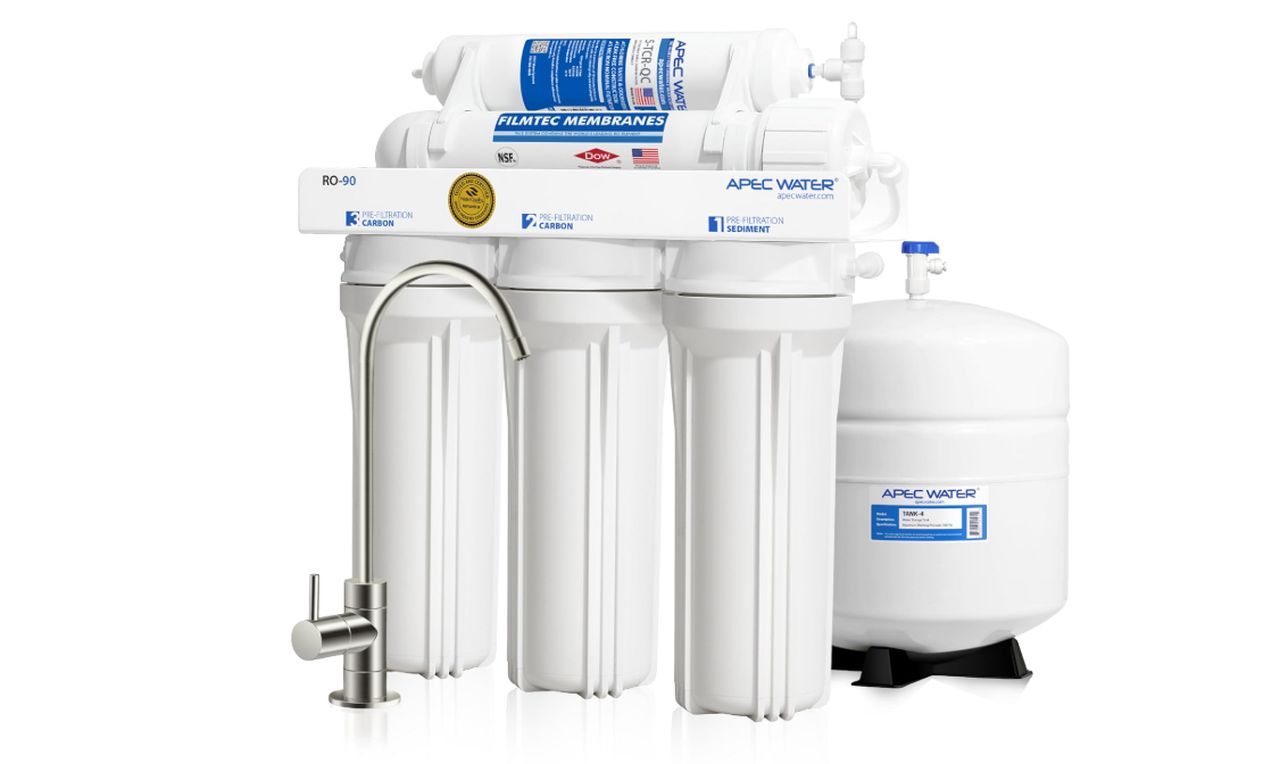
The APEC RO-90 is an under-sink home RO water filter designed for households that need a steady supply of clean drinking water. It features a six-stage filtration process capable of reducing common contaminants such as chlorine, lead, fluoride, and arsenic, while offering a higher 90 GPD output than many standard RO systems. The unit includes long-lasting filters, a storage tank, and a lead-free chrome faucet, making it a complete and reliable setup for everyday use.
Our Take:
We find the RO-90 especially useful for families or frequent water drinkers who want better purification without stepping into premium pricing. It delivers consistent performance, good water taste, and dependable build quality, though it does require some cabinet space and basic DIY installation.
What We Like:
- Higher-than-average 90 GPD output
- Six-stage filtration improves water quality
- Durable components with long filter life
What We Don’t Like:
- Under-sink installation takes effort
- Typical RO wastewater output
Price: $230 | Special Feature: Reduce TDS | Capacity: 90 G/day | Product Dimensions: 16″L x 5.25″W x 17.5″H
Rating:
Amazon: 4.4/5 | Our Rating: 4.4/5
Express Water Alkaline Ultraviolet Reverse Osmosis Water Filtration System

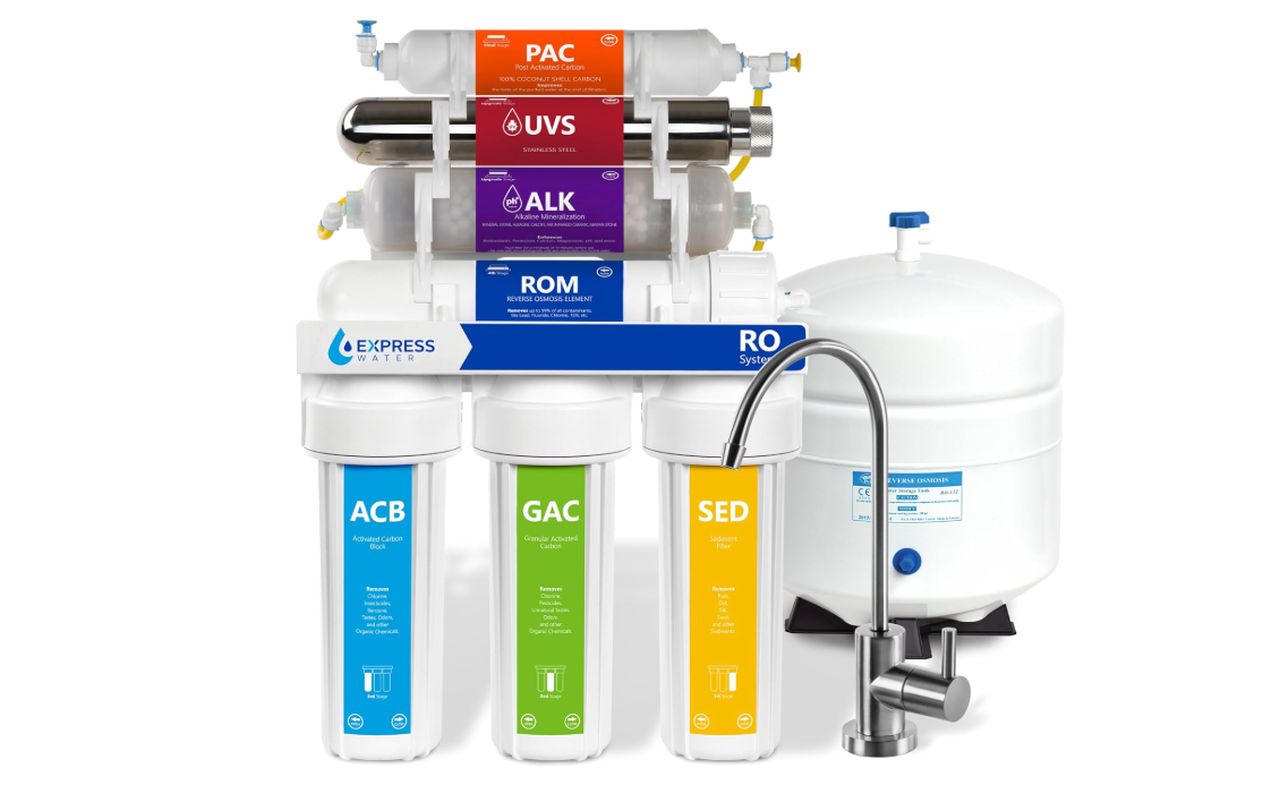
This under-sink RO system combines multi-stage reverse osmosis filtration with alkaline remineralization and UV sterilization to remove up to 99.99 percent of contaminants, including chlorine, lead, fluoride, and bacteria, while adding essential minerals like calcium, magnesium, and potassium back into your water. The included UV light adds an extra layer of protection against biological impurities, and the system comes with a storage tank and modern faucet for convenient kitchen use.
Our Take:
We find this versatile RO unit especially useful for households that want both deep purification and enhanced water quality, thanks to mineral enrichment and UV protection, which is ideal if you’re concerned about both contaminants and maintaining a balanced pH. While installation requires some under-sink space and a power outlet for the UV component, the added purification and mineral benefits make it a robust choice.
What We Like:
- Combines RO, alkaline remineralization, and UV sterilization
- Adds beneficial minerals for improved taste
- Comes with tank and faucet included
What We Don’t Like:
- Requires under-sink space and power for UV light
- Setup can be a bit more involved than basic RO systems
Price: $260 | Special Feature: Reduce TDS | Capacity: 4 Gallons | Product Dimensions: 15″L x 5″W x 17″H
Rating:
Amazon: 4.5/5 | Our Rating: 4.4/5
APEC Water Systems ROES-PH75 Essence Series 6-Stage Alkaline RO System

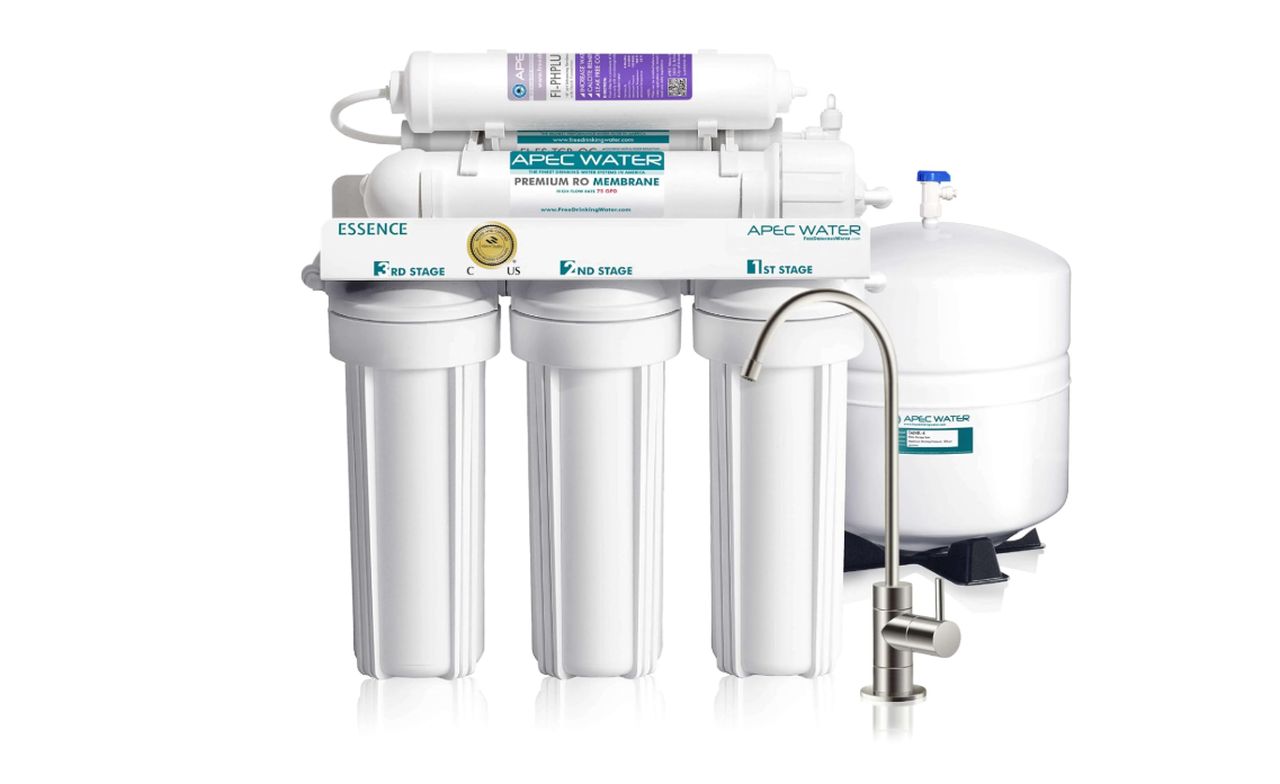
The APEC ROES-PH75 is a six-stage under-sink home RO water filter system that delivers up to 75 gallons of purified water per day while removing common contaminants like chlorine, lead, VOCs, and heavy metals. Its standout feature is the alkaline remineralization stage that adds high-purity calcium carbonate back into the water to raise the pH and improve taste. The system also includes a lead-free faucet, quick-connect tubing, and a 4-gallon storage tank for ready-to-use drinking water at the tap.
Our Take:
We think the ROES-PH75 is especially appealing for users who want clean water with a smoother, slightly alkaline taste without moving up to more expensive units. It’s robust, quality-built with easy DIY installation, and performs well for everyday drinking and cooking needs, though it still produces typical RO wastewater.
What We Like:
- Adds beneficial minerals to boost pH and taste
- Comprehensive six-stage filtration
- Includes everything you need for under-sink installation
What We Don’t Like:
- Under-sink installation requires some space and effort
- Like all RO systems, it generates wastewater
Price: $270 | Special Feature: Heavy Duty, Reduce TDS | Capacity: 75 G/day | Product Dimensions: 15.5″L x 5.25″W x 17.5″H
Rating:
Amazon: 4.4/5 | Our Rating: 4.4/5
iSpring RCC7AK 6-Stage Under-Sink Reverse Osmosis Water Filter System

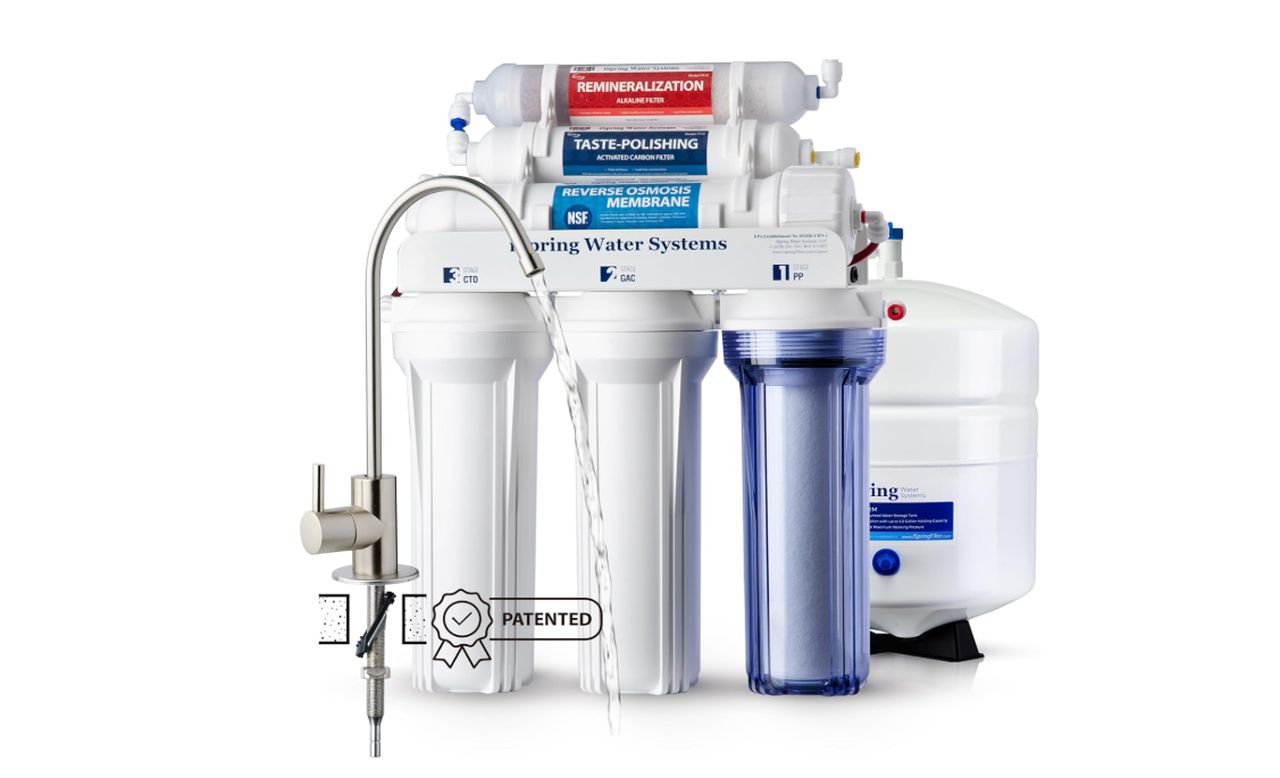
The iSpring RCC7AK is a six-stage under-sink RO system that delivers up to 75 gallons of purified water per day while effectively reducing contaminants such as chlorine, lead, fluoride, arsenic, and heavy metals. What sets it apart is the alkaline remineralization stage, which restores beneficial minerals and balances pH for a smoother, more natural taste. The unit includes a high-capacity RO membrane, quick-connect fittings, a storage tank, and a stylish faucet, making it a complete setup for kitchen drinking water.
Our Take:
The iSpring RCC7AK is a well-rounded RO system for anyone who wants dependable contaminant reduction and better-tasting, remineralized water without spending much. It’s straightforward to install for DIYers and performs consistently, though like most traditional RO units, it takes up under-sink space and produces standard wastewater.
What We Like:
- Balanced pH and improved taste via alkaline remineralization
- Six-stage filtration for broad contaminant reduction
- Complete kit with tank and faucet included
What We Don’t Like:
- Requires under-sink installation
- Standard RO wastewater output
Price: $200 | Special Feature: Reduce TDS | Capacity: 75 G/day | Product Dimensions: 15.5″L x 16″W x 18″H
Rating:
Amazon: 4.6/5 | Our Rating: 4.5/5
Home Master TMAFC Artesian Full Contact Undersink Reverse Osmosis System

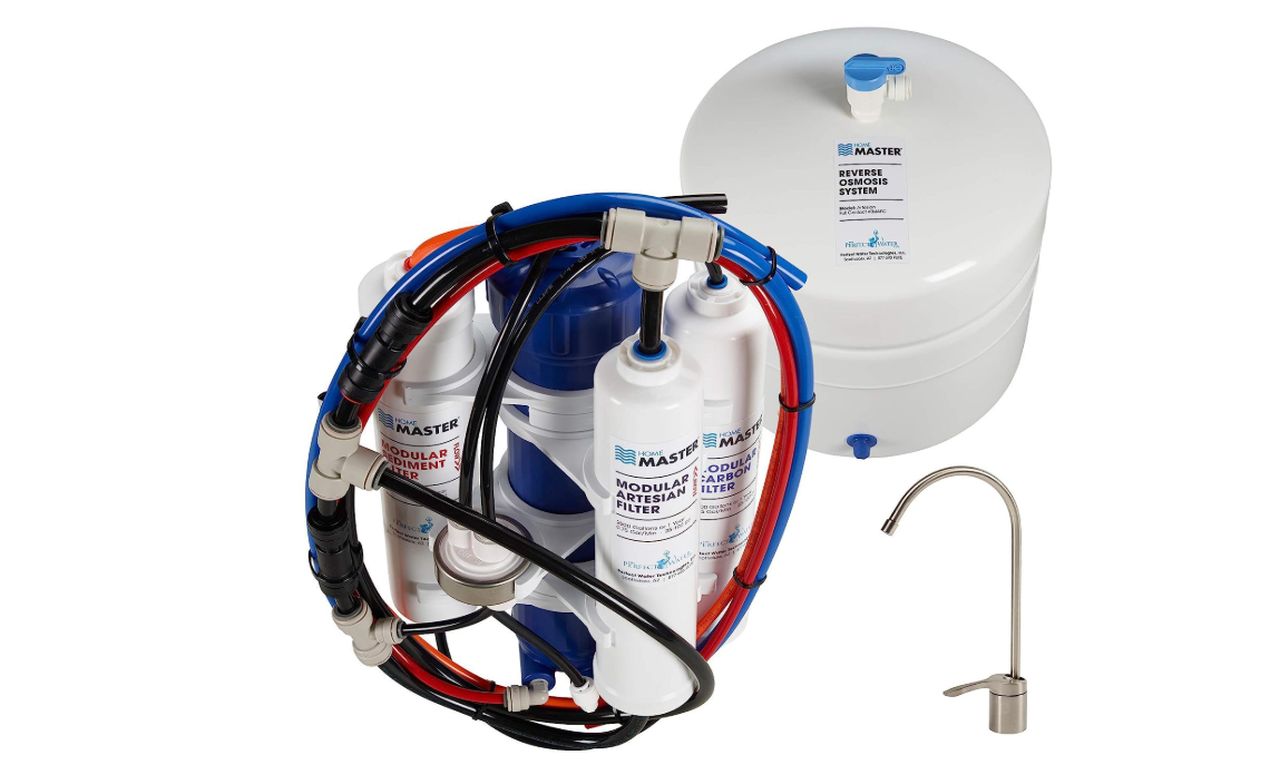
Home Master TMAFC Artesian Full Contact is a high-quality under-sink RO system that uses a seven-stage filtration and remineralization process to remove up to 98 percent of contaminants like chlorine, heavy metals, and dissolved solids while adding beneficial calcium and magnesium minerals back into the water for improved taste and alkalinity. Its patented Full Contact technology remineralizes at two points in the process, and the system also uses a Fast Flow RO kit to boost faucet output and a modular filter design for easier annual replacements.
Our Take:
We find the TMAFC Artesian Full Contact ideal for users who want clean, mineral-enhanced drinking water with better taste than typical RO systems, along with easier maintenance and reduced typical RO drawbacks. While its daily capacity is lower than some competitors’, and installation requires under-sink space, the added mineral balance and improved flow make it a compelling choice.
What We Like:
- Adds beneficial minerals for a richer taste and slight alkalinity
- Seven-stage filtration for broad contaminant reduction
- Faster faucet flow with included Fast Flow RO kit
What We Don’t Like:
- Requires under-sink installation with some DIY effort
- Lower daily output (around 50 GPD) than some competitors
- Still produces typical RO wastewater (though reduced)
Price: $290 | Special Feature: 4.5 second Fill Rate, 7-stages, 8.5″ carbon contact per pass, Patented 2-pass remineralization system | Capacity: 2000 Gallons | Product Dimensions: 20″L x 13″W x 16″H
Rating:
Amazon: 4.8/5 | Our Rating: 4.7/5
Express Water RO5DX 5-Stage Reverse Osmosis Water Filtration System

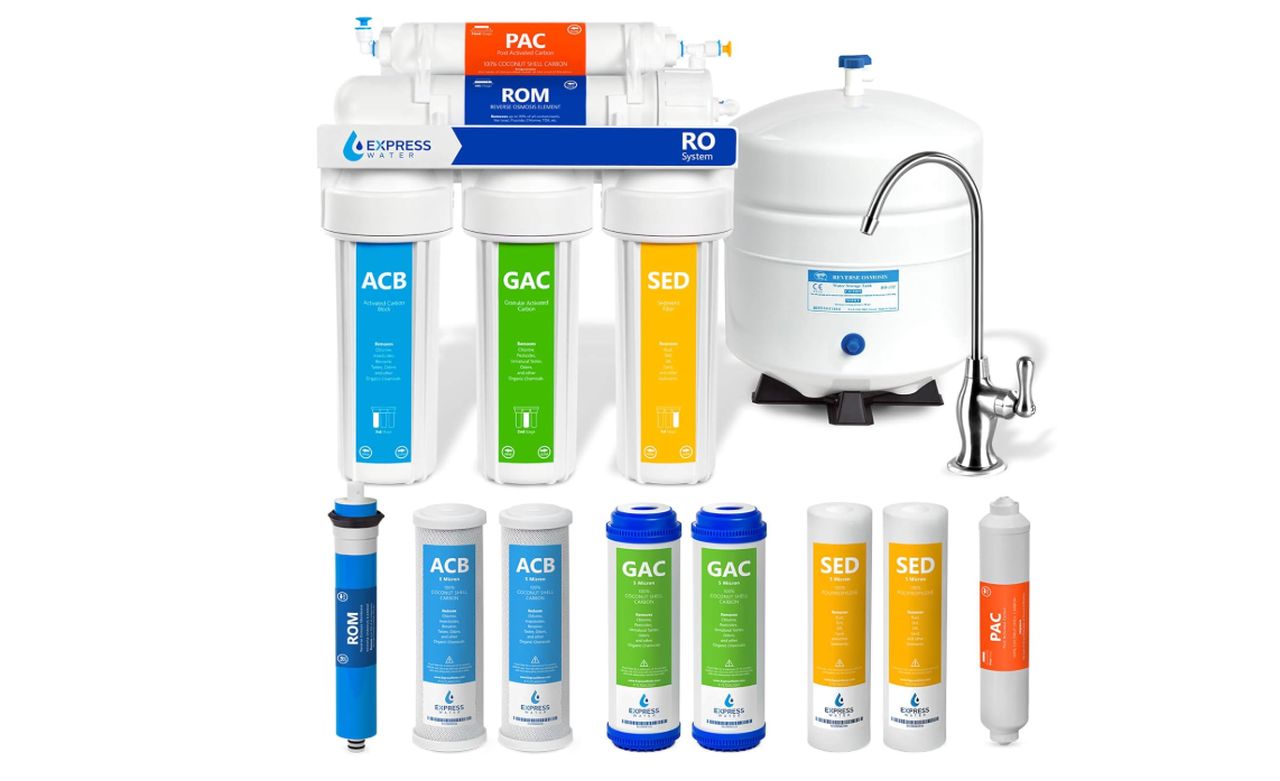
The Express Water RO5DX uses a five-stage reverse osmosis process to remove common contaminants like chlorine, lead, fluoride, and dissolved solids, delivering clean, filtered water straight to your kitchen tap. The system comes complete with a 4-gallon storage tank, chrome faucet, filter housings, and installation hardware, making setup and maintenance straightforward. Its filters are designed for reliable performance and a reasonable service life, with easily replaceable cartridges.
Our Take:
We believe that RO5DX is a dependable basic RO unit that balances solid filtration performance with easy installation and upkeep. It delivers crisp, clear water with minimal complexity and keeps maintenance simple. A great option if you want straightforward, effective water purification without extra bells and whistles.
What We Like:
- Five-stage filtration for broad contaminant reduction
- Includes storage tank and faucet with all hardware
- Easy to install and maintain
What We Don’t Like:
- No remineralization or advanced purification stages
- Standard RO wastewater output
Price: $190 | Special Feature: Reduce TDS | Capacity: 4 Gallons | Product Dimensions: 14″L x 5″W x 15″H
Rating:
Amazon: 4.5/5 | Our Rating: 4.5/5
HBN Tankless Reverse Osmosis Filtration System
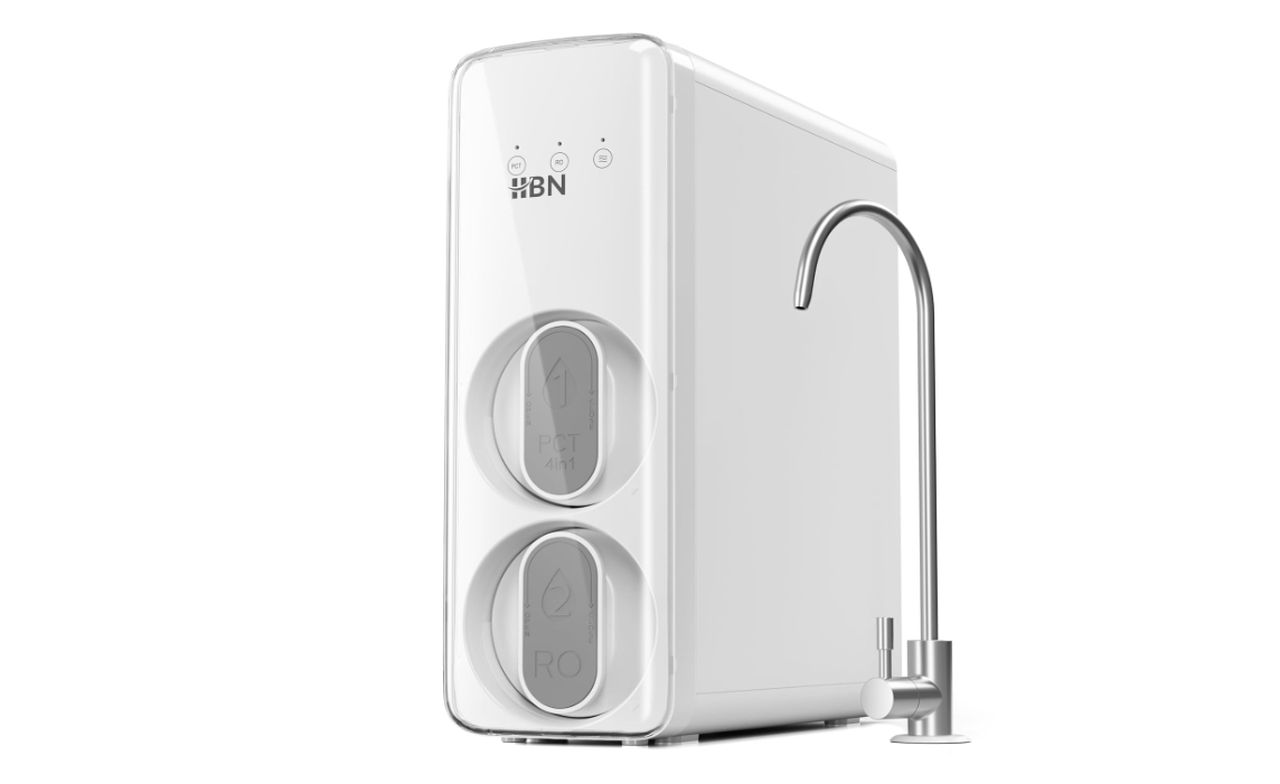
The HBN tankless home RO water filter delivers continuous filtered water without a storage tank, using multiple filtration stages to reduce common contaminants while providing fresh water on demand. Its tankless design frees up under-sink space and helps reduce the risk of secondary contamination that can occur in traditional RO storage tanks. It typically includes LED indicator lights to signal when filters need changing and features quick-connect fittings for easier installation.
Our Take:
This tankless RO unit is compelling for users who want a compact, modern RO setup with instant flow and fewer bulky parts. The lack of a tank means water isn’t held in standby, and you get purified water straightaway. Also, the system’s monitor lights make upkeep more intuitive. Like most RO systems, expect some wastewater production and a need for electricity (for pumps or sensors), but the convenience and space-saving design stand out.
What We Like:
- Tankless design delivers water instantly and saves space
- Filter life indicators help with timely maintenance
- Quick-connect setup simplifies installation
What We Don’t Like:
- Requires power for pumps/sensors
- Still produces wastewater like standard RO filtration
Price: $290 | Special Feature: 600GPD high capacity, 8-stage Filtration, Tankless | Capacity: 600 Gallons | Product Dimensions: 15.59″L x 5.31″W x 15.47″H
Rating:
Amazon: 4.5/5 | Our Rating: 4.5/5
Waterdrop G3P800 Undersink Reverse Osmosis Water Filtration System

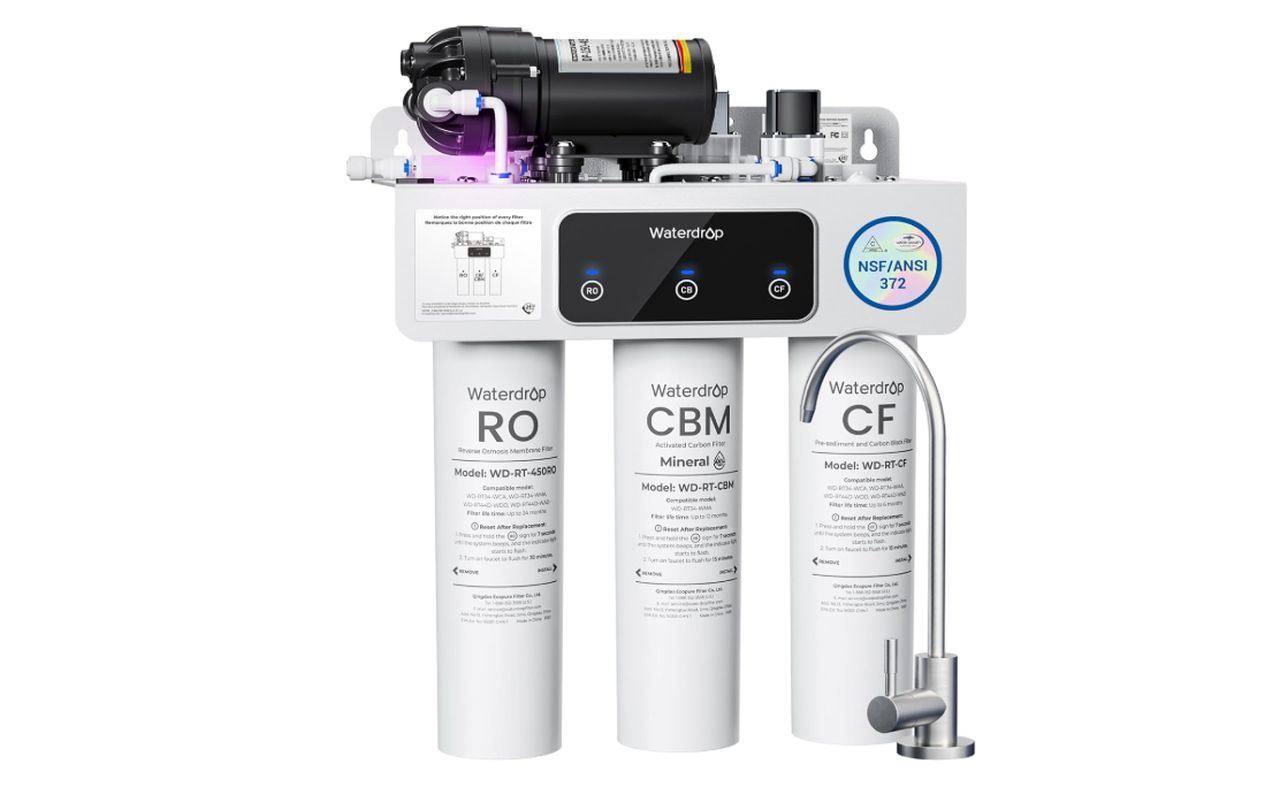
The Waterdrop G3P800 uses a multi-stage filtration process including RO membrane and remineralization to reduce common contaminants such as chlorine, lead, fluoride, and heavy metals, while adding back beneficial minerals for improved taste and balanced pH. It features a compact, tankless design for continuous water flow and comes with a dedicated faucet and quick-connect installation fittings, making it a space-efficient solution for kitchen drinking water.
Our Take:
We find the Waterdrop G3P800 to be a modern and efficient RO option that blends solid contaminant reduction with better-tasting water through its remineralization stage. The tankless setup ensures on-demand water without bulky storage tanks, and the overall performance feels smooth and reliable for daily use. Like other RO systems, expect some wastewater output and basic installation effort under the sink.
What We Like:
- Tankless design provides continuous on-demand water
- Remineralization improves taste and pH balance
- Compact footprint with quick-connect installation
What We Don’t Like:
- Requires under-sink space and some DIY setup
- Normal RO wastewater production
Price: $200 | Special Feature: Tankless | Capacity: 450 Gallons | Product Dimensions: 13.39″L x 6.22″W x 17.95″H
Rating:
Amazon: 4.6/5 | Our Rating: 4.5/5
Geekpure 5-Stage Reverse Osmosis Water Filtration System
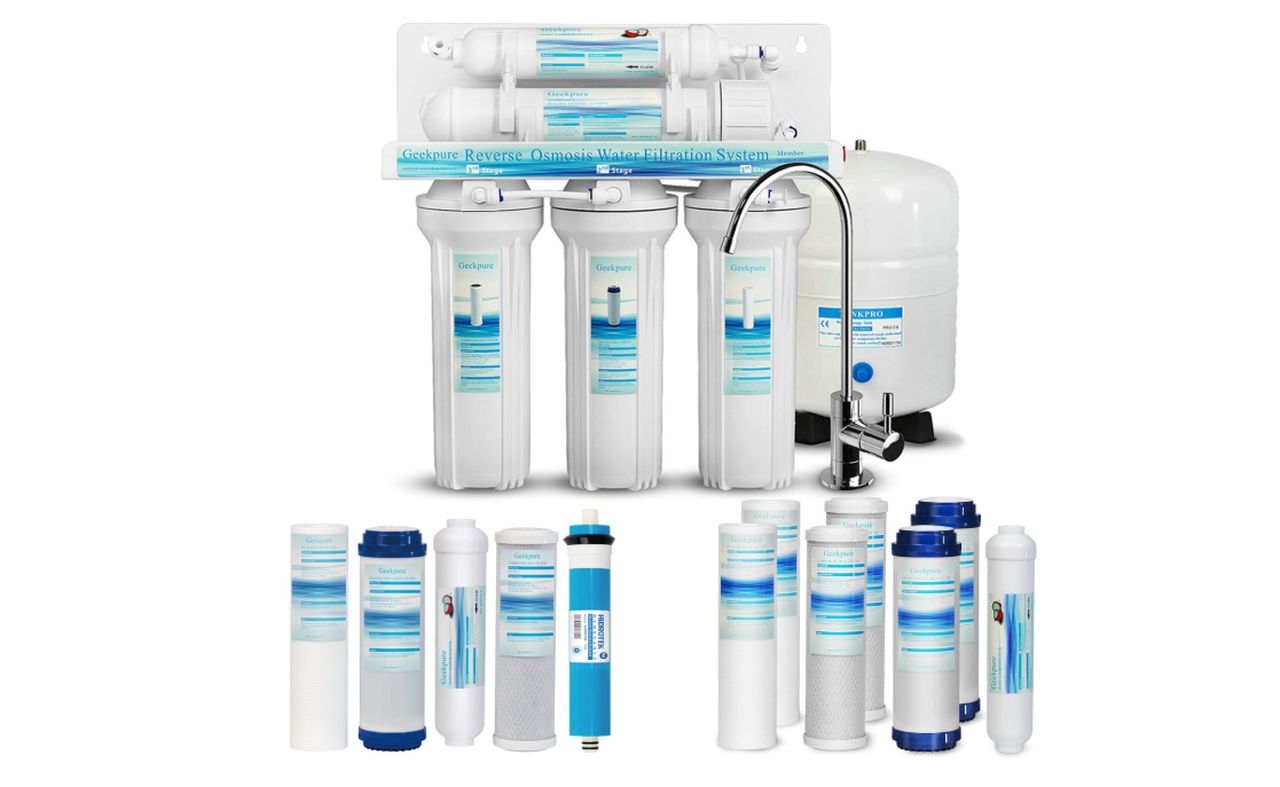
The Geekpure 5-stage RO system is an under-sink water purifier that uses a five-stage process, including sediment pre-filtration, carbon blocking, reverse osmosis membrane, and post-carbon polishing to reduce contaminants such as chlorine, heavy metals, and dissolved solids, delivering clean drinking water. It includes a 4-gallon storage tank, dedicated faucet, and all necessary installation hardware, and the RO membrane is NSF-certified for reliable performance.
Our Take:
The Geekpure RO system is a dependable and straightforward choice for everyday water purification. Its five-stage process does a good job of cleaning tap water, and the inclusion of a storage tank and NSF-certified membrane brings reassurance in performance and quality. While it doesn’t offer upgrades like remineralization or tankless design, it is solid where it counts, delivering clean, filtered water without unnecessary complexity.
What We Like:
- NSF-certified RO membrane for trusted performance
- Five-stage filtration for broad contaminant removal
- Includes tank, faucet, and installation hardware
What We Don’t Like:
- Traditional tank takes up under-sink space
- No remineralization or advanced features
Price: $150 | Special Feature: 5-Stage Reverse Osmosis RO Drinking Water Filter System with Extra 7 Filters | Capacity: 2.8 Gallons | Product Dimensions: 14.2″L x 9.5″W x 18.1″H
Rating:
Amazon: 4.4/5 | Our Rating: 4.4/5
FS TFC5-88 Reverse Osmosis Water Filtration System

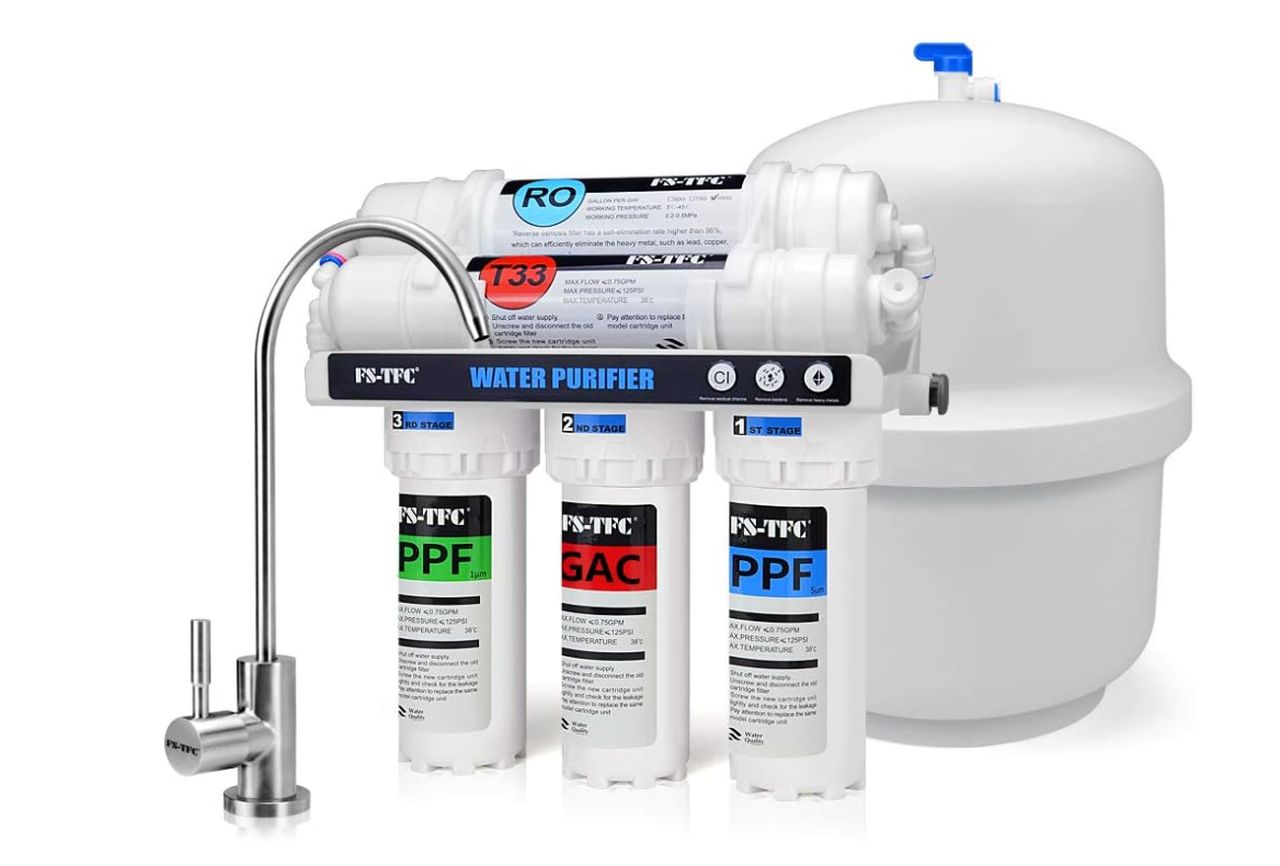
The FS TFC5-88 is a traditional under-sink home RO water filter that relies on a five-stage filtration process, including a sediment pre-filter, carbon block filters, RO membrane, and post-filter to reduce contaminants such as chlorine, heavy metals, fluoride, and dissolved solids. The system comes with a storage tank, dedicated faucet, and all installation hardware, and uses TFC (thin-film composite) membrane technology to improve purity and water quality.
Our Take:
The FS TFC5-88 is a reliable RO system for basic household water purification. The five-stage setup handles everyday tap water issues well, and the included components make installation manageable. While it doesn’t include advanced features like remineralization or tankless design, it focuses on solid, no-nonsense filtration that works consistently where it’s needed.
What We Like:
- Five-stage filtration with a TFC membrane for effective contaminant removal
- Comes with storage tank, faucet, and installation hardware
- Simple and reliable design
What We Don’t Like:
- Traditional tank takes up under-sink space
- No added features such as remineralization or tankless operation
Price: $140 | Special Feature: Reduce TDS | Capacity: 100 Gallons | Product Dimensions: 11.5″L x 5″W x 11.5″H
Rating:
Amazon: 4.2/5 | Our Rating: 4.2/5
How Does Reverse Osmosis Work?
Assuming that we have a fairly good understanding of the definition of “reverse”, it is best to start by looking at how osmosis works before bringing the two concepts together.
First, what is Osmosis?
The definition of osmosis is the passage of a solvent, but not a solute, between two solutions of different concentrations separated by a semipermeable membrane.
What, you don’t understand? No fear. Most of us don’t either, that’s why there are countless explanations and analogies to clarify osmosis. We will comment on some of them, but first, let’s divide osmosis into all its parts in order to understand it.
First, we will make our solution. We start with an old cup of boring water. To make things more tasteful, we will call the water “solvent”, which is convenient, because that is what it is. To make our solvent a little tastier, we will dissolve delicious sugar. Sugar is the solute.
As a summary, we now have water (solvent) in which we have dissolved sugar (solute), to make water with sugar (our solution). Now that we have our sugar-water solution, we’ll take a U-tube. A U-tube is a beaker shaped like a U.
Right in the middle of the tube, imagine a little Gore-Tex that cuts the U in half. Gore-Tex is our “semi-permeable membrane.” Gore-Tex is a thin plastic, dotted with a billion tiny holes that allow water vapor to pass through, but the liquid stays outside. (We chose Gore-Tex because plastic wrap would not let anything through, and a cotton cloth garment would let almost anything through.)
On one arm of the U-tube, we pour our water-sugar mixture. In the other, we pour our plain, colorless, odorless water. That’s when the magic of osmosis begins, if you find the movement of the water to be magical.
The liquid level in the sugar water arm will slowly increase, as the solvent (water) moves through the Gore-Tex, to make both sides of the U-arm closer to equal in the sugar to water ratio.
But why does this happen? Simply put, because water wants to find the balance. And because one side of the arm is full of sugar, the pure water on the other side decides to move to match the concentration or until osmotic pressure (the pressure that occurs when molecules move) is reached.
So there you have it; Osmosis occurs when a low-concentration solution of solute moves across a membrane to reach the more concentrated solution, weakening it. You did it, you get it!
Now, after analyzing how osmosis works in one direction only, we turn it around and see how reverse osmosis works
We go Around the Osmosis
Being under pressure can set a building on fire, split a family in two, put people out on the street, and also create a unique poem. Not to mention that pressure also makes reverse osmosis work.
We learned that in osmosis, a lower concentration solution will filter its solvent into a higher concentration solution. In reverse osmosis, we are (literally) reversing the process by making our solvent filter come out of our high-concentration solution into the lower-concentration solution.
But as we’ve seen, that’s not something the solutions really want to do. How do we make reverse osmosis happen? We put the solution under pressure. Let’s take saltwater as an example:
In reverse osmosis, we would have a solution of saltwater on one side of a tank and pure water on the other side, separated by a semi-permeable membrane. We would apply pressure on the saltwater tank side, just enough to counteract the natural osmotic pressure on the pure water side, and then push the saltwater through the filter (this takes about 50-60 bar Lenntech pressure).
But due to the size of the salt molecules, only the smaller water molecules would reach the other side, thus adding fresh water to the water side, and leaving the salt on the other side.
To summarize: Reverse osmosis occurs when pressure is applied to a highly concentrated solution of solute, causing the solvent to pass through a membrane into the concentrated solution below, leaving a higher concentration of solute on one side and only solvent on the other.
Also Read: This Faucet Filter Monitors and Cleans Water You Drink
Advantages of Reverse Osmosis at Home
Improves Water Taste: Reverse osmosis filtration improves the taste, odor, and appearance of water by removing contaminants that cause taste and odor problems.
Eliminates Impurities: Reverse osmosis systems remove contaminants from water, including nitrates, pesticides, sulfates, fluorides, bacteria, pharmaceuticals, arsenic, and many more. The carbon filter of a reverse osmosis system will also remove chlorine and chloramines.
Saves Money: With a reverse osmosis unit, you can cancel your water delivery service and stop buying boxes of bottled water. Your RO provides “better than bottled water” quality water for very little money per purified liter.
Easy Maintenance: Reverse osmosis systems have very few moving or replaceable parts, which makes reverse osmosis filtration systems easy to clean and maintain.
Do I Need a Home RO Water Filter?
So we’ve already seen some of the ways we can take advantage of reverse osmosis water purification to make it work for us. But is asking nature to reverse itself, to return to a state that is not its own, necessarily a good idea?
There are surely arguments that arise from the use of reverse osmosis – people believe drinking ultra-clean water comes with detractors, even though it is fantastic. People think that the reverse osmosis process tends to remove many valuable minerals. But after understanding the entire process, it is easy to conclude that it has more advantages and benefits.
Many homeowners understand the benefits of RO but have doubts about whether they should switch to it or not. Tap water provided by municipalities often has traces of substances such as lead, nitrates, nitrites, etc which can be harmful to the body over a period of time.
How to Install Home RO Water Filter System
Installing the reverse osmosis system at home can seem like a daunting task, but the truth is, RO kits make it really simple to set up. The kits come with special faucets, filters, water storage tanks, and semi-permeable membranes.
Experts recommend a reverse osmosis filtration system with an automatic shut-off valve. Such a feature ensures on-demand filtered water, making certain that the valve closes when the water storage tank fills up to disallow more water from entering the partially permeable membrane.
When the water is drawn from the faucet, the valve allows the water through the membrane, pushing the wastewater down the drain.
Cleaning and Maintaining the RO Filter
RO filter is a small investment you can make for your health. Install it and enjoy pure, tastier drinking water forever.
Though installing the system is the biggest task on the way, once you have come around, it is not difficult to maintain it and change the filters.
All types of reverse osmosis systems require periodic maintenance. This is to ensure it is working as it did when new. The interval in which the replacement of the filter is due depends on the type of filter and the harshness of the water it is filtering. On average, the RO system requires a filter change anytime between six months and one year.
Recommended Filter Change Schedule
- Sediment Pre-Filter: Replace every 6 to 12 months
- Carbon Pre-Filter: Replace every 8 to 12 months. This will help to ensure membrane life and quality
- Carbon Post Filter: Replace this every 12 months
- Reverse Osmosis Membrane: Replace the reverse osmosis membrane every 2 years
How to Choose the Best Home RO Water Filter
Reverse osmosis water filters have become a popular choice for homes looking to improve drinking water quality. With multiple options available, choosing the right RO system depends on your household needs, water quality, and available space. Here’s what you should consider before making a decision.
Understand Your Water Quality
The first step is knowing what’s in your tap water. RO systems are designed to reduce contaminants like chlorine, heavy metals, fluoride, and dissolved solids, but some models go further with additional filtration stages. If your water has high TDS levels or noticeable taste and odor issues, a multi-stage RO system will deliver better results.
Filtration Stages Matter
Most home RO systems come with five to seven filtration stages. Basic systems focus on sediment removal, carbon filtration, and reverse osmosis, while advanced models may include remineralization or UV purification. More stages generally mean better water quality, but they can also increase maintenance requirements.
Tank vs Tankless Systems
Traditional RO systems use a storage tank to hold purified water, ensuring a steady supply but taking up more under-sink space. Tankless RO systems, on the other hand, provide water on demand and save space, though they often require electricity and higher water pressure. Your kitchen layout plays a big role in deciding between the two.
Flow Rate and Daily Capacity
Pay attention to how much purified water the system can produce daily. Larger households or frequent water usage benefit from higher GPD (gallons per day) ratings. A system with faster flow also reduces wait time when filling bottles or cooking.
Maintenance and Filter Replacement
Filter replacement frequency and ease of maintenance are often overlooked. Look for systems with easily accessible filters, clear replacement schedules, and availability of spare parts. Indicator lights or alerts can make upkeep simpler and help maintain consistent performance.
Installation and Space Requirements
Most RO systems are designed for under-sink installation, but space constraints can vary widely. Before choosing a system, ensure your cabinet can accommodate the unit, storage tank (if included), and plumbing connections without clutter.
Frequently Asked Questions About Home RO Water Filter Systems
A. RO systems effectively reduce a wide range of impurities, including chlorine, lead, fluoride, arsenic, nitrates, heavy metals, and dissolved solids, providing clean and safe drinking water.
A. Filter replacement varies by model and usage but generally ranges from 6 to 12 months for pre- and post-filters, and 2 to 3 years for the RO membrane. Some systems include indicator lights to alert you.
A. Yes, traditional RO systems produce wastewater — typically 3 to 4 gallons for every gallon of purified water. However, some newer models are designed to reduce this ratio and improve water efficiency.
A. Most under-sink RO systems require basic DIY plumbing skills or professional help. Many come with detailed instructions and all necessary hardware for installation.
A. Standard RO filtration removes most minerals along with contaminants. Some systems add a remineralization stage to restore healthy minerals and improve water taste and pH balance.
Final Verdict
Choosing the right home RO water filter means balancing effective purification, ease of use, and your home’s specific needs. Whether you prioritize advanced features like remineralization or space-saving tankless designs, a quality Home RO water filter ensures cleaner, better-tasting water, making it a smart investment for health and peace of mind.