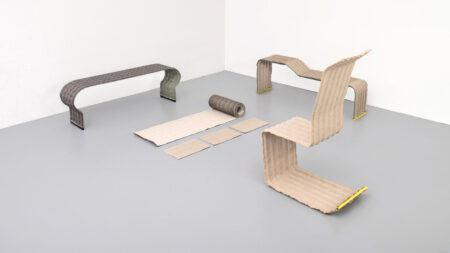
As new technologies continue to shape our homes and lives, designers around the world are rethinking not only how a particular product functions, but also what it is made of. We have seen examples where ocean waste and mycelium are used to make furniture, or instances where recycled old coffee grounds are used as a unique material for making coffee cups. Recycled paper pulp has also been steadily shining as a design material, and one of the most compelling recent examples is the ECHO collection by Russia-based design studio KOD.objects. This project not only highlights new material possibilities but also touches upon ancient Russian architecture and material culture.
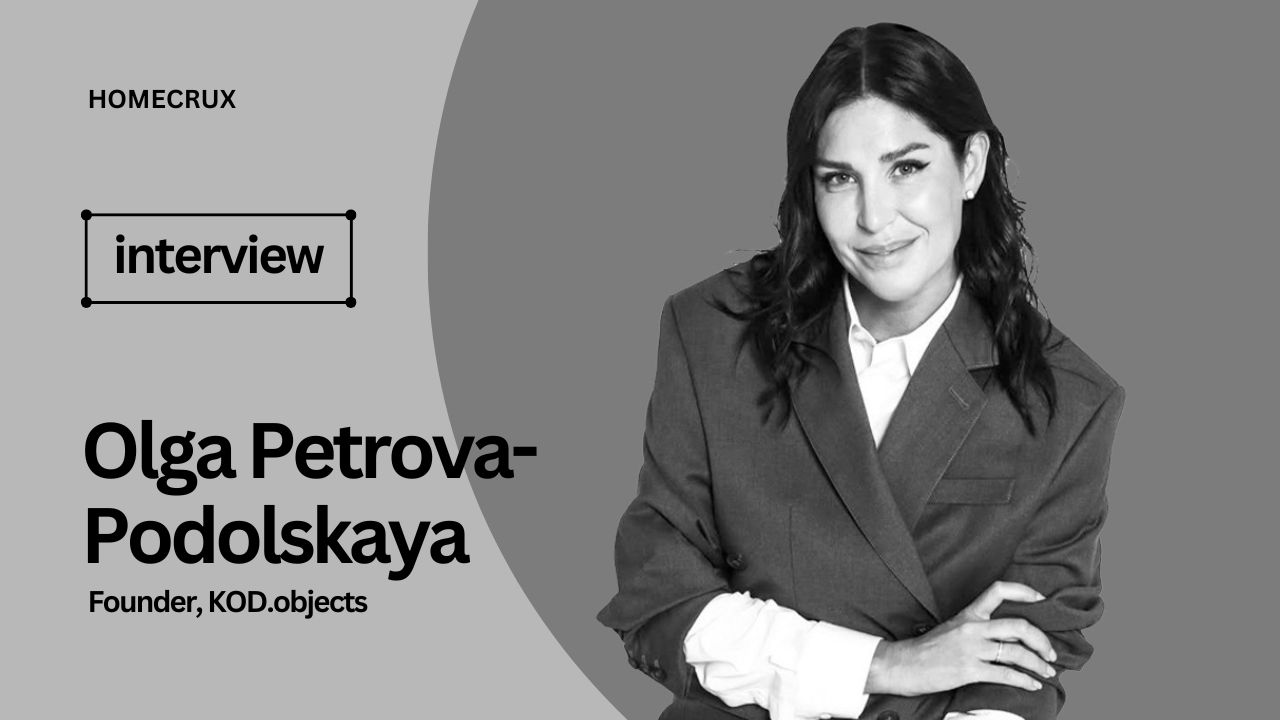
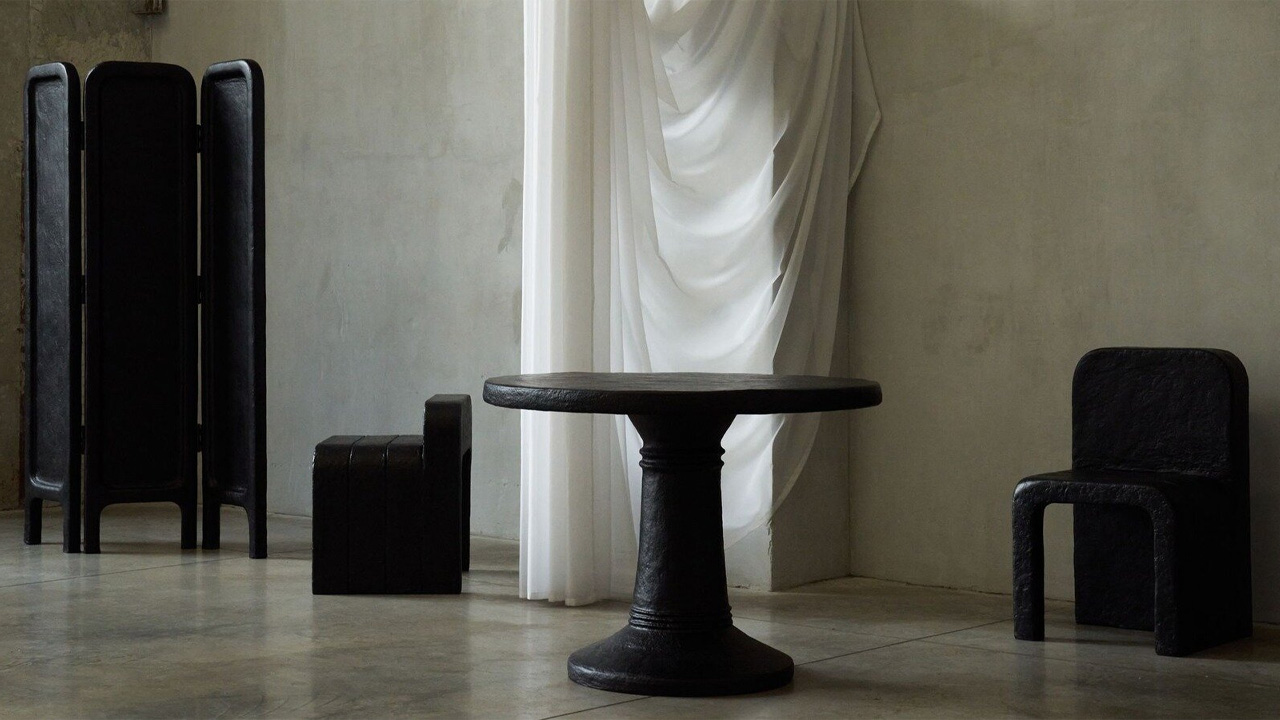
As soon as I came across the ECHO collection, I was really fascinated by the textured look, which makes all the furniture pieces in the collection appear like made from natural rocks, but the aesthetic is actually achieved with recycled paper pulp covering. This surface layer not only enhances the beauty of simple plywood furniture but also adds to its durability. Intrigued by the collection, we spoke with the designer and founder of KOD.objects, Olga Petrova-Podolskaya, to learn more about the idea, material, and design approach behind the project.
Homecrux (HC): Tell us about yourself. How has your professional journey been so far? How did KOD.objects come about?
Olga Petrova-Podolskaya: I came to product design through working with interiors. For many years, I focused on spaces – residential and public – and over time I felt the need to create not only interiors, but the objects that form their conceptual foundation. Since 2016, my portfolio has included lighting collections such as Smile, Flamingo, Lumier, Candy, Fireflies, Lighter, Inari, Mr. BIG, Elements, and Amphora, as well as several installations, kitchens, and furniture collections.
My works have been exhibited at iSaloni and at exhibitions in Venice. KOD.objects emerged as a research- driven project. It is a design laboratory where form is treated as a carrier of cultural structure rather than a stylistic gesture.

HC: Are there any specific materials or environments that are integral to your work, and how do they influence your creative decisions?
Olga Petrova-Podolskaya: Materiality plays a key role in my work — weight, density, and the physical presence of form. I am interested in materials that are perceived not visually, but physically. I usually know very clearly which material should be used for a particular object. The environment is equally important: the architecture of old cities, the scale of walls, the depth of openings, and the way light and shadow interact. These elements are not copied directly, but they shape the internal logic of proportions and composition.
HC: KOD.objects describes itself as a “Cultural Codes Design Lab.” How do you define a “cultural code”?
Olga Petrova-Podolskaya: A cultural code is not ornamentation and not a literal quotation of the past. It is a reinterpretation of elements from the past – of what inspires us. I look at historical objects and ancient architecture as structural principles of form. In architecture, such codes appear through proportions, rhythms, thicknesses, arches, and portals. They create a sense of stability and recognition without the need for explanation.
Everyday objects also become the basis for new technologies – for example, in the facades and construction logic of the Karelia kitchen. These are the kinds of structures we work with at KOD.objects.
HC: You say you are researching ancient alphabets and approaching cultural heritage from a different perspective. What does that mean in the context of your work?
Olga Petrova-Podolskaya: I am interested in systems, not images. Alphabets, architecture, and everyday objects are all ways of organizing space and meaning. The idea of working with alphabets emerged when I began searching for an alternative to the iconic caps of major international brands worn by us and our children. I wanted to create a new identity – one rooted in our own history, but reworked into contemporary monograms. By studying alphabets, I look for the logic of sign construction, its internal rhythm, and its relationship with empty space.
Two different monogram collections are currently being developed: one based on extinct letters of the Old Slavic alphabet, and another on letters we still use today, but constructed according to historical writing principles from centuries ago.
HC: The new ECHO collection draws inspiration from Russian architecture. What specific architectural elements influenced the collection?
Olga Petrova-Podolskaya: The ECHO collection is based on architectural archetypes: the arch, the niche, the portal, and vertical rhythm. These are forms that were originally created as structural and meaningful elements. In furniture, they are perceived as fragments of architecture adapted to the human scale and interior space.
HC: You frequently use recycled paper pulp and plywood. What drew you to these materials?
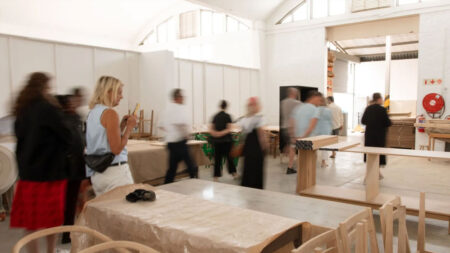
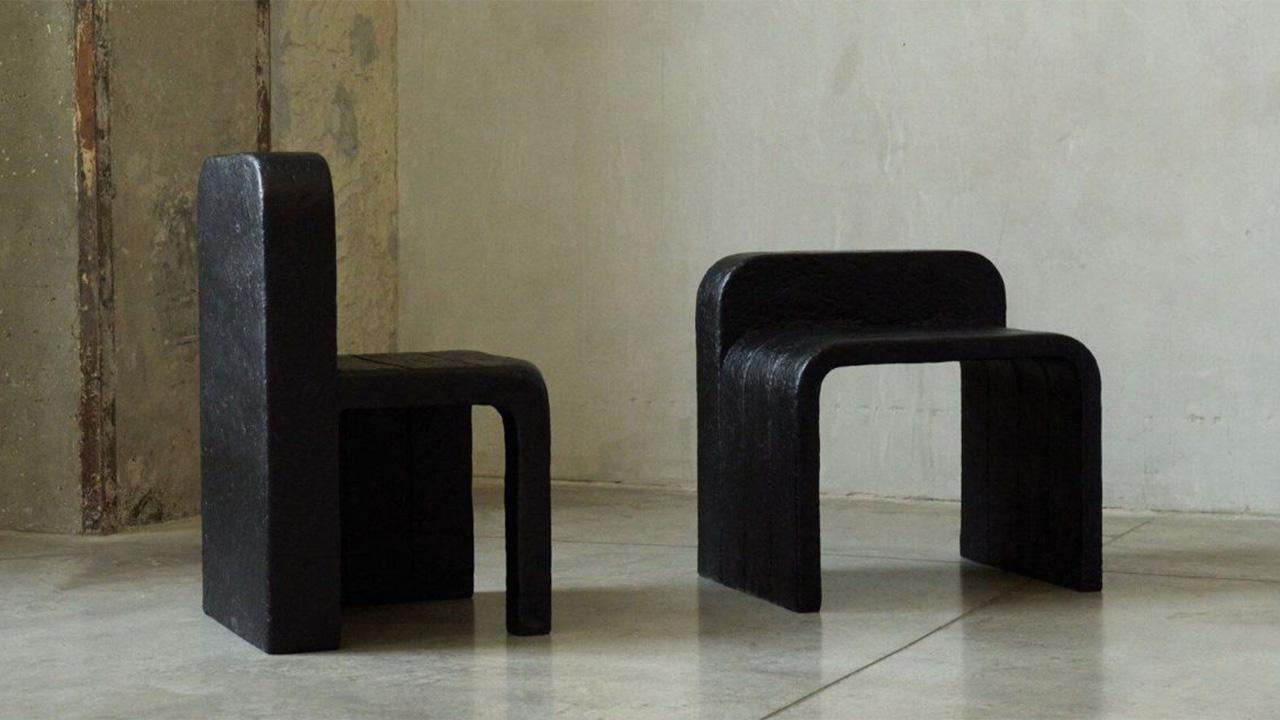
Olga Petrova-Podolskaya: Recycled paper pulp allows me to work with form as sculpture while maintaining ecological responsibility and structural strength. Inside, the objects have a plywood framework. This material also conveys textures reminiscent of historic plaster and certain everyday objects from the past, such as traditional metal cookware.
It makes it possible to create visually massive forms that remain tactile and warm. Working with it requires craftsmanship and a slow process, which is fundamental to my practice. The workshop we collaborate with has specialized in this technique for many years.
HC: The surface of furniture made from recycled paper pulp appears stone-like or weathered. How do you achieve these textures and ensure durability?
Olga Petrova-Podolskaya: The textures are created through multilayered handwork with the pulp and proprietary protective coatings. This is not an imitation of stone, but a result of the material itself and the process of shaping it.
In its properties, the material is closer to a composite. It is designed for long-term use in interiors and gains character over time rather than losing it. And again, the internal structure is plywood-based.
HC: You’ve said your designs aim to communicate silently. What is the most important message?
Olga Petrova-Podolskaya: When people look at objects from the ECHO collection, they may not consciously understand why, but they clearly feel a connection to ancient Russian architecture. I aim for objects that do not demand attention. The key feeling is stability and calm. The object exists in space as a support rather than an accent, allowing a sense of balance and slowing down in everyday life.
We thank Olga Petrova-Podolskaya and the KOD.objects team for making this interview possible.