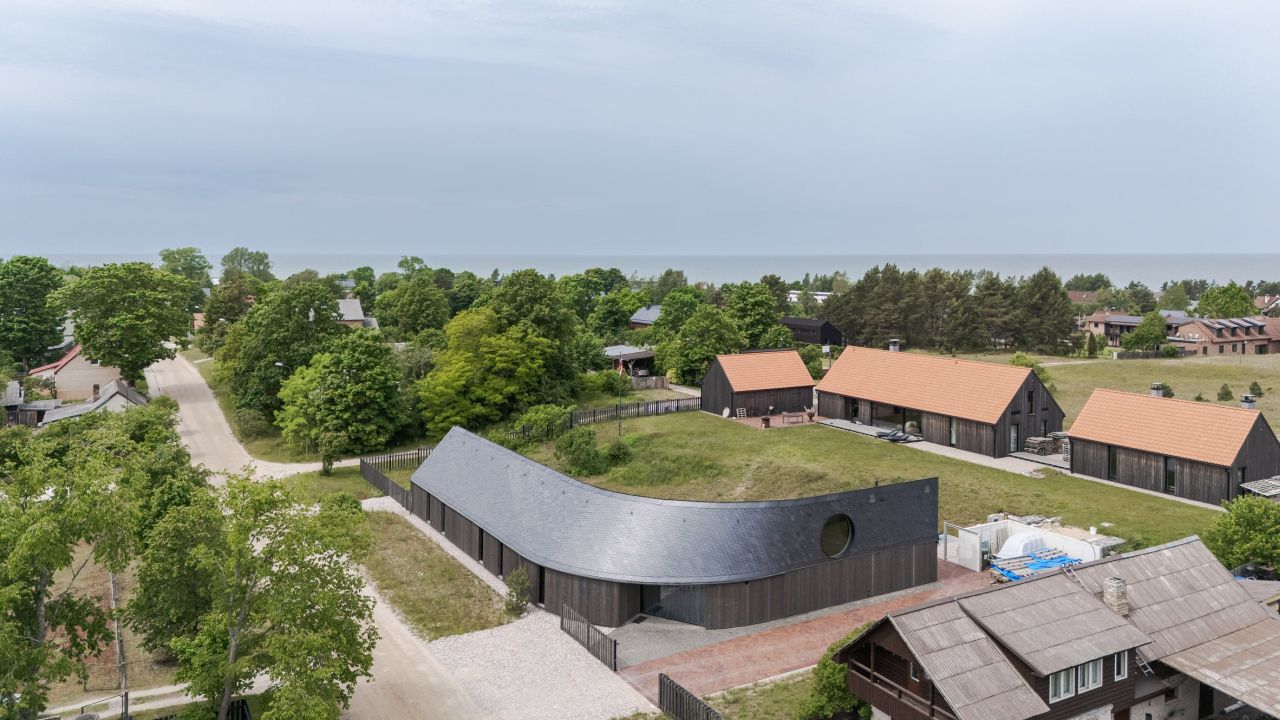
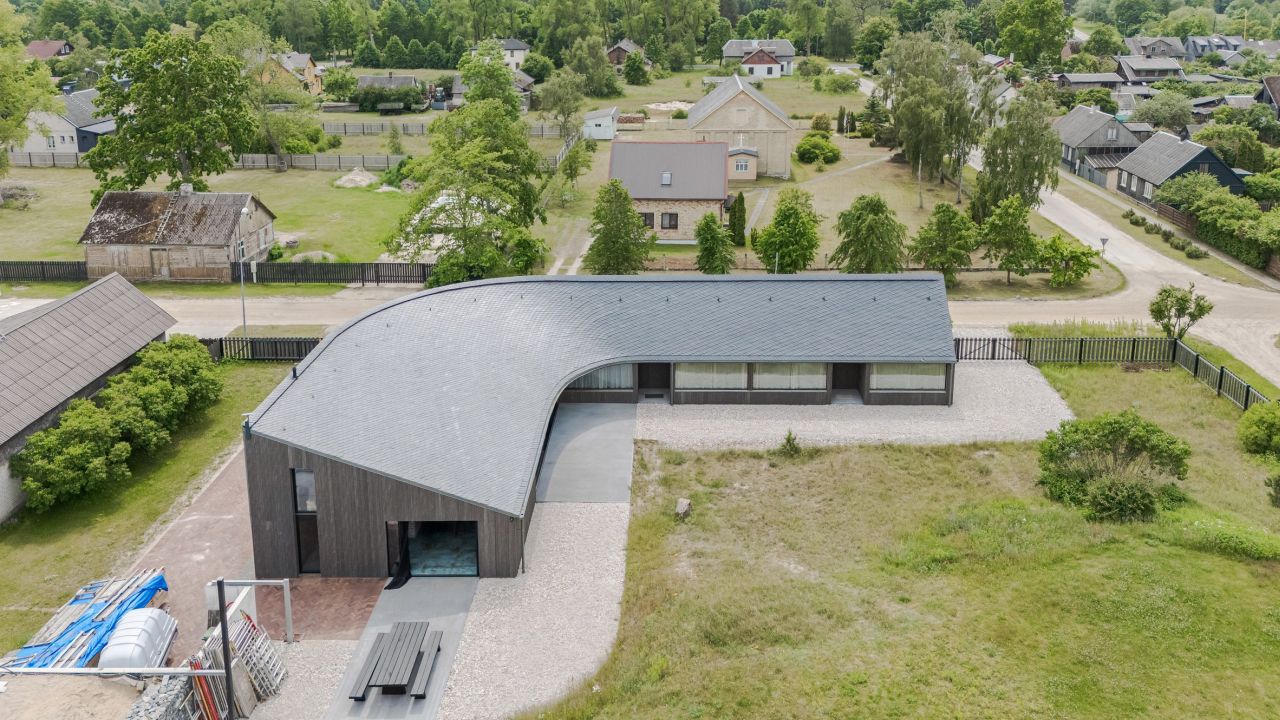
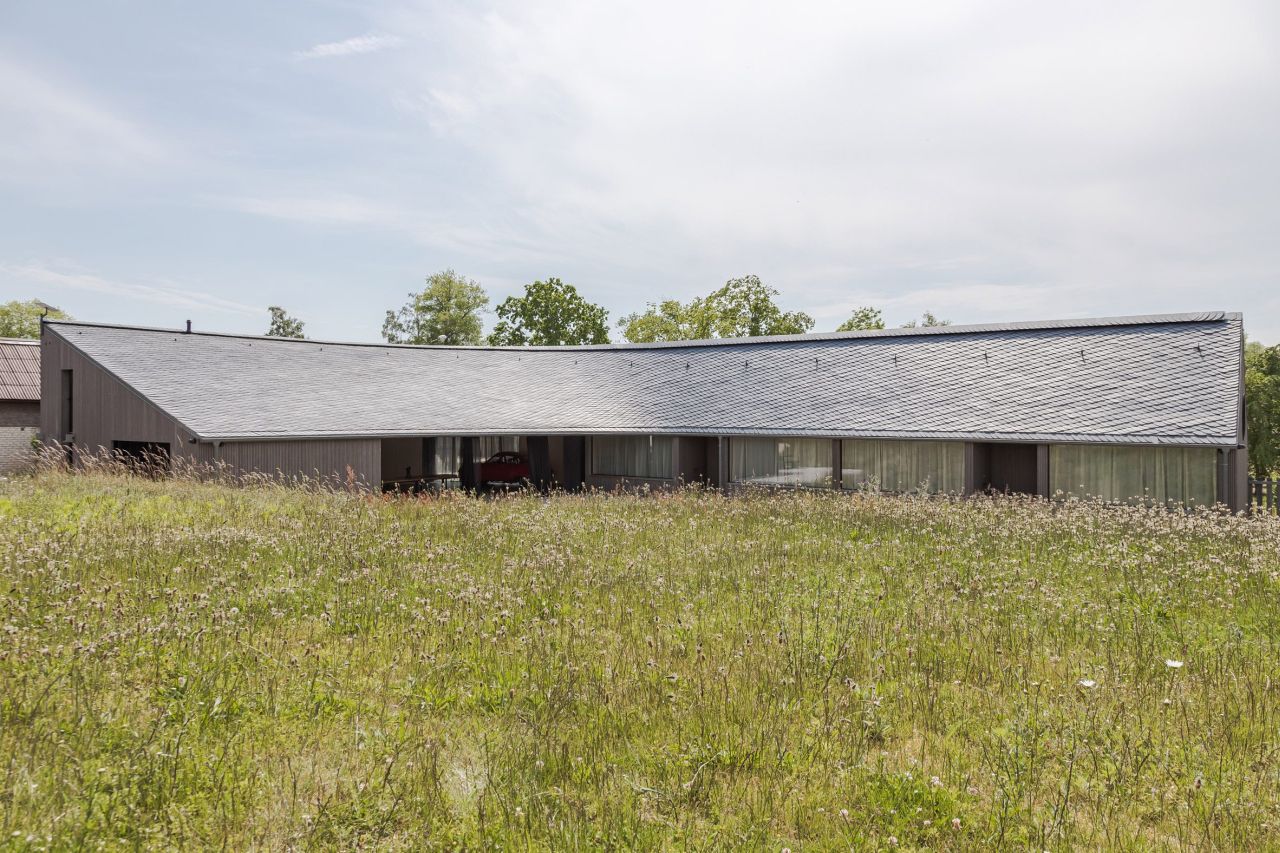
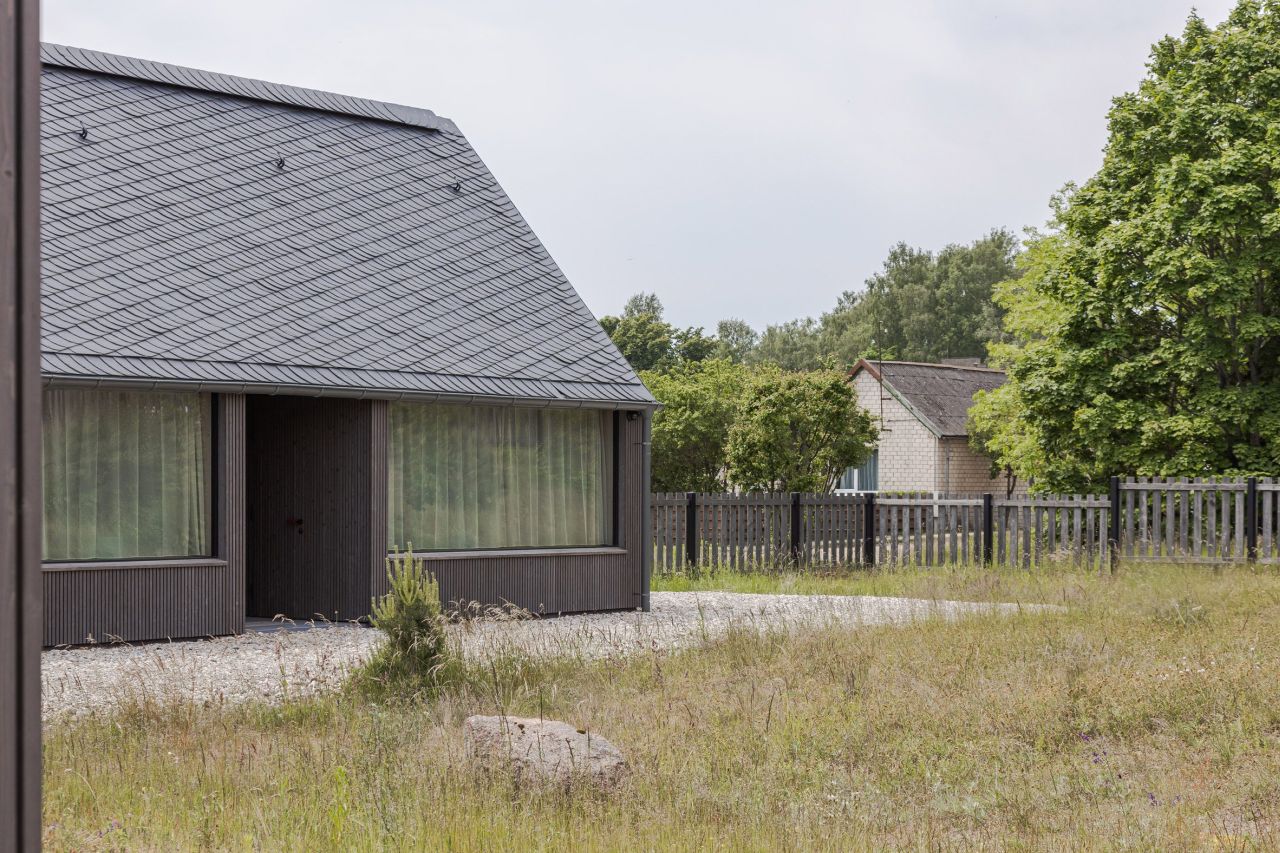
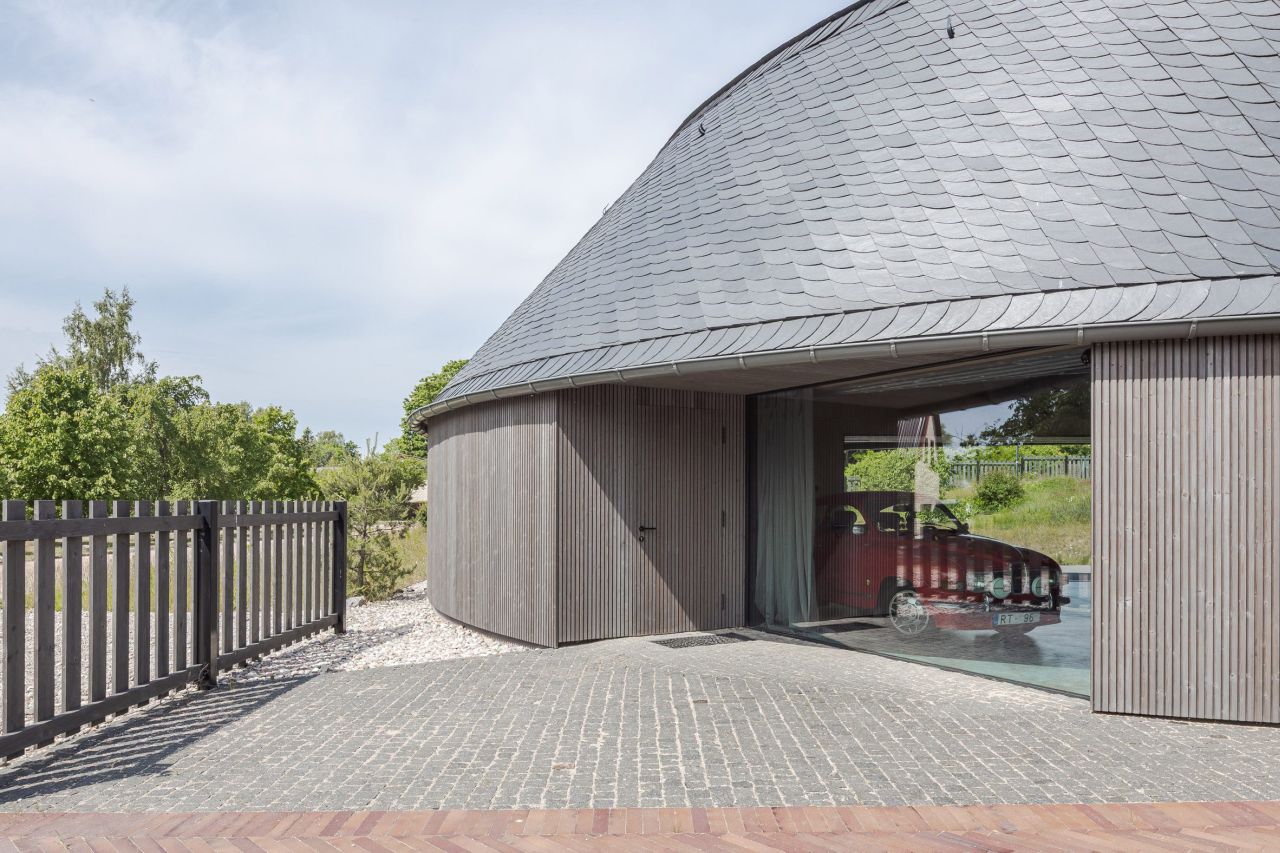
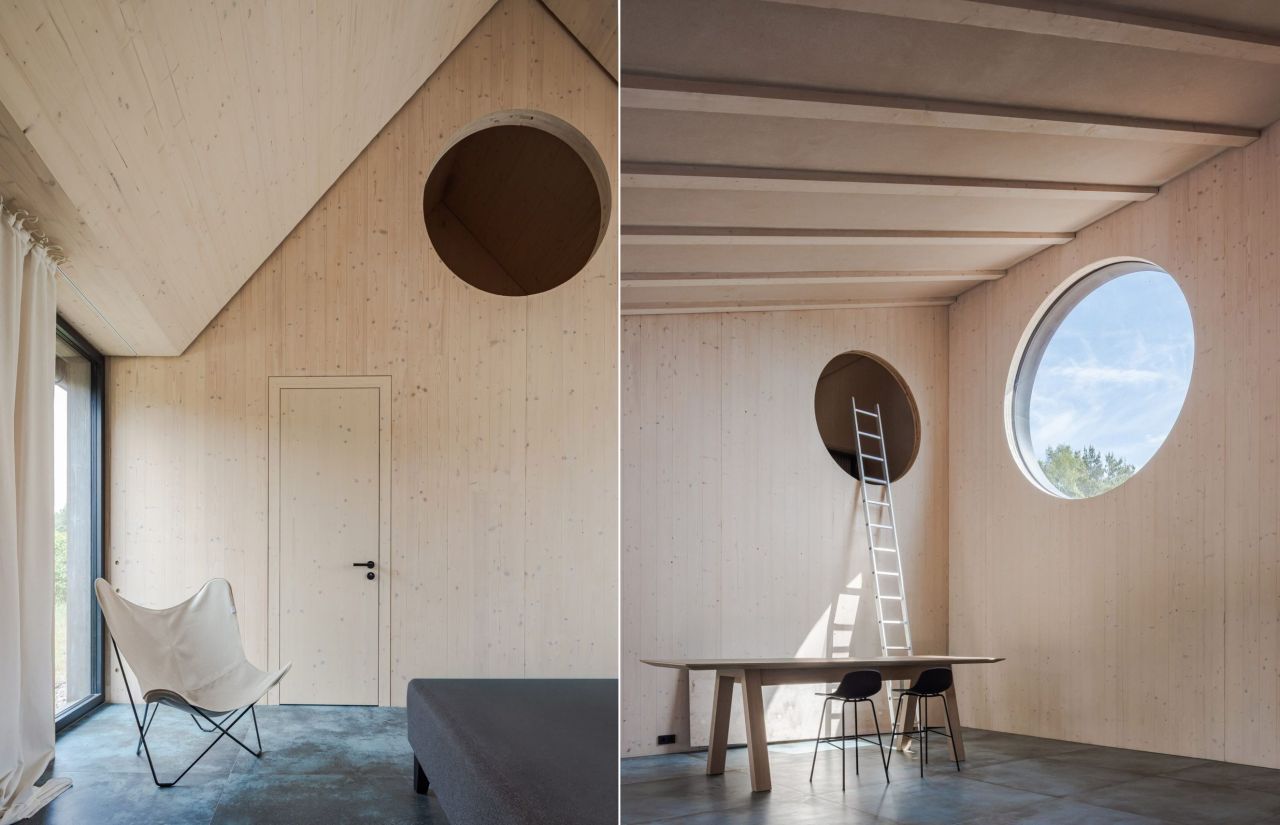
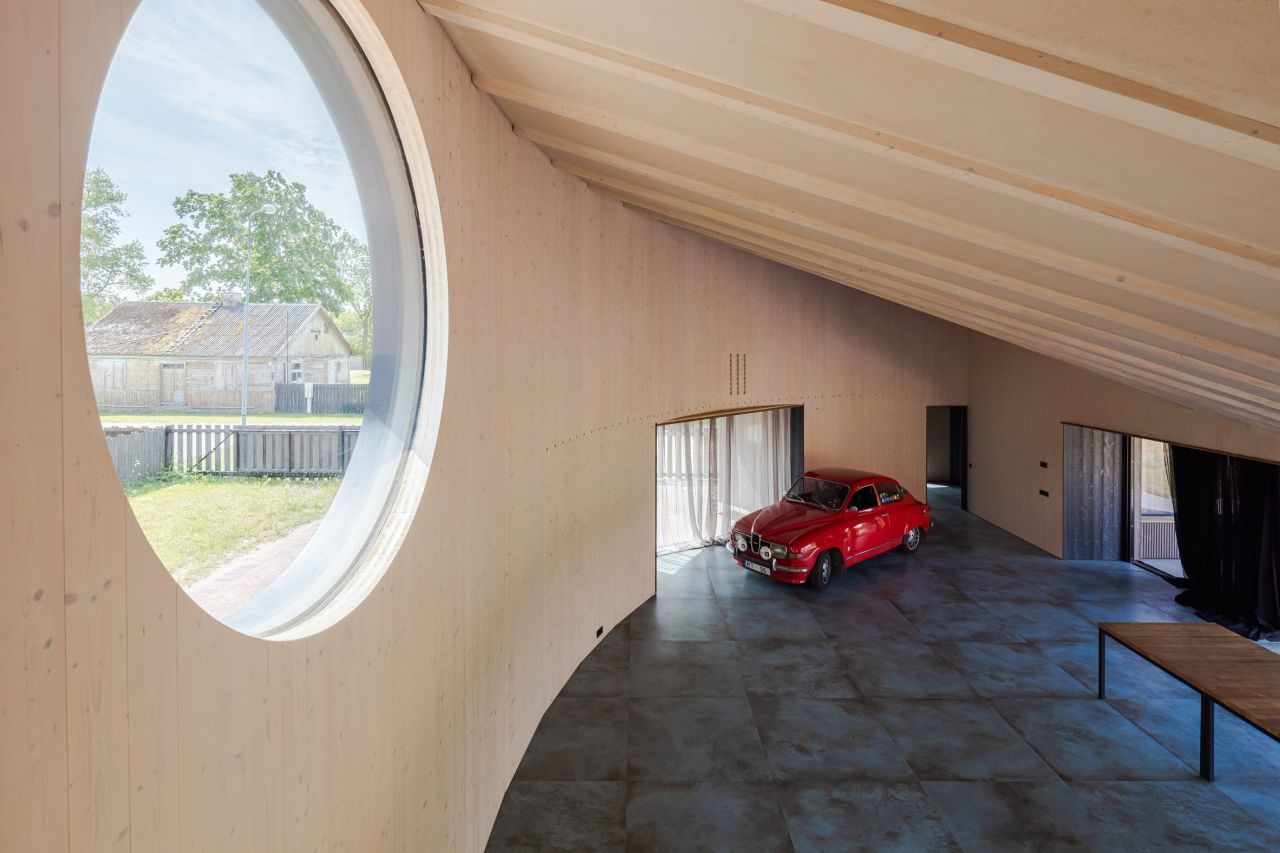
The Pāvilosta House serves as an extension to a Latvian home while following common seaside architecture practices. Designed by the local architecture firm MADE arhitekti, this L-shaped building features a twisting, slate-clad roof that mimics the sand dunes shaped by the Baltic coast’s wind and waves, while its overall form pays tribute to the region’s local architecture.
With wood and concrete construction along with the slated roof, the house functions as a part of the surrounding seaside landscape. It not only respects the street view but also the traditional building profile. Its dynamic geometry even pays tribute to the powerful natural forces of the region.
As explained by the designer, “The architectural concept of the Pāvilosta house lies in the in-between space.” Featuring traditional gabled forms, the house represents Pāvilosta architecture by incorporating materials and elements that respond to the sea and wind.
As clarified by the owner, the house must maintain spatial qualities while also relate to the emotions related to life by and on the sea. In simple terms, the building must benefit from sea breeze along with the serene views.
There is no doubt the architecture of the house is influenced by the sea. The first thing to notice is the curved roof that feels as if shaped by the water and air just like they would have transformed the Pāvilosta dunes.
Also Read: This Cliffside Family Home is Shaped by Nature to Blend Seamlessly With Surroundings
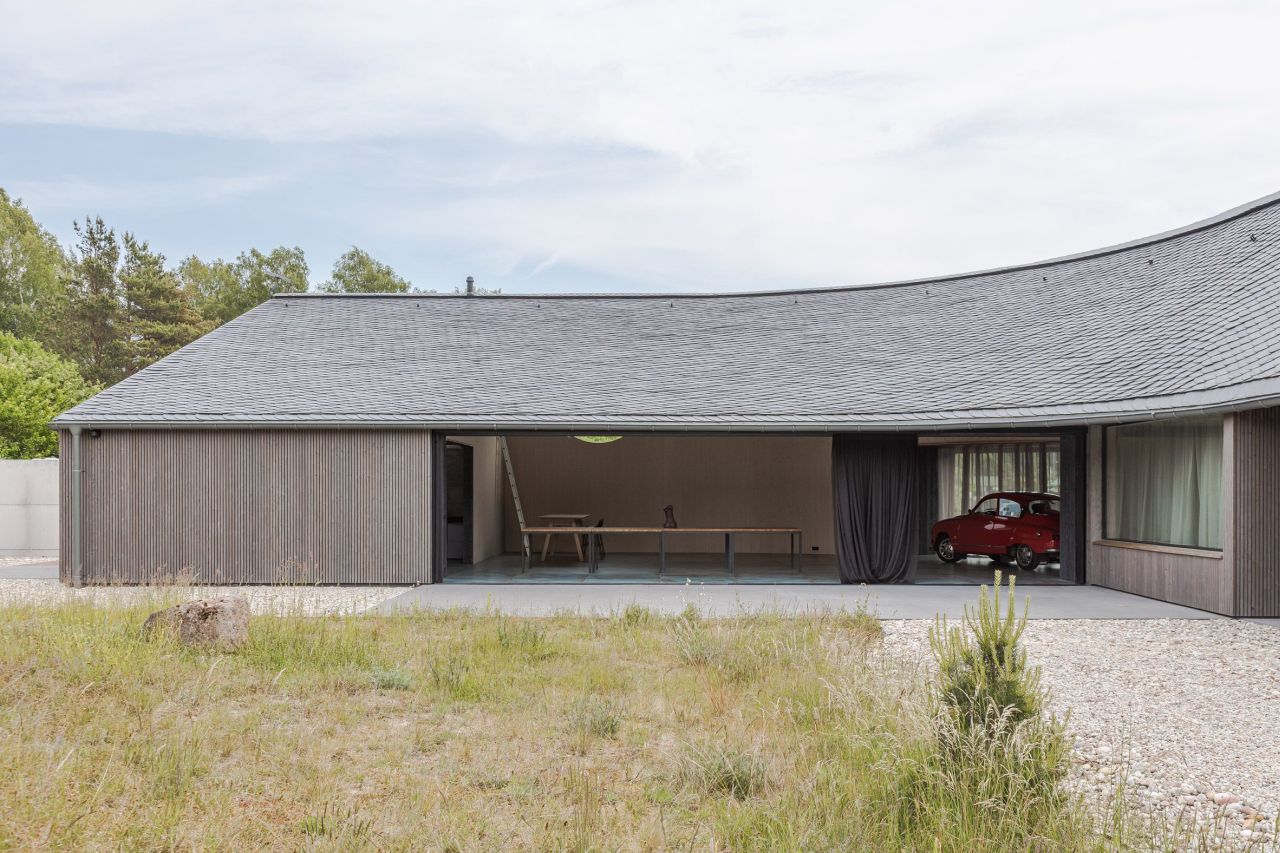
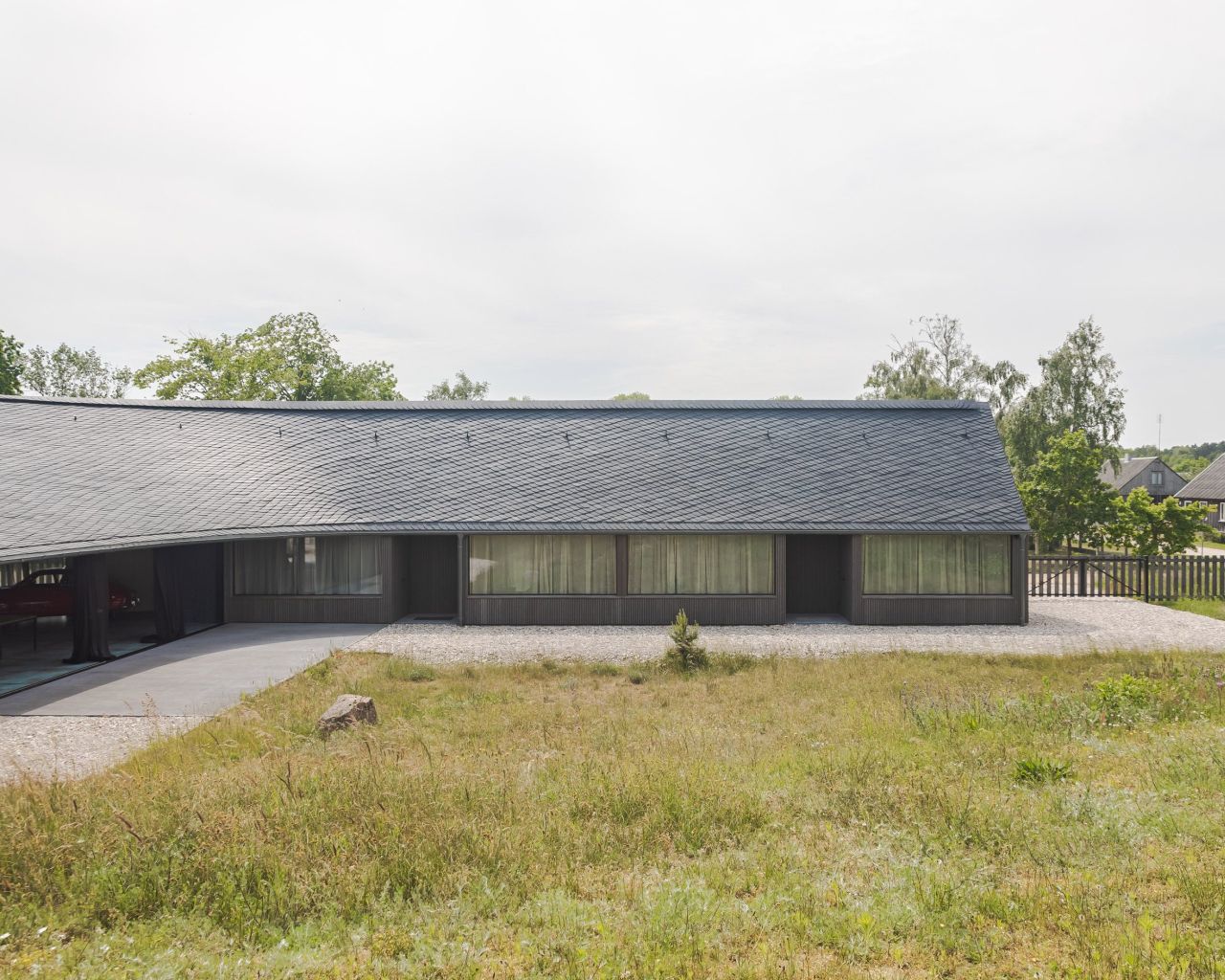
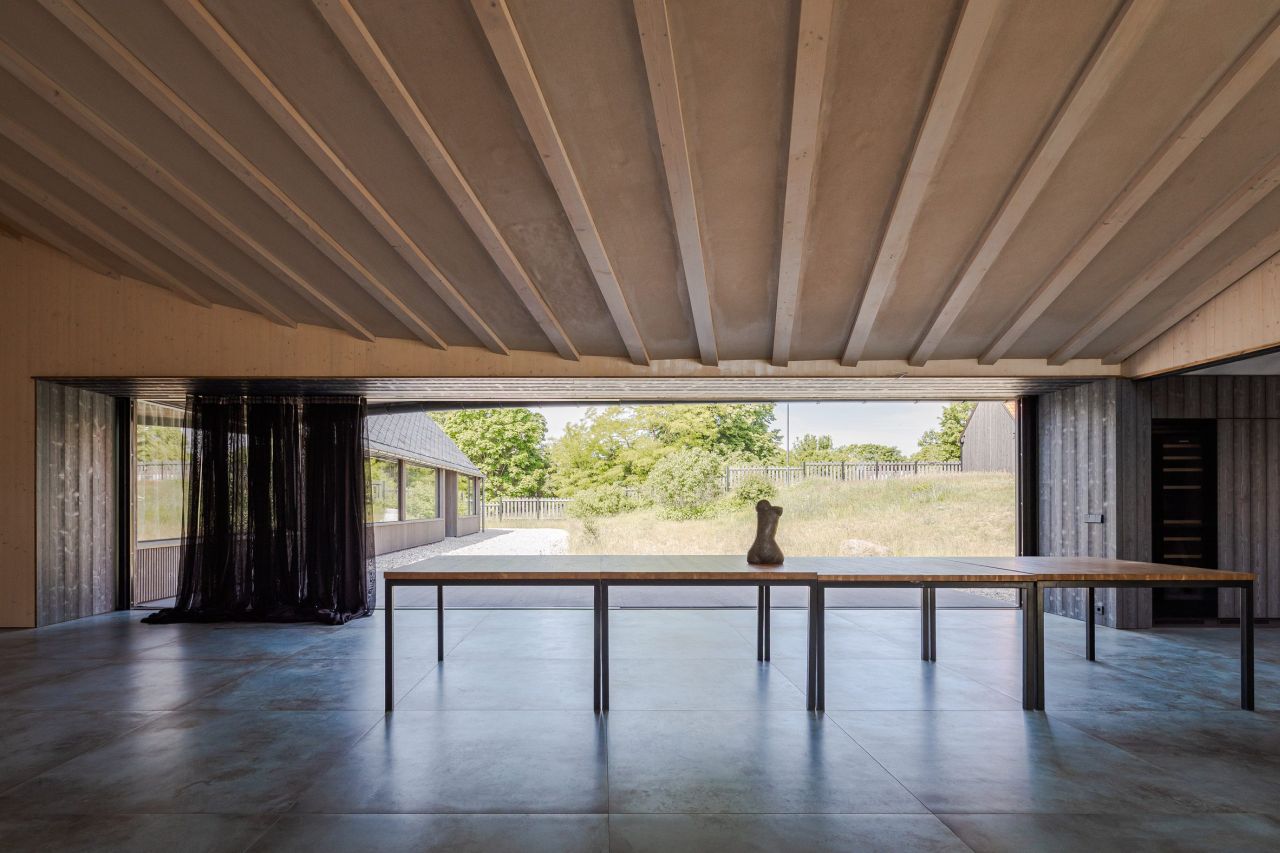
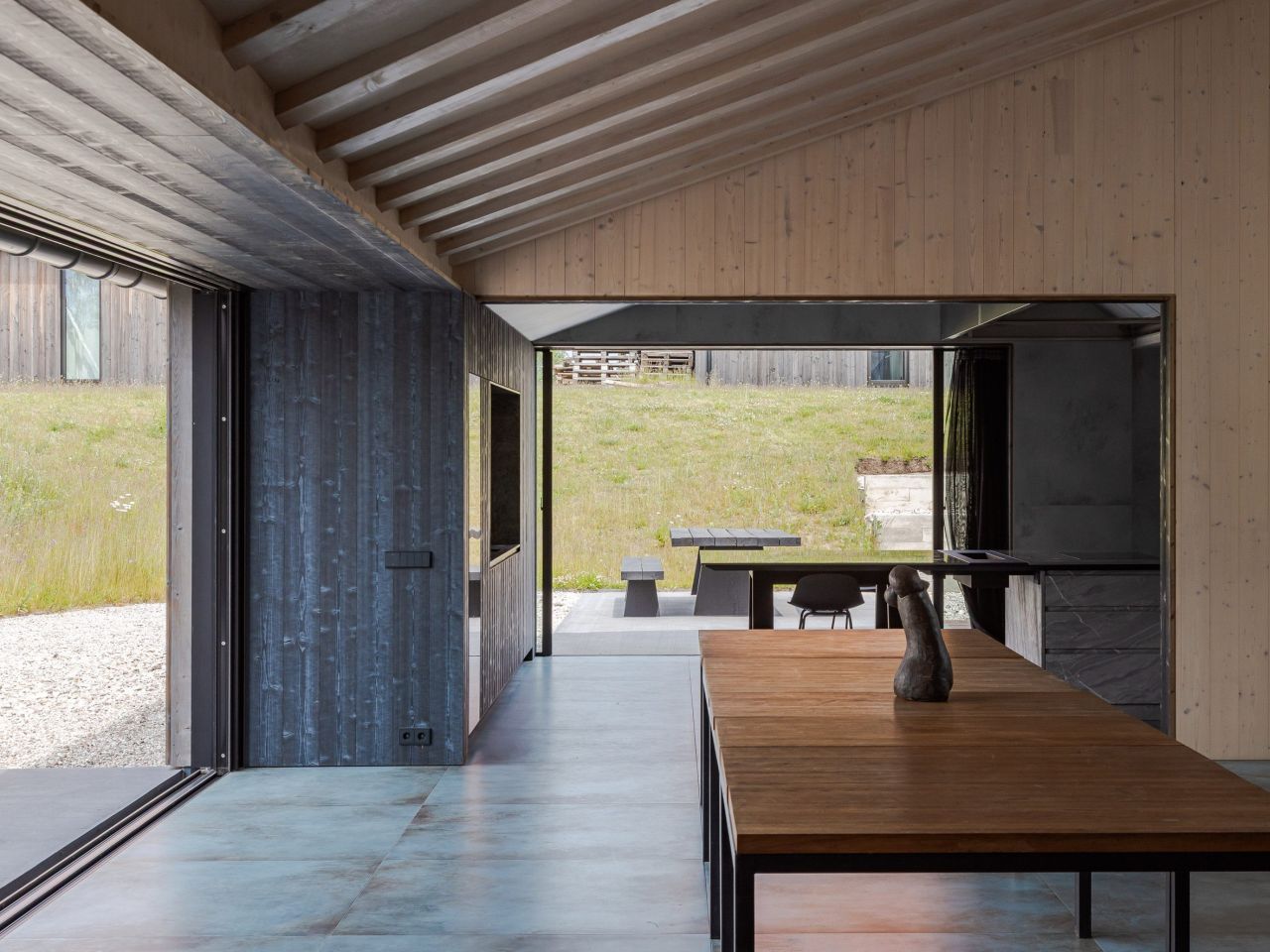
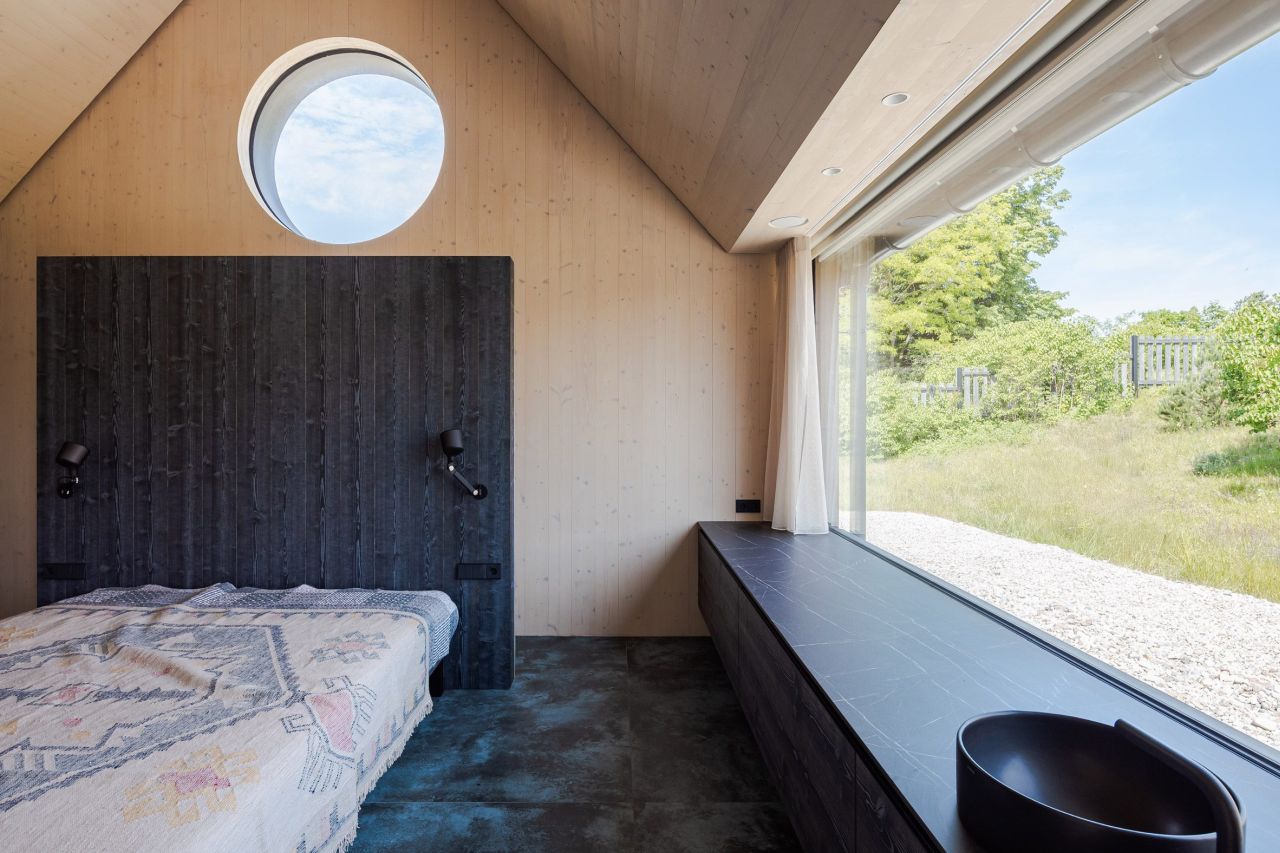
The center of the building is a large space for private activities while the kitchen is at the northern end. This area is designed with the concept to blend into the surrounding outdoors. It has a 10m wide window that opens into the courtyard, facing west. The Pāvilosta House has four bedrooms located along the street. They are grouped in pairs around two entrances from the courtyard.
MADE Arhitekti has emphasized on building a connection between natural landscape through floor-to-ceiling windows, dynamic geometry, and using materials like wood and slates. This residential project cleverly combines tradition with contemporary aesthetics.





Via: Dezeen