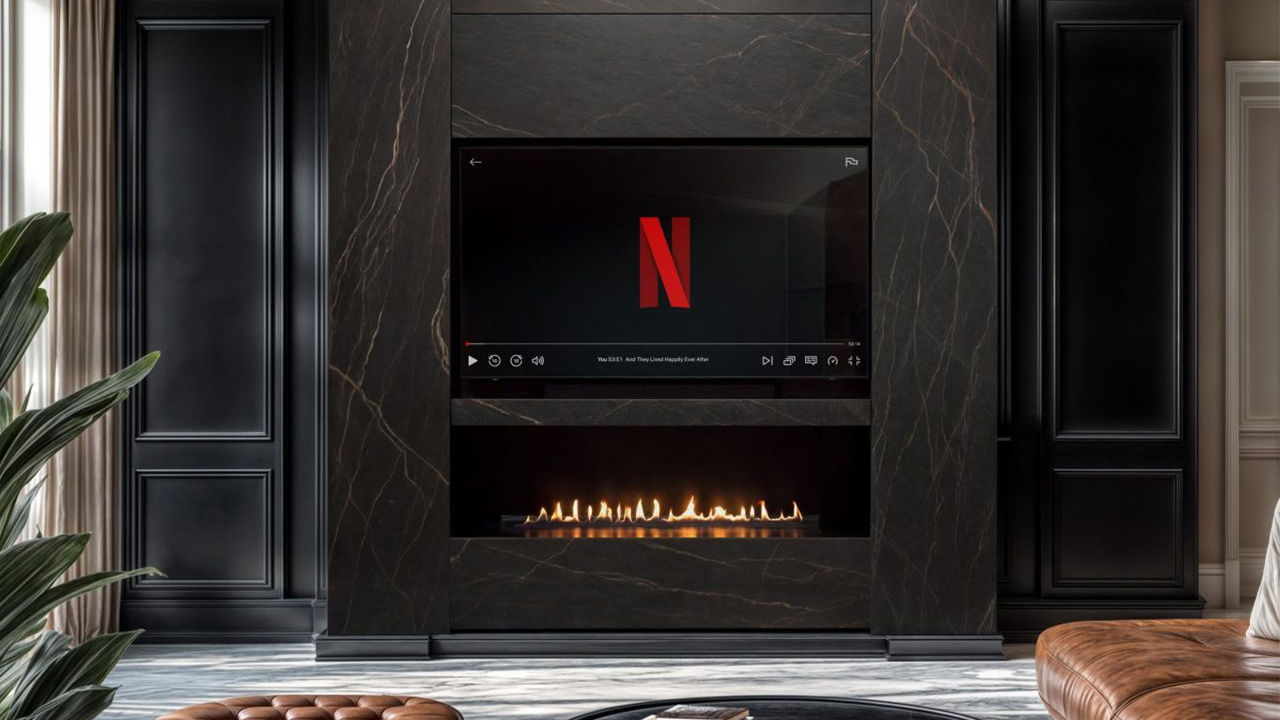
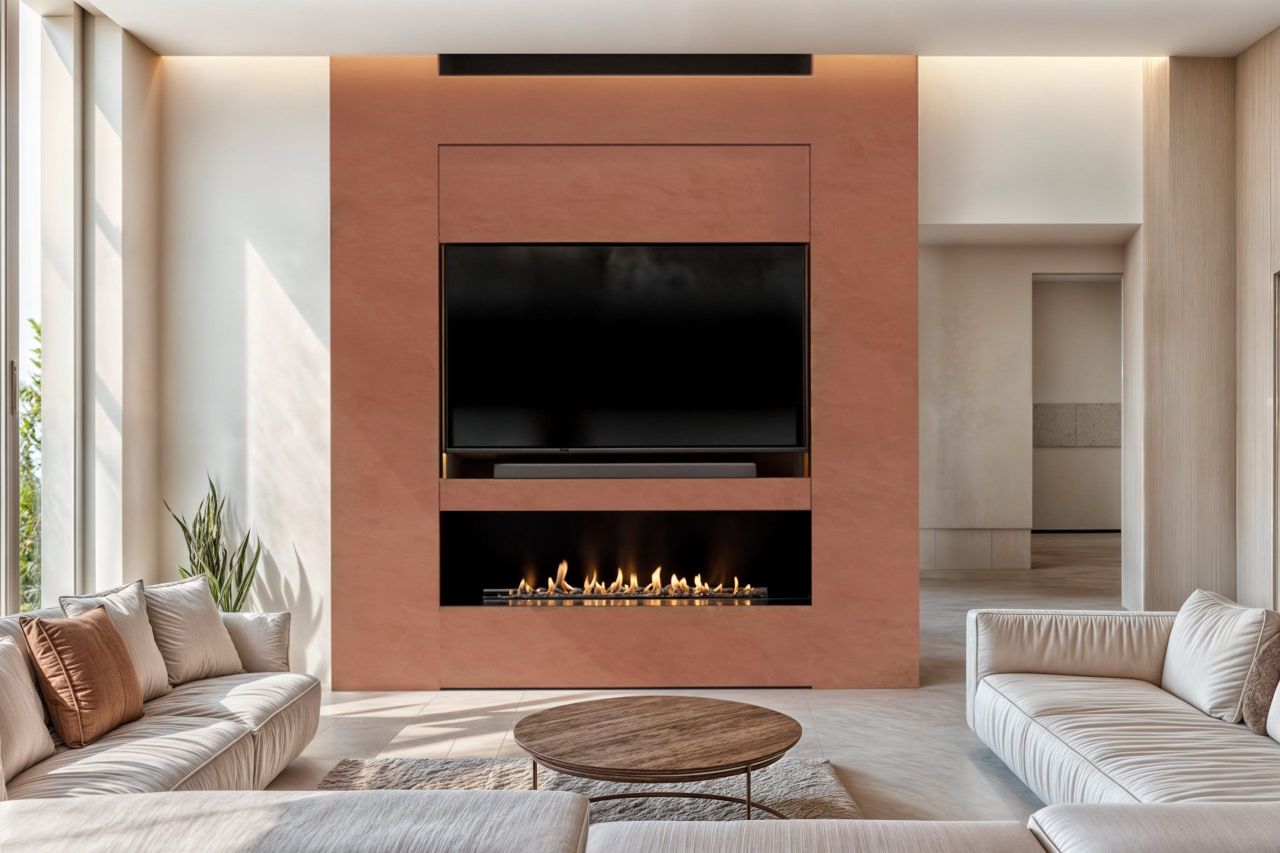
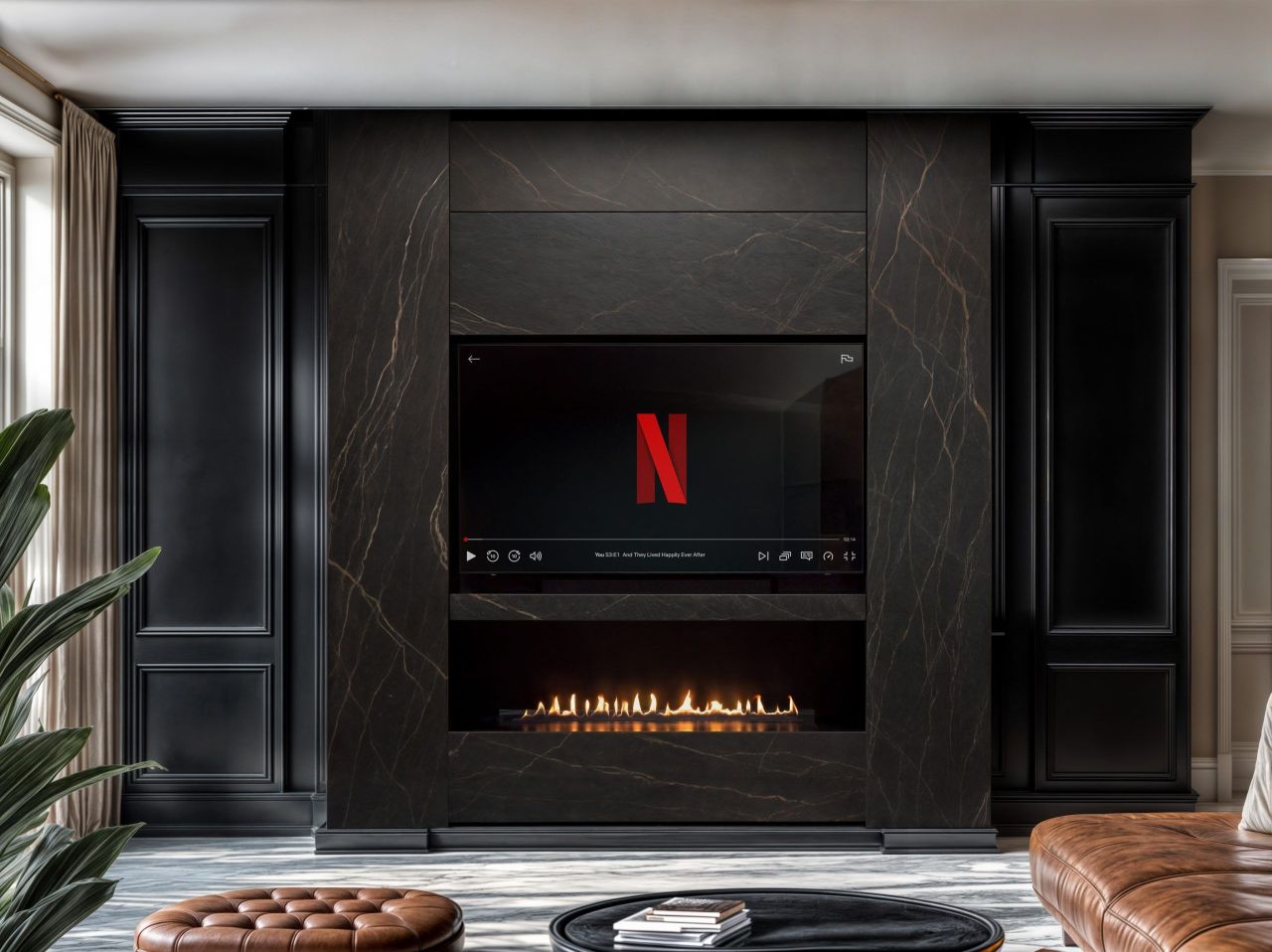
At Madrid Design Festival (MDF) 2026, Planika presented its vision of fire features as a project-based design element that carries the same language as the interior. The showcase focused on integrating fire technology into high-end architectural surfaces and reinterpreting the Mediterranean lifestyle through sustainable materials. The standout centerpiece of the Planika exhibit is the NEX Media Wall. It is a motorized multimedia system that combines a fireplace with a television in a single unit.
This innovative system is designed to solve the common problem of “TV over the fireplace.” It uses an automated sliding mechanism to adjust the screen height for better viewing angles. With a single command, the TV panel glides upward to reveal the fireplace or lowers to an optimal viewing height to prevent neck strain. Its chimney-free design allows flexible installation in locations where traditional fireplaces can’t fit. This opens up various spatial design possibilities for interior designers.
It can be configured with BEV (Burning Ethanol Vapors) for heat and a real flame, or CoolFlame Water Vapor technology for a visual-only effect with LED-lit steam. It is available in over 66 stone-like finishes from Cosentino, making it suitable for any interior design style.
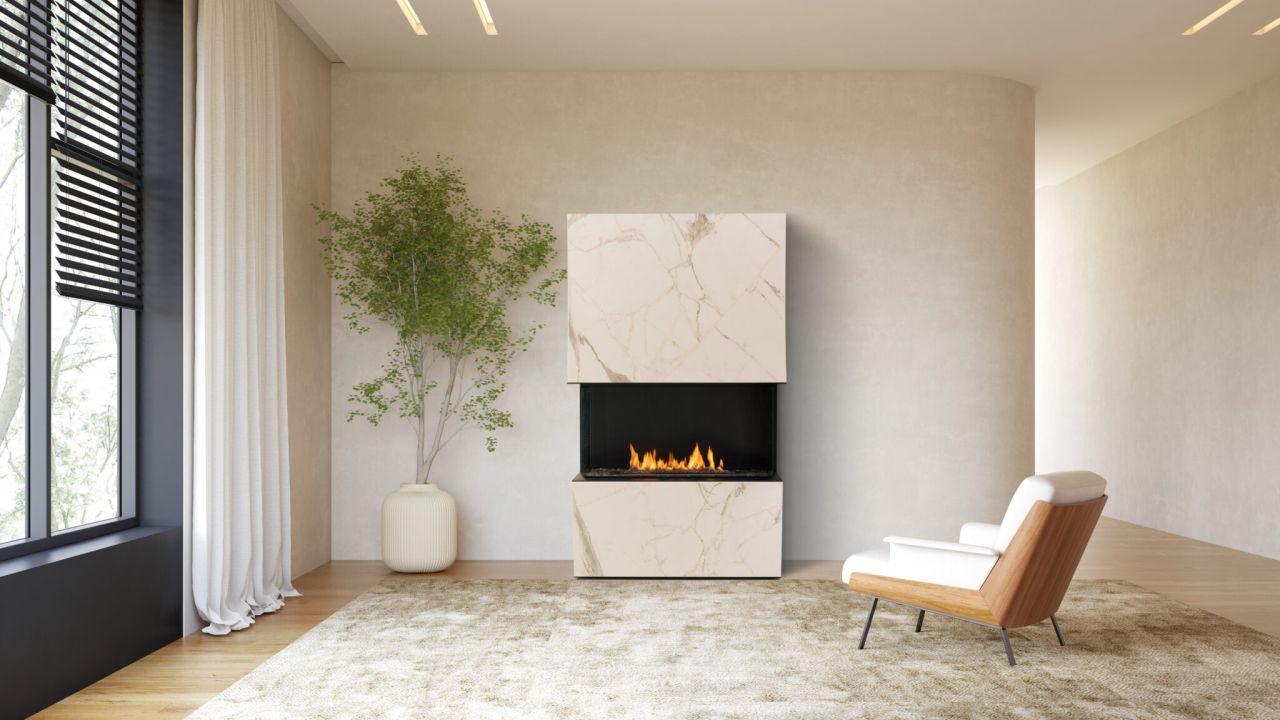
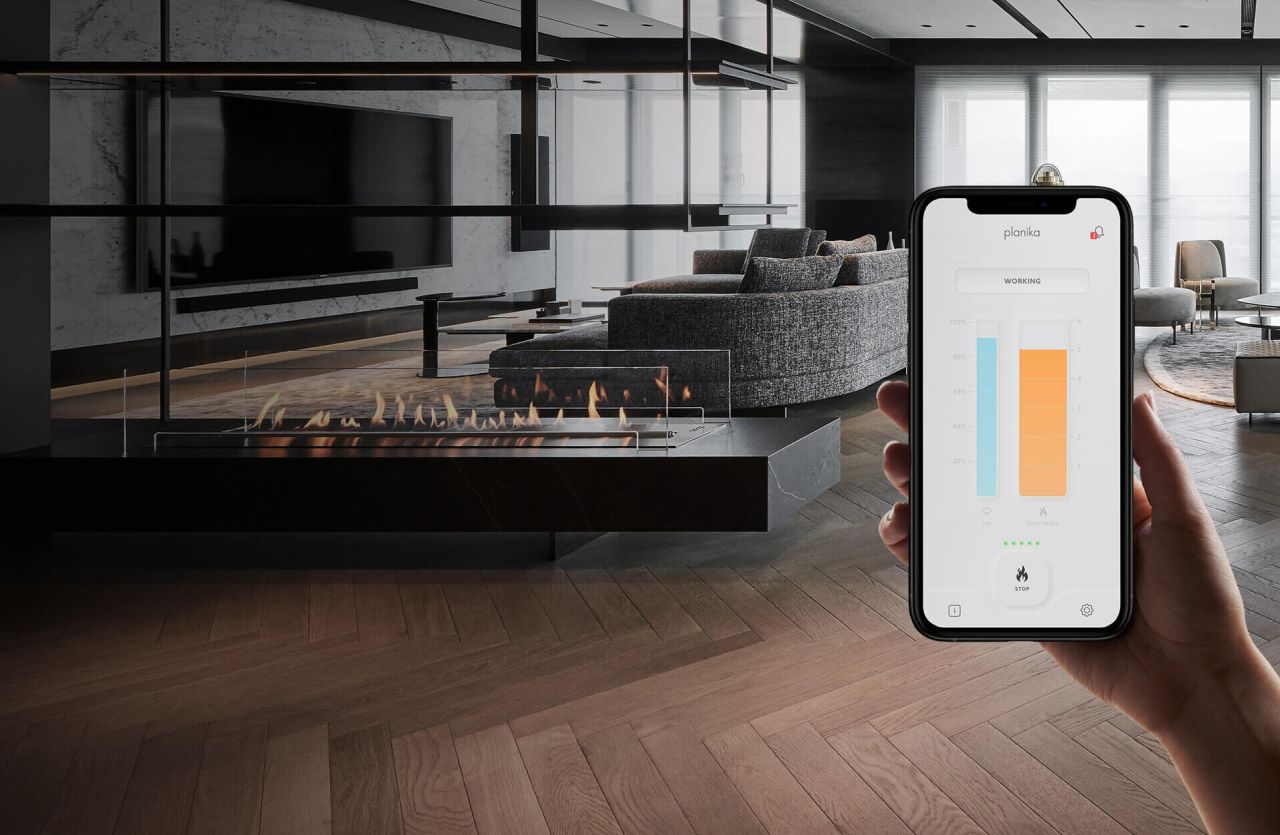
Planika also showcased the Fire Line Automatic (FLA) series of flagship linear burners, which can be integrated into custom furniture and architectural features. The FLA4 series was showcased with new sliding glass panels for a cool aesthetic and integrated into monolithic stone mantels. It also featured upgraded precision sensors and smart home compatibility.
Also Read: Oval 80 Fireplace Mounts or Suspends to Become Centerpiece in Room
Planika was a key participant in the collective exhibition “Mediterranean Manifesto”, co-produced by the festival and Cosentino. The brand also hosted the “Fire as a design element” session during MDF 2026, which explores fire as a creative force and as a conceptual tool in architecture and interior design. The main idea was to understand the role of fire as a project-based design language.




Via: Planika