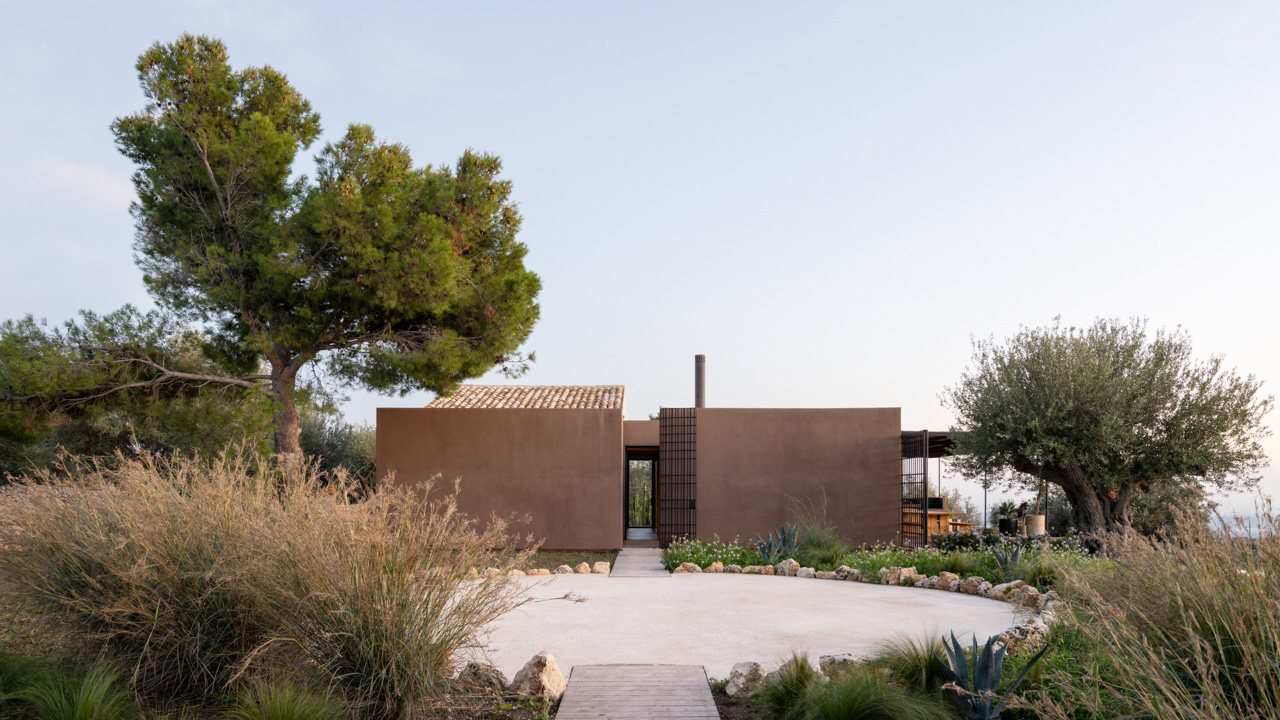
The Italian firm depaolidefranceschibaldan architetti (ddba) has created Villa Modda as a project that seamlessly integrates earthen elements within a modern shell. The project aimed to restore the ancient rural ruin and transform it into a modern residential architecture while keeping its historical charm intact. Situated in the UNESCO-listed Val di Noto of southeastern Sicily, the villa occupies the exact footprint of former agricultural stables, preserving the surrounding landscape by preventing the use of new land.
The Villa Modda gets its name from the local wildflower Modda, which the architects have used to symbolize the deep connection between the villa and its Mediterranean agricultural landscape. Embodying the philosophy of sustainable evolution in its architecture, the villa evolves with the changing seasons and landscape. Its shell features intentional discontinuities and custom iron grills, allowing natural ventilation and maintaining ideal indoor temperature, embracing the elements of passive design.
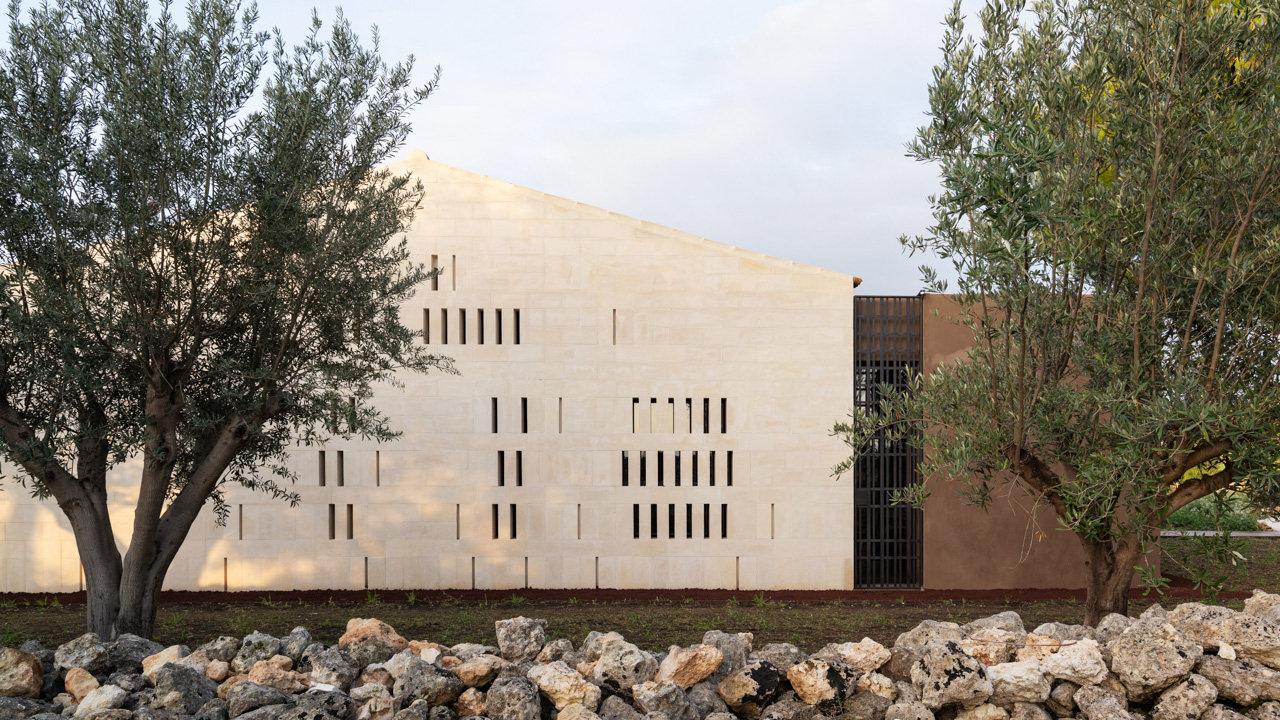
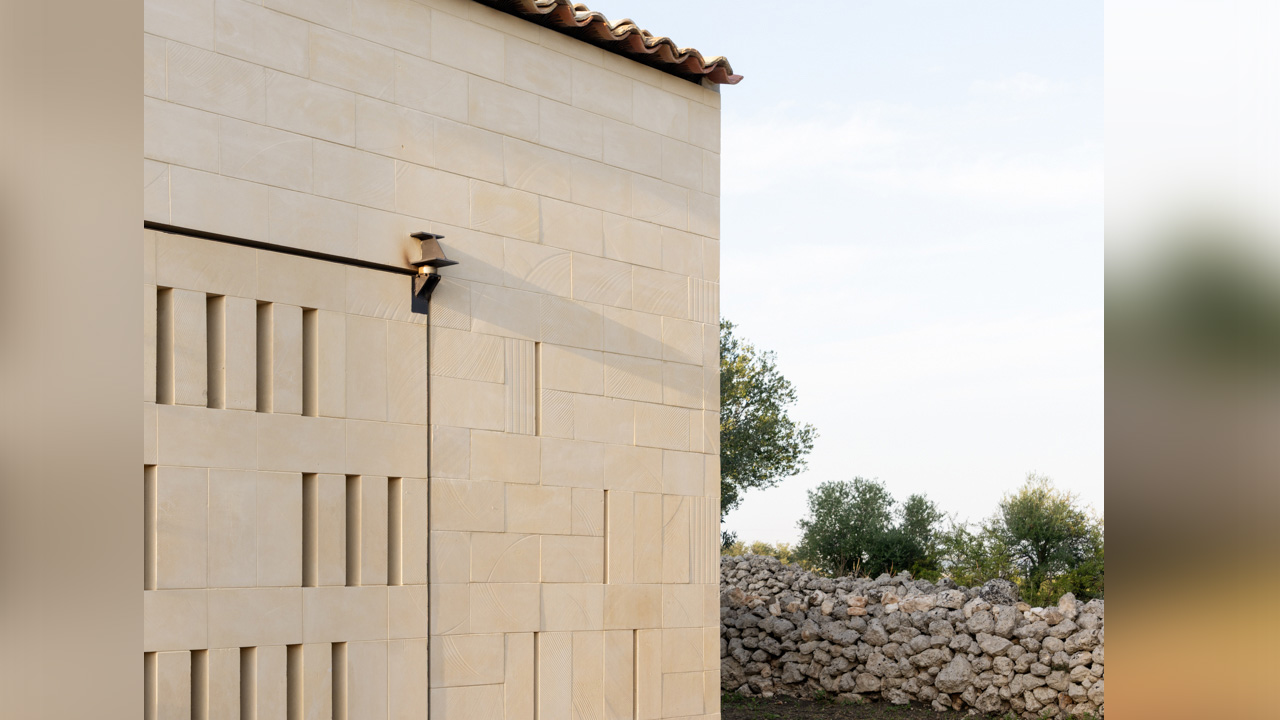
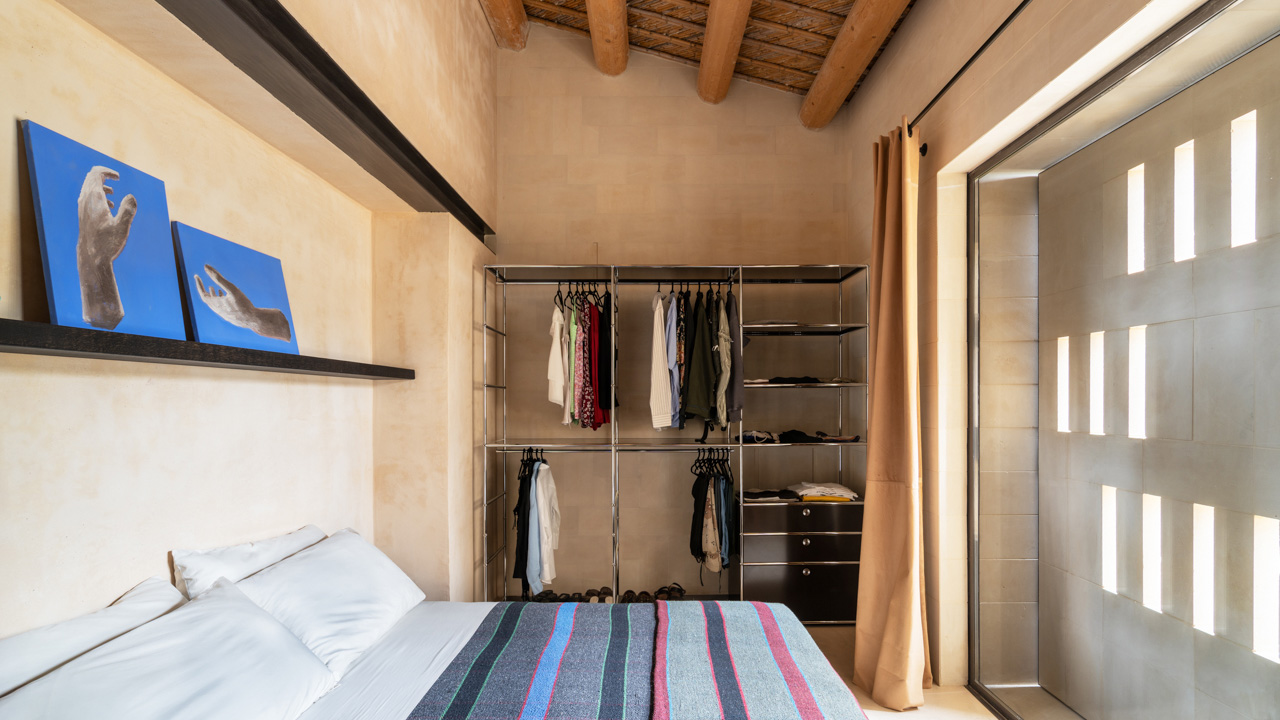
The original stable was restored by cladding with Noto stone blocks with discontinuities in its stonework, creating a rhythmic interplay between light and shadow while giving a breathable filter to the building. Its double high-pitched roof forms a classic silhouette of farm buildings usually found in the Mediterranean region.
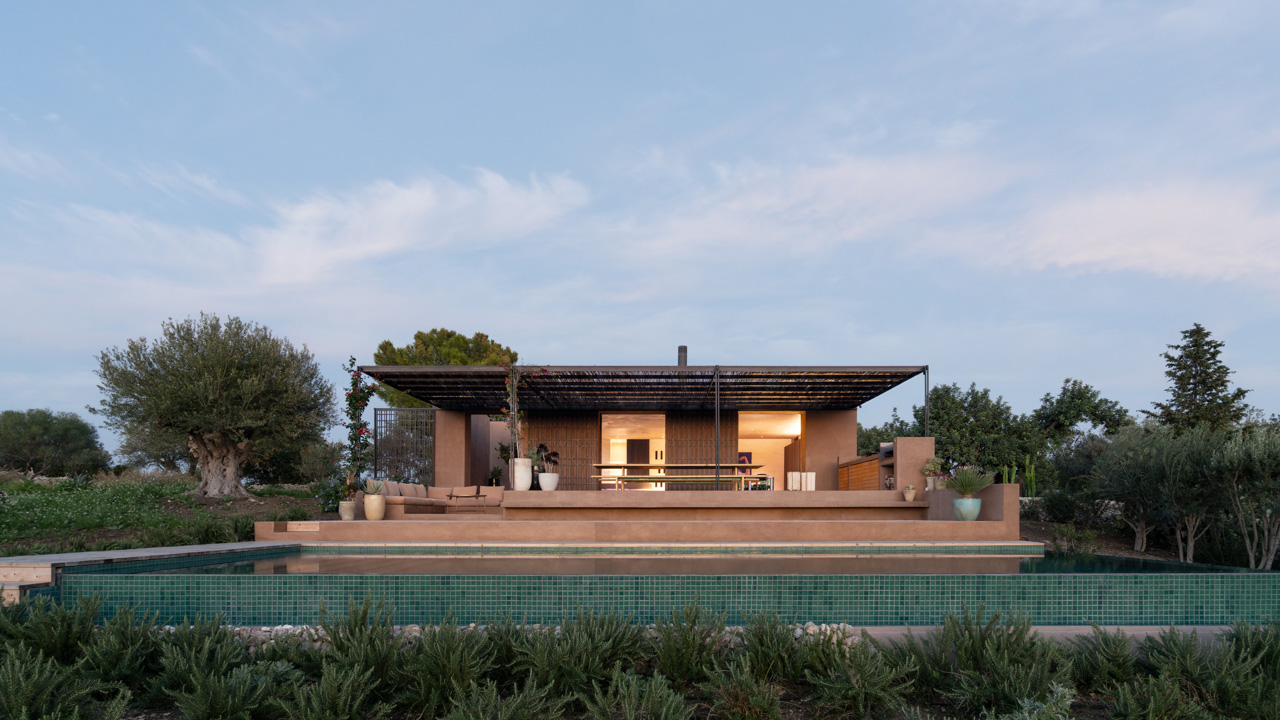
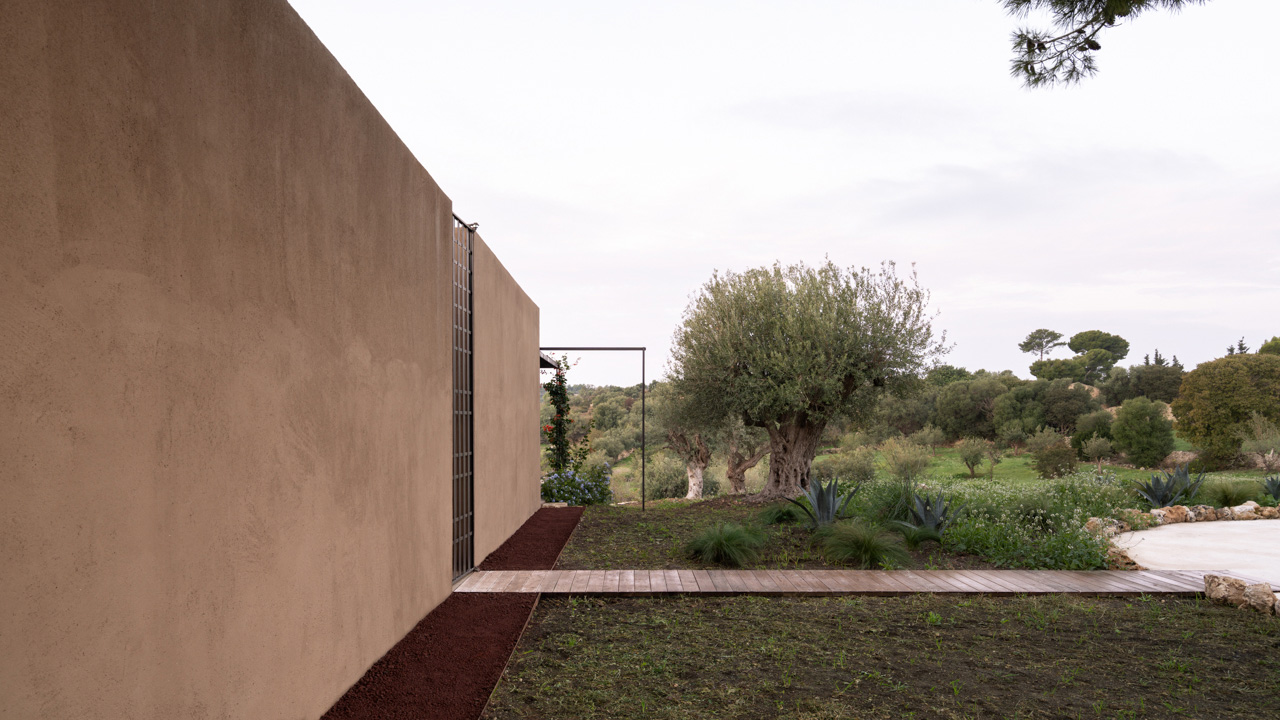
The new modern extension complements the original stable with its earthen Brown Cocciopesto cladding made with a mix of lime-based mortar with crushed brick, matching the surrounding carob trees and soil of Sicilian countryside. The primary function of the new extension was to provide modern amenities, which the original stable lacked.
The distinction in the material palette between the two structures creates a visual dialogue between the ancient memory and modern architecture. Together, they unify to form a space that blends historic charm with a contemporary utility.
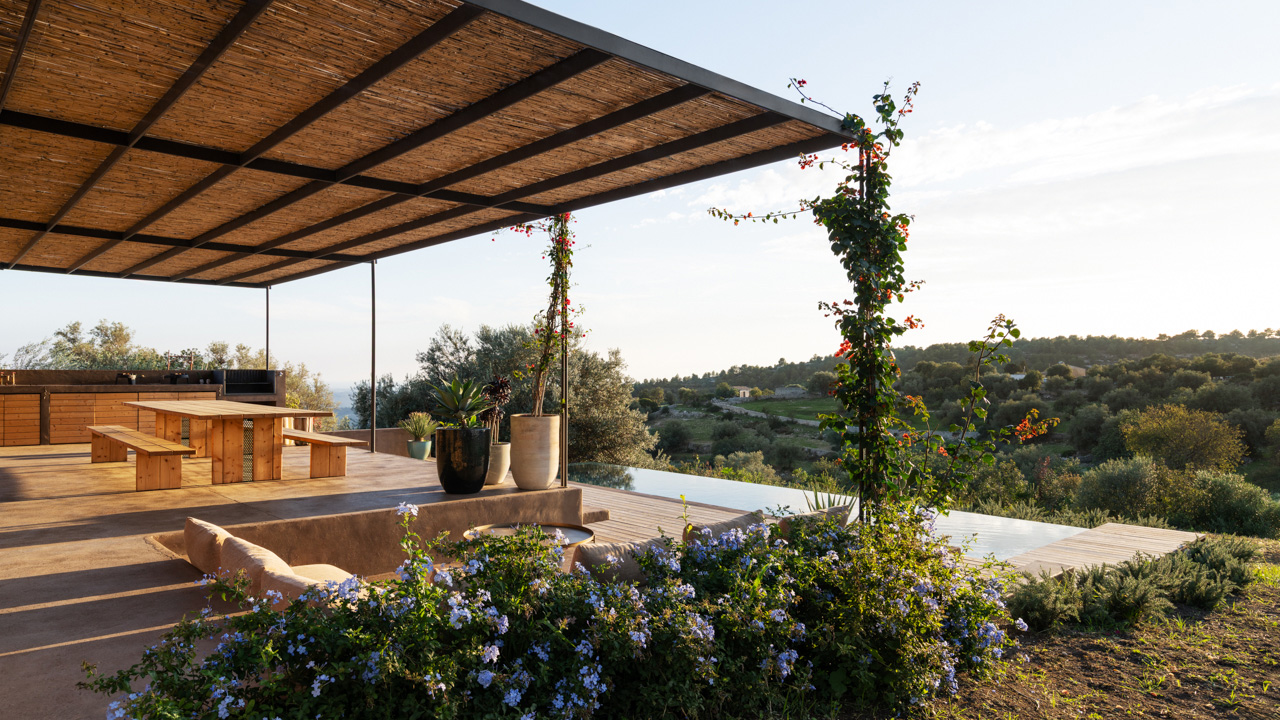
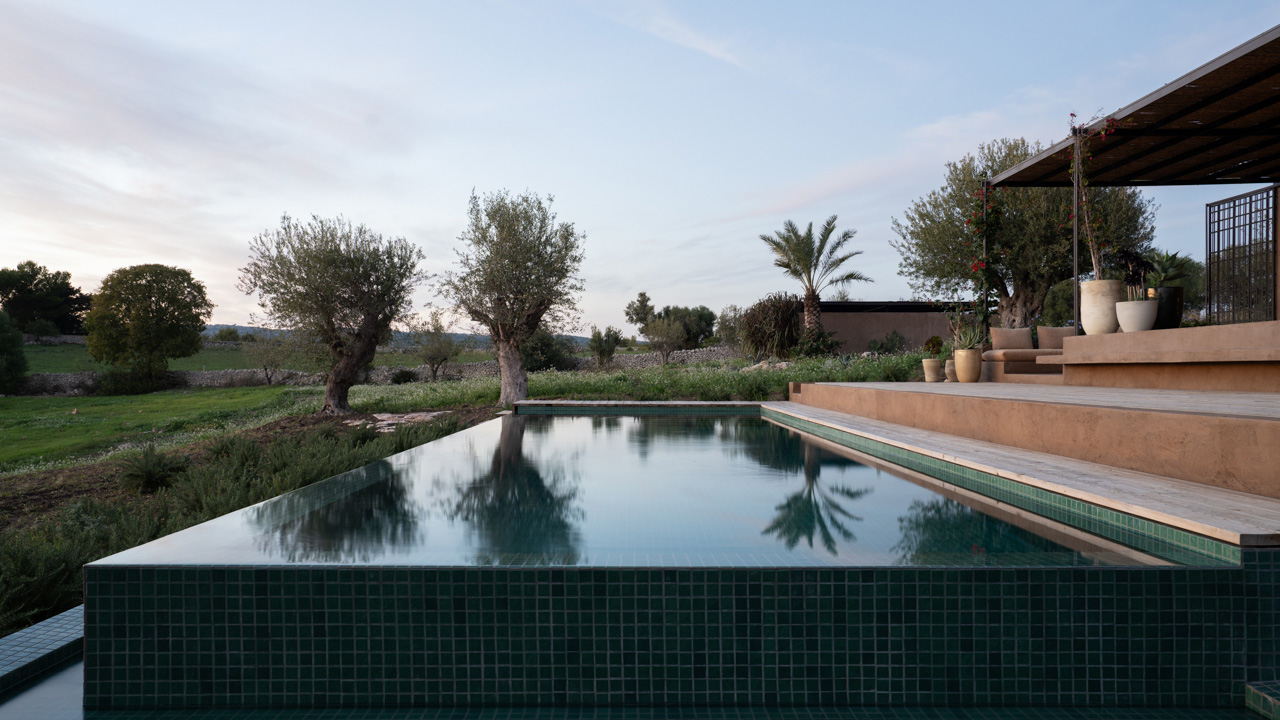
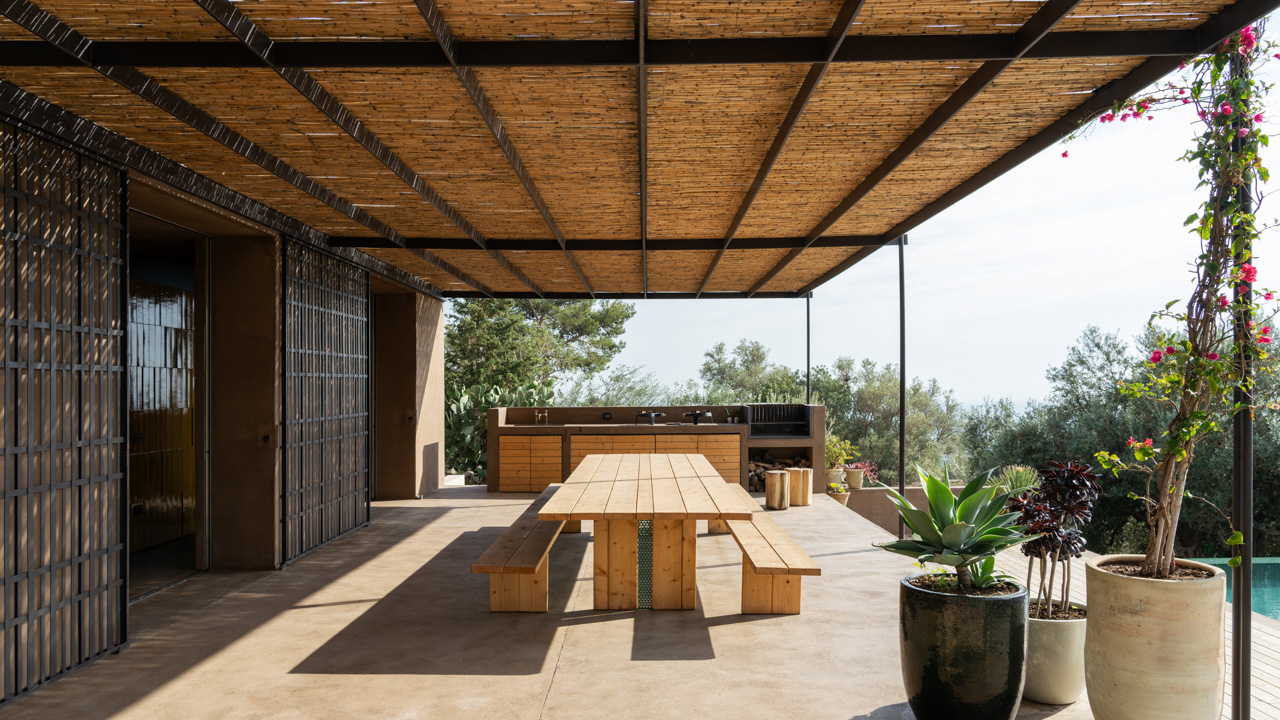
The outdoor terrace covered with a large pergola protects against the harsh sunlight and casts a shadow onto the surface. It forms an outdoor living area where you can lounge and dine while admiring the landscape. The terrace leads to the infinity swimming pool, which blends seamlessly with the hilly terrain and vanishes into the landscape, looking like a natural water feature rather than an artificial water tank.
Also Read: Prefab Douro Wood House Becomes One With Nature, Flaunts Living Roof
The emerald tiles of the pool complement the foliage and shrubs of the Mediterranean landscape. From a distance, the emerald pool appears like a natural depression with deep green hues, allowing it to naturally merge with the lush surroundings. The use of sandblasted cocciopesto battuto for the pool deck and walkways provides a rugged texture. It mirrors the organic feel of the ground and maintains the deep connection with nature.
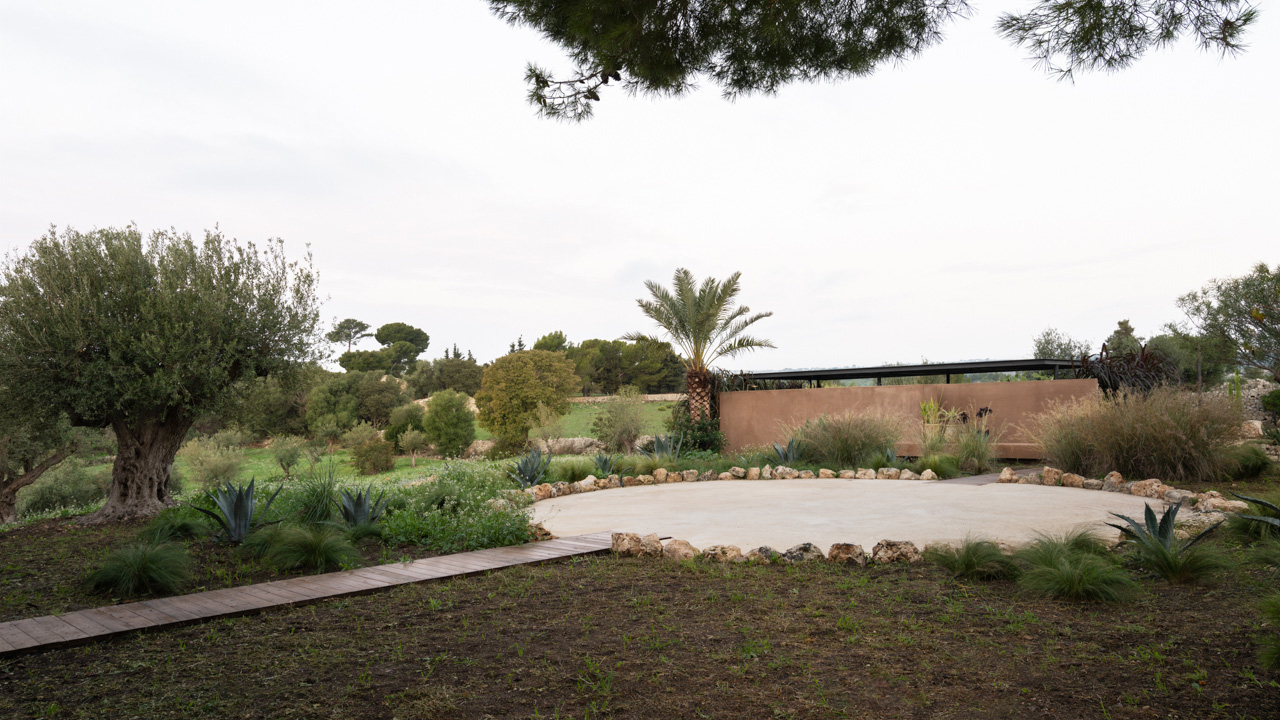
The circular kiln further accentuates the outdoor living experience by serving as a unique outdoor room. The kiln is a restored stone-drying platform surrounded by native flora, including Modda. This outdoor platform adds a sweet earthen charm to the architectural project. You can pause and admire the landscape before entering the villa.
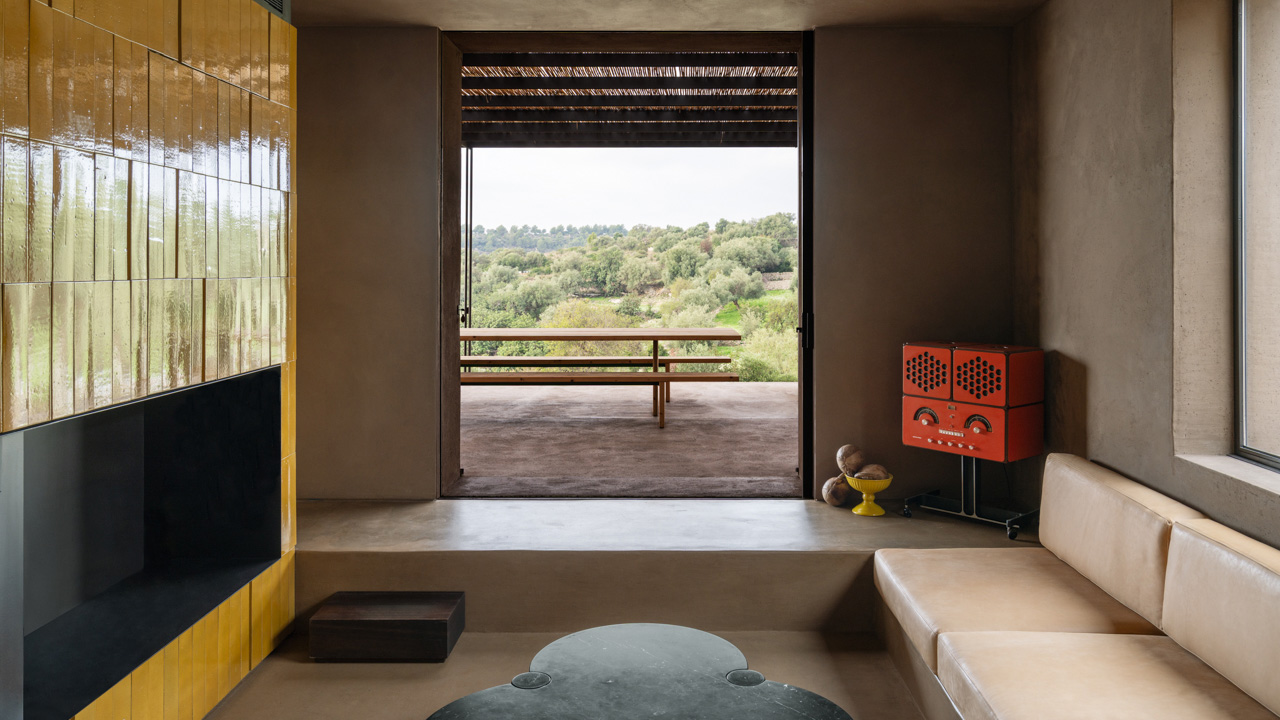
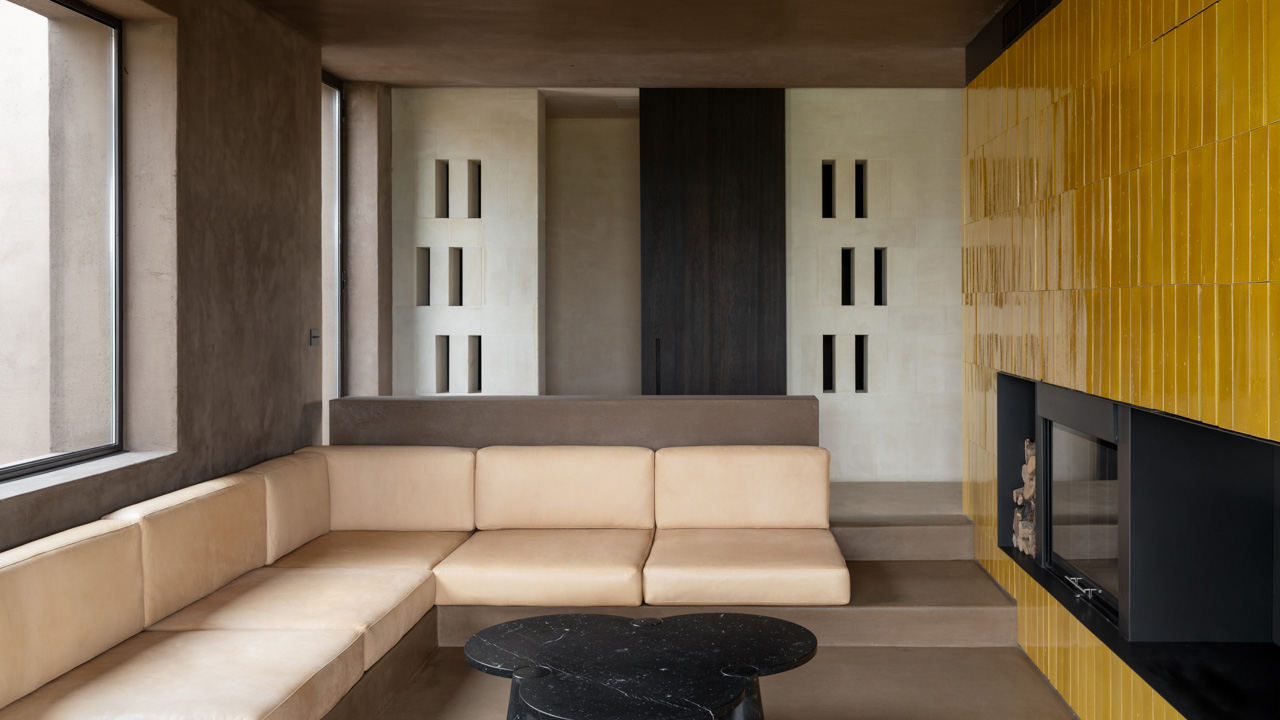
The interior of the house features an open-plan layout where different zones naturally merge. The glazed terracotta tiles in the kitchen and fireplace look like eye-catching centerpieces. It contrasts beautifully against the earthen tones of the floor and walls. The architects used the cocciopesto pastellone to provide tactile warmth to the Nato stone structure.
Also Read: Cabin-Style Cluster of Hotels Resembles Craters Around a 150,000-Year-Old Dormant Volcano
The 3,229 square feet space is split into two distinct wings. The original Noto stable serves as a private wing, containing a bedroom and other communal rooms. The thick stone-clad wing provides a quieter place where you can rest peacefully. The Noto stone provides warmth to the interior during winter and keeps it cool during summer. The modern extension forms the social wing, where a floor-to-ceiling open doorway merges outdoors with the indoors.
The Villa Modda is a stunning example of preserving the ancient structures by providing them with a modern touch without overpowering their identity. The use of the iron grilles and intentional discontinuities in the stonework naturally regulates the sunlight, airflow, and cross-ventilation without using any heavy machinery.

Via: arkitectureonweb