In a world where humans are relying on robots, AI-enabled appliances, and technological advancements for everyday chores, including cooking and cleaning, the 2026 edition of EuroCucina took us back to traditional ways of cooking. At Salone del Mobile, the event revived the art of traditional outdoor cooking with new kitchen designs that remind us why it is important to sometimes do things the old way.
Regardless of its location, the kitchen is an ever-evolving space. In recent times, it has transformed into an easy-going, appliance-reliant area to accommodate fast-paced lives where we seek to automate aspects of the process, whether cooking indoors or outdoors. Technological advancements in the kitchen industry have made this easier, albeit causing us to forget that the greatest joy of cooking is actually being in touch with your ingredients and going on a culinary journey with them. Instead, we have let our indoor and outdoor kitchens become riddled with apps, AI, and complicated tech.
When it seemed that traditional cooking was fading from the annals of modern life, which, by the way, has become a trending lifestyle for the new generations, now termed as homesteading, the 2026 EuroCucina pulled us back to the joy of cooking. This year’s edition saw many brands bringing back old-school outdoor kitchens, letting us experience every step of the culinary process with a hands-on approach.

Even though indoor kitchens remained influenced by modern technology, al-fresco cooking regained its lifeline through traditional processes. Stepping beyond AI, EuroCucina saw a renaissance of outdoor cooking, the traditional way. “This shift reflects a broader desire to experience cooking as a moment of sharing, where functionality, aesthetics, and lifestyle seamlessly converge,” says Italian kitchen brand Officine Gullo.
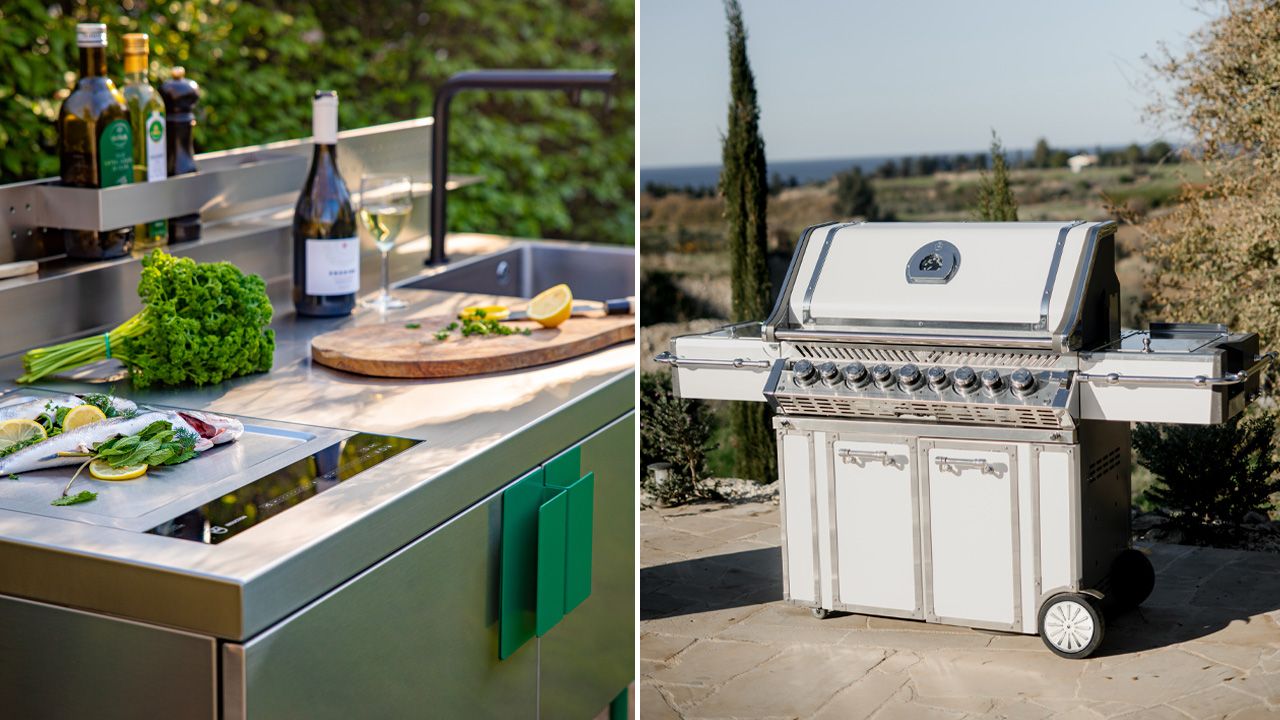
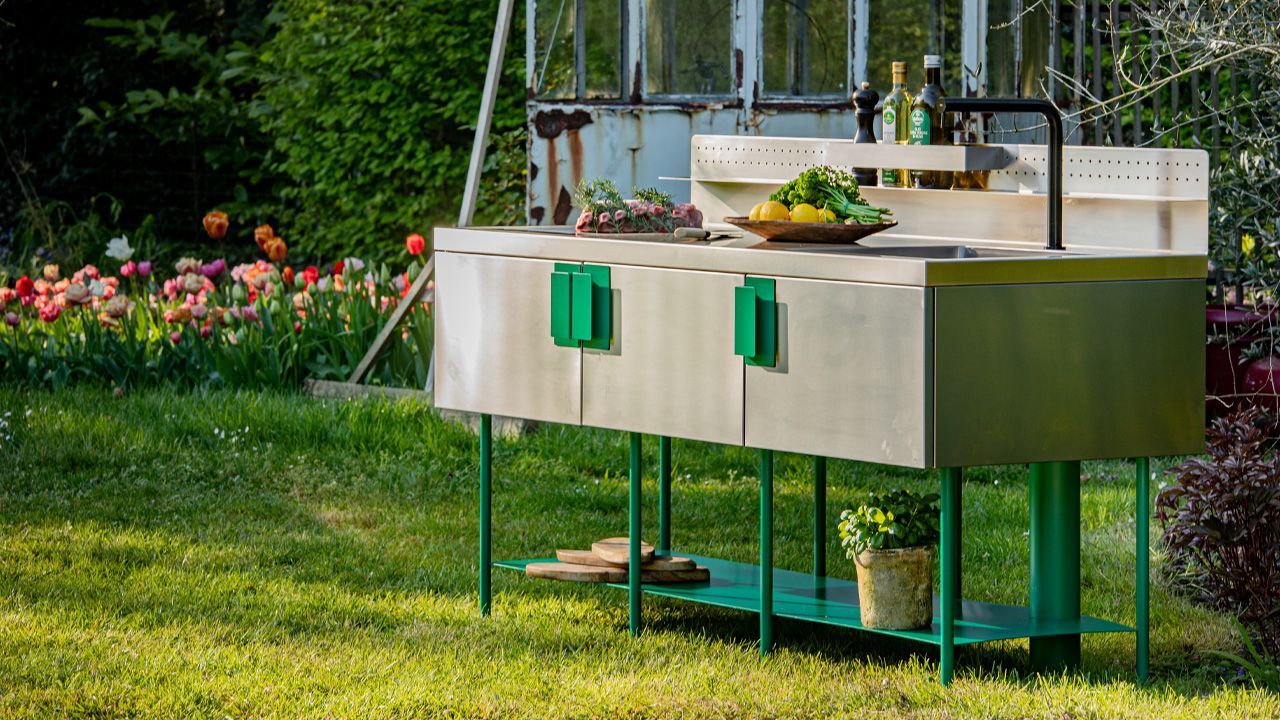
With over 60 brands exhibiting their kitchen innovation at the event, more than a few stood out for al-fresco cooking. Case in point is the ÀTRIA by Abimis, created together with Studio Delineo and Massimo Rosati. The kitchen, drawing inspiration from the architectural world, has a geometric silhouette that becomes a shared canvas for culinary art, which is more relevant in today’s outdoor cooking space than ever before.
It is an equilibrium of harmonious proportions with full and empty spaces, facilitating a complete cooking experience. The stainless steel outdoor kitchen features an integrated sink, an induction hob, a backsplash with a shelf, a confined section for bottles and condiments, and compartments for storage underneath the countertop.
The ÀTRIA is designed to bring together two ancient symbols of domestic life: the hearth and the open space of the home. The name originates from the Latin word àtrium, embodying these elements flawlessly, bringing back traditional cooking, just outdoors.
Also Read: Why Physical Presence at Design Fairs Still Matters in an AI-Driven Furniture Industry
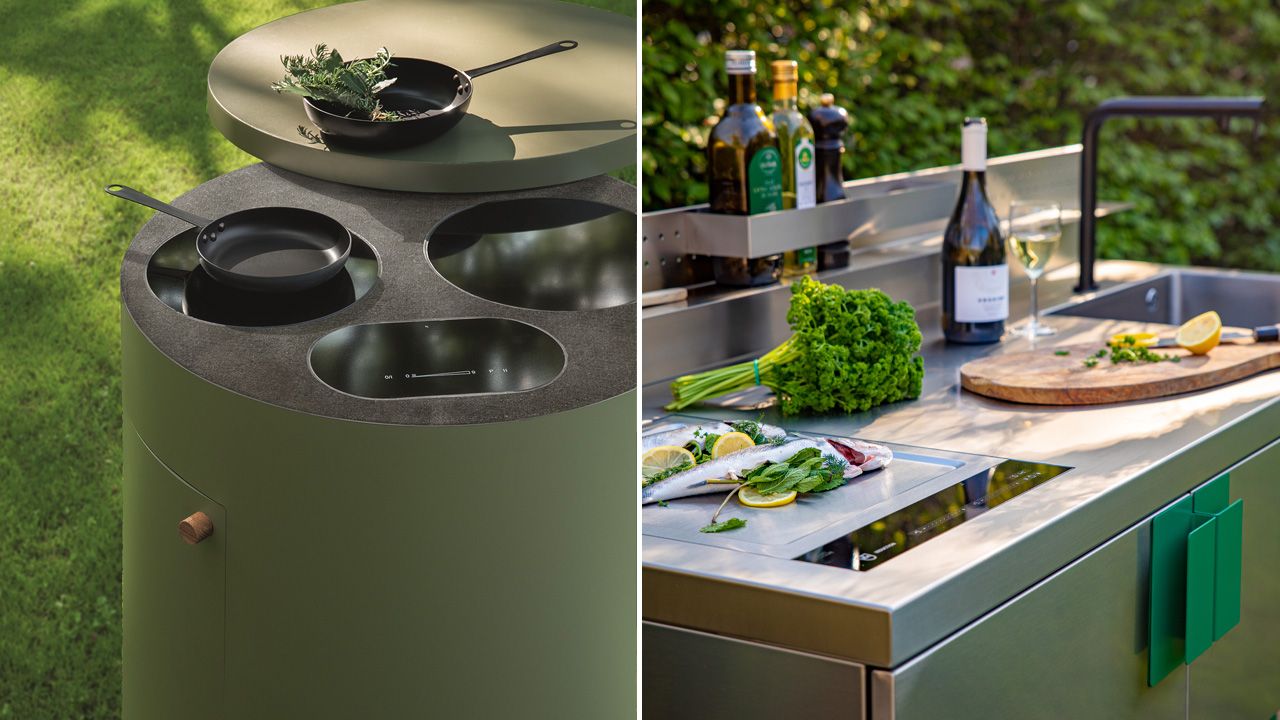
Another player that highlighted the joys of manually preparing every element of your food was Ethimo, which exhibited the Phil outdoor kitchen designed by Gordon Guillaumier. It employs a nomadic configuration by splitting the countertop elements into three modules.
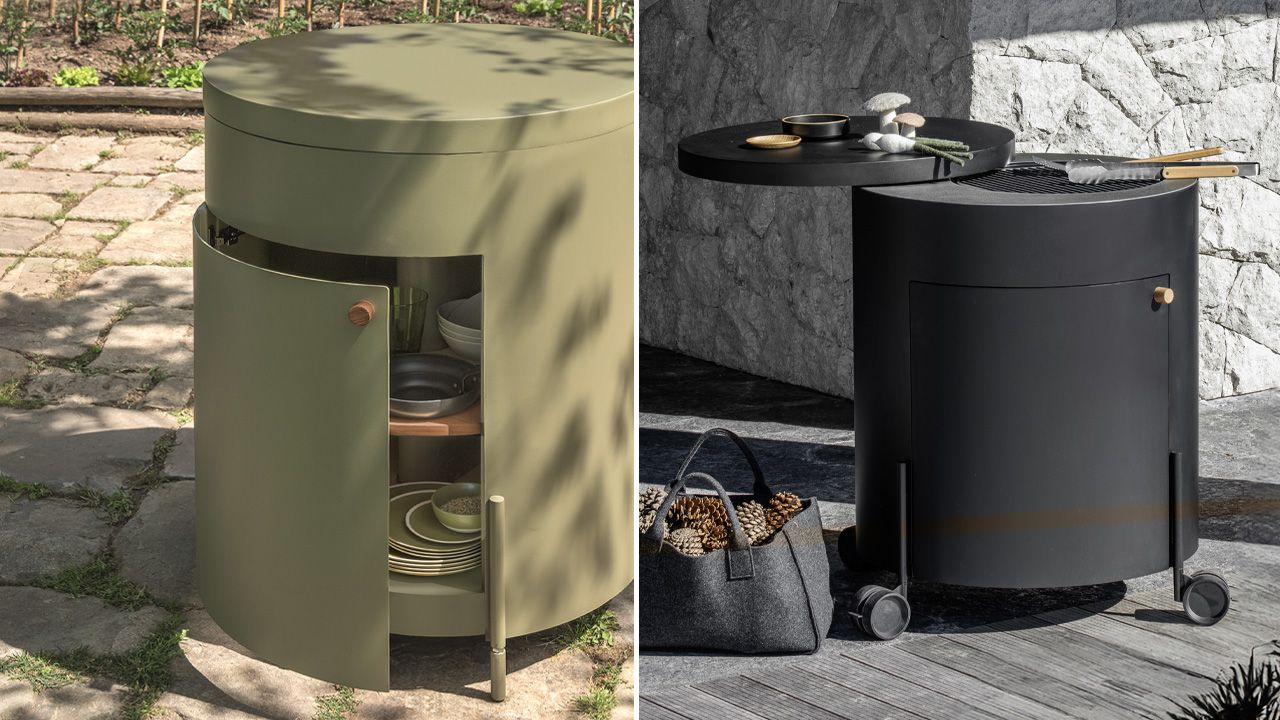
The Phil emphasizes outdoor entertaining with an original way to personalize outdoor settings while enjoying contemporary cooking in a creative, relaxed way. This open-air kitchen solution connects us to nature, to ourselves, letting us do the manual tasks while we enjoy every second of it. The three modules include a sink, an induction top, and a brazier grill, in either an olive green or sepia black finish. Together, the three elements coexist to create a circular flow for preparing a meal.
While simplifying outdoor cooking, Phil’s unconventional design makes the traditional al-fresco process mobile. The sink with a teak work surface has fixed feet, whereas the induction top and grill are outfitted with castors to add versatility in the outdoors.
All modules are equipped with storage inside their cylindrical forms. They sleekly fit primary food preparation needs into a functional design without overcomplicating the process with apps, AI, or unnecessary automation. The Phil outdoor kitchen systems want you to go back to a simple life where you can cook and enjoy food with loved ones.
The Mediterranean region is known for its al-fresco hosting, where you can enjoy hearty food with heartwarming vistas. Bringing that same aesthetic to your outdoor cooking area, Officine Gullo unveiled its new tailor-made open-air kitchen at the 2026 EuroCucina.
The outdoor cooking system represents the perfect synthesis of architectural design, modern technology, and Italian craftsmanship, embodying the brand’s vision. Officine Gullo told Homecrux, “Outdoor cooking is increasingly becoming an extension of the home. No longer just occasional or seasonal, but a true lifestyle centered around conviviality, comfort, and design.”
When asked about outdoor cooking evolving as a lifestyle, Officine Gullo told Homecrux, “We see this evolution moving toward fully equipped outdoor kitchens that offer the same performance and ergonomics as indoor spaces. The goal is to enable users to cook outdoors with all possible comforts, combining professional-grade technology with a welcoming, social atmosphere.”
The stainless steel kitchen is designed to withstand outdoor elements and is resistant to corrosion and weathering. Its matte Lily White finish, paired with satin chrome accents and polished chrome fittings, lends the entire composition a bright, regal aesthetic. It brings the entire kitchen outdoors for a more involved cooking process.
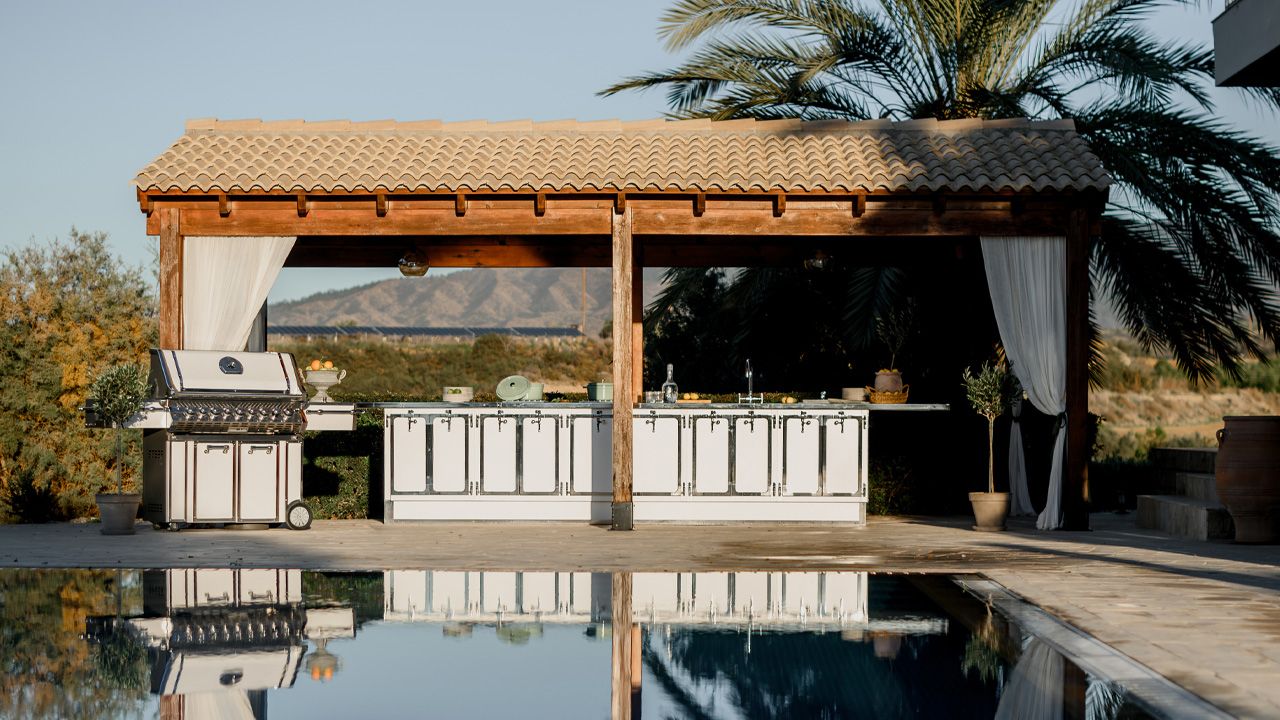
The design carries a five-meter island to ensure complete and intensive functionality. Its upper section has two sizzle zones, an integrated ice bucket, a welded sink with an arched tap, and a large brushed stainless steel worktop. The lower part includes a two-drawer refrigerator, a wine cooler, and roomy storage. At both ends of the structure are cantilevered surfaces accommodating stools.
Myface Outdoor Design took curtains off its Senses Kitchen, a modular structure that allows it to adapt easily to different spaces and lifestyles. With its removable accessories and customizable components, the kitchen responds differently to each space, whether it goes on a terrace, patio, balcony, or backyard. This al-fresco cooking system flaunts metallic finishes and natural marble.
Salone del Mobile has helped influence and shape outdoor cooking in recent times. Talking about this impact, Myface Outdoor Design shared with Homecrux, “Salone has played an important role in our vision of outdoor kitchens. It has helped move them beyond purely practical solutions into thoughtfully designed elements that contribute to the overall atmosphere of a space.”
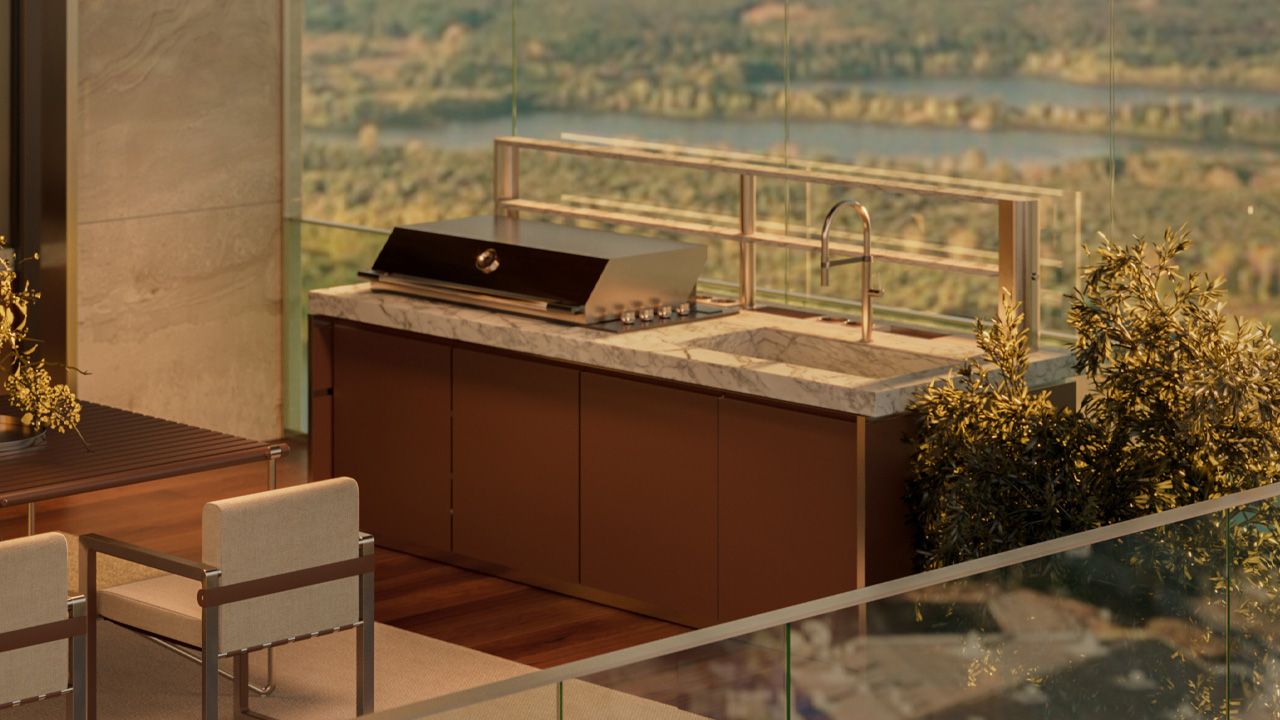
The four outdoor kitchens, along with others exhibited at the 2026 EuroCucina, opened the room for conversation on a hands-on approach to al-fresco cooking. The materials have also evolved with tactile finishes, while stainless steel ensures your outdoor kitchens can be your haven for decades to come. The palette is taking on a more emotional and natural take, bringing us closer to nature, how we prepare and consume our food.
Cooking isn’t an automated task that needs to be delegated to a machine: It demands your hands to feel the flame as you add the ingredients; it demands to soothe your soul as you stir and aromas waft up your nose, watering your mouth. The 2026 EuroCucina wants to give you that soul-stirring process back. For those of us who find more joy in cooking than eating, this year’s edition certainly served some amazing outdoor kitchen designs without complicated tech or automation.