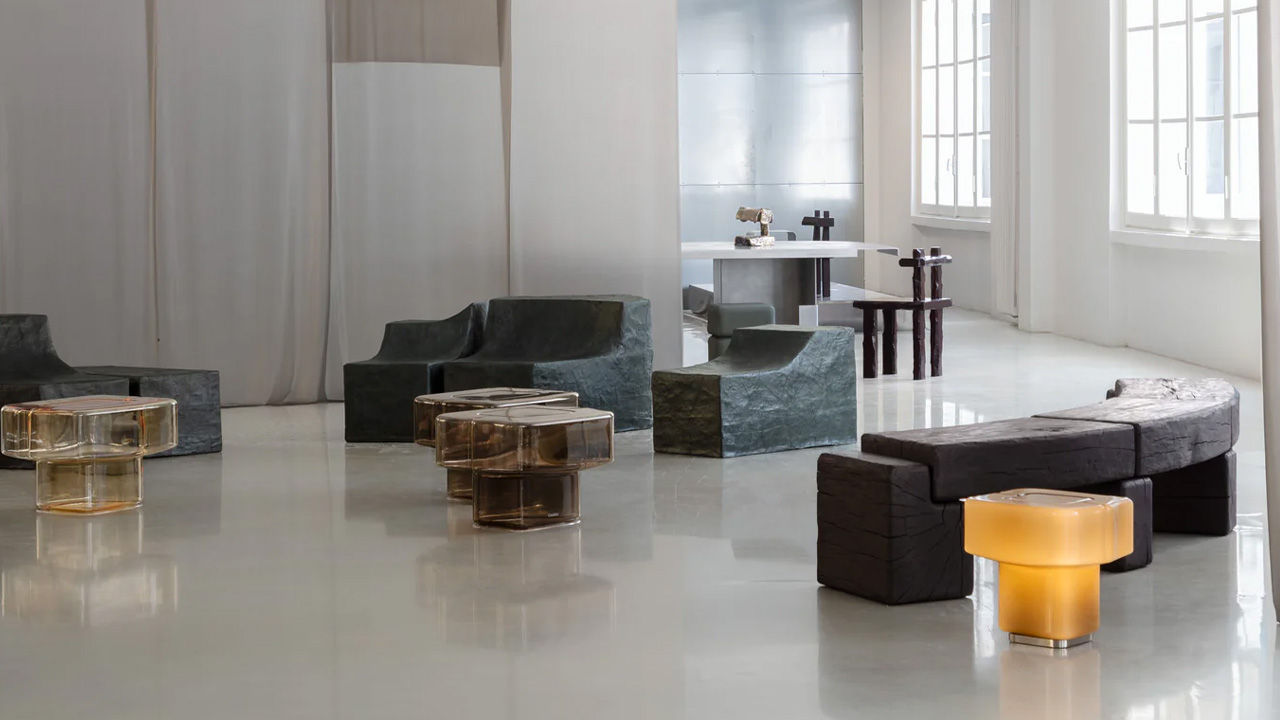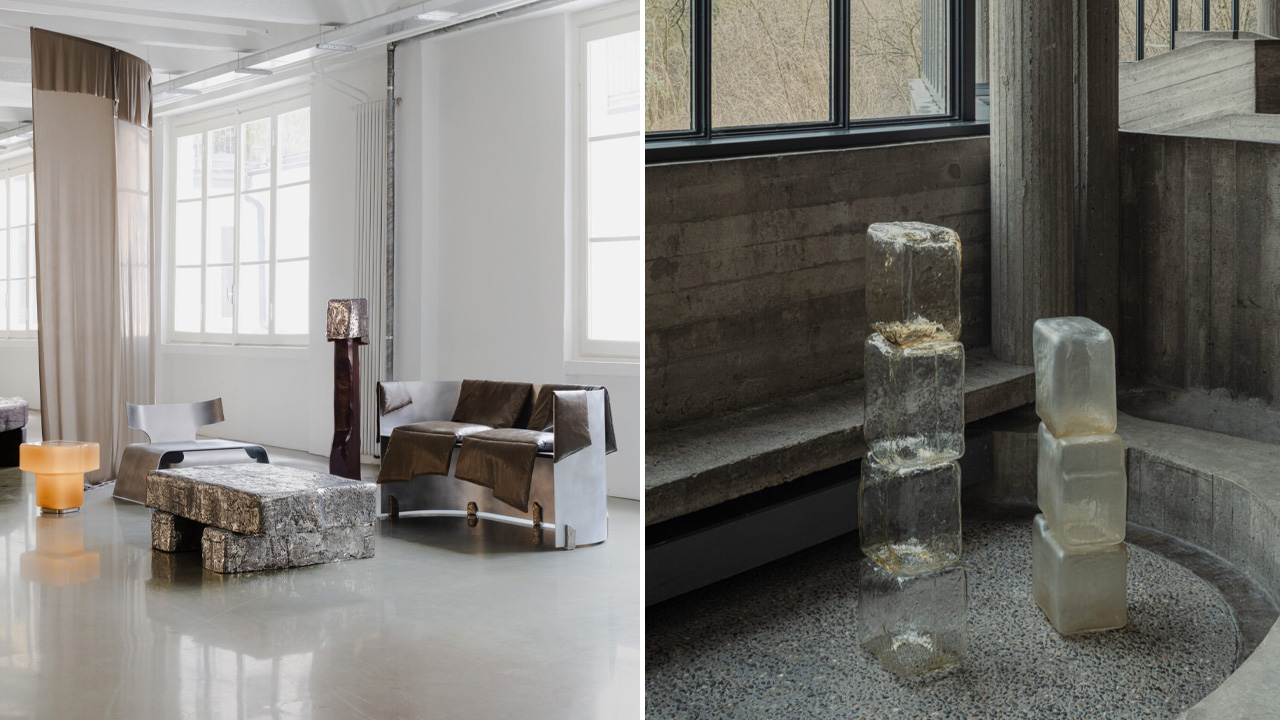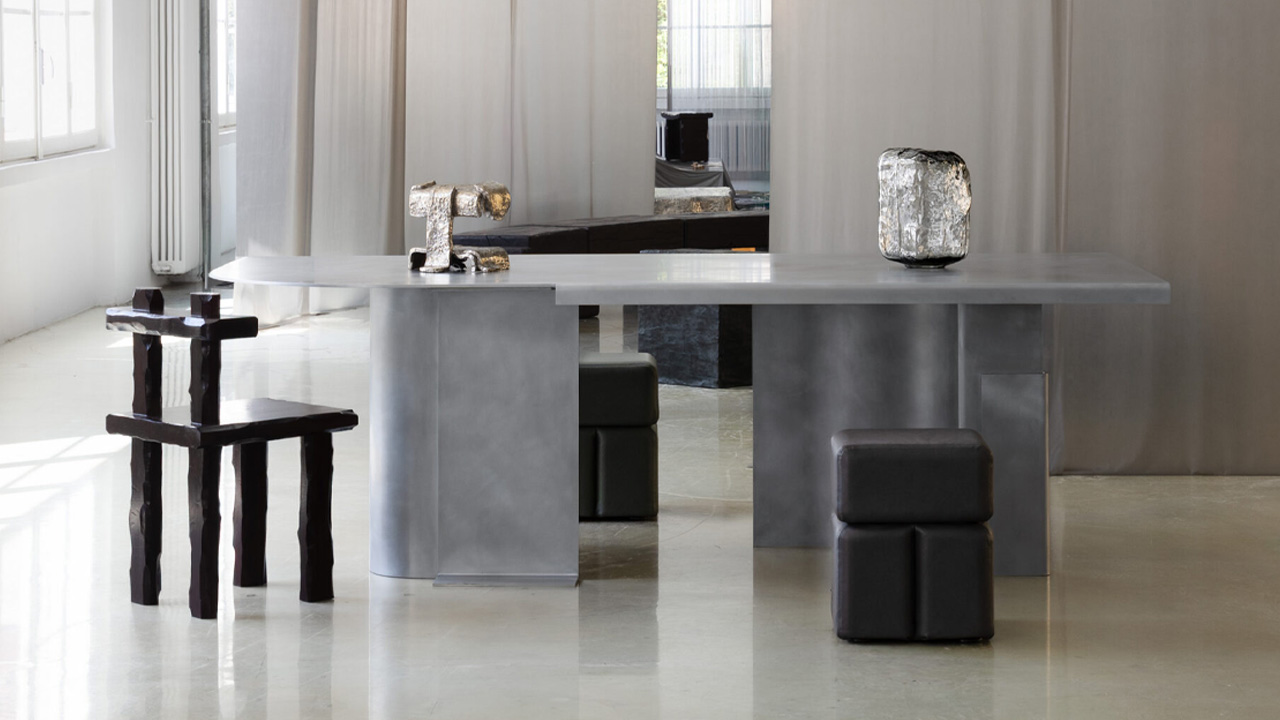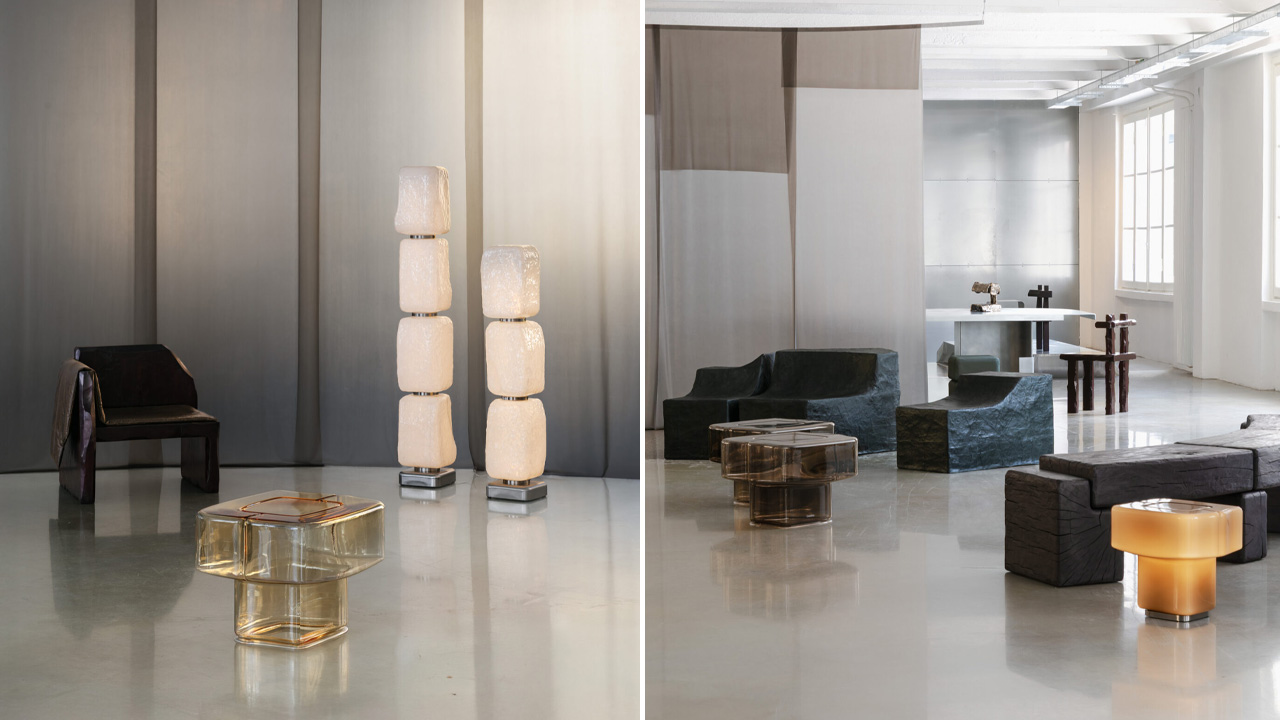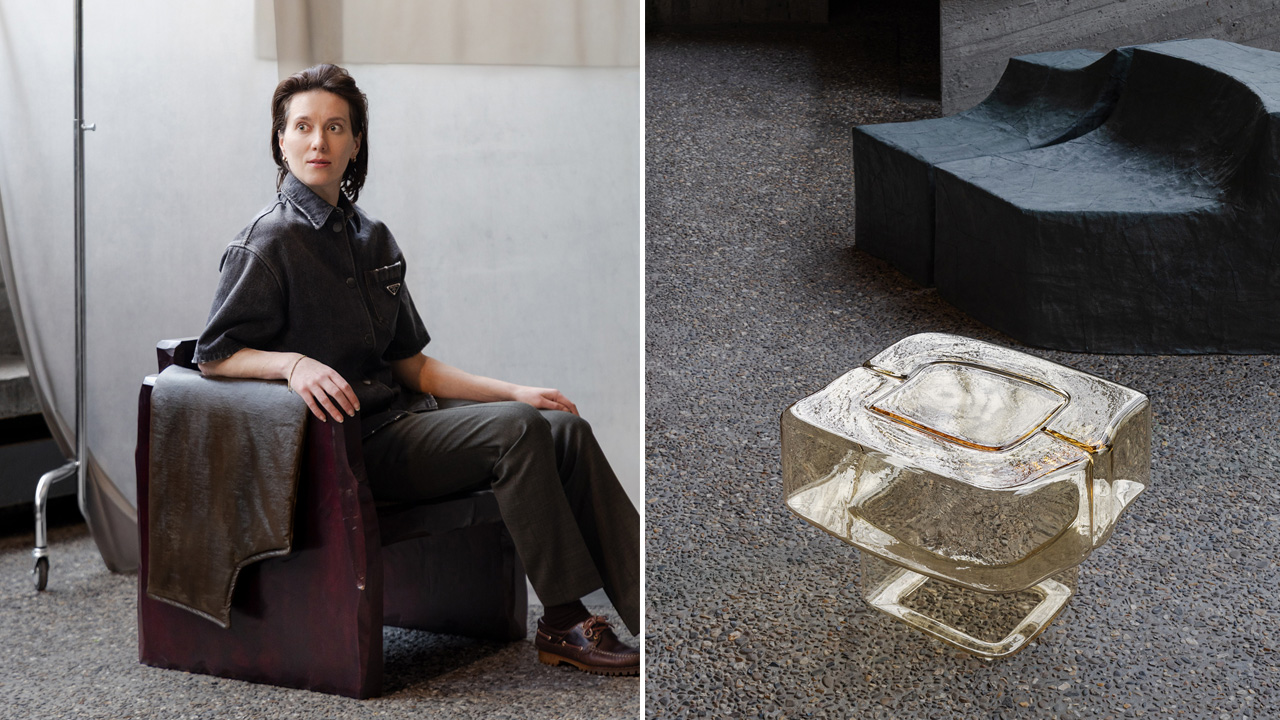
The Fluid Re-Collection is the first solo exhibition in Italy by Belgian designer and artist Linde Freya Tangelder, presented in collaboration with Cassina during Milan Design Week 2026. Hosted at the iconic 10 Corso Como in Milan from 21 to 26 April, the installation showcased Tangelder’s process-driven approach, merging craftsmanship with industrial design.
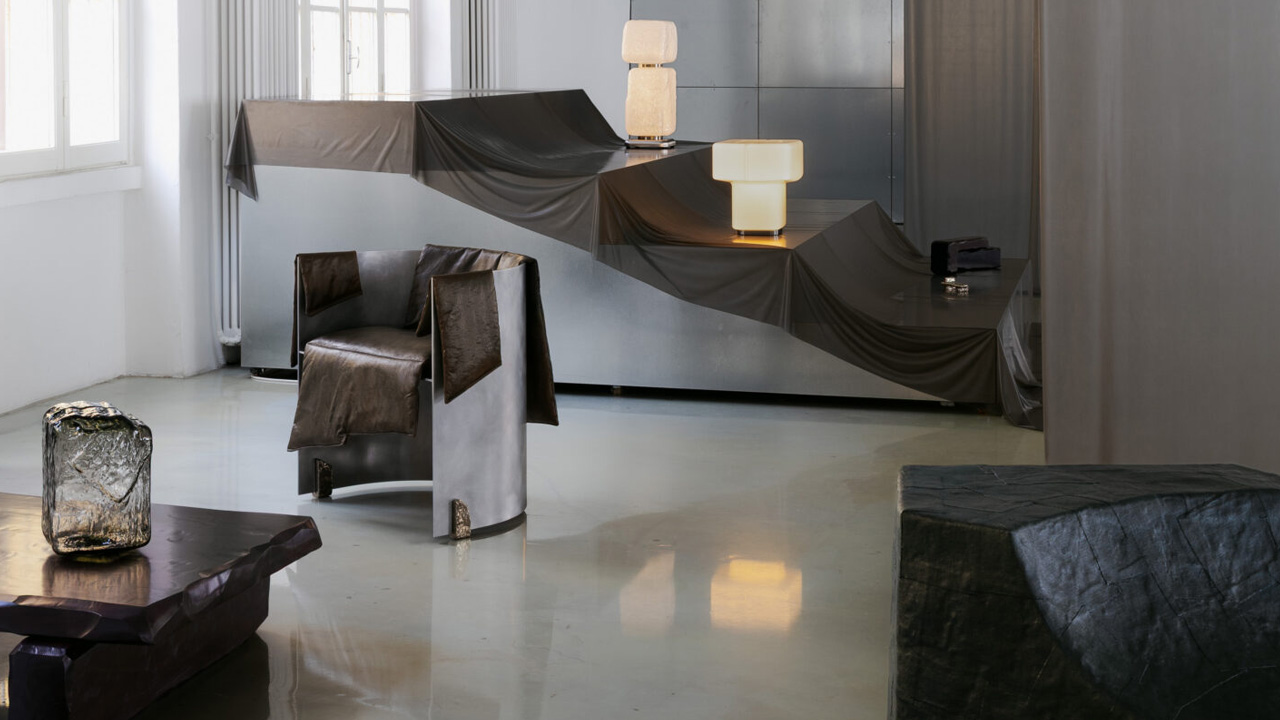
The furniture collection thrives on the tension between softness and sharpness. Cold, industrial materials like metal and glass are manipulated to mimic the fluidity of natural forms mid-creation, creating objects that look like they are still in the process of melting or growing.
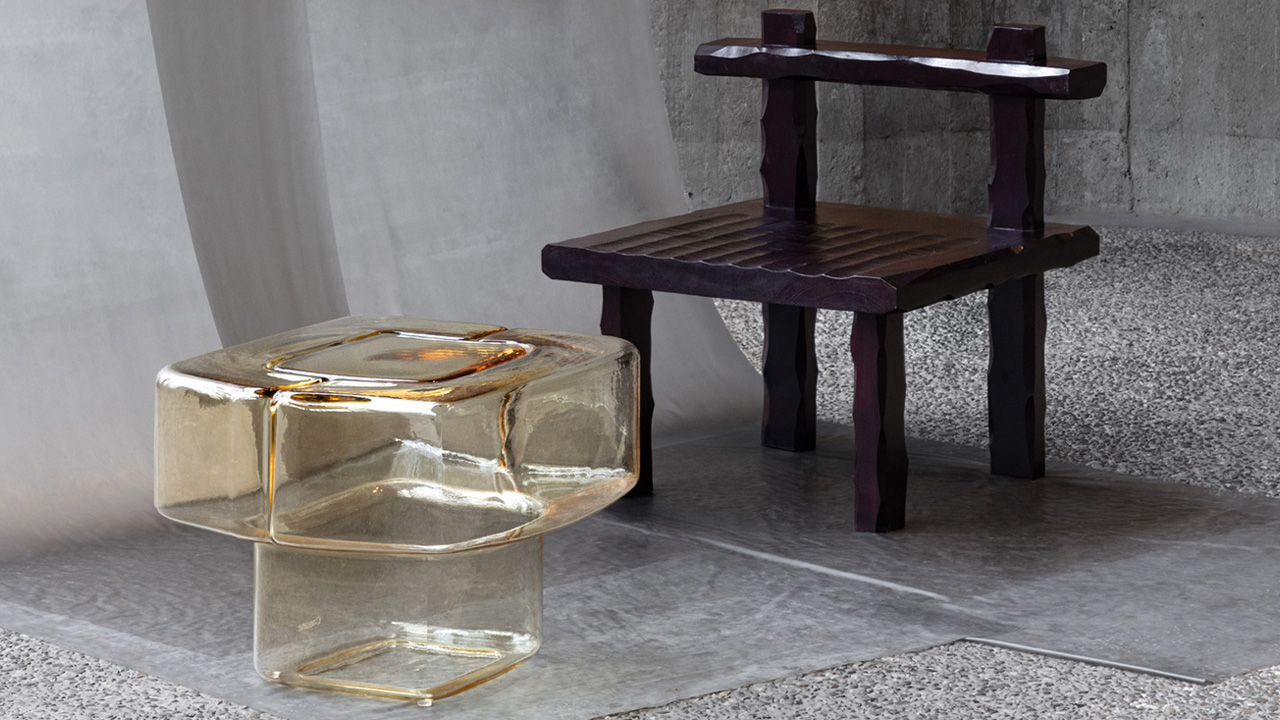
A defining feature is the unforced hand-carving method. Instead of seeking geometric perfection, Tangelder allows the hand to dictate the silhouette – most notably in the low chairs – resulting in sculpted archetypes that prioritize tactile history over industrial uniformity.
The exhibition space itself was a feature, wrapped in semi-transparent plastic foils that served two purposes. It recreated the atmosphere of an atelier, where works-in-progress are covered for protection. The other, it forced a layered perspective, where the viewer sees the ‘ghost’ of the object before encountering the physical piece.
Major Pieces From the Collection:
- Fluid Joinery Light: A beacon born from the collaboration where light doesn’t just shine but flows through a structure that feels both architectural and organic
- Fluid Joinery Side Table: A glass-blown ‘mushroom’ that appears to have sprouted from the floor, capturing the fragile, liquid state of molten glass in a permanent, functional moment
- Sculpting Archetypes: A low chair that bears the marks of the human hand, unforcedly carved as if the wood itself decided its final form
- Reworked and Remold: These pieces wore spontaneous canvas flaps and deep, mossy greens, looking less like furniture and more like artifacts reclaimed by nature
Also Read: Spotlighting Middle Eastern Voices at Milan Design Week 2026
As part of the Cassina Patronage program, the pieces represent a marriage of two worlds: Cassina’s industrial excellence (precision and manufacturing power) and Tangelder’s artisanal experiments (limited editions and experimental journey). The collection’s aesthetic is grounded in an earthy, mossy palette – deep greens and raw wood tones – complemented by the use of spontaneous canvas flaps and reworked surfaces that suggest a state of “re-collection” or assembly.