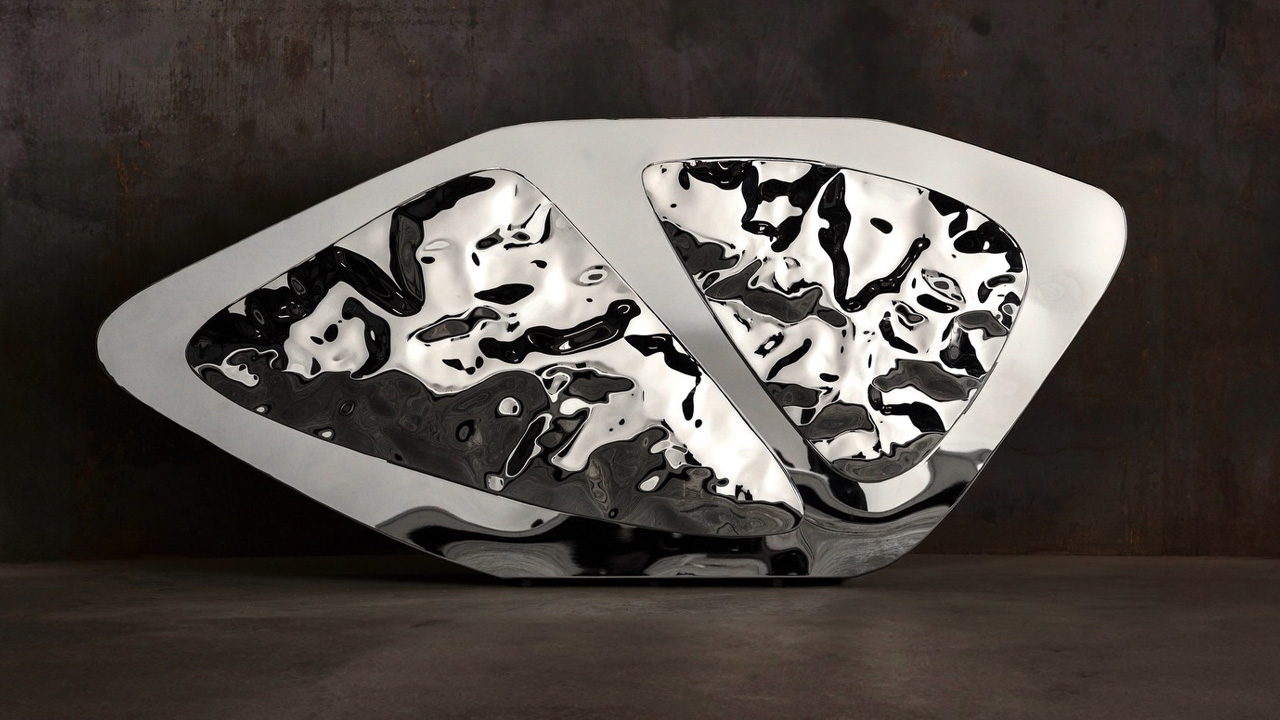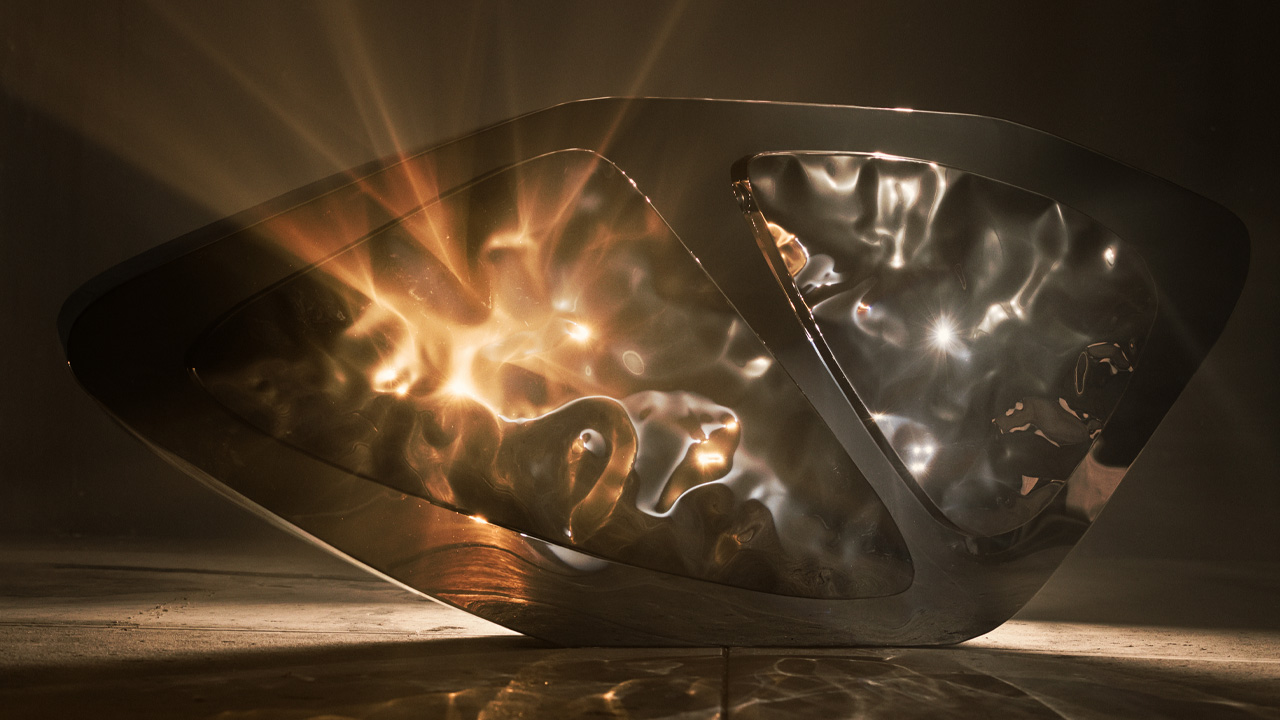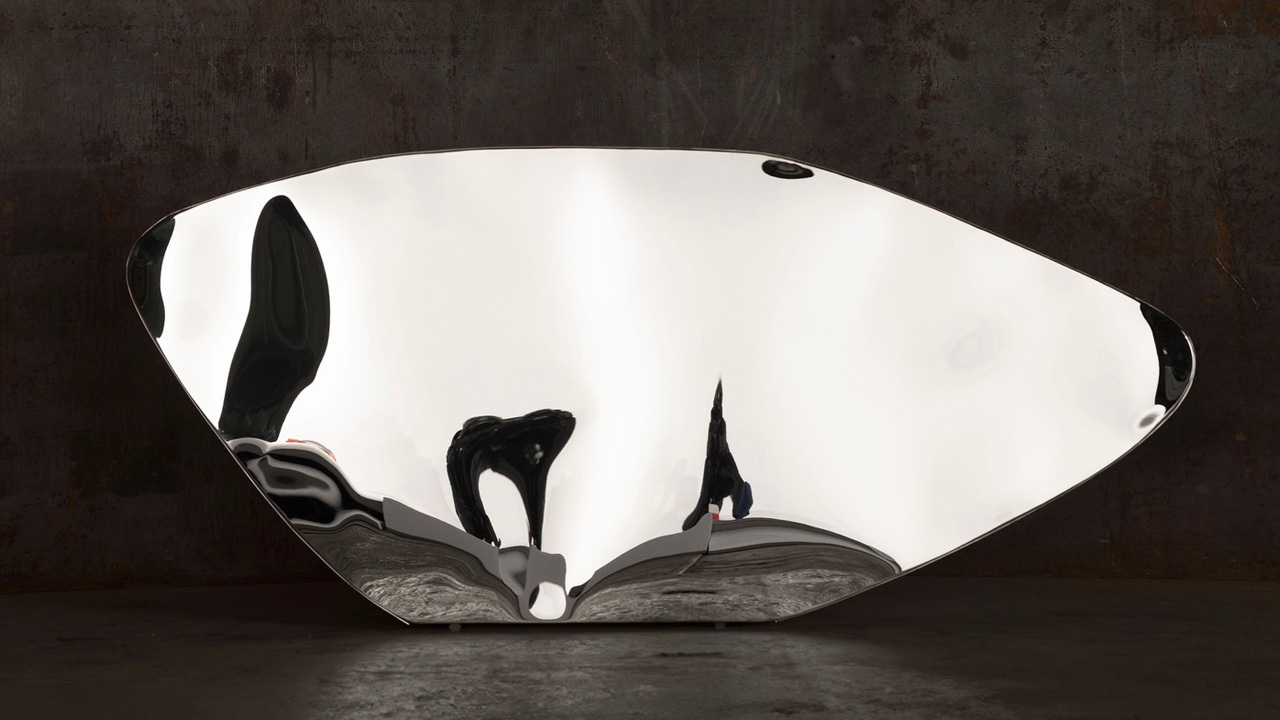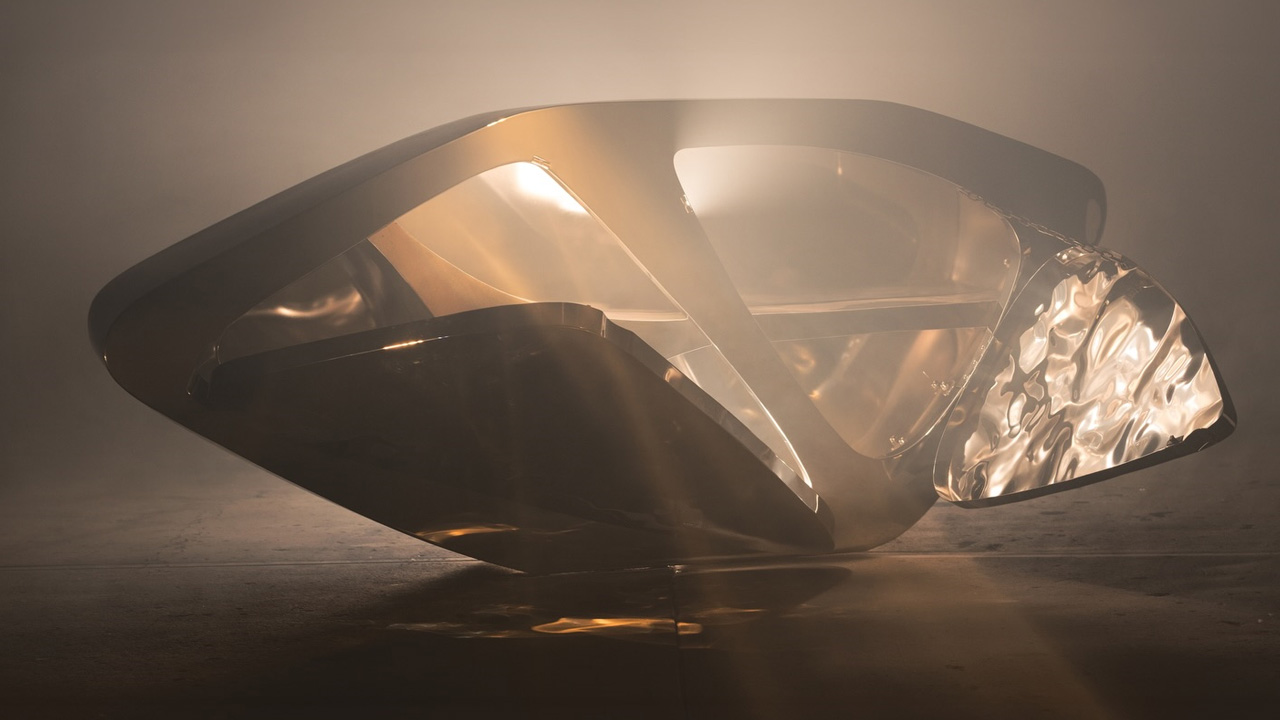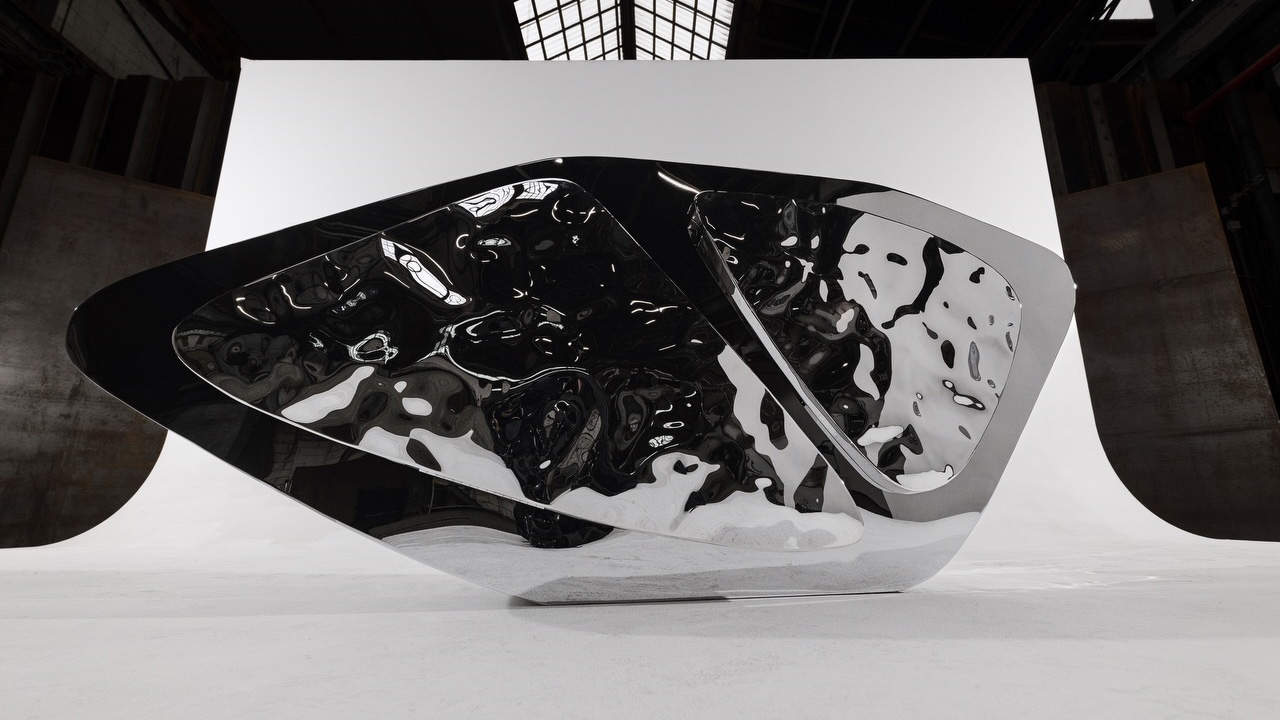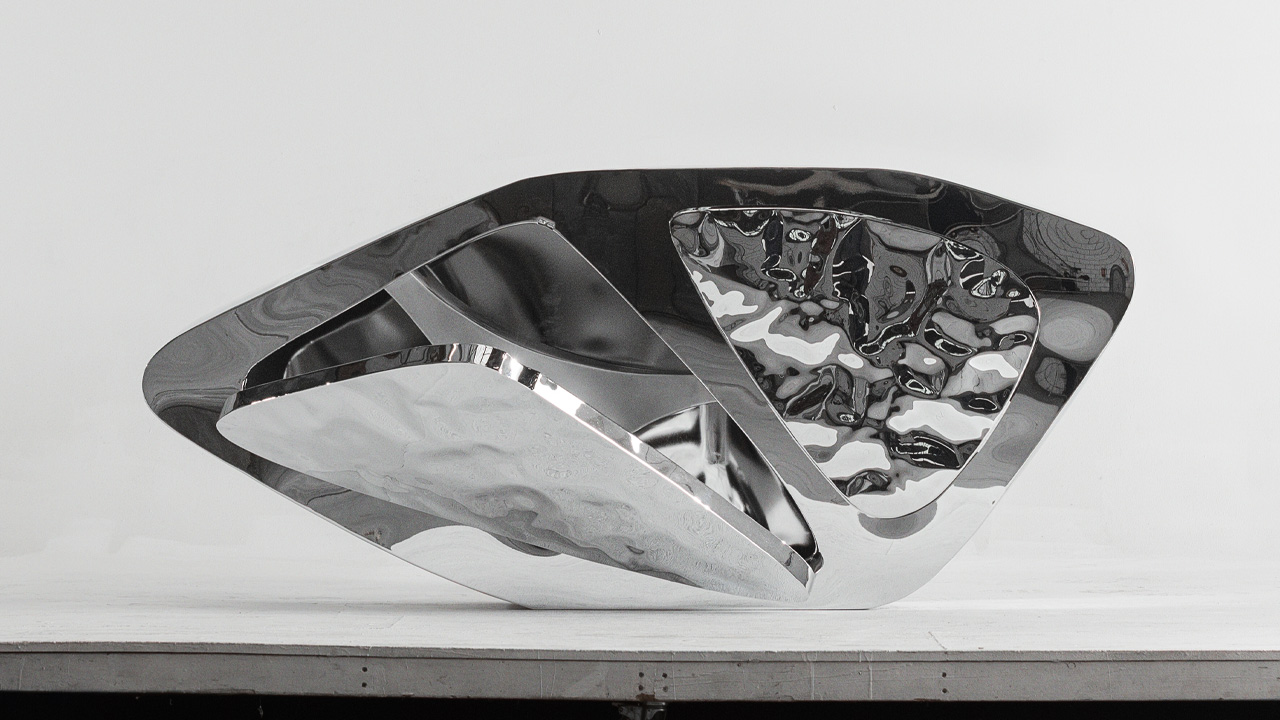
Cabinets come in various designs and shapes. While their functionality takes precedence over all else, sometimes the form becomes so much more powerful that it rises beyond its function. Barcelona-based designer Pepe Valenti has created the Silver Lining, a cabinet where his sculptural language leaps to challenge the mere functionality of the furniture. Showcased at the 2026 Collectible Brussels, the cabinet is an example of how a repetitive process offers beautiful results.
Valenti says his design lies in the faded lines between typical furniture and art. He tells Homecrux, “Now art can be functional and still be considered art. In my opinion, collectible design is still art. I believe today we are not so defined by boundaries or labels, and are slowly refining who we are and what we want to be, without being defined by who we have been.”
The cabinet challenged every skill Pepe relied on. The designer had to weld, shape, chrome, and remake components until they felt right. It took him five months to complete the project. He had no fixed design in mind, but during those five months that were teaching him patience, the cabinet unveiled itself. The creative limitations were creating shapes, and the dialogue between intention and materiality formed the core of his practice.
He wished to evolve his designs to something more, and that’s what gave birth to the Silver Lining cabinet. He believed that the strength of repetition would help him discover new angles, tensions, and possibilities. He saw this design as a pull to step out of the comfort zone toward challenges that would reshape him. Valenti viewed the cabinet as the perfect balance between the discipline of repetition and the urgency for growth.
Also Read: How Designers Rewrote the ‘Collectible’ in Brussels?
The cabinet is made from chrome-plated stainless steel. Measuring 200x100x30 cm, the cabinet has two doors that are hammered to give them a unique texture and personality. A single shelf inside allows the user to place belongings inside, while the outside remains an unassuming piece of art. He says, “It is inspired by nature, and by contrasts between solidity and liquidity, movement and stillness, roughness and precision.”
Valenti told Homecrux, “I try to create from a sensitive place, starting with a feeling. There’s usually a moment or sensation I want to recreate through shape, form, and material. The sensation comes first, then form, and only later practicality. At the beginning, it’s more about creating without boundaries.” He refers to the cabinet as a love letter to his craft.