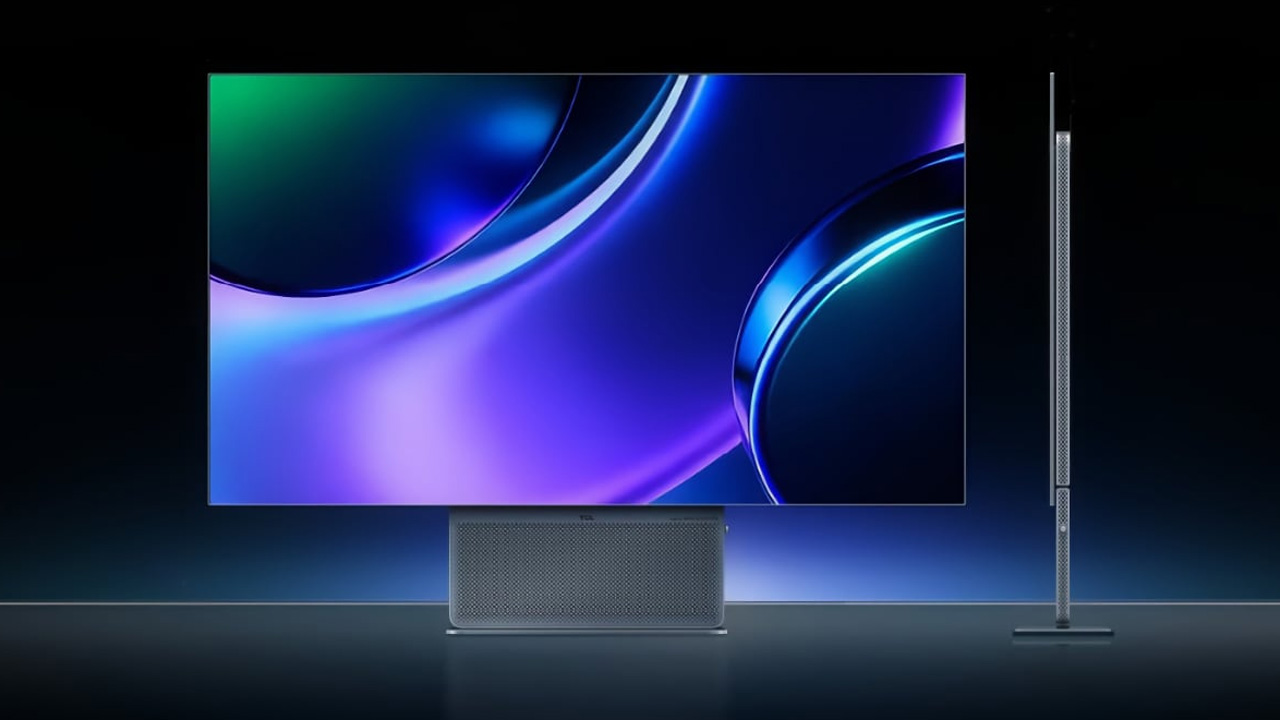
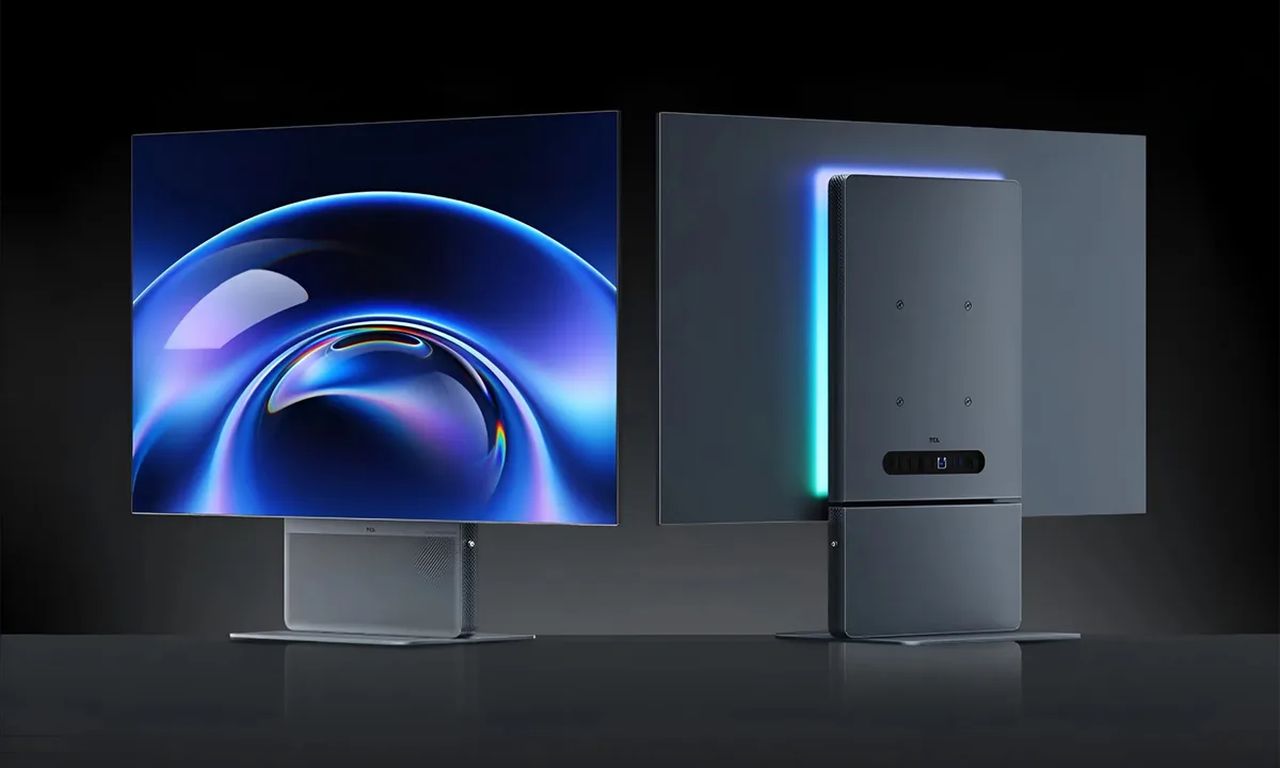
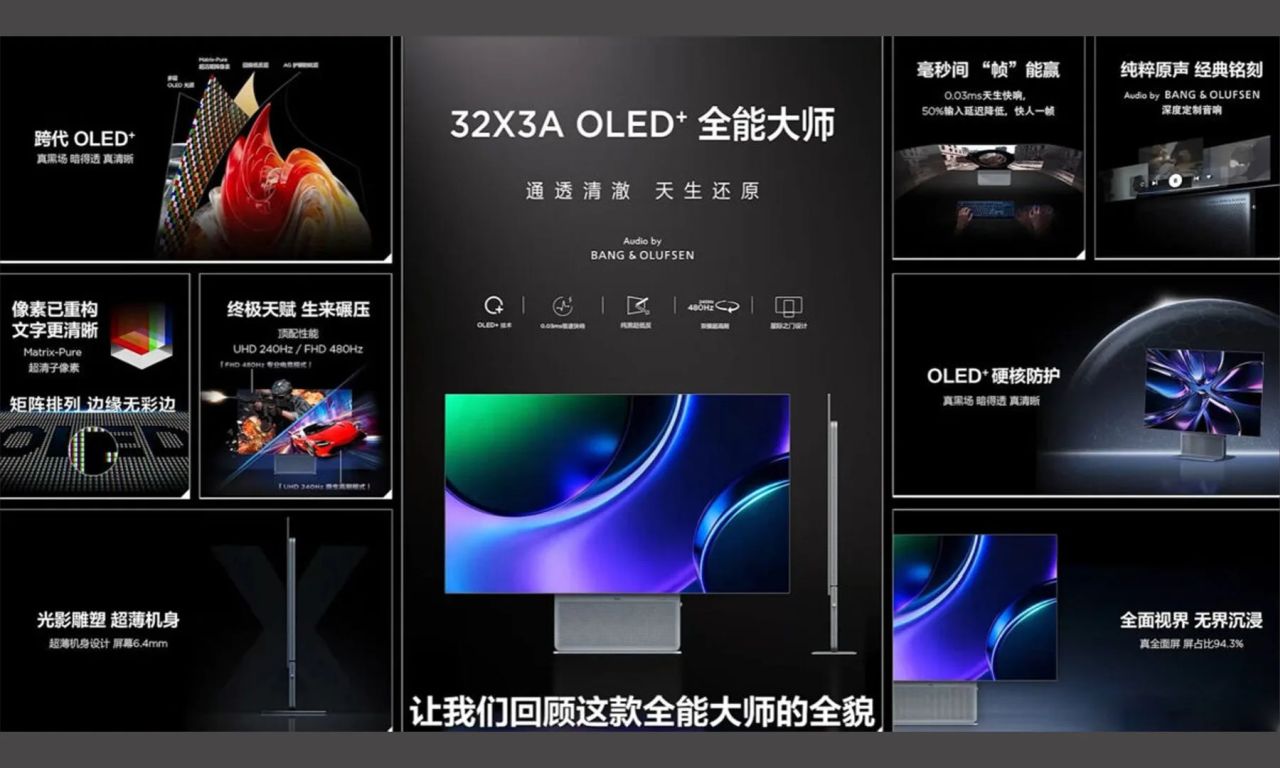
TCL is finally making way into the OLED display segment with the launch of its new 32X3A desktop monitor. As per the initial information, it is a 31.5-inch display with 4K resolution and a native 240Hz refresh rate that makes it suitable for both gamers and creators. There is a dual-mode function with support for 480Hz at 1080p as well. The monitor also stands out with an ultra-thin 6.4mm design, a feature that makes it stand out in the crowd.
As highlighted by FlatpanelsHD, TCL is currently constructing an 8.6-generation plant, where they will inkjet-print OLED panels in 2027. There are no exact details about the display tech, but it was mentioned to use a WOLED panel in a Reddit discussion. TCL is specifically calling it an “OLED+” display that fixes the common text clarity and glare problems found in some OLED screens. TFT Central notes that it uses vertically arranged sub-pixels, which helps improve text sharpness compared to older WOLED panels. However, it still uses an RGWB pixel layout, so text clarity issues are not completely solved.
The TCL 32X3A OLED monitor also includes a built-in ambient light sensor that adjusts screen brightness and color temperature automatically. For connectivity, it includes two HDMI 2.1 ports, USB-C with 90W charging, a headphone port, and two USB-A data ports. Other key features include 0.03 ms response time, 1300 nits of peak brightness, 99% DCI-P3 color, DisplayPort 2.1, and audio by Bang & Olufsen.
TCL held a press conference a few days back, in which the 32X3A OLED monitor was announced, which is initially expected to be launched in China. A few reports say that this model is available to pre-order at CNY 5,999 (about $870) right now. As a routine, TCL first launches its flagship products in its home country and then brings them globally. You can hope these OLED monitors will also make their way to other markets after the China launch.
TCL has started its movement in the OLED industry, but it is still very far from LG, which debuted the UltraGear evo Range of 5K2K OLED gaming monitors at CES 2026.

Via: Digital Trends