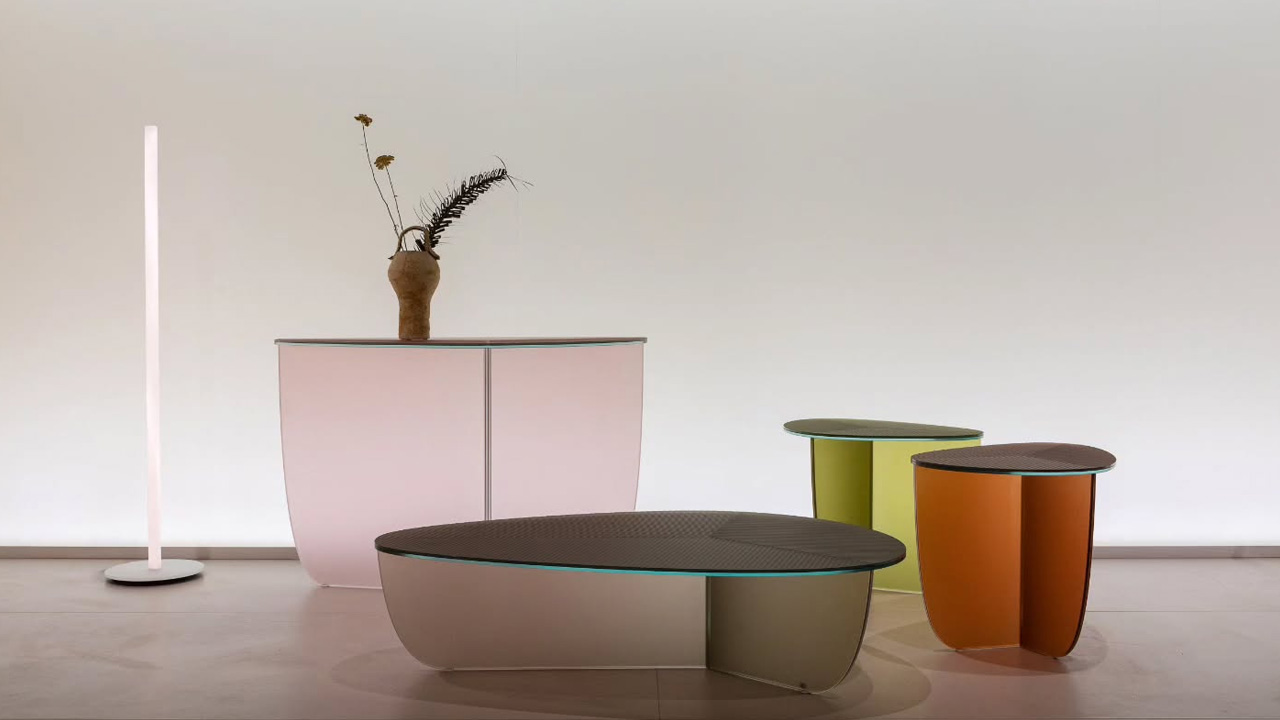
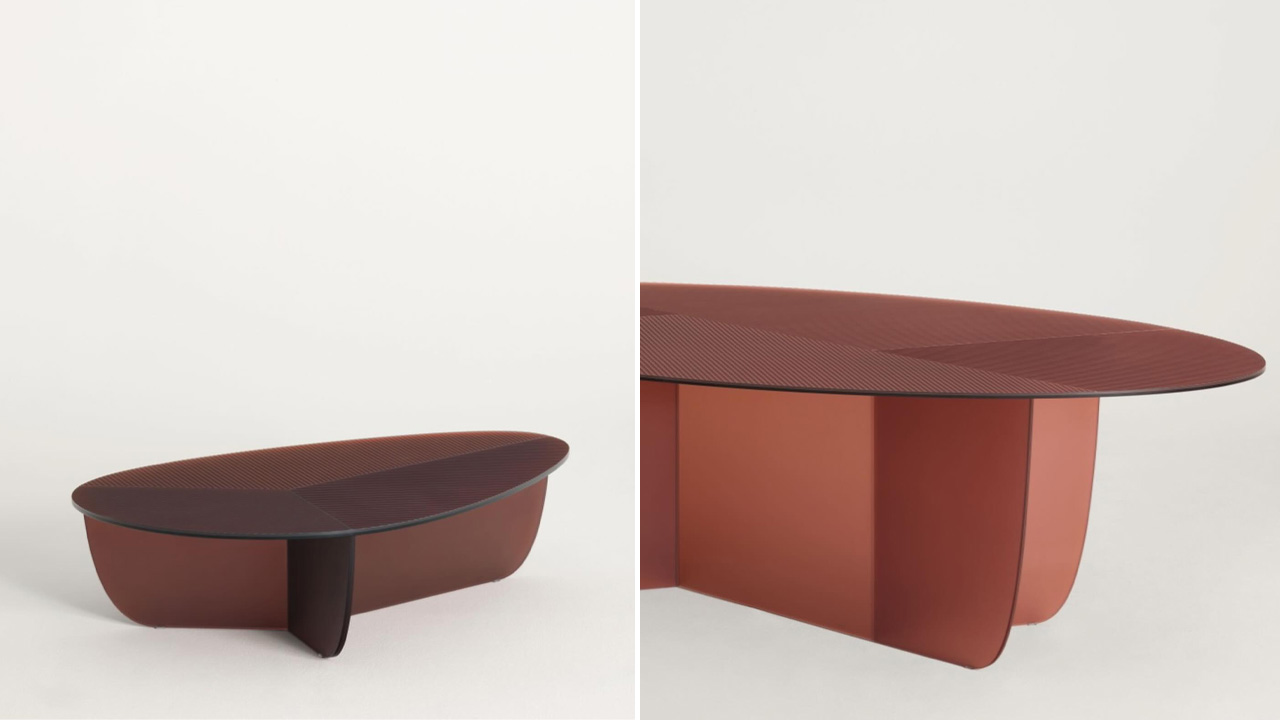
The Akur table collection, the byproduct of the collaboration between Icelandic designer Hlynur Atlason and Glas Italia, debuted at this year’s Salone del Mobile. Inspired by aerial views of Icelandic farm fields and named after the Icelandic word for field, the collection defines the typical linear and hard associations of glass, featuring soft, approachable, and organic shapes.
Its organic shapes shed the sharp, clinical edges of traditional glass, opting for curves that feel smoothened by centuries of tide and wind. Each table rests in a room not as furniture, but as a soft, translucent shadow cast by the interplay of light and shadow.
In a masterstroke of design, the legs do not merely support the surface; they rise through it like islands breaking the water’s plane. This creates a faceted ‘field’ of glass, like a patchwork of light and level that honors the rhythmic geometry of Icelandic farms seen from clouds.
The visual movement of the collection is found in its satin sink. As the sun charts its path across the room, the tables transform; they do not just sit, they shimmer and shift, offering a quiet, ever-evolving performance of depth and color that reveals the wandering eye.
Also Read: Best Office Furniture We Spotted at 2026 Salone del Mobile
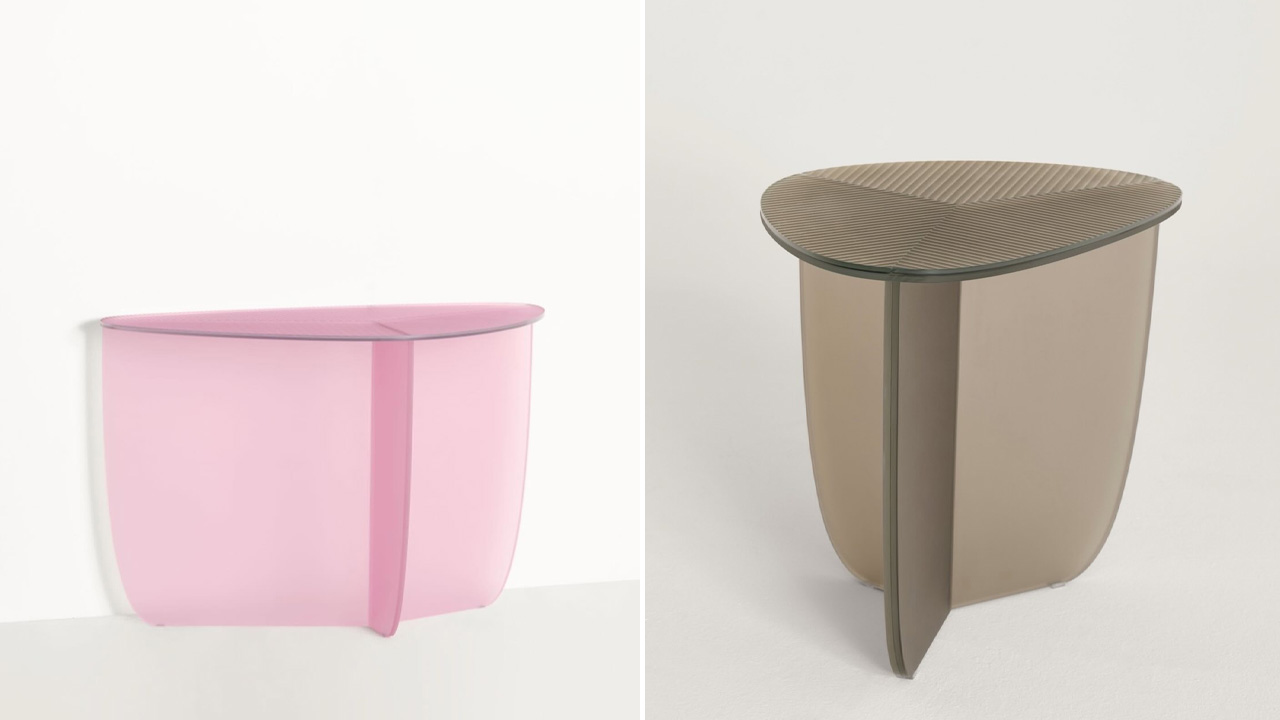
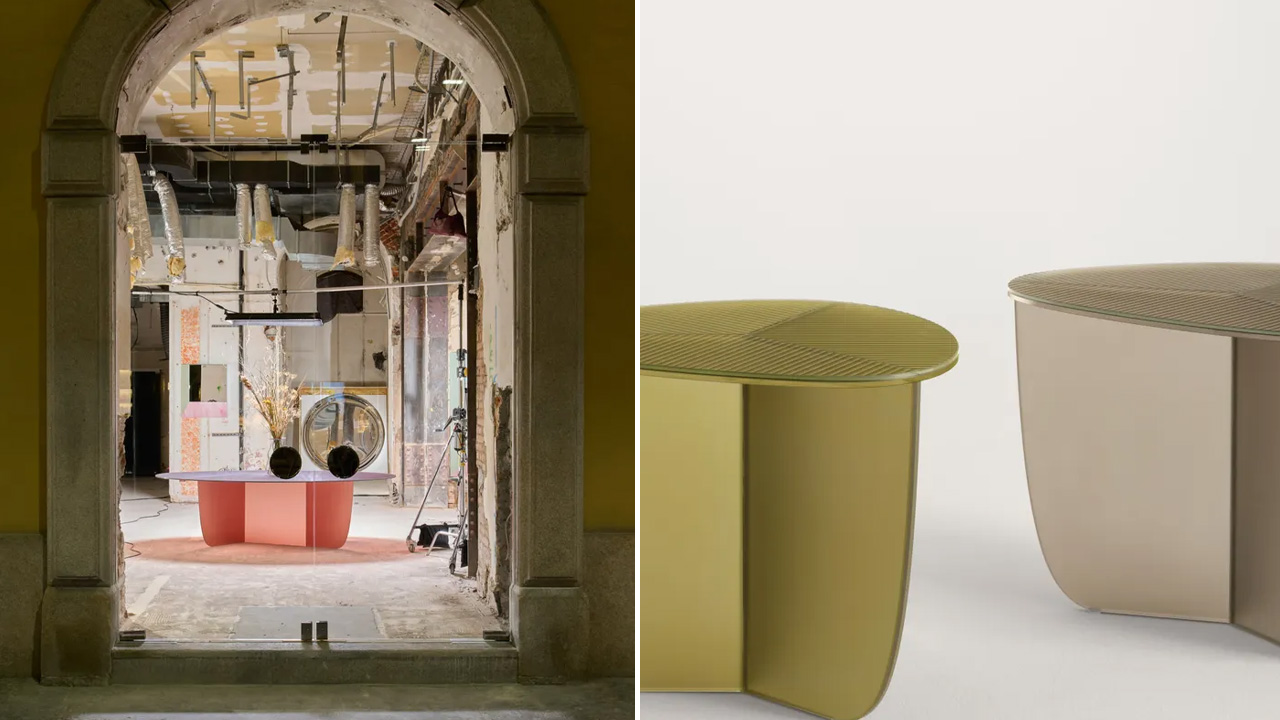
The Akur collection is designed for homes and includes dining tables, coffee tables, side tables, and console tables. It is defined by a palette of five soft, natural tones that mirror the muted and shifting colors of the Icelandic landscapes. While the specific tradenames for the Akur series are kept under wraps by Glas Italia during its debut phase, the designer describes them as “warm, approachable, and soft”.
The satin glass finish is the final, ethereal touch that defines the collection. This transforms the surface into a soft, tactile canvas that diffuses light rather than reflecting it sharply, allowing the internal colored film to glow with a muted, inner radiance. The Akur collection achieves a single, fluid expression as both the base and the top feature the satin texture.

Via: Archiproducts