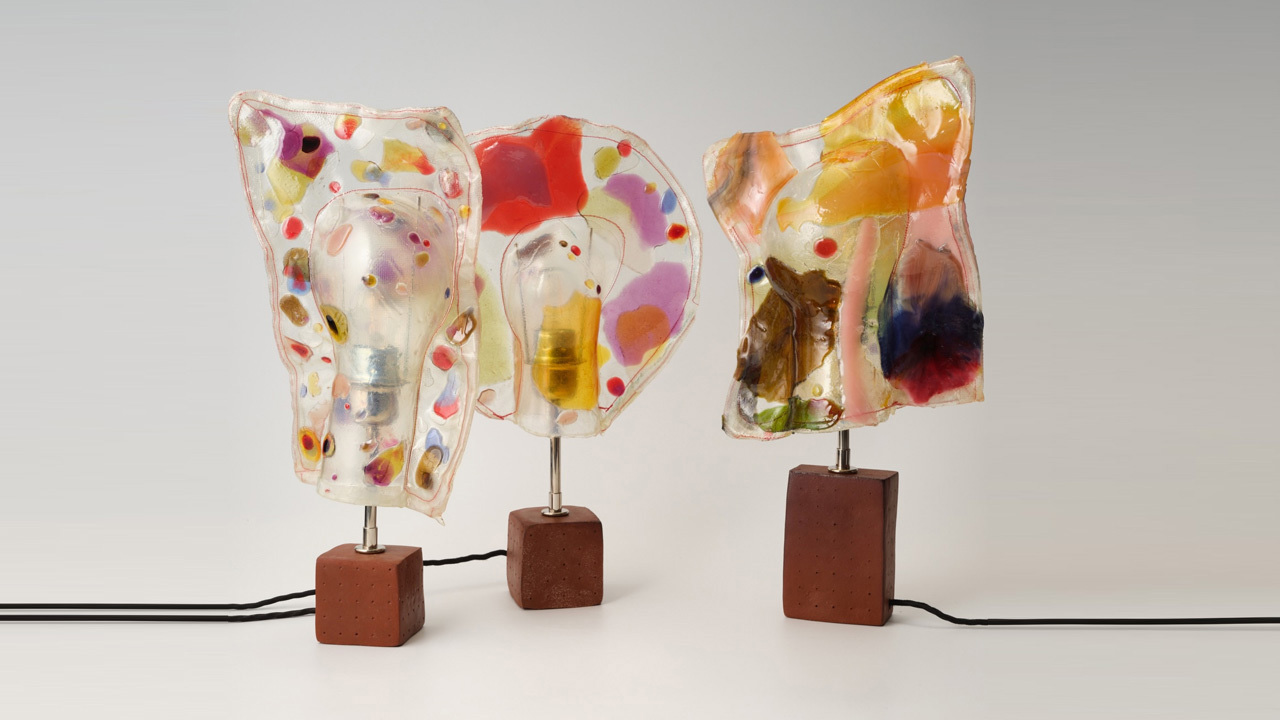
The lighting designs are vast and varied: some are geometric, others look cartoonish, and some are vibrant. Then there is this lighting collection that looks like food, particularly candy. With its edible appearance, the candy lamp collection by architectural designer Marten Herma Anderson is inspired by the childhood memory of melted candies. The collection started from a single design and has now become a family of three lamps.
Anderson has some kind of love for translucent wrappers, whether it be ice-cream wrappers or gummy bear wrappers, and that’s where the idea was generated. He likes the concept of light passing through the translucent color, never meant to glow, which is exactly what he has tried to incorporate into the lamps.
Protecting their playfulness, the lamps exhibit a clear understanding of functionality and fabrication. The designer shares, “I once “decorated” the bulb of my mother’s bedside lamp with a gummy bat. It melted. Mom was mad. Thirty-something years later, that memory became this lamp.”
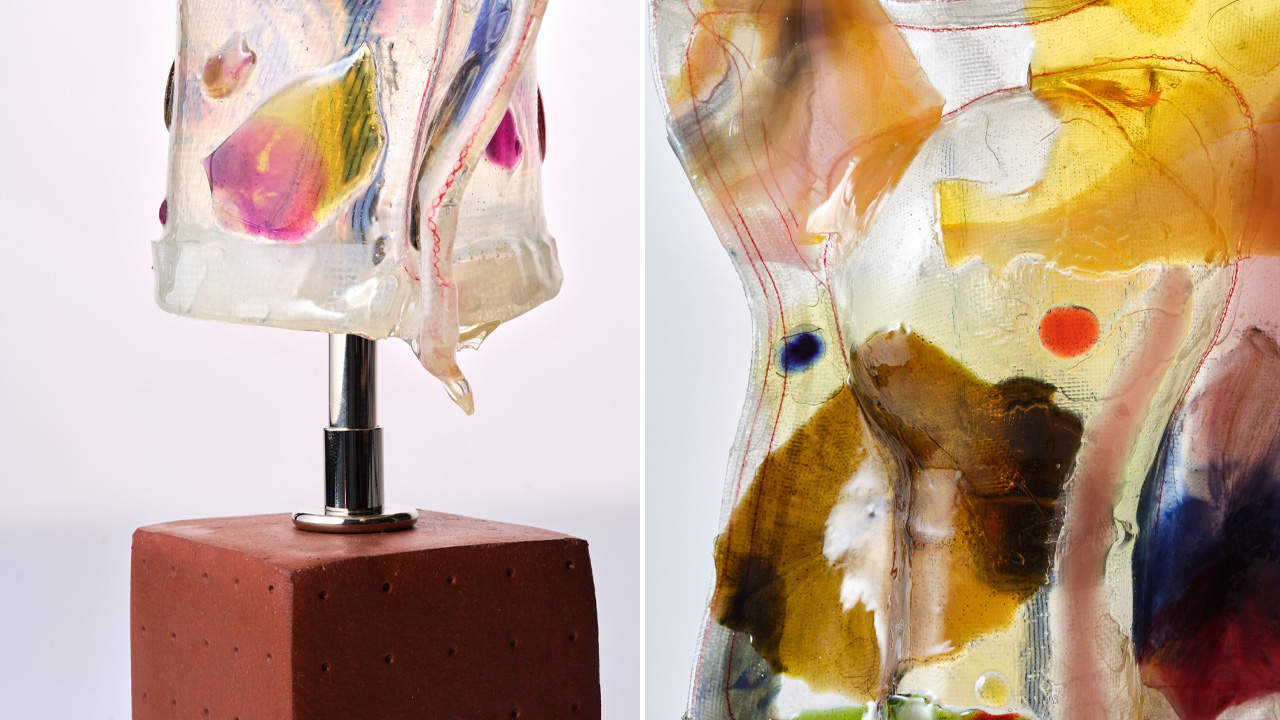
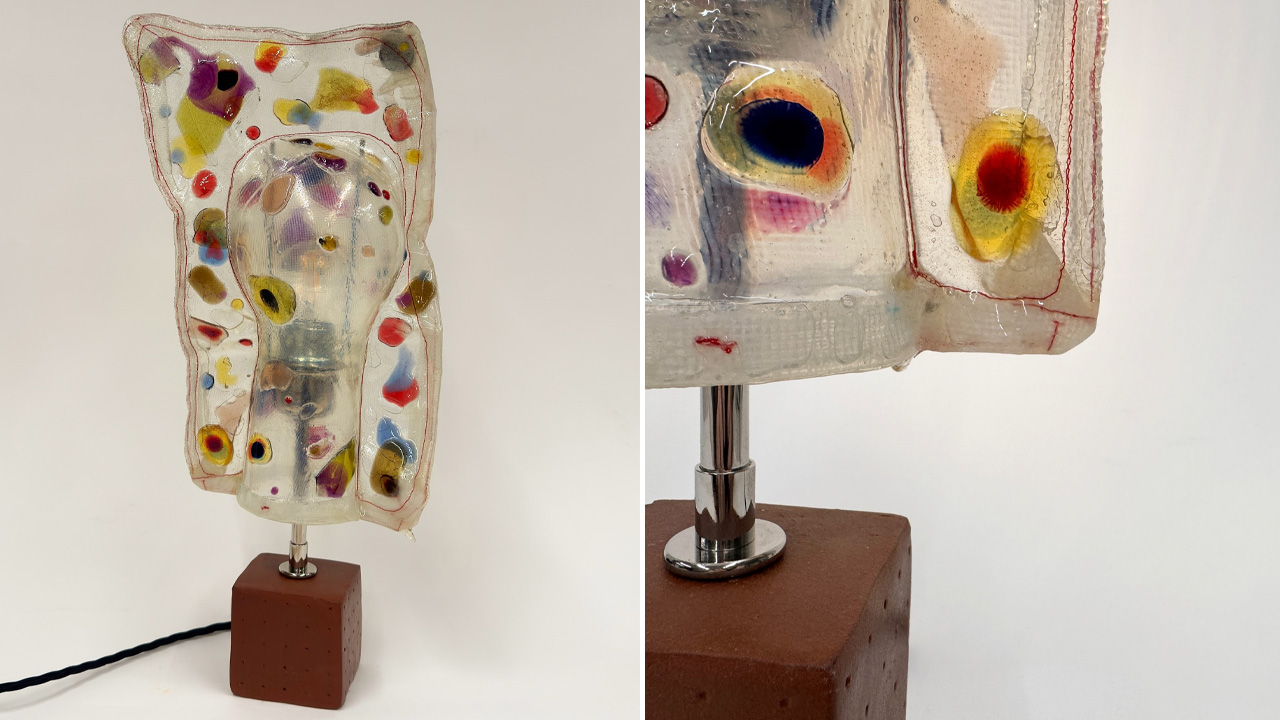
Using resin, Anderson suspends melted pigments that recall the fluid texture of candy as it softens under heat. This makes the shades look like dripping/hovering over the lamp.
For all the lamps, Anderson combines glass fiber and resin shades with raw waxed ceramic bases. Here, the contrast takes the prize. The candy lamp series is a dialogue between softness and structure, and translucency and mass. The upper parts, all colorful and luminous, give out an almost goopy look. They feature traces of making, like air bubbles and fine mesh impressions, giving them a sense of immediacy and spontaneity.
In stark contrast, the bases are crafted from raw, waxed ceramic. Their muted, earthy tones and heavy, dense mass serve as a contrast to the luminous upper forms. The proportion between the base and the shade allows the expressive resin forms to emerge while maintaining a formal balance.
The lamps’ working relies on the interplay between a central light source and a sculpted, multi-layered shade that acts both as a diffuser and a lens. Once switched on, the lamps change their perception. Color spreads through the resin unevenly; some areas emit a soft glow, while some remain dense. Lighting up the lamp activates the otherwise invisible details, turning the lamp into a character-changing piece.