
Whether you are upgrading some features of your existing kitchen or a complete home renovation, it is always a challenging task to protect your furniture, electronics, and other personal items during such projects. This simply implies you have to create a proper plan of what will happen to belongings during the renovation project so that they are safe during the repair. The first step should be to better know the importance of packing furniture, appliances, and other items. Thereafter, you can choose options to store them in a space in your home or rent a special place for them away from your home.
For a whole-house renovation, you often need to move furniture and household items. This requires you to plan to make the renovation process more manageable. The most important in your plan should be a clear timeline, complete with a room-by-room schedule. You should be prepared before the contractors arrive at the site. Labeling the packed boxes is equally important, as this becomes really helpful when you are unpacking.
When you have space at home, you can store packed belongings there, but this does not apply to larger renovations, as it requires more space. This is where you need to hire temporary off-site storage for your furniture and other expensive items. In such situations, a self-storage unit can provide additional space for all belongings.
Whether you plan to store items at home or elsewhere, the most crucial step is to employ a systematic approach to packing. This not only helps protect your possessions but also simplifies unpacking after the renovation is complete. This guide on how to pack for home renovation, with a room-wise checklist, will help you set things in motion.
Create Renovation Packing Plan
Before you start packing, you first need to assess the scope of the renovation project. This includes identifying which areas of your home will be exposed to dust and construction traffic. This will help you estimate how many belongings you need to pack and where they can be stored.
Next, you have to create a clear timeline for every room. You can start by packing items you don’t use regularly. This includes seasonal decorations, guest room furniture, and rarely used kitchenware. You have to leave the everyday essentials out until the renovation work starts.
Declutter Before You Pack
When planning a complete home renovation, you get an opportunity to reduce the household clutter. As you sort through belongings, you can separate items into four categories: keep, donate, sell, and discard. Getting rid of unnecessary items before packing is an important task when decluttering. It reduces the number of boxes you need to move and store.

Gather Packing Supplies
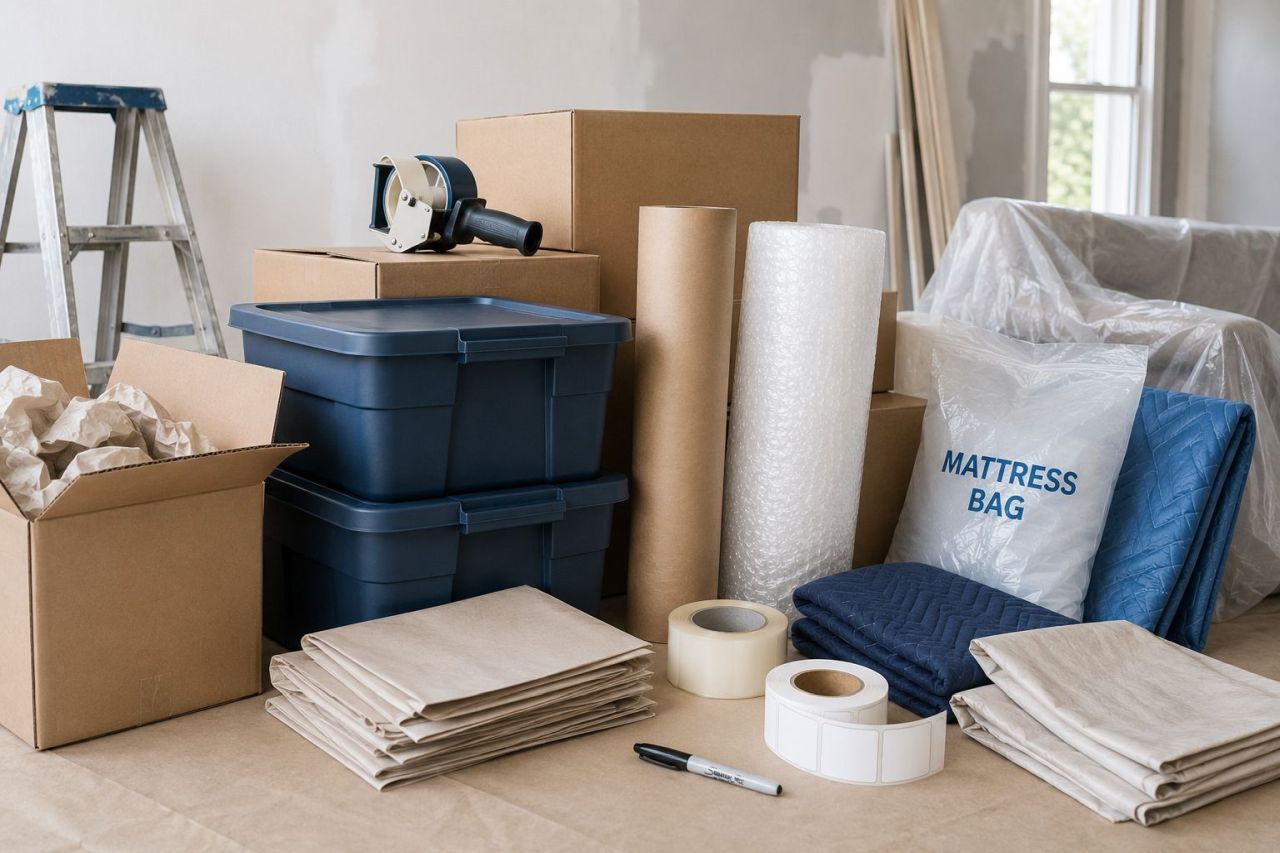
Packing is important to safeguard your items, so you should invest in the packing materials thoughtfully. If you have the right materials for packing different items, it can prevent damage during storage and transportation.
See the packing supply checklist below:
- Sturdy moving boxes
- Plastic storage bins
- Packing paper
- Bubble wrap
- Packing tape
- Permanent markers
- Labels
- Furniture covers
- Mattress bags
Additionally, plastic bins can offer additional protection against dust and moisture. They can be used particularly for items that will remain stored for several weeks or months.
Also Read: Preparing Your Home for Long‑Distance Move – Tips to Reduce Stress and Damage
Pack One Room at a Time
Packing room by room helps maintain organization so that you don’t have to get confused later.
Bedrooms
Packing the bedroom separately will help you in your daily life until the project is completed. This ensures that everyday essentials are easy to find if family members continue to live in the home during the renovation. In the meantime, you can pack out-of-season clothing, spare bedding, decorative items, and anything not needed daily. Wardrobe boxes or garment bags can be used to store clothing that wrinkles easily.
Living Room
The living room often contains electronics, artwork, books, and decorative pieces. Packing these items together reduces the risk of damage, as you always know that these items can be broken if handled improperly. This also makes it easier to set up the space again once the project is complete. It is recommended to wrap television screens and monitors and store them upright.
Also Read: How to Move Heavy Furniture by Yourself (12 Pro Tips)
Kitchen
The kitchen typically contains fragile items like dishes and cookware, so it is better to pack this room separately to prevent breakage. This also helps homeowners quickly locate essential cooking supplies if needed. Start by packing cookware and rarely used appliances. Wrap dishes, glasses, and ceramics individually to reduce the risk of breakage.
Bathroom and Laundry
Organize bathroom items in dedicated boxes so that you can easily access them throughout the renovation. This also prevents wet leaks from bathroom items without damaging belongings packed from other rooms. Pack the laundry supplies separately so that they are labeled differently for easy identification later on.
Home Office
If you have a home office, it is best to pack and store items from that area properly, as they can get misplaced easily. Store physical documents in clearly labeled folders or waterproof containers. Work equipment you will be needing can be stored in a separate box so that you can access it anytime during the renovation.
Children’s Room
When you pack a child’s belongings together, you can easily keep them organized. Children can find familiar items during the renovation.
Protect Fragile and Valuable Items
Dust from construction projects can affect delicate belongings, so you should wrap them individually using packing paper or bubble wrap. You have to store valuable documents, jewelry, collectibles, and sentimental items in a secure location away from active construction zones.
Label Everything Clearly
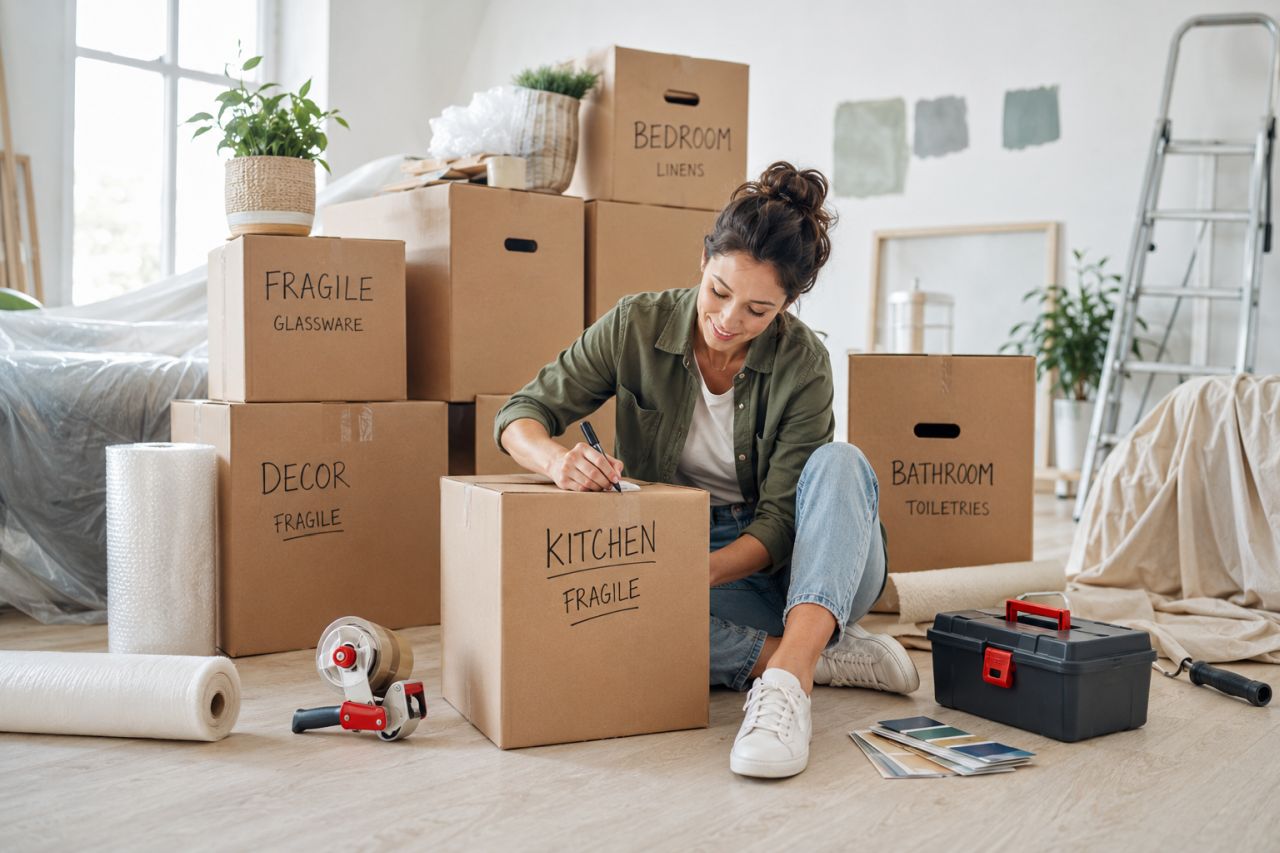
Labeling may seem tedious, but it can save significant time when unpacking. You can also use color-coded labels that make it easier to identify items from a specific room.
Mark each box with:
- The room it belongs to
- A brief description of the contents
- Any handling instructions, such as “Fragile” or “This Side Up”
Declutter Your Home
When renovating your home, it is not necessary to take out every item. Furniture pieces located far from construction zones can be simply wrapped with protective coverings. However, when dealing with larger renovations, workers require complete access to work areas. This means you will have to relocate furniture, rugs, electronics, and decorative items to prevent damage. This is why separate storage during home renovation is required.
If you are planning to store items off-site, create an inventory list to keep track of what has been packed and where it is located.
Set Up an Essentials Area
During a renovation, it is possible that you can not access certain rooms, so you should prepare a separate box or container with everyday necessities.
Include items such as:
- Toiletries
- Medications
- Chargers
- Basic tools
- Important documents
- Cleaning supplies
- A few days’ worth of clothing
Protect Furniture and Large Items
Moving furniture away from construction zones can prevent them from the from dust and other debris during renovation. You can cover larger pieces with furniture blankets, plastic sheeting, or fitted protective covers. Avoid placing heavy objects on upholstered furniture or mattresses during storage, as this can cause permanent damage over time. The main challenge is to decide where to put furniture during renovation, and this depends on the space available in your home, which doesn’t interfere with the renovation areas.
Coordinate With Your Contractor
You should discuss storage needs and work zones before the construction starts. Contractors can help identify areas that need to be cleared for renovation. Once you know what areas will be affected, you can prevent last-minute packing and relocation challenges.
Make Unpacking Easier
When the construction is nearing completion, you need to revisit your inventory list and prioritize which rooms should be unpacked first. Bedrooms, bathrooms, and kitchens should be done on priority over guest rooms and storage areas. Just like the packing process, it is a best practice to unpack one room at a time for maintaining organization.
Final Thoughts
Packing for a home renovation takes time and planning, but the effort can help protect your belongings and reduce stress during construction. By decluttering, organizing, labeling boxes, and choosing appropriate storage solutions, you can create a safer environment for both your possessions. A well-prepared packing plan can also make settling back into your newly renovated space much easier after the project is complete.
FAQs
A. No. You need to clear only the rooms affected by the renovation, though nearby areas may need protection from dust.
A. You can wrap them individually with packing paper or bubble wrap and place them in sturdy, labeled boxes.
A. This box should include toiletries, medications, chargers, important documents, and other everyday necessities.
A. Not always. It may be useful for large renovations when there is not enough storage space in the home.
A. Waiting until the last minute. Packing early helps reduce stress and keeps belongings organized.