When it comes to chess, I have a big player ego. Boasting a 1,200+ ELO rating, I have unceremoniously decimated colleagues, relatives, and occasional overconfident players. But finding a truly worthy adversary, someone who pushes back, punishes mistakes, and keeps me grounded, has always been a challenge. Human opponents at my level are scarce, and apps on a flat screen don’t tickle my fancy. So when SenseRobot announced the Chess Mini, a compact AI-powered robot with a physical arm that actually moves pieces, I was intrigued enough to spend some time with it.
Components
The model arrived well-packaged, and the complete set includes several components. Here is a list of items received in the box:
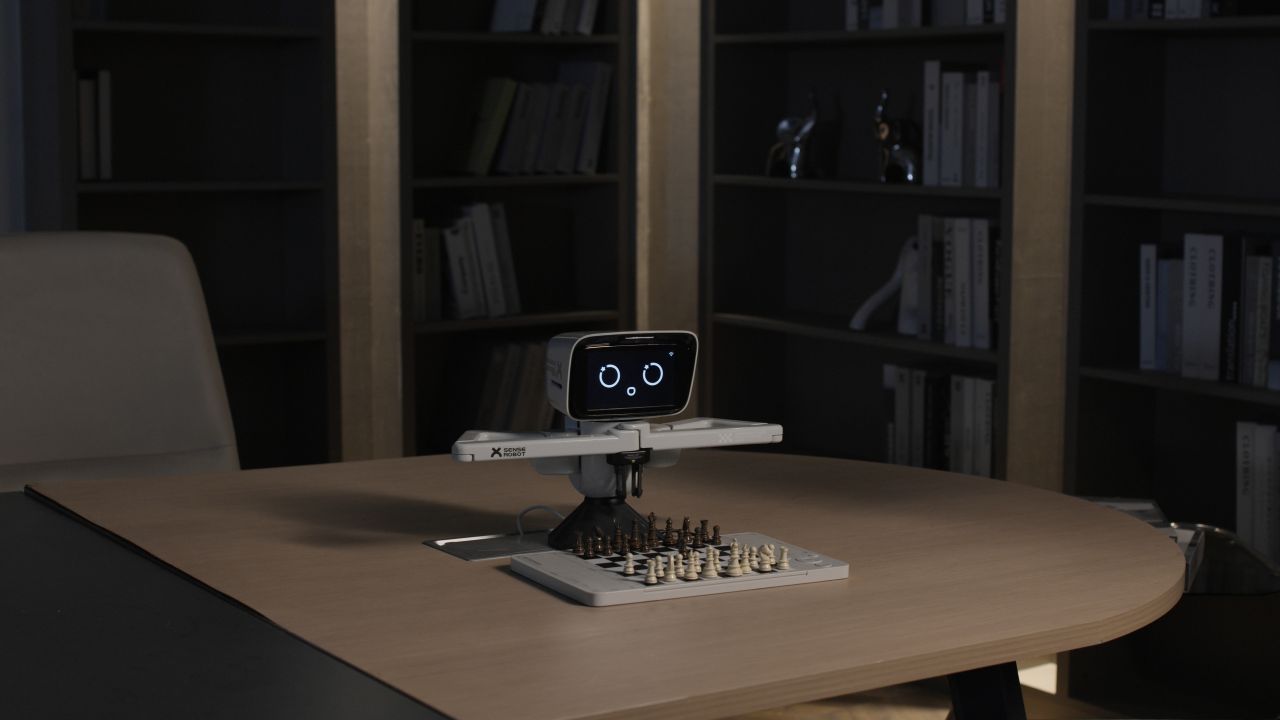
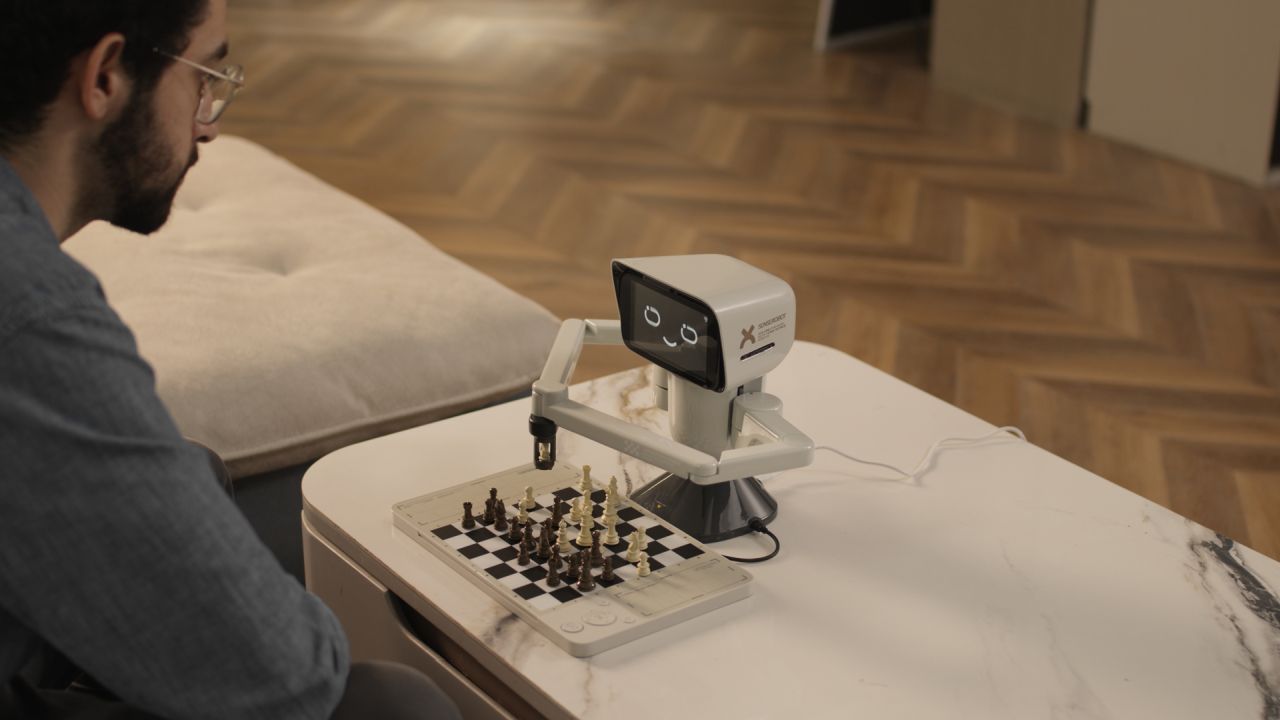
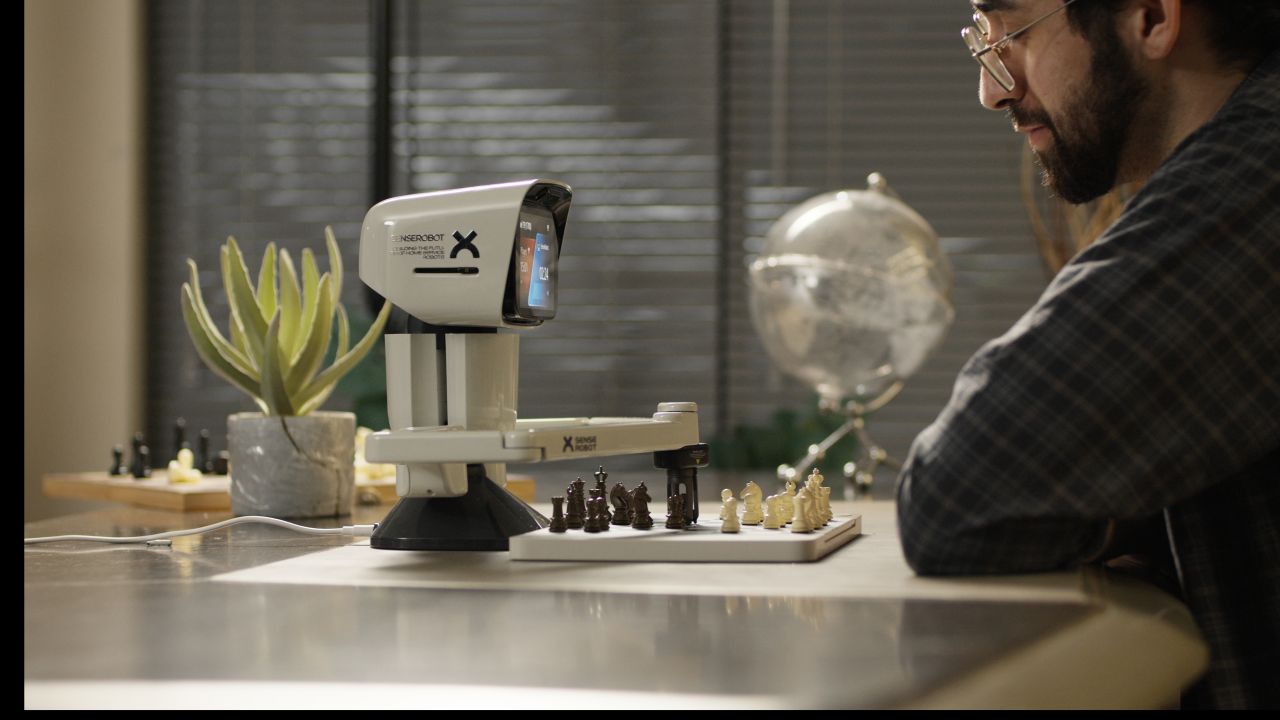
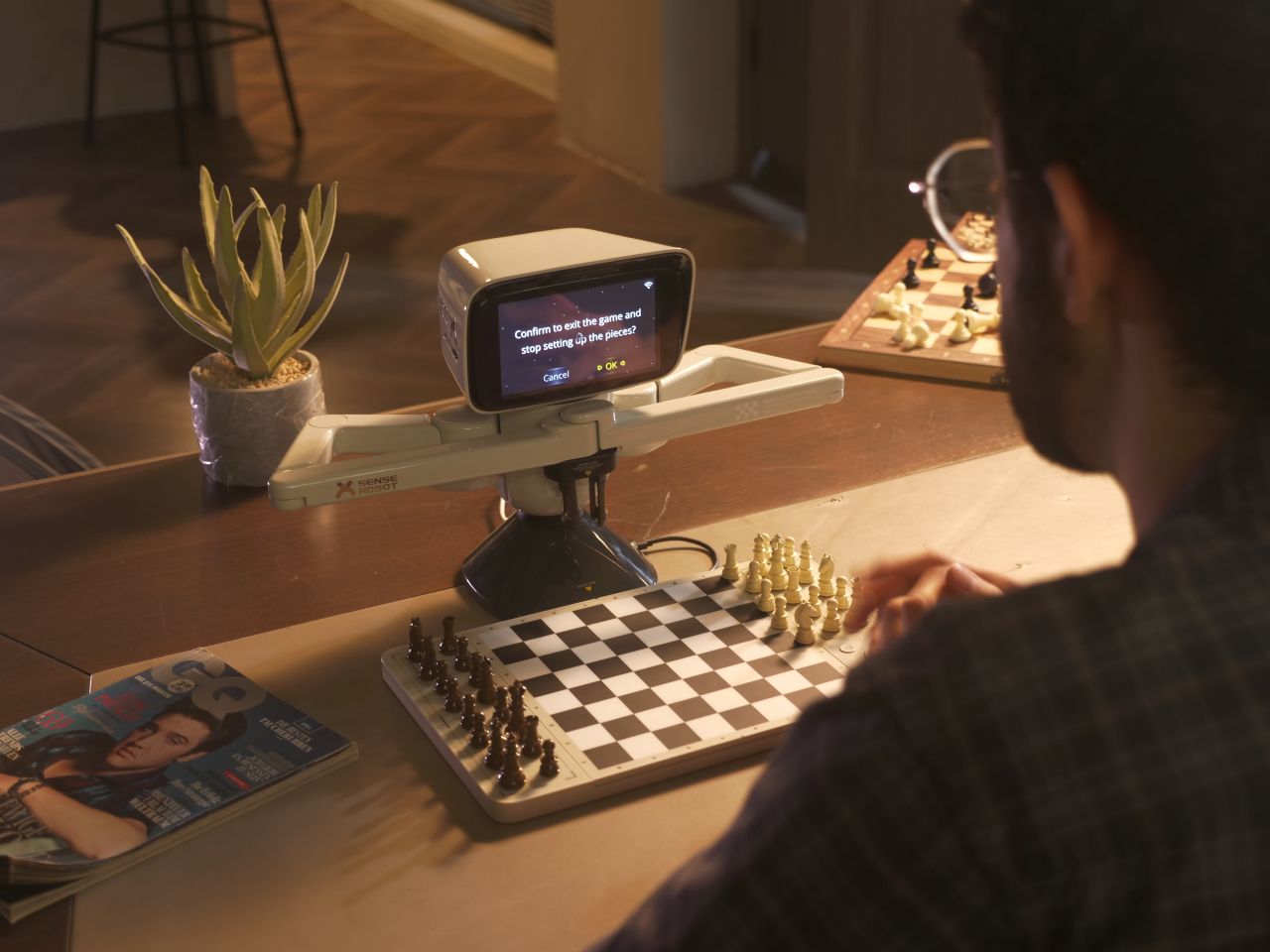
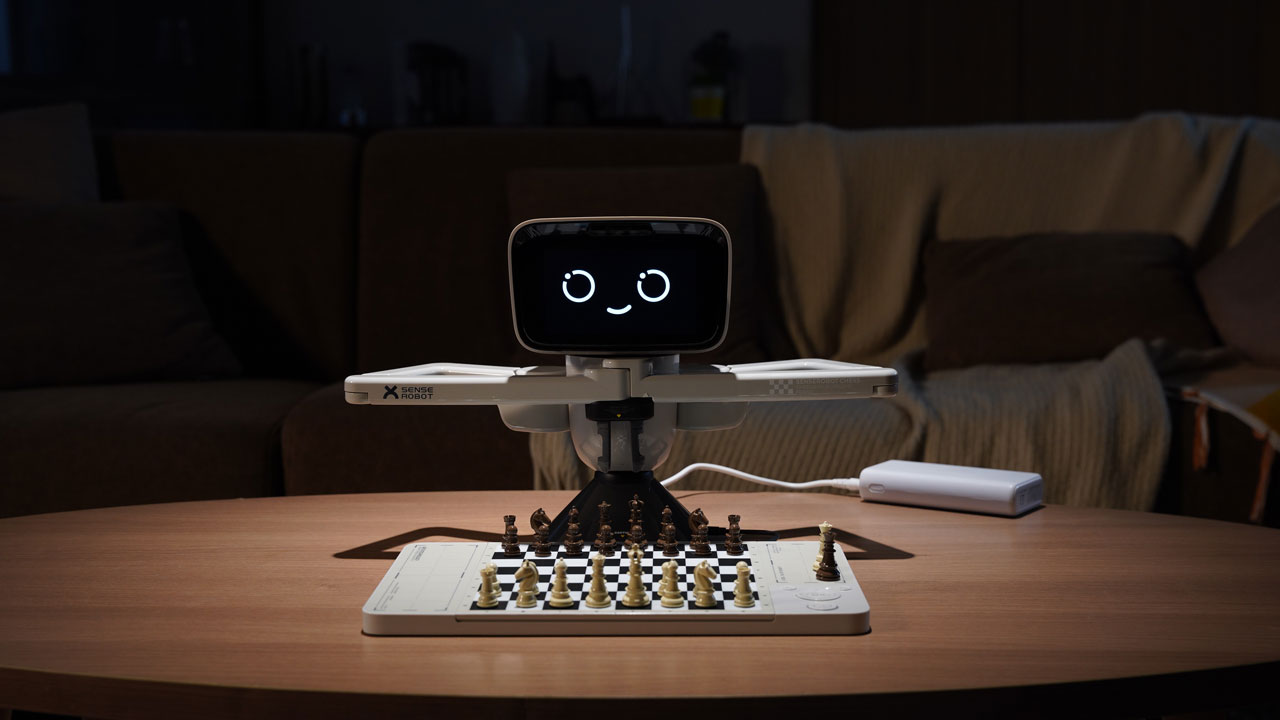
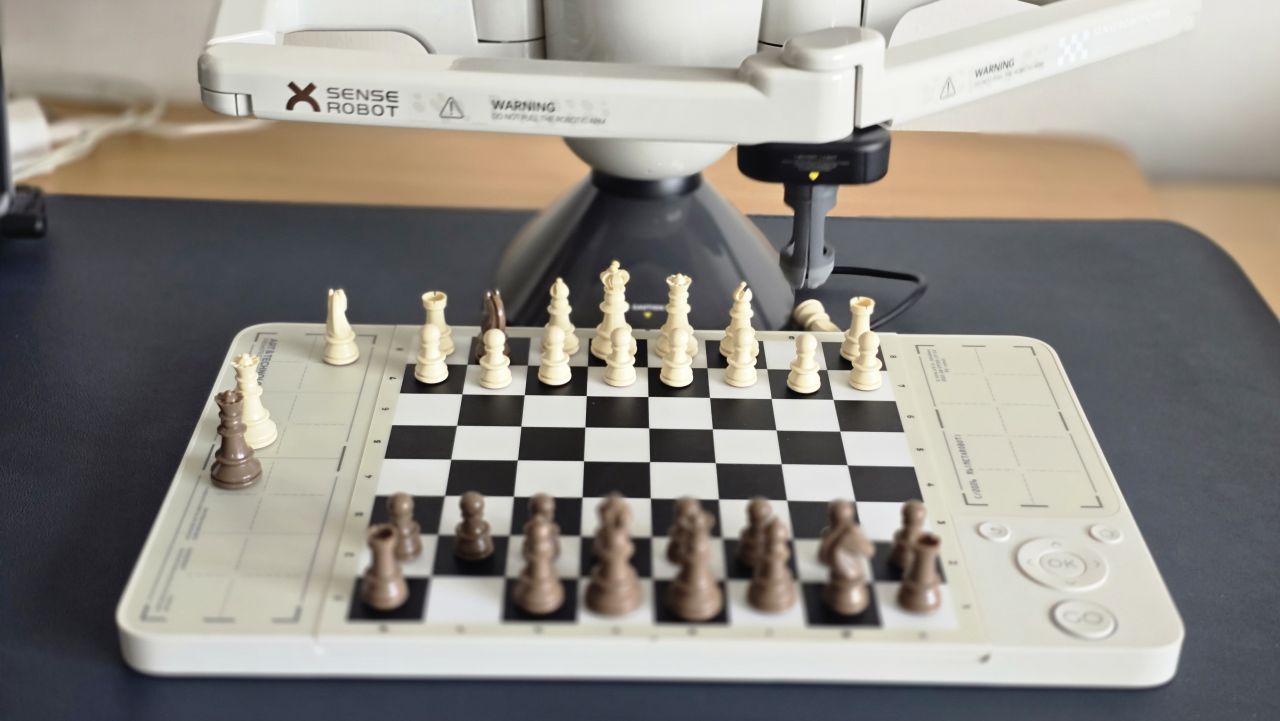
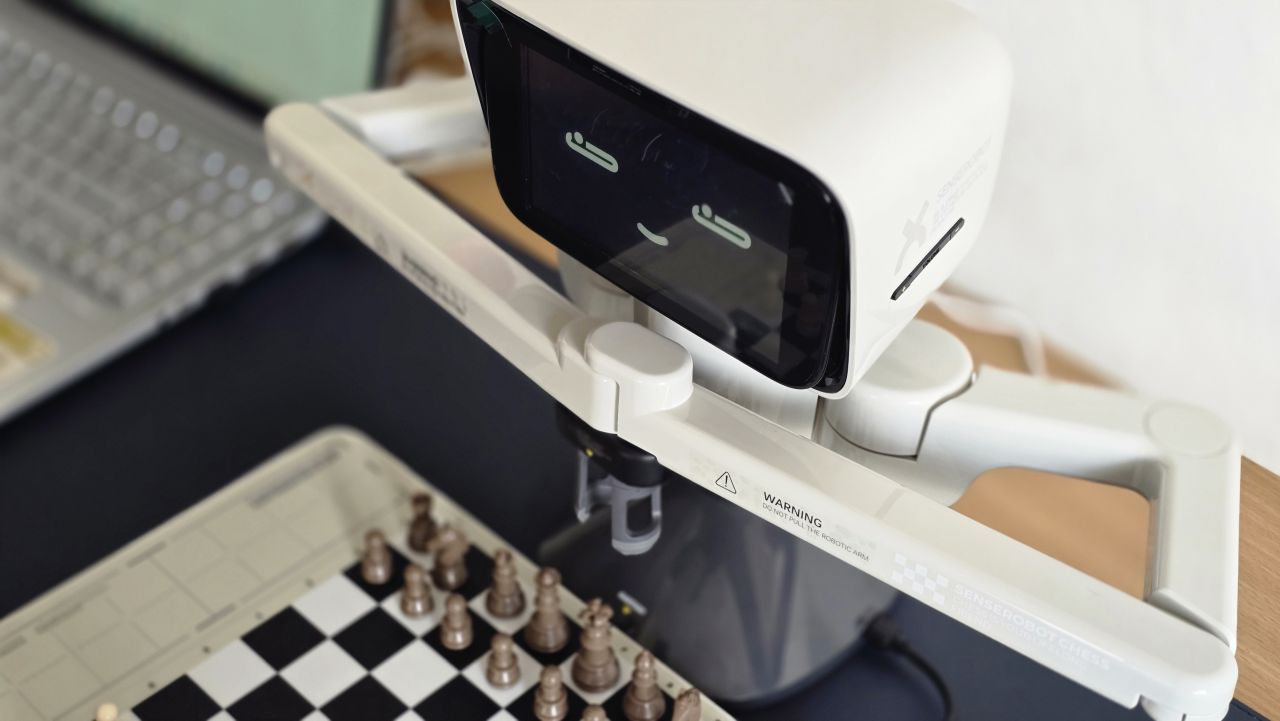
Chess Robot with Physical Arm: The star of the show is, without question, the robot itself. It is cute and intelligent, and doubles as a decorative piece. The robot unit sits at one end of the board, with its head housing a sizable display that functions as both a chess clock and an interactive interface. The arm, mounted to the body, is what gives this machine its personality, and it is the feature you will keep showing off every time someone walks into the room.

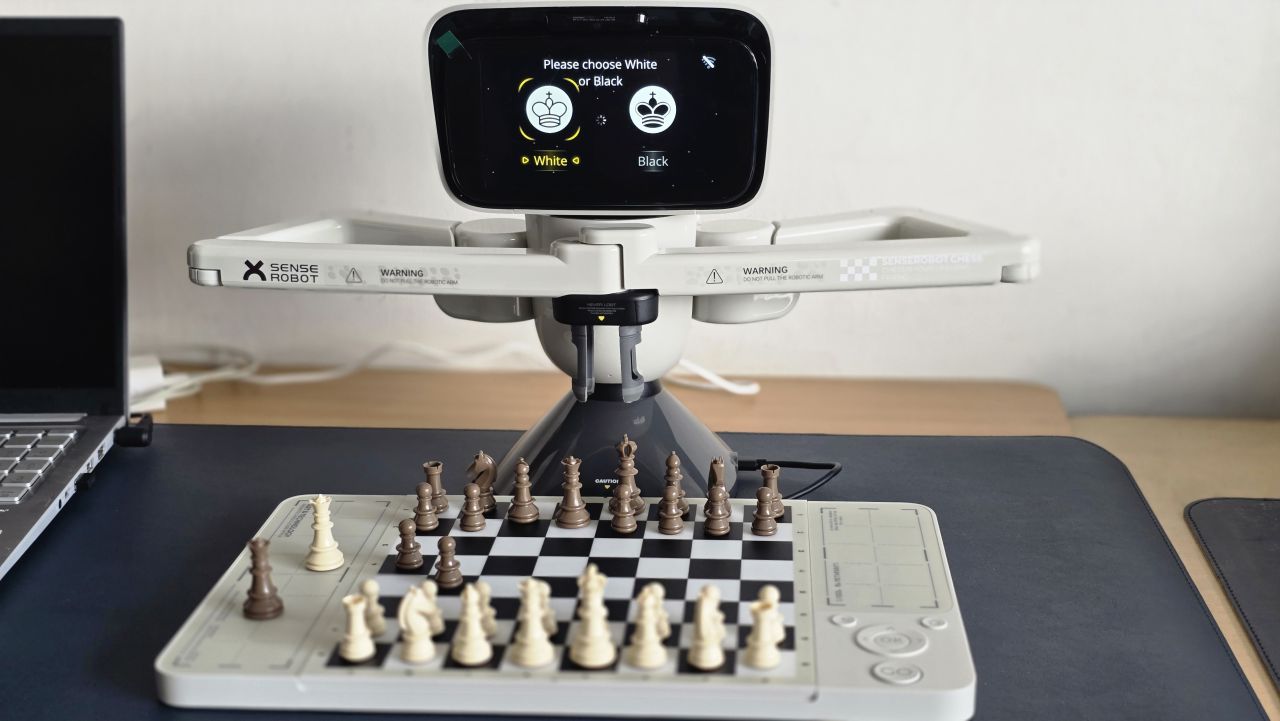
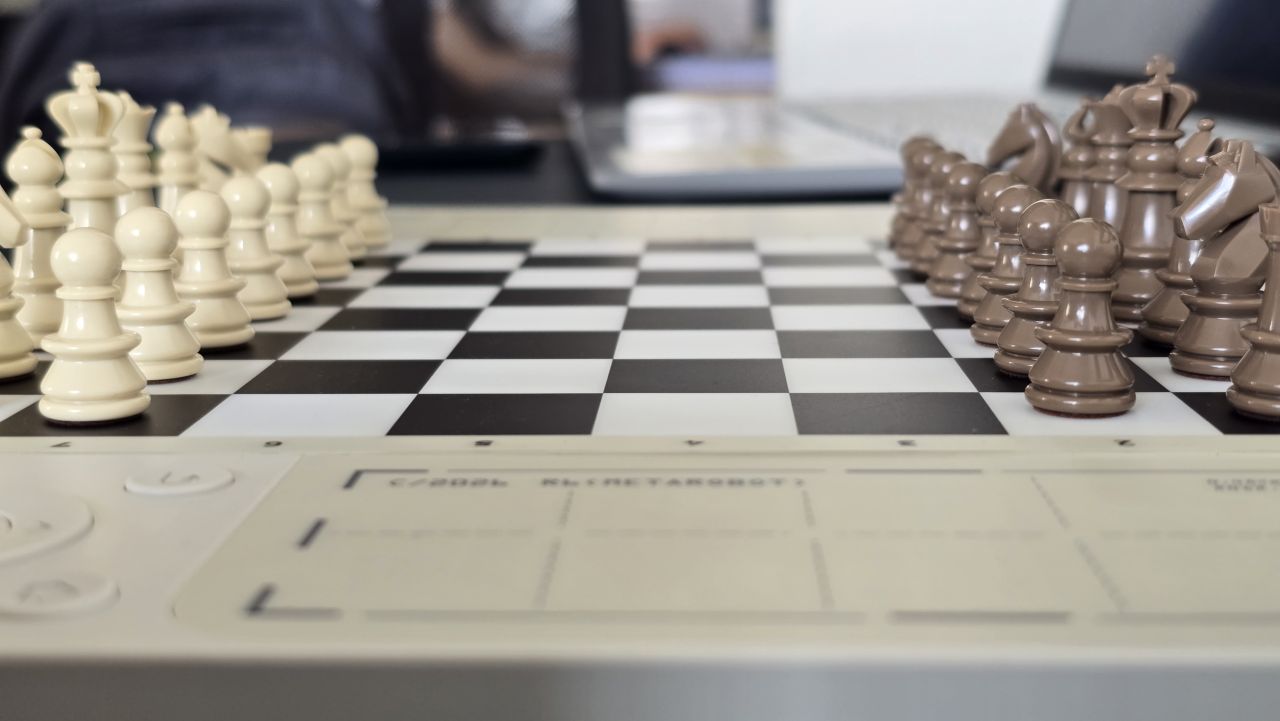
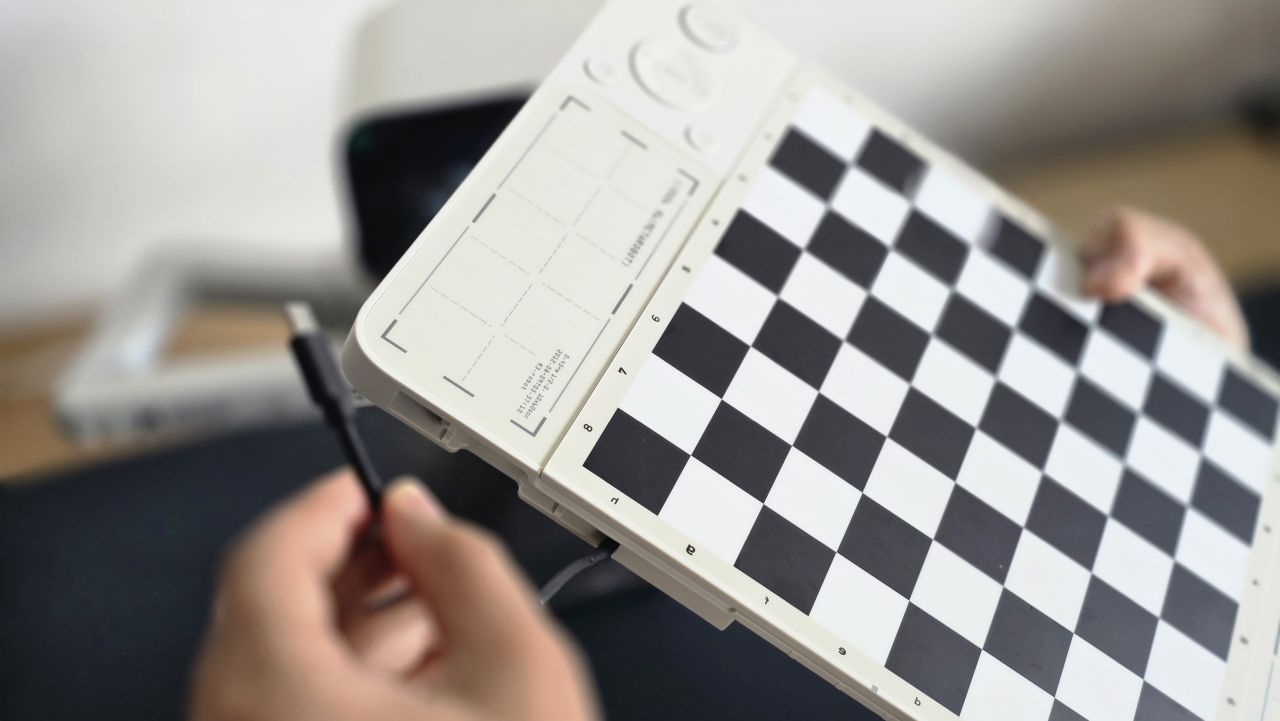
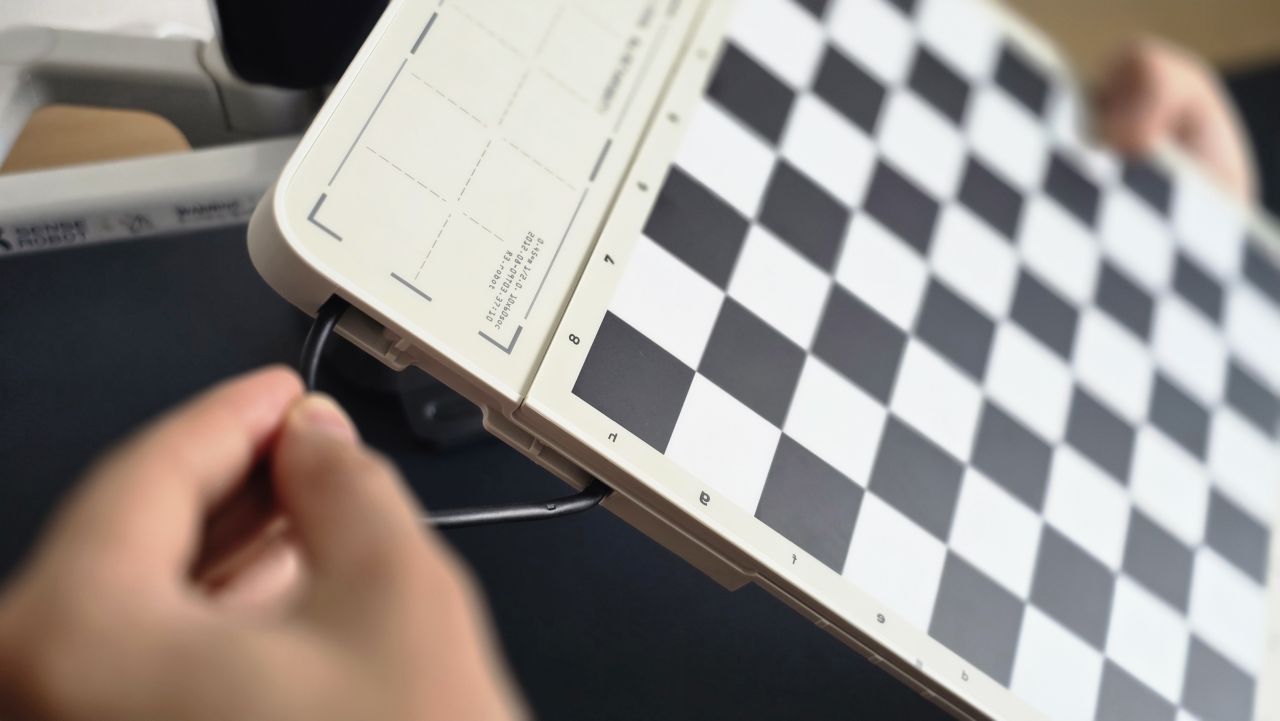
Chess Board: Measuring 13 inches on all sides, the board is clean and compact, making it suitable for a desk, a coffee table, or even a travel bag. The magnetic surface keeps pieces firmly anchored to their squares. Before playing, the chessboard has to be securely attached, and the USB cable connecting the board to the robot must be properly plugged in.

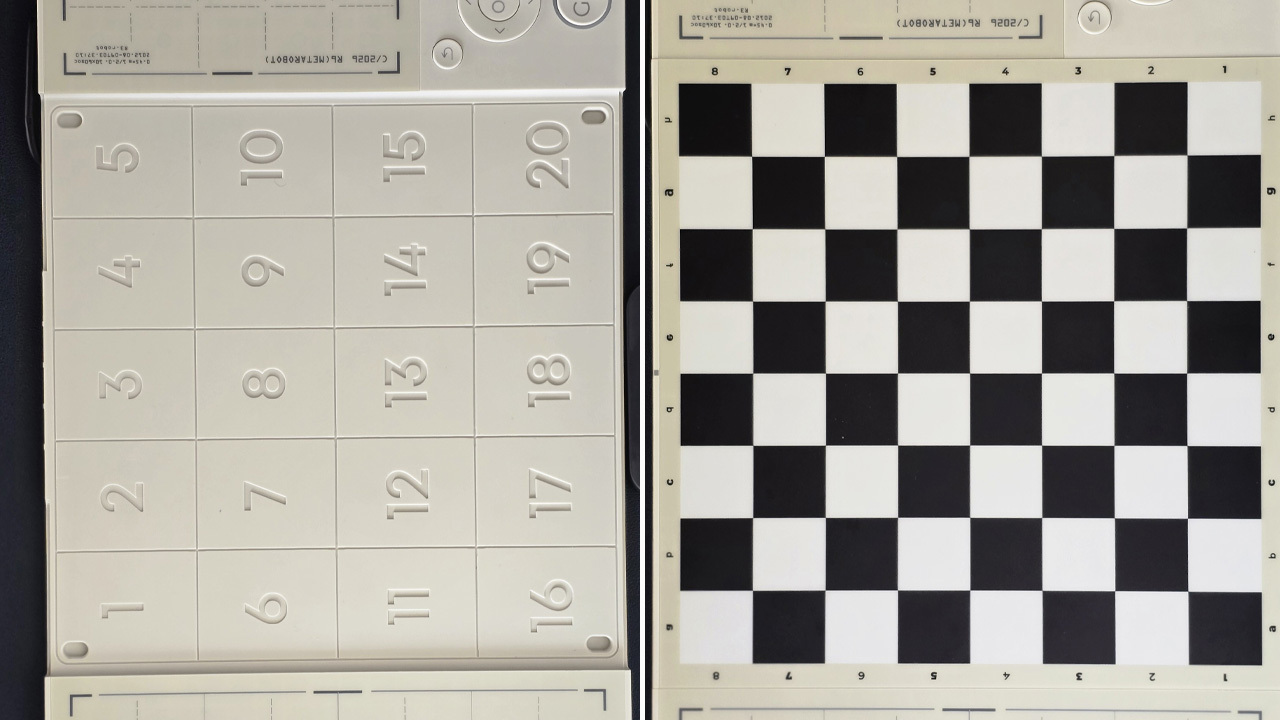
Pieces: There are 34 pieces in total, including two spare queens (one of each color). Each piece is light and well-crafted, and finished to a quality that punches well above its weight. They arrive neatly organised in a designated storage box. Other items include 40 programming cards and a universal power adapter (4 plugs included).
The Arm is the Star of the Show
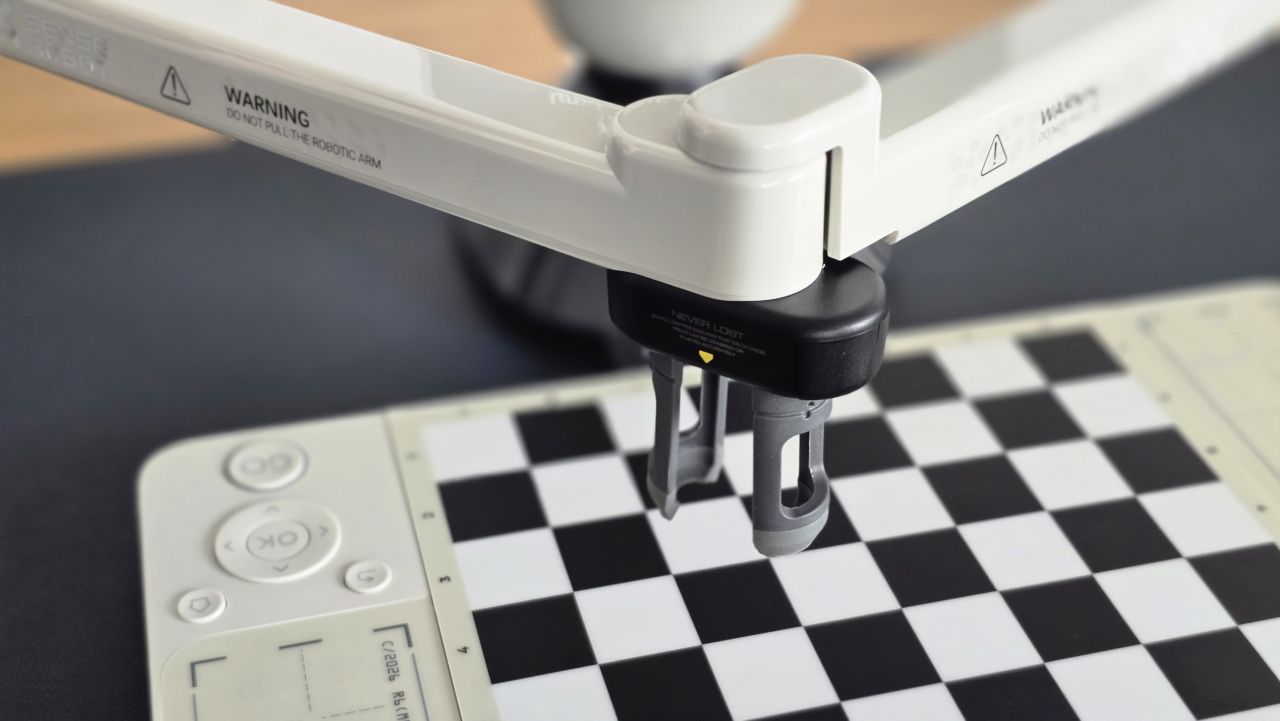
What makes the entire model worth discussing is, undeniably, its robotic arm. Boasting four degrees of freedom, the arm physically repositions pieces after each move. To see the mechanical arm reach out, grip a piece, and glide it purposefully across the board is delightful to watch. It restores a sense of theatre to the game that digital chess entirely strips away.
The arm delivers millimetre-level positioning and uses a soft yet firm grip, strong enough to hold each piece securely while being gentle enough to avoid damage. The arm moves with a smooth confidence that reads as almost human, and for the vast majority of moves, it executes cleanly and precisely.
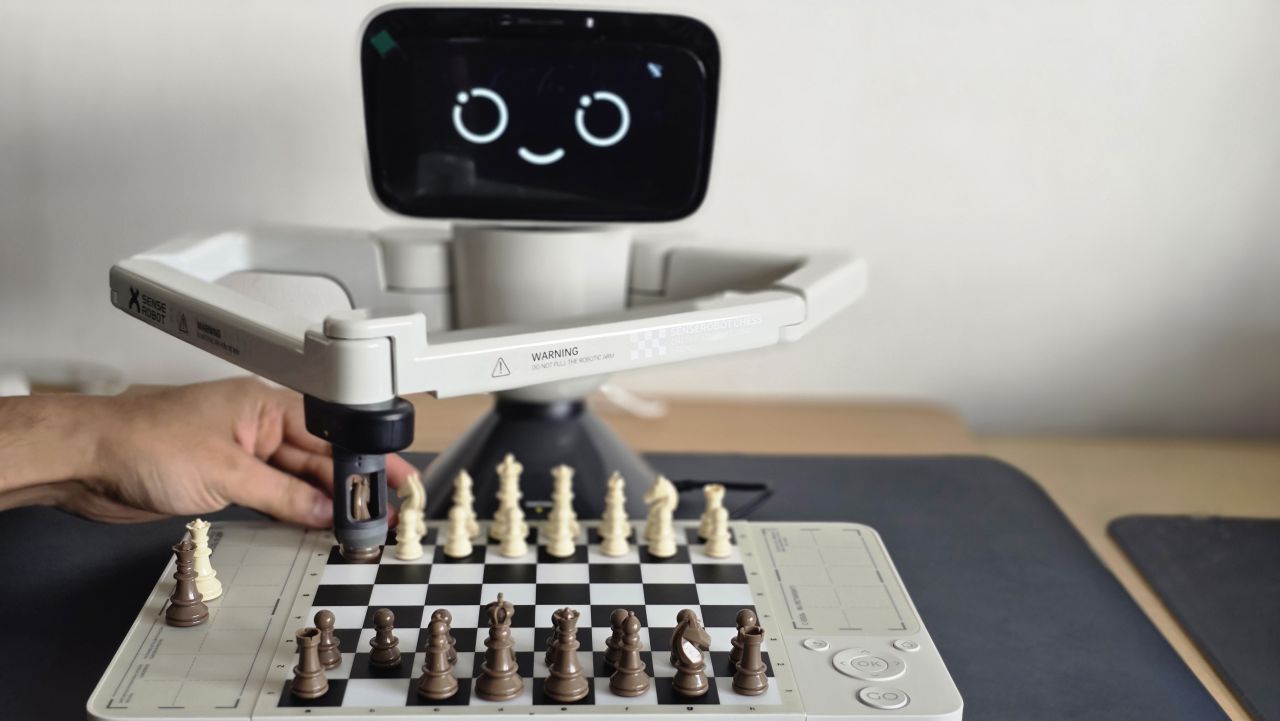
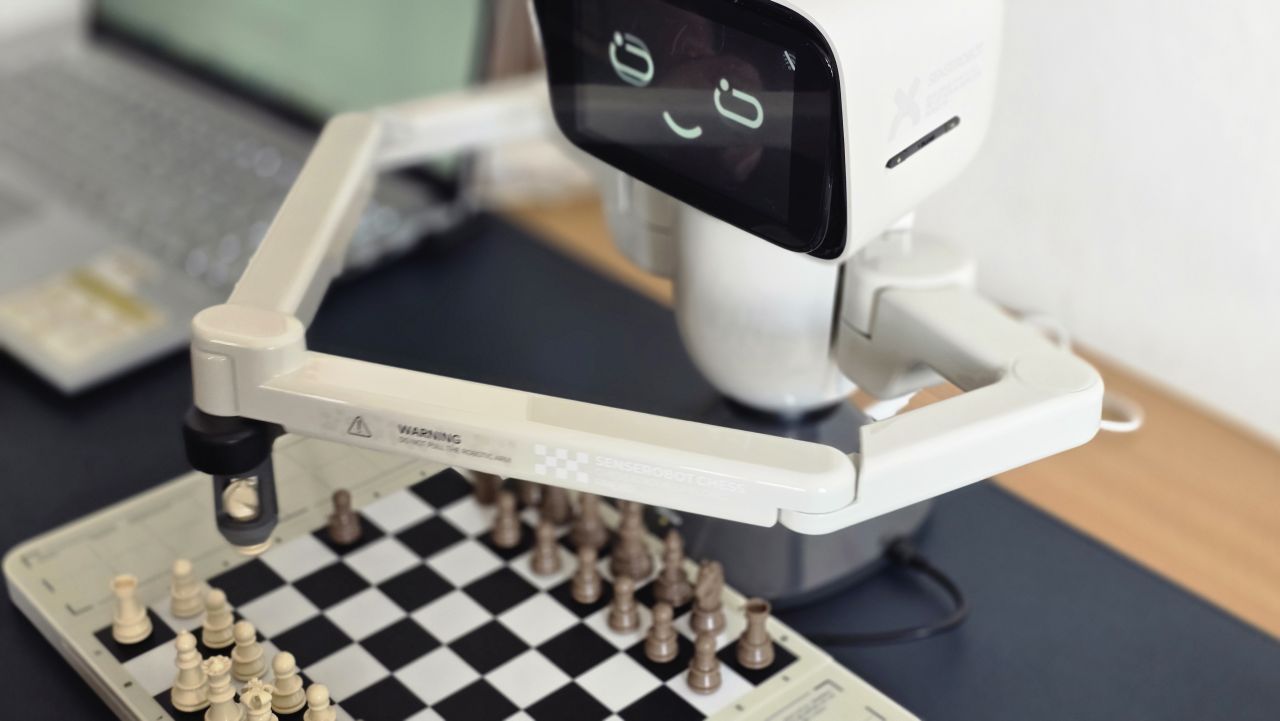
Another USP of the chess robot is its camera recognition. Thanks to advanced vision algorithms that enable the robot to track and respond to piece positions in real time. In my testing, the system achieved 100% recognition accuracy across all chess pieces. That said, there is still some scope for improvement. I found that the gripper struggles to grab pieces in tighter spaces. It handles open moves well, but crowded, complex, or packed scenarios require a more robust, refined grip geometry to ensure consistent, decisive action. While this isn’t a dealbreaker, it is a noticeable reminder that the product is still in the testing phase.
Playing Against it: Levels, AI, and Coaching
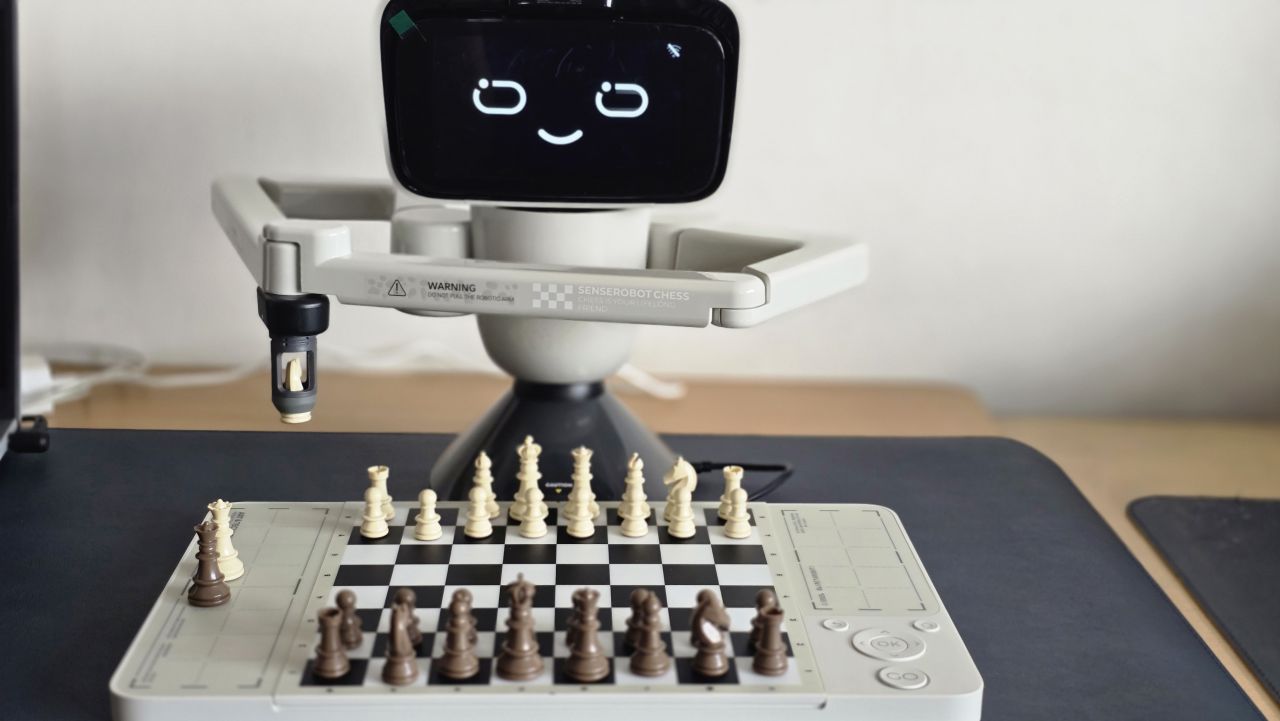
Similar to Millennium Chess Classics, which I reviewed earlier, the Chess Mini also offers multiple difficulty levels based on ELO ratings ranging from 200 to 1,700, providing a finely tuned challenge for players from absolute beginners to advanced club players. I spent most of my time in the 1,100 to 1,400 bracket, and the AI felt appropriately competitive without feeling either cheap or artificially constrained. For those who want to hustle, the Apex Duel mode connects over the internet to reach a professional-grade ELO of 3,200. I am yet to try my hand at it.
Integrated with advanced large language models, the robot doesn’t just function as your competitor, but also acts as an interactive mentor. You can interact with it and ask questions mid-game, and it will verbally explain the strategy behind a move or offer suggestions on what move to make next. These kinds of responses are useful for intermediate-level players trying to learn gambits, grasp positional concepts, and understand tactical themes.
As detailed in our feature on SenseRobot Chess Mini’s crowdfunding campaign, the robot comes with a comprehensive library of 1,200 practical exercises, 145 classic endgames, and 100 puzzles, giving it substantial depth as a training tool beyond simply playing games. For younger players and beginners, the Chess Mini also supports chess learning through 25 structured lessons, with the display on the robot’s head serving as both a chess clock and an interactive teaching interface.
The device allows users to play games from Chess.com and Lichess.org via Chessconnect on a real, physical board without needing a phone or PC. Your online opponent makes a move, and the arm physically executes it on your board. You make your move, press the confirmation button, and the game proceeds. Honestly, I have yet to explore this aspect as well.
The Software Needs More Work
Despite its impressive concept and strong hardware execution, Chess Mini still shows some early software growing pains. Much of my frustration, however, stems not from the hardware but from the software accompanying it. During setup and gameplay, the board sensors can occasionally misidentify piece positions or prompt unnecessary replacement actions. In some instances, the robotic arm may even attempt to place one piece on top of another. Fortunately, these issues appear to be software-related rather than mechanical, and ongoing firmware updates have already been improving detection accuracy and overall stability.
Pricing and Value
The Chess Mini is available now for an Early Bird price of $400 on Kickstarter. Post launch, it will retail for $700. After spending a good week or two with the SenseRobot Chess Mini, here is a list of features I liked and loathed about the device.
What I Liked
- The arm is precise, smooth, and genuinely delightful to watch
- Strong AI coaching layer with LLM integration
- Excellent build quality and pieces
What I Didn’t Like
- The arm grip could be more decisive in crowded positions
- Software onboarding needs polish
- The chess robot is in testing, and its application is unavailable for now
The Bottom Line
While the software needs tweaking, the hardware has been perfected. The robot makes me smile every single time I switch it on. The pieces are nice to touch, and the arm, being the centrepiece of the entire experience, is a joy to watch in motion. I have not yet had the chance to explore much of the teaching functionality, as occasional software hiccups still interrupt the experience.
The caveats are real but not fatal. The software integration needs polish, and the arm’s grip mechanics have room to grow. These are the things you accept when you are early to a product that is still evolving toward its final form. Even with those rough edges, I kept reaching for it over my regular board. To put it simply, this is a smart chess robot that will earn its place as a centrepiece of my living room.