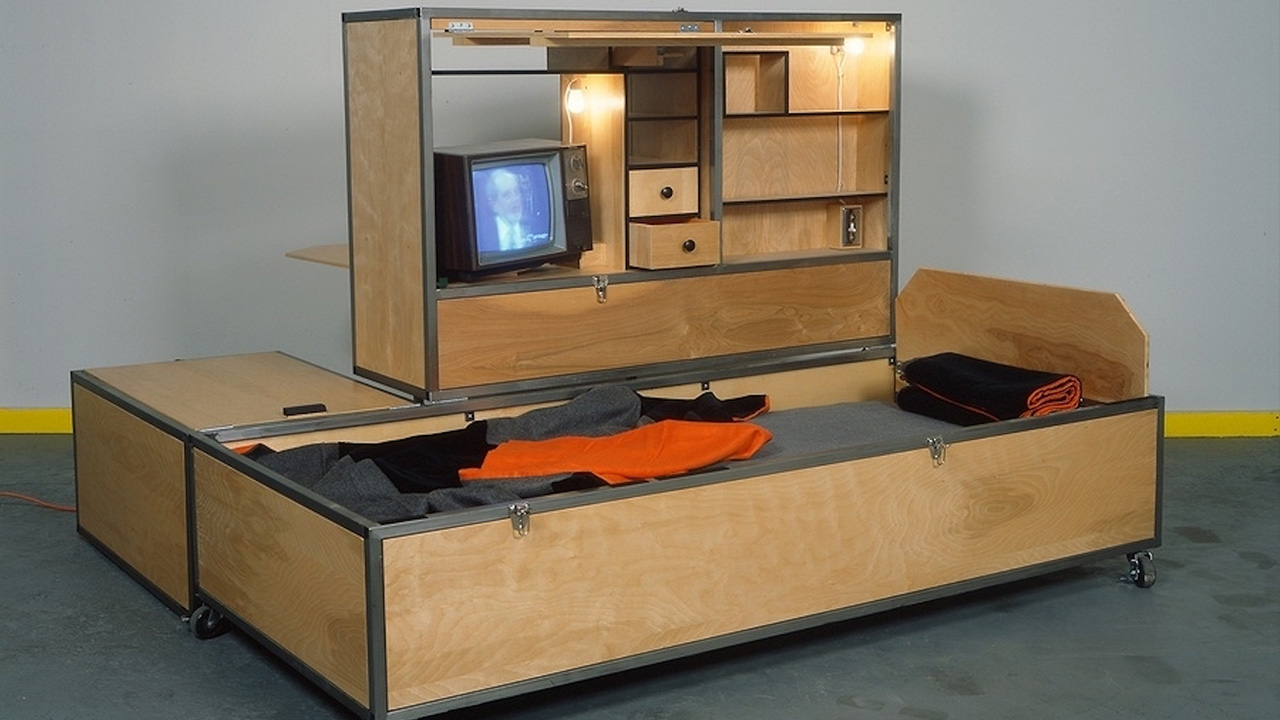
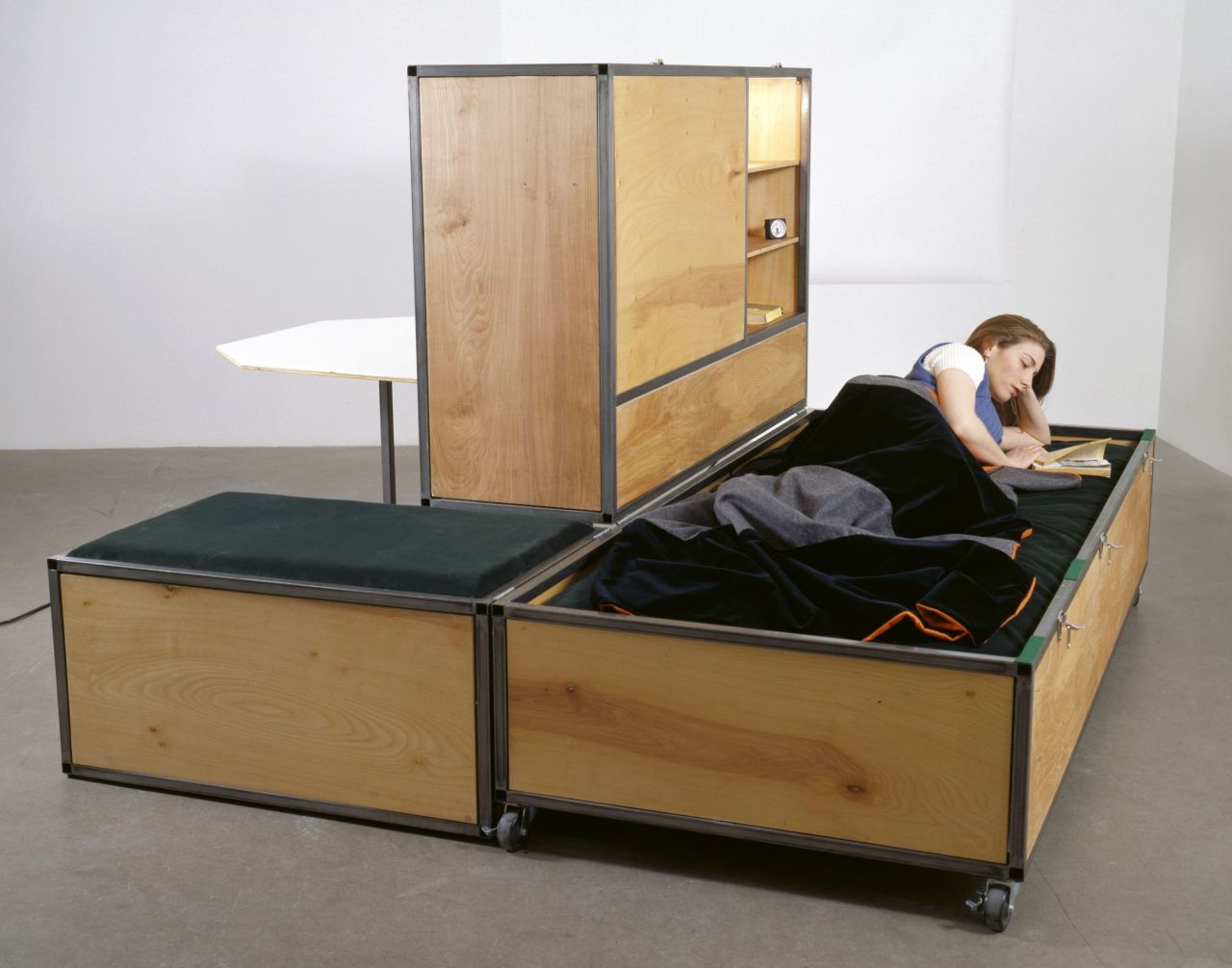
American artist Andrea Zittel’s A-Z Living Units are a great example of how small-space living has long been a source of inspiration. The main idea behind these mini living units is to accommodate everything necessary for living into a single piece of furniture, making it easy to move. The design incorporates a folding bed, stools, storage compartments, and work surfaces into a 3-square-meter collapsible structure that can also be moved on casters to another location. These 30-year-old units offer a unique solution to modern housing conundrums.
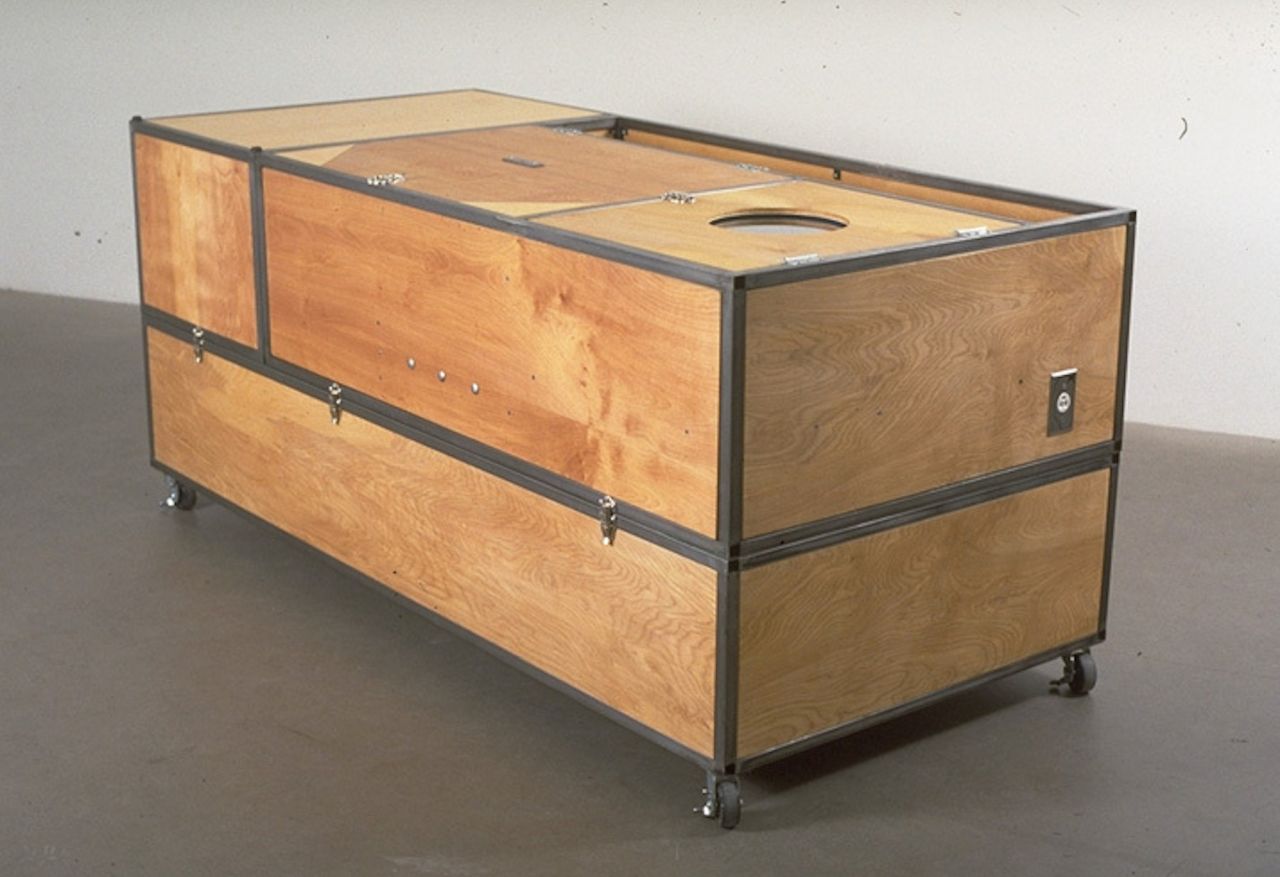
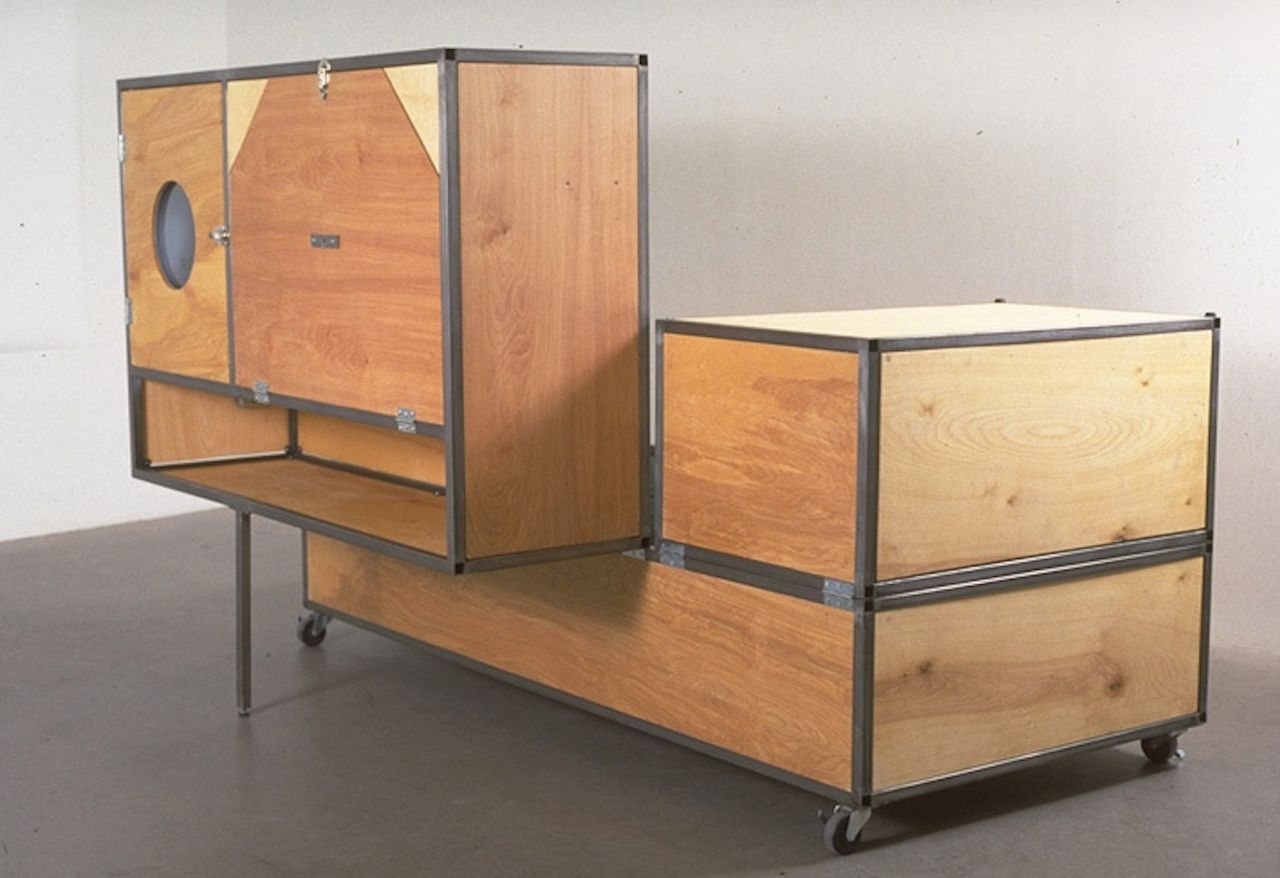
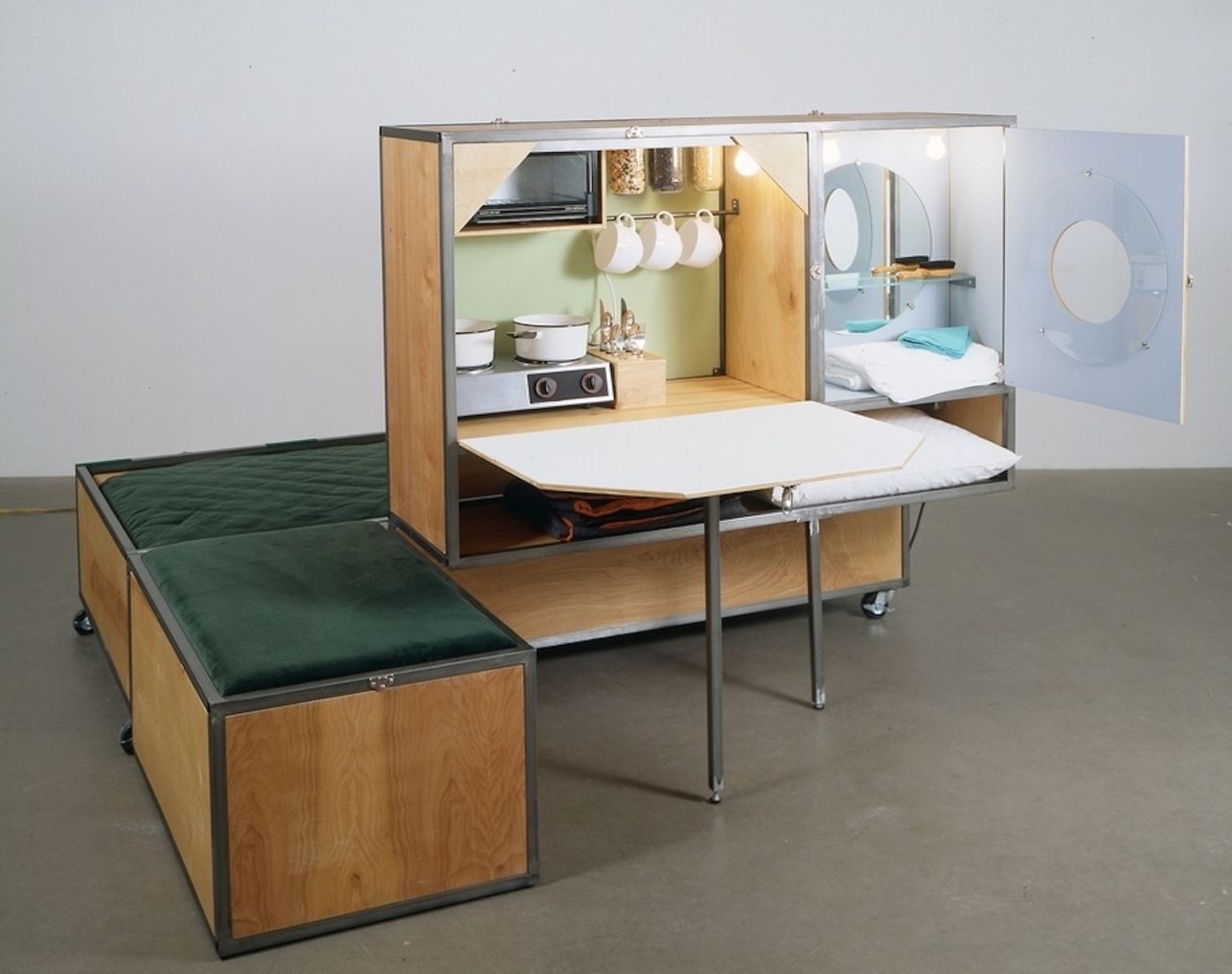
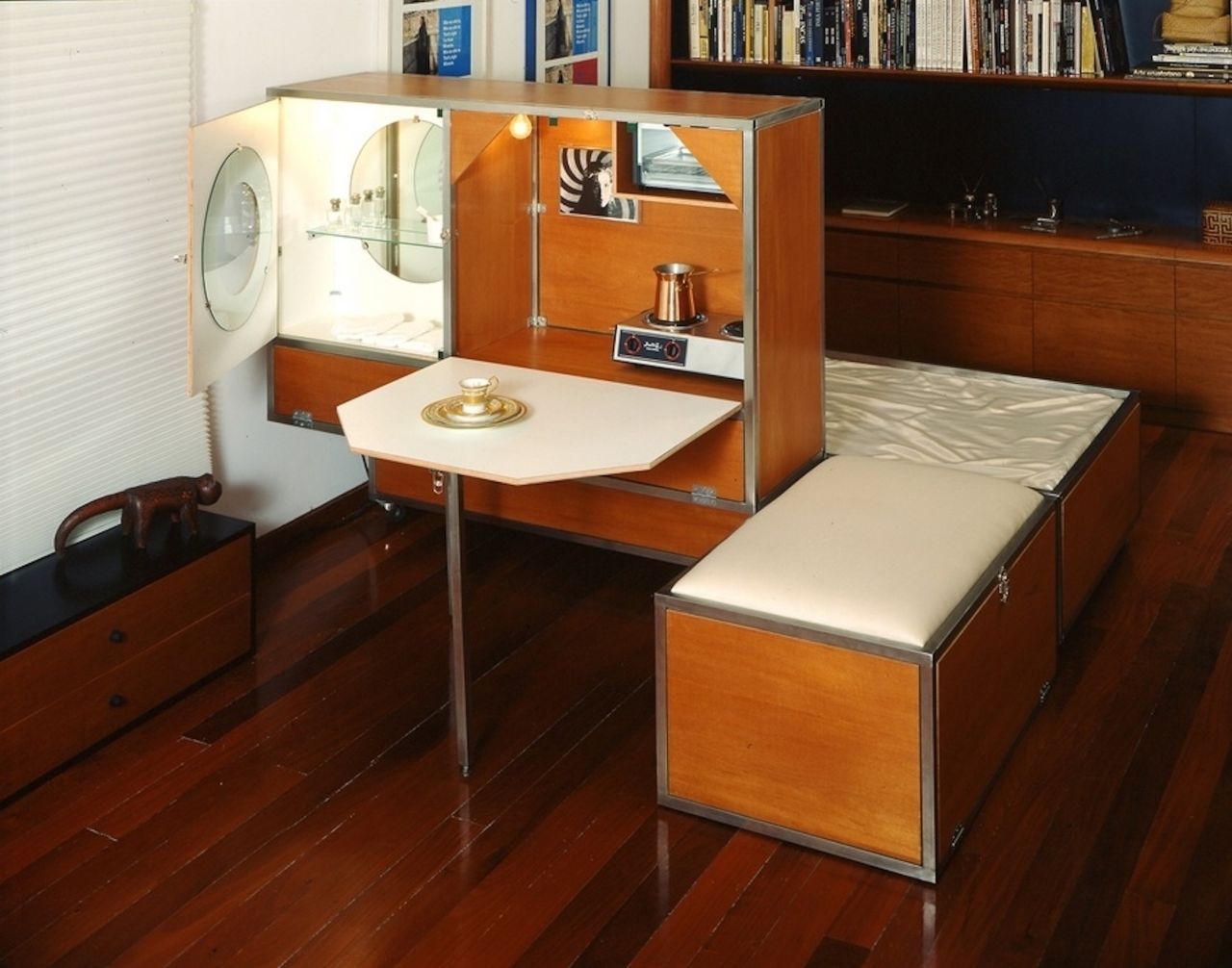
At first sight, you will find the units like a wooden crate, but as you flip open the top, it reveals the different facilities integrated into the design. In one version, one side has a small kitchen with its cover working as a makeshift table, while the other side of the box has a bed. Many A-Z Living Units were customized to meet different needs, like workspace and a TV nook.
Zittel first built the A-Z Management Maintenance Unit in 1992 inside her 200-square-foot Brooklyn studio to accommodate basic activities like eating, sleeping, cleaning, and storage. It became an inspiration for her to build an even more compact A-Z Living Unit in 1993. Later, she produced versions for others that included a sink and stovetop, a dining booth, a closet, a sleeping cot, and a stool.
Once the idea was successful, she introduced new designs. The 1993 model folded like a steamer trunk, rolled on casters, and fit through a standard doorway. The 1994 version was slightly larger, offering a more comfortable built-in bed along with horizontal work surfaces and improved storage.
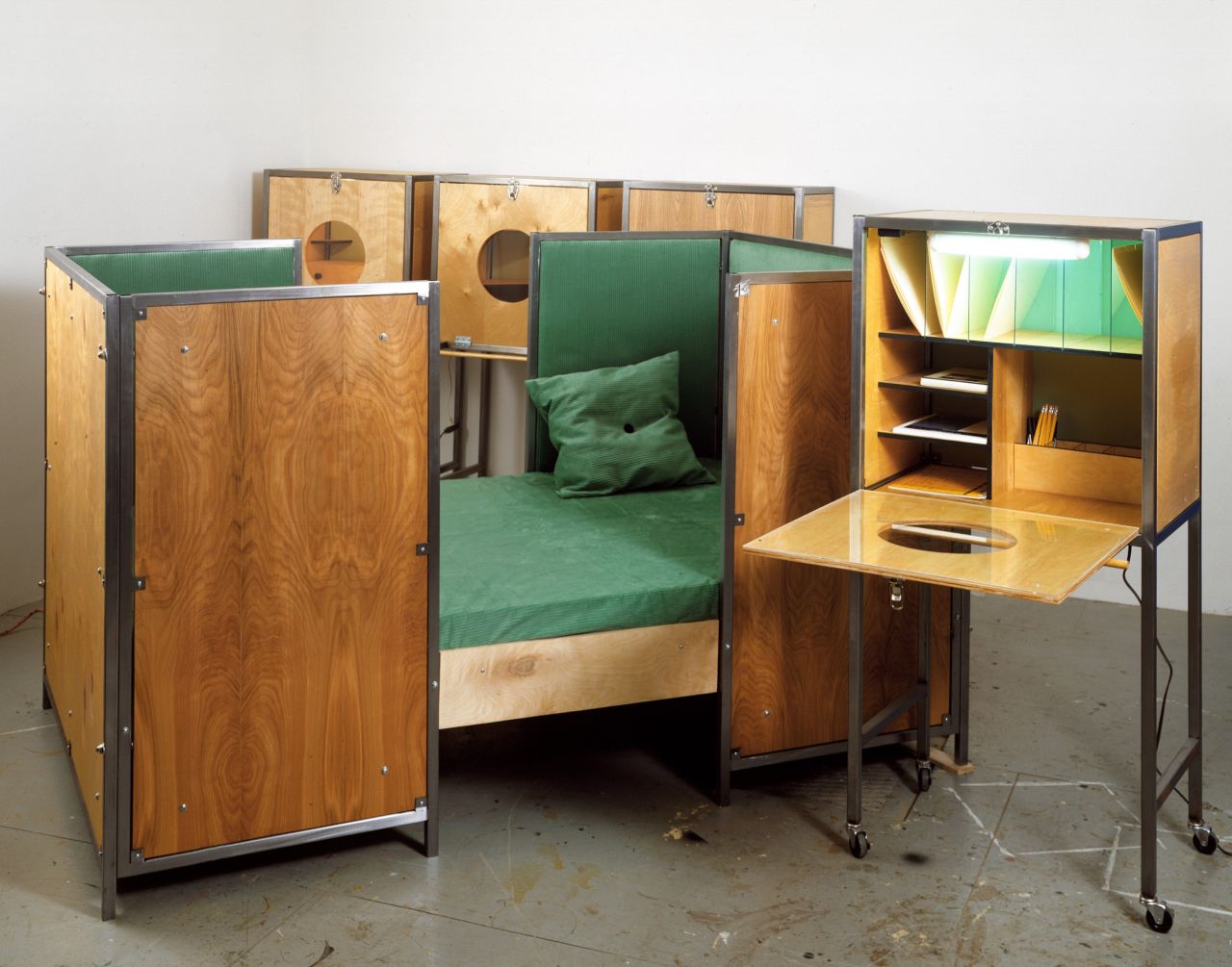
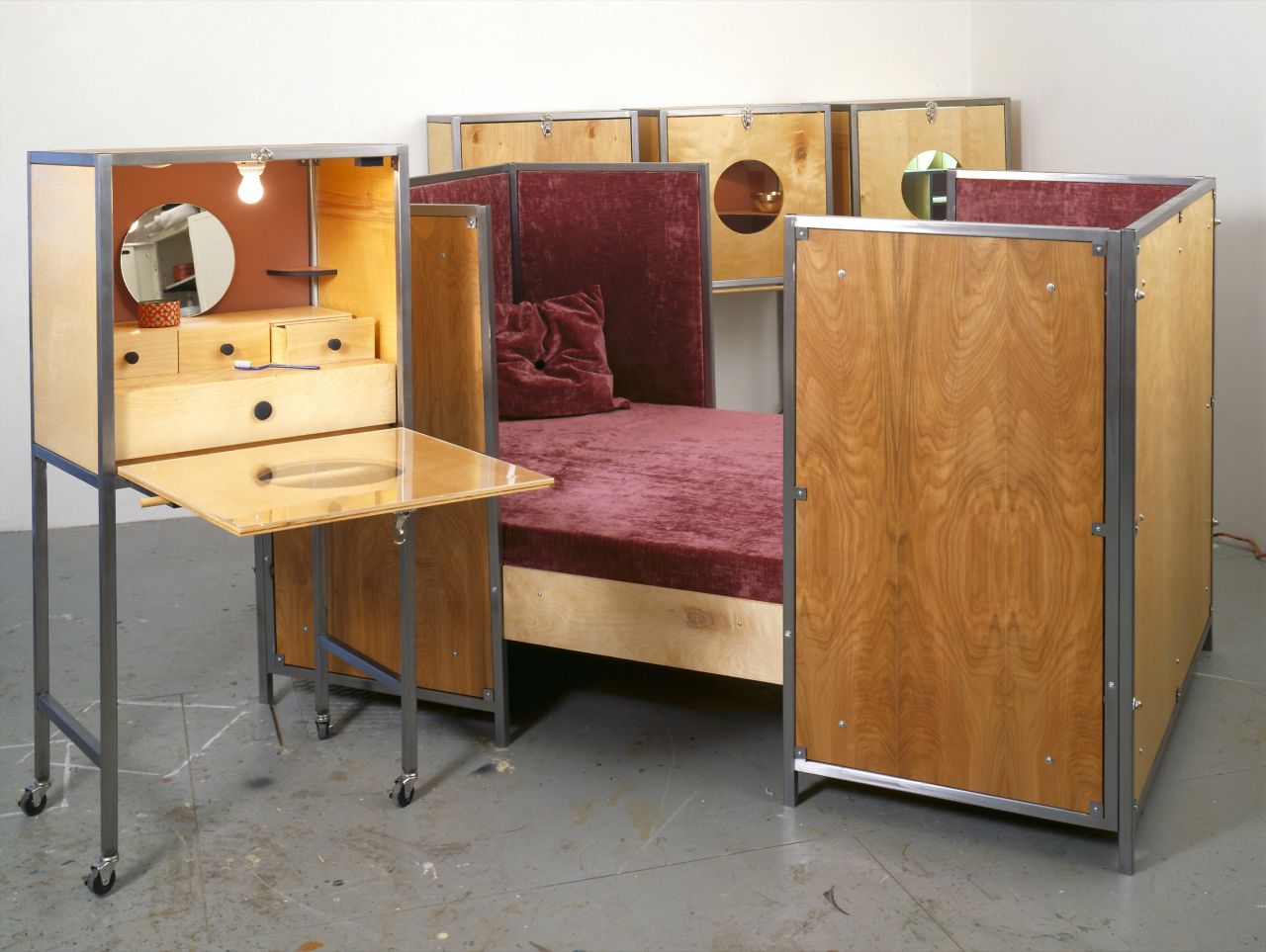
The fourth design, named A-Z Comfort Unit, was introduced in 1995. It featured a fort-like bed paired with rolling service carts for dining, office work, and vanity use. It comes with carts docked on either side so that even two people could carry out daily tasks without leaving the bed. Zittel further expanded the concept through projects like A-Z Homestead Units, Office Vehicles, and Wagon Stations, exploring portable minimalist living systems.
This micro-architecture style aims to change the perception of how little space we actually need for a comfortable life. These creative multifunctional living pods can be viewed as social sculptures that cross boundaries between art, architecture, design, and technology. If we compare this design to modern-day innovations, the only thing that comes to mind is transforming furniture by Ori Living. Regardless, Zittel’s designs can be a great solution to modern space constraints.
Via: Archilovers
Follow Homecrux on Google News!