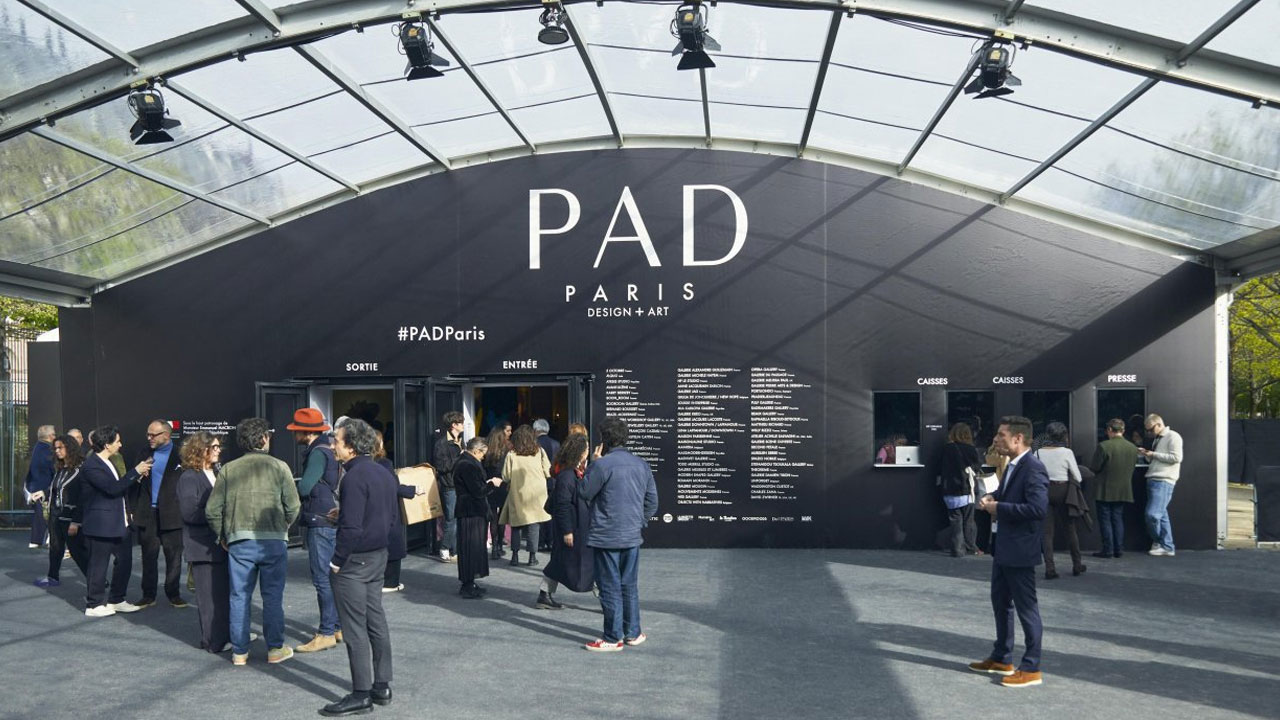
There is a sofa at PAD Paris this year that looks like the surface of the moon. Its fabric, sourced from the Venetian house Rubelli, has a crater-like texture that shifts under the grand hall’s lighting. “Zaha Hadid designed it,” a representative from Galerie Boketto, which is exhibiting the design alongside other collectible pieces, told Homecrux. Galerie Boketto is also exhibiting Brazilian post-war design, European textile art, and contemporary sculpture, featuring works by veterans José Zanine Caldas, Magdalena Abakanowicz, and Zaha Hadid.
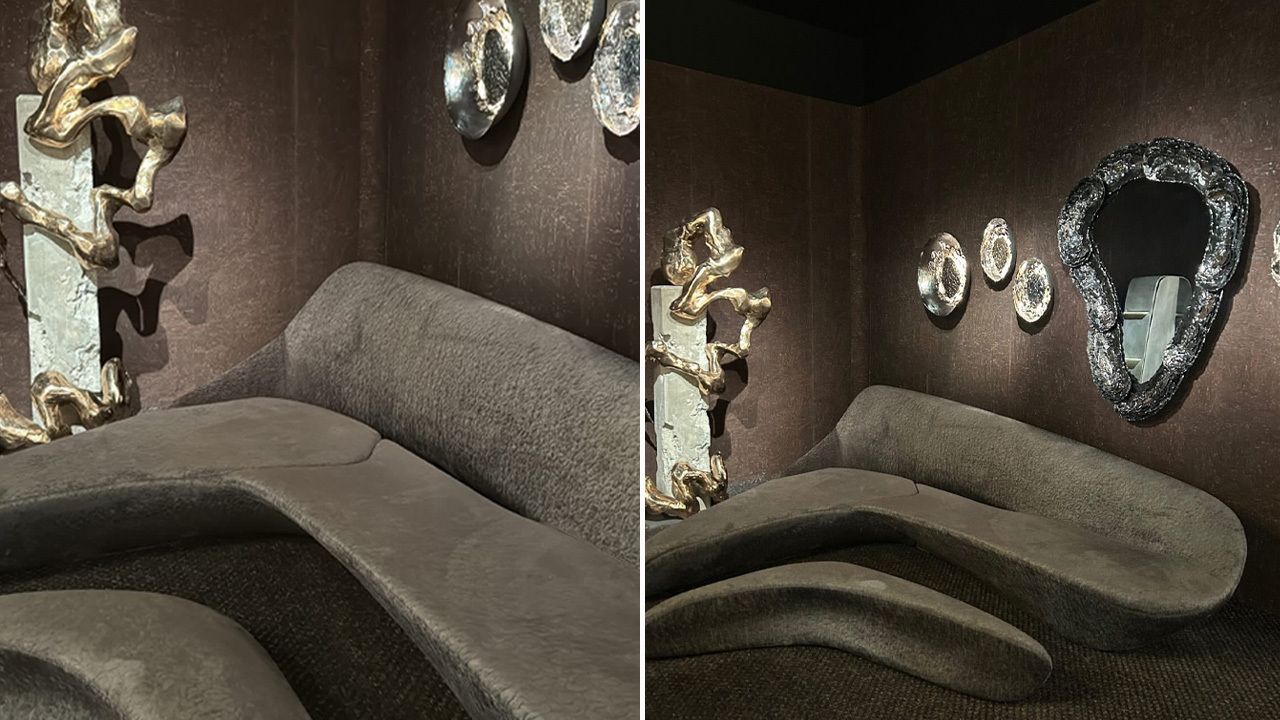
“Zaha’s piece in particular is an organic, sculptural masterpiece that serves as a soft space on our booth,” the rep informs. Dangling above the sofa are earth-cracked clay lamps by Natalia Landowska. “We have built a conscious earth-to-moon axis with the light fixtures of Natalia. They are earthy, cracked, almost reminding you of the initial stages of the development of the earth,” the gallery adds.
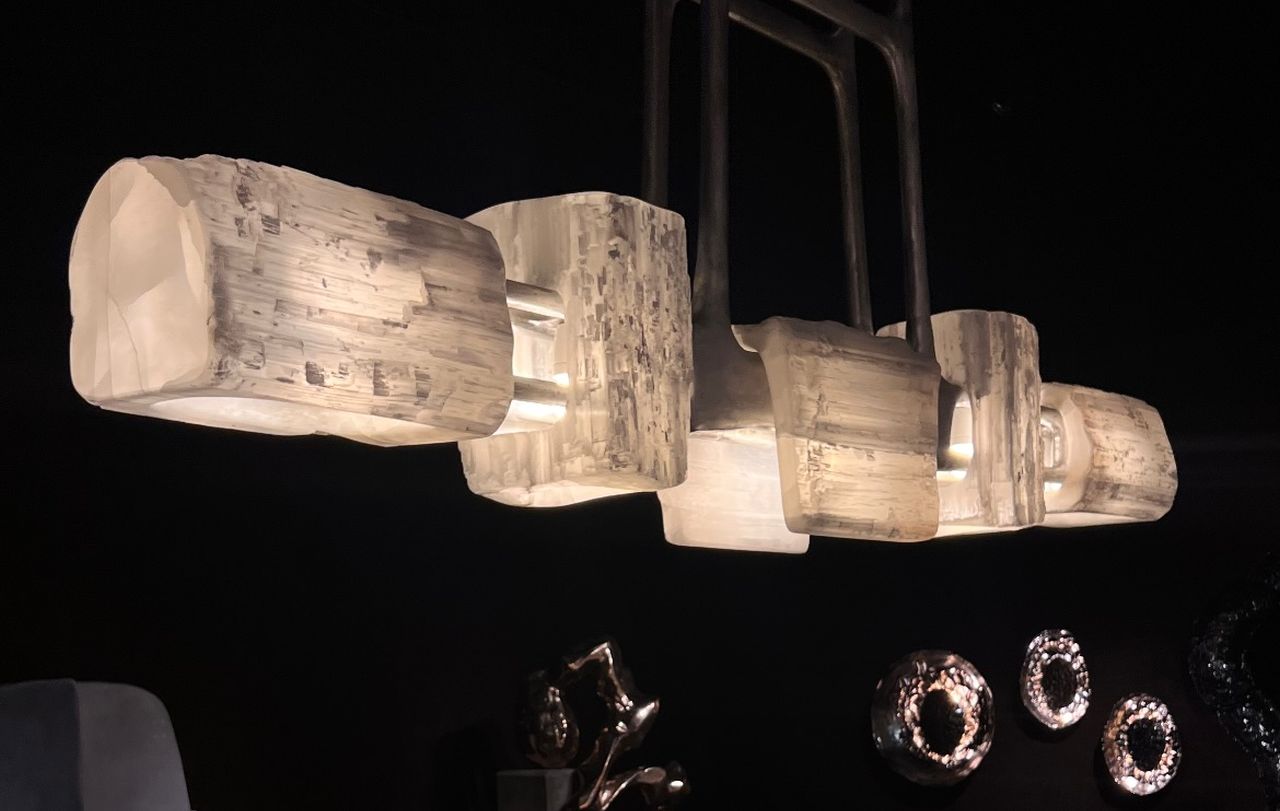
As an installation, Galerie Boketto‘s curatorial proposition is called A Philosophy of Making. “In it, we explore the philosophy behind the act of making objects. We are grounding this on the theory of André Leroi-Gourhan (French archaeologist and paleontologist), who argued that the human hand shaped human cognition,” the Gallery states. The whole project brings together six artists across generations. The presentation includes a rare monumental work by Magdalena Abakanowicz, one of the towering figures of 20th-century art, alongside new works by Moulay Hafid Sdikiene, Igor Dobrowolski, and José Zanine Caldas’s hand-carved Namoradeira.
Zanine Caldas’ work appears twice at the fair. Galerie Brazil Modernist / Pereira & Matis has built its booth as a conversation between the giants of mid-century Brazilian design and a newer generation of makers. Galerie Brazil Modernist / Pereira & Matis co-founder Vladimir Matis tells us, “We are showing rare works by Joaquim Tenreiro, Jorge Zalszupin, and Caldas alongside Studio Rain, Juliana Vasconcellos, and Lucas Recchia.” The headline piece is a rare three-seater sofa by Tenreiro from around 1950. “It is an exceptional work,” Matis explains, “combining solid wood and light in a way that feels both grounded and weightless.”
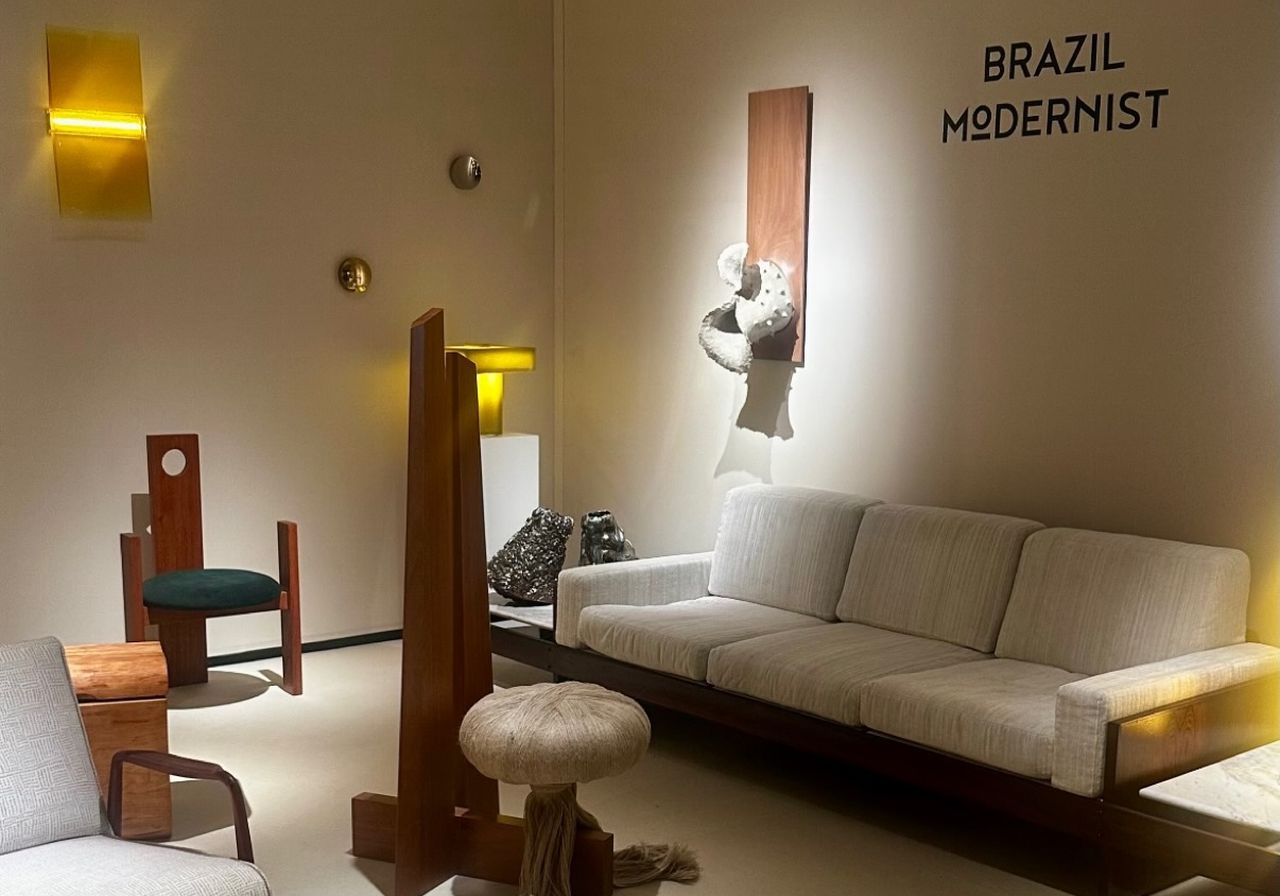
“This year’s presentation is especially meaningful to us as it explores the theme of material diversity as a way to connect generations of Brazilian design. By placing historical masters alongside contemporary designers, we aim to highlight a shared sensitivity to materials: wood, natural fibres, resins, and a continuous dialogue between craftsmanship, experimentation, and cultural identity,” Matis states.
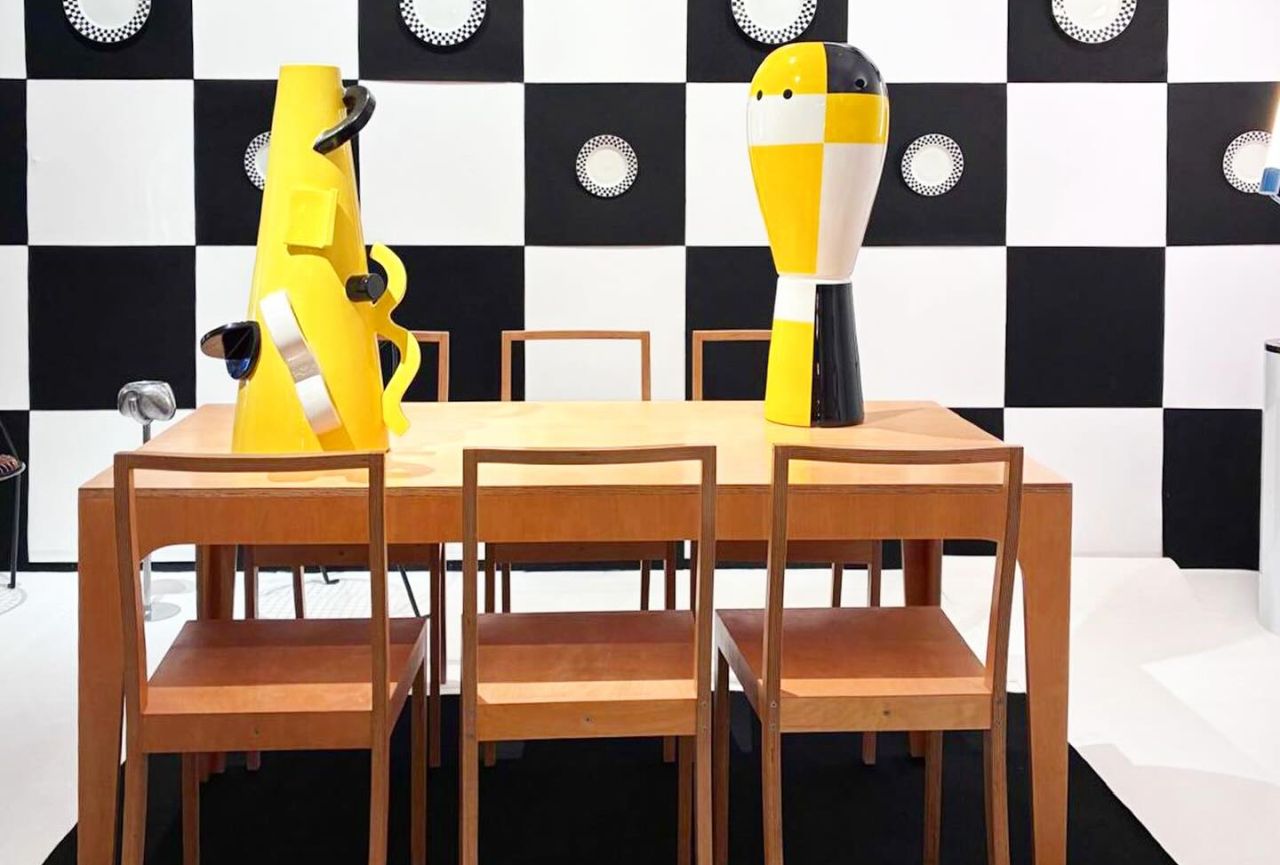
Not every gallery intends to offer a contrast. Some have been focusing only on pure taste. Remix Gallery, which has made the 1980s its home, places Andrée Putman, one of France’s most precise and uncompromising designers, at the centre of its booth. “We are showing floor lamps she made for the Balenciaga boutique on Avenue George V in 1988,” the gallery founder, Antoine Nouvet, says. These are “pieces that were at once radical, modernist, and timeless.” Around them sit Nanda Vigo’s Light Tree wall lamp and Jasper Morrison’s Ply table and chairs. “The refined shares space with the rebellious,” Nouvet adds, “in a way that feels perfectly balanced for this edition.”
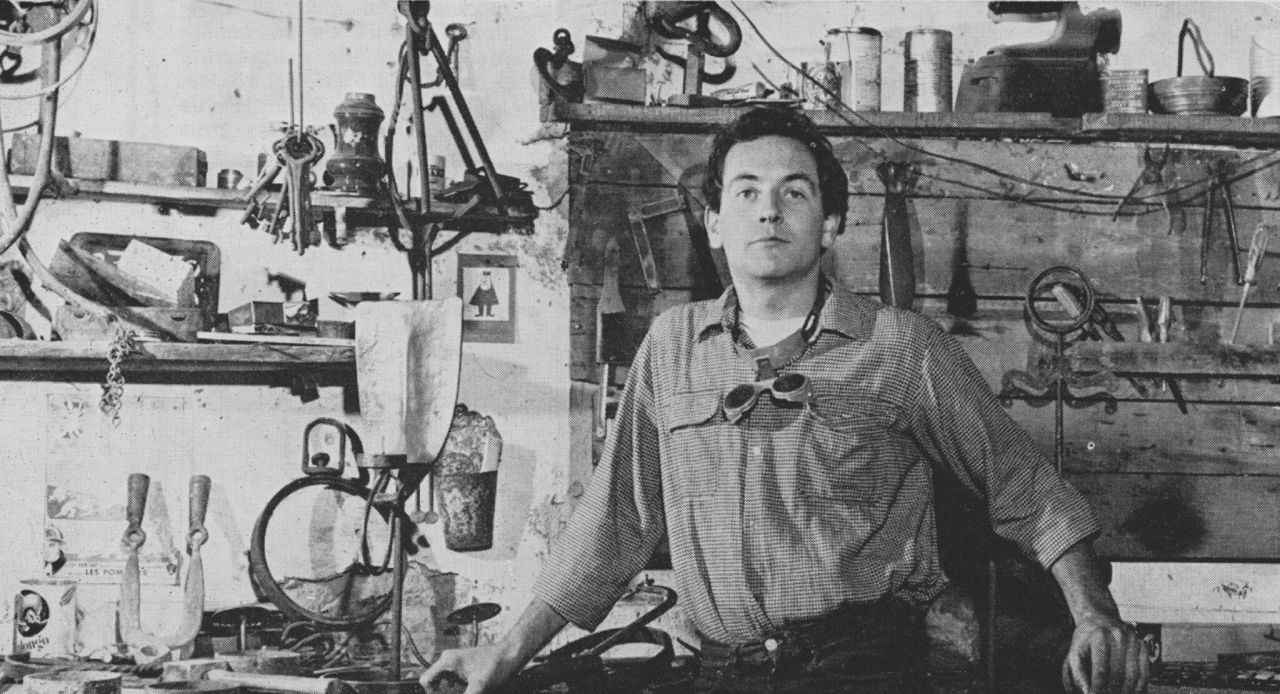
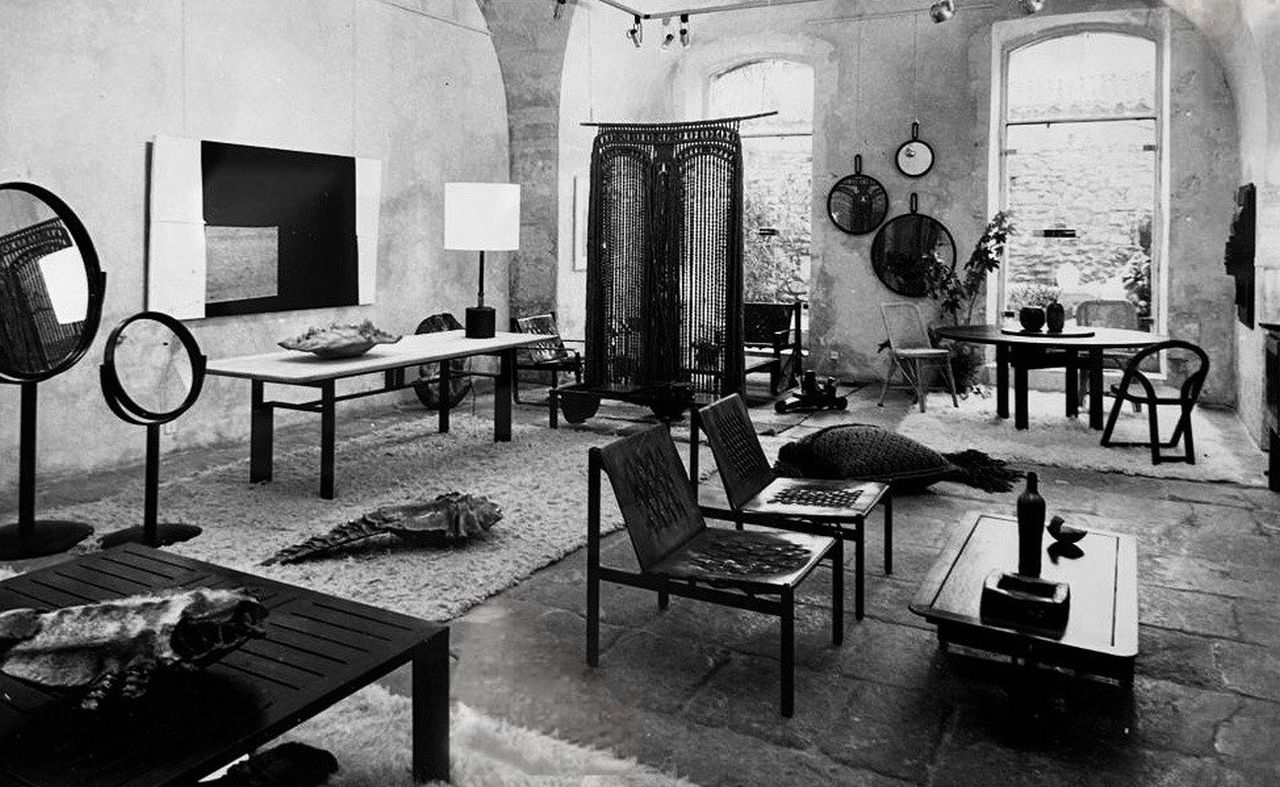
Another notable name that has been silent during the lead-up to PAD Paris but stole the show at the end of Day One of PAD Paris is Galerie Meubles et Lumières. Gallery head Guilhem Faget has dedicated the booth to Léopold Gest, a self-taught French artist who moved to Saint-Rémy-de-Provence in the late 1960s and spent decades working alone in iron. “His mirrors, lamps, and candlesticks are each one of a kind,” Faget notes. “Gest had little interest in being found, which makes this presentation all the more special,” he adds.
Mia Karlova Galerie returns to this edition of PAD Paris with what it calls “a new curational narrative of craftsmanship.” The gallery presents a unique selection of contemporary art and collectible design. Bringing together Dutch and international contemporary artists and designers, the selection presents unique works defined by a deep commitment to making.
“Each piece engages closely with material and form, drawing the viewer in and sustaining attention beyond the immediate moment,” states Martyna Szpilka, Gallery Assistant, Mia Karlova Galerie. Among those featured are Valeriya Isyak, Vadim Kibardin, Jesse Visser, and Mariekke Jansen. “Together, these designers bring a bold mix of materials, techniques, and narratives that reflect the gallery’s commitment to groundbreaking design and the desire to provoke emotions,” Szpilka adds.
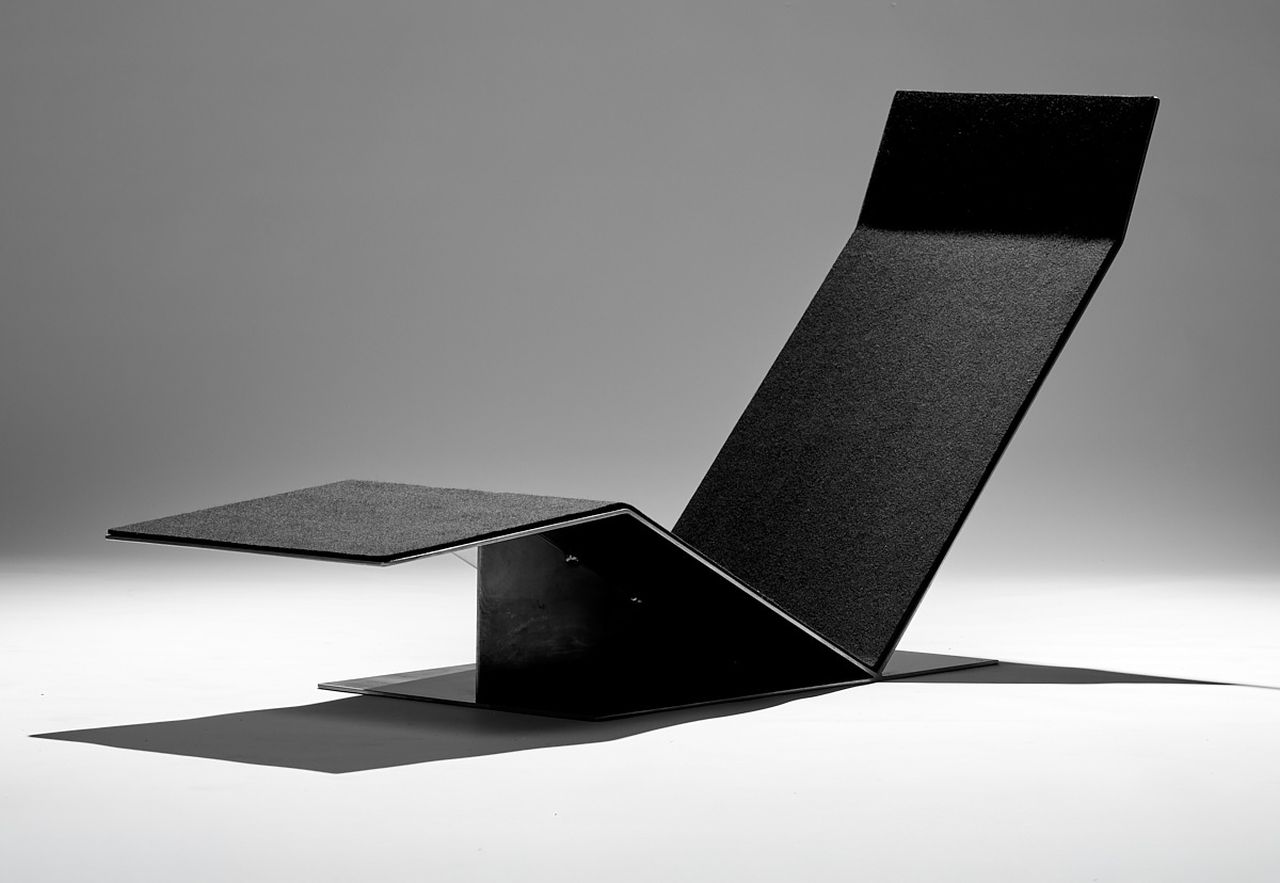
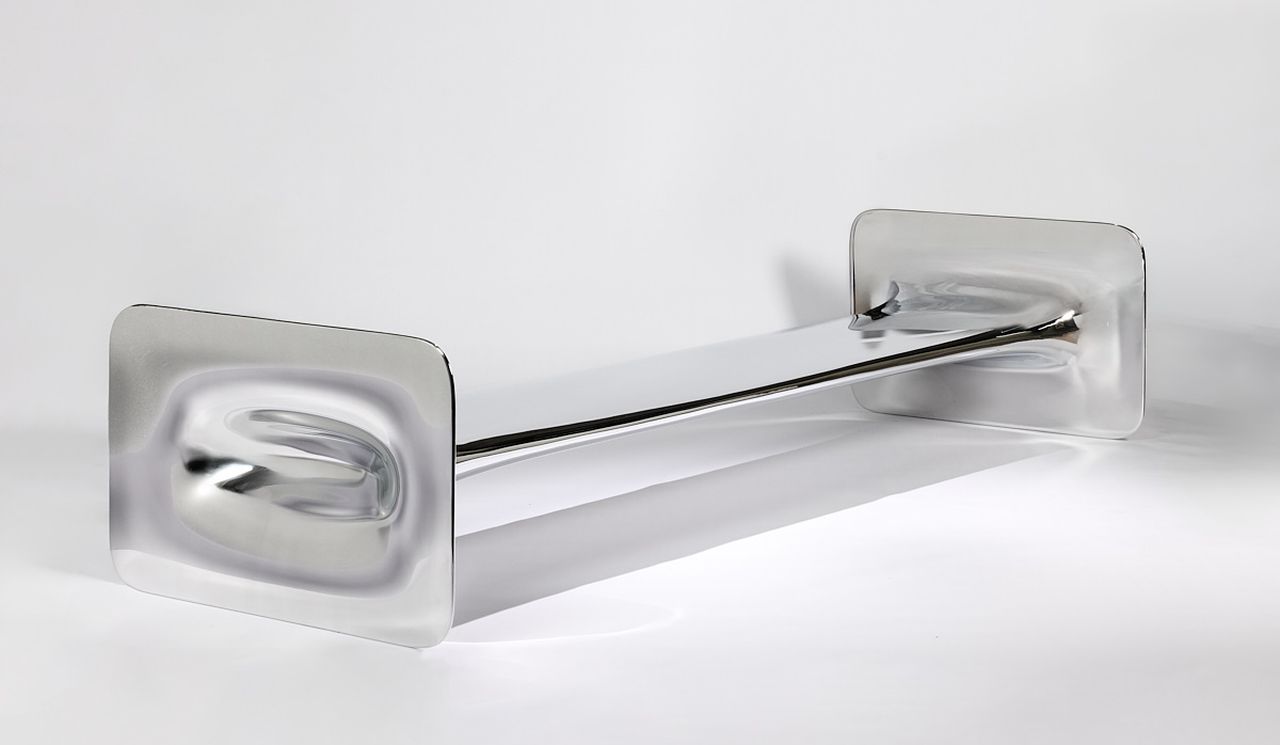
Among all the exhibitors, Pulp Galerie takes the most theatrical approach. Visitors walk through strips of PVC curtain into a booth conceived as a cold room, where works are displayed on frosted metal shelving. Inside, Ross Lovegrove’s Liquid Bench plays with its own reflections: the Ellipse Pisé dining set by Yves de la Tour d’Auvergne brings weight and structure; and Gaetano Pesce’s Nobody’s Perfect sideboard, colourful, wobbly, deliberately strange, pulls warmth back into the chill. “It is a booth that trusts visitors to sit with contradiction,” Paul-Louis Betto, gallery co-founder, tells us.
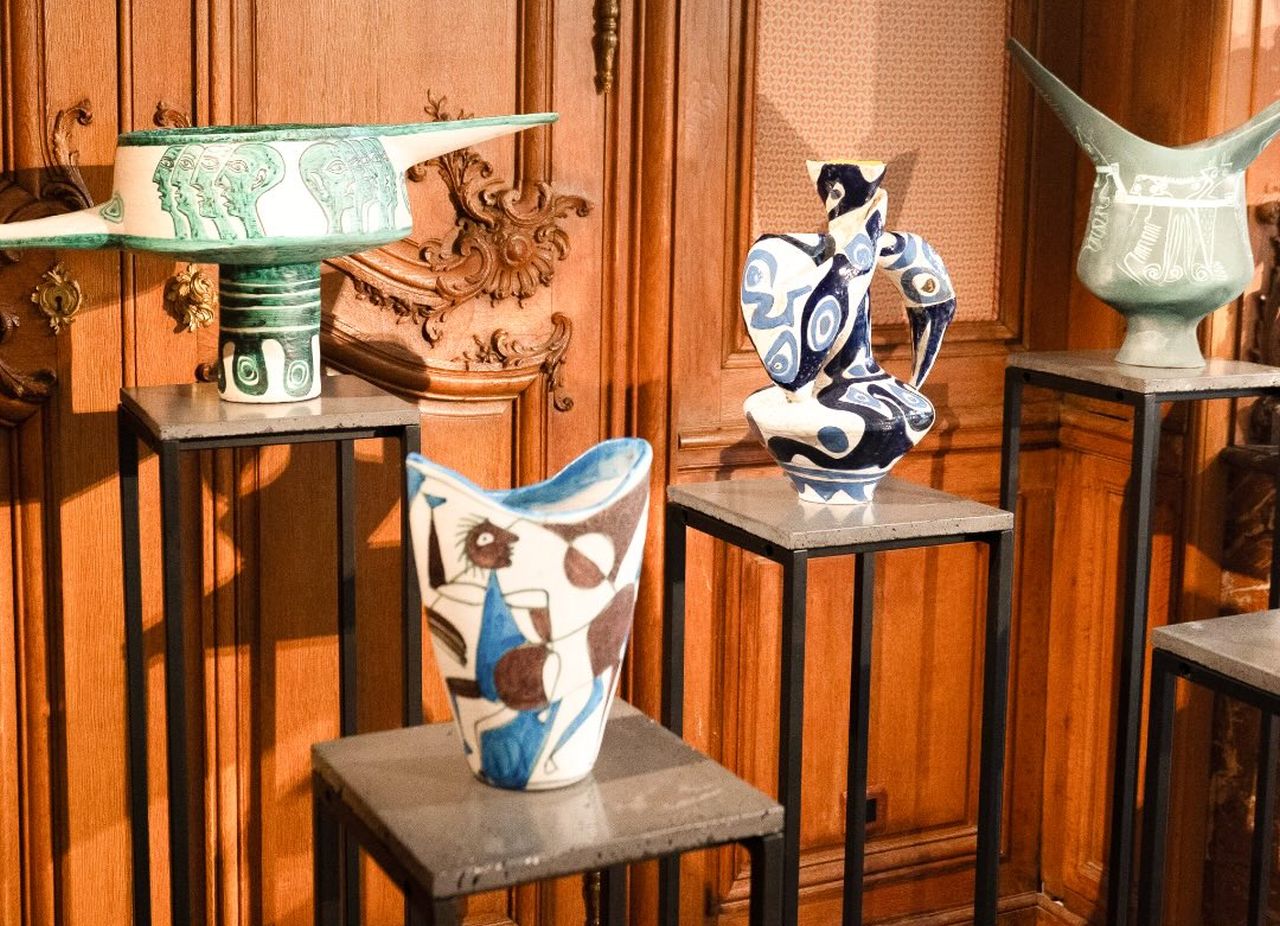
Then we have Gallery Gaïa & Romeo, led by Antoinette Monnier, which is making the case for Italian postwar ceramics. The gallery is presenting twenty-seven works from the 1950s through the 1970s, including pieces by Salvatore Meli and Marcello Fantoni, against a digital backdrop designed to connect them to the present. “Our mission is to restore the Italian masters of ceramics to their rightful place. These were artists who used clay not as a craft material but as sculpture, and we want that to be seen clearly,” Monnier states.
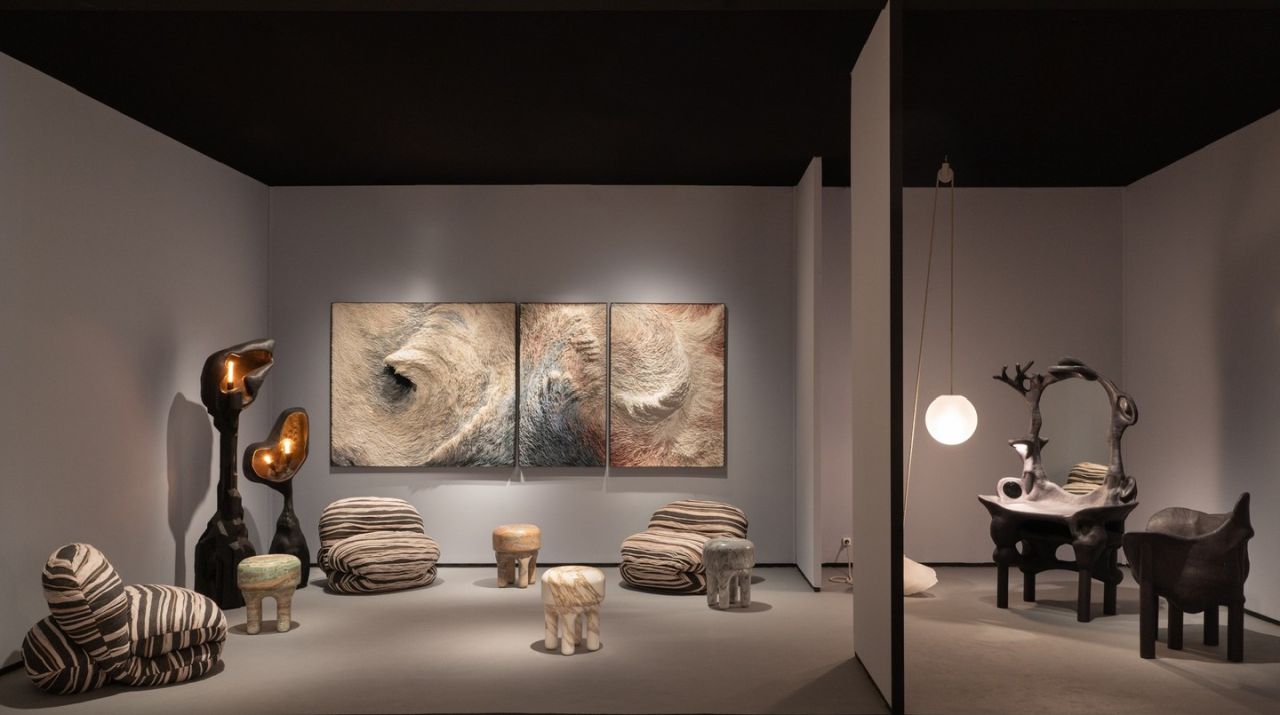
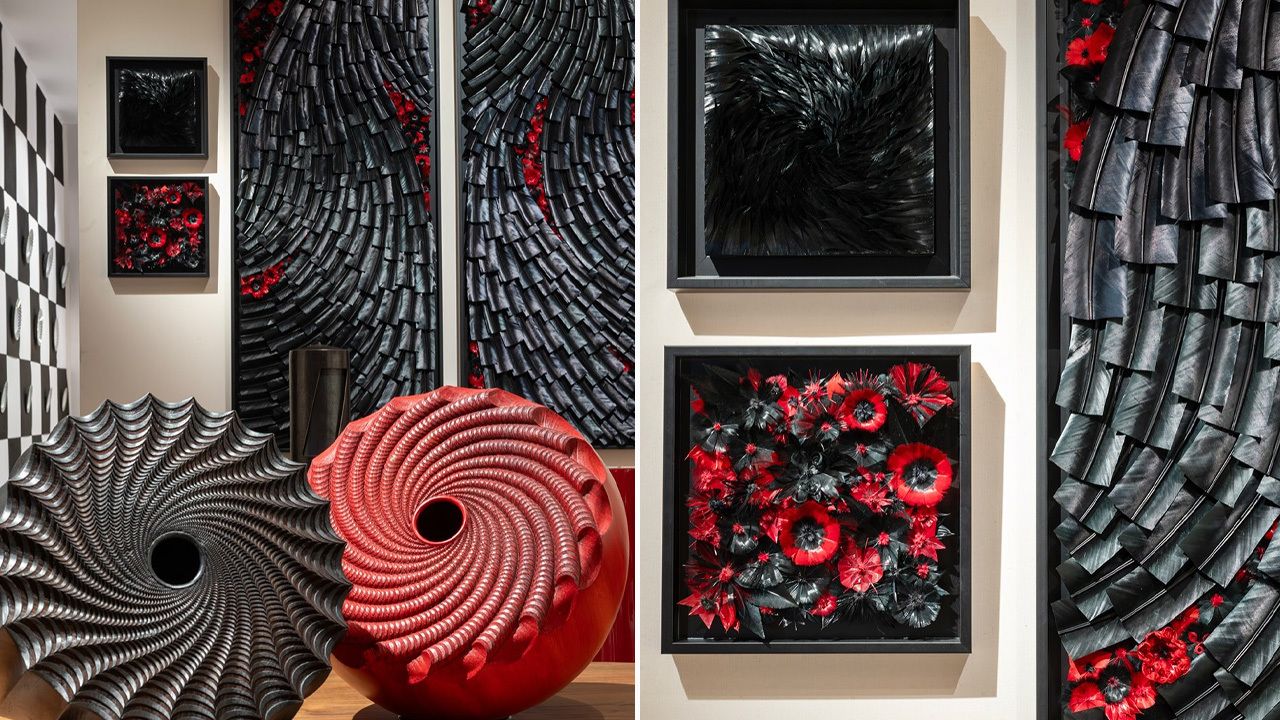
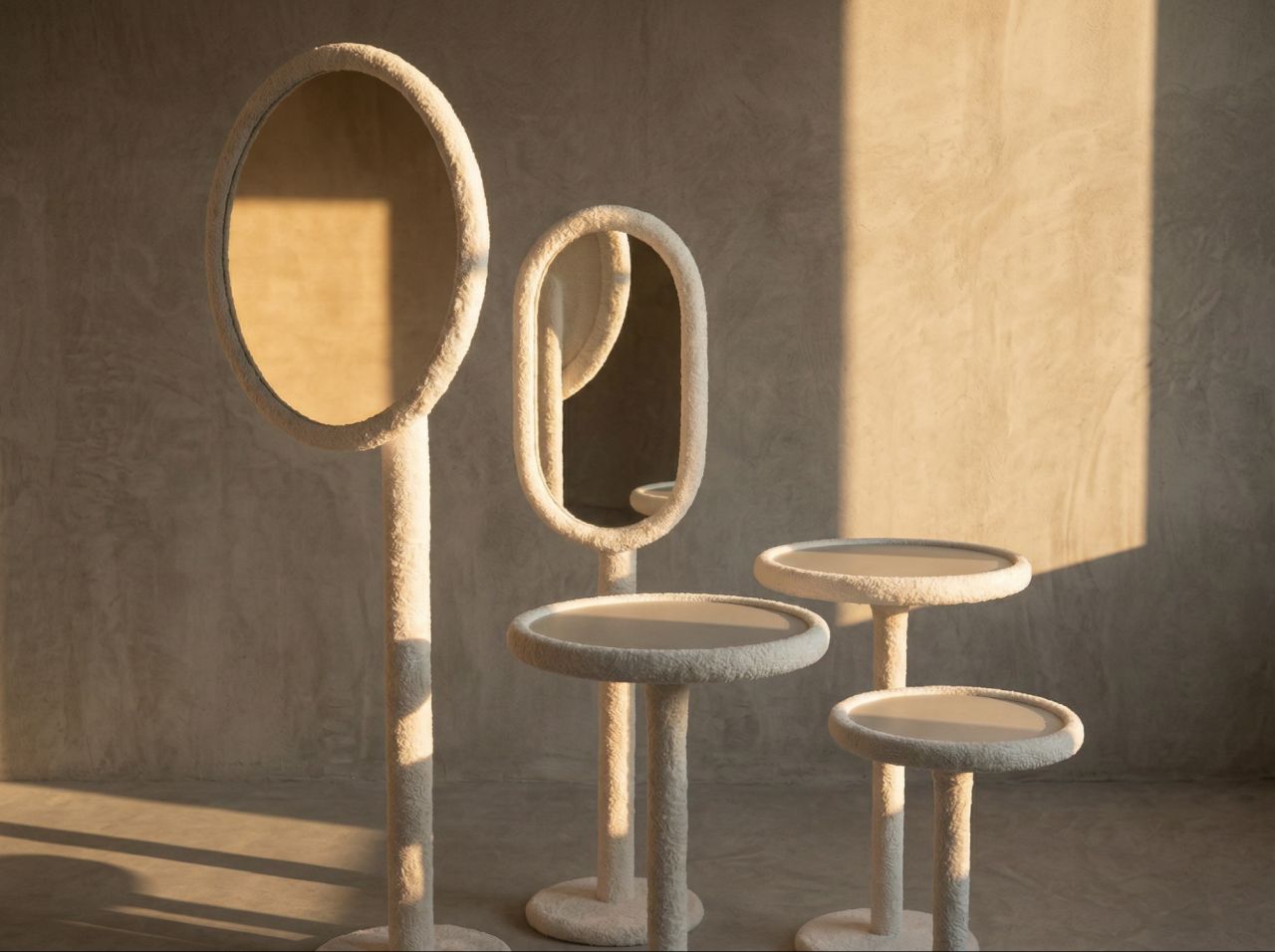
Walk a little ahead, and you will spot the Maison Parisienne Gallery. It has themed its booth after nature, organic shapes, raw materials, a mood more than a display, built around Pierre Renart’s Cascade, a work in wood that moves like water. Someone who takes the theme even more seriously is Yoomoota Gallery, which goes furthest into the imagination, with a world of biomorphic furniture and mixed-media work centred on “a one-of-a-kind set called Primordial Fountain.” “It is an environment where life itself becomes the answer,” Taras Yoom, co-founder of Yoomoota, shares. PAD Paris is full of such strange and historic designs. This edition, in particular, allows the past and future to share the floor simultaneously.
Follow Homecrux on Google News!