Not so long ago, design festivals, trade shows, and tech gatherings came to a halt. The world dealt with what we today call COVID-19. But if there was one positive takeaway, it was the sharp rise of the digital world. People not only got into the knack of using social media but also began using it for sales, promotions, and marketing. Then came the AI wave, and people could suddenly design renders online, write press releases on their own, and be a part of a design gathering online.
The consequences were anyone’s guess. Salone del Mobile drew 434,509 visitors in 2018, a figure that has slipped to 316,000+ in 2026. Maison & Objet is having an equally difficult time. Its January and September 2025 Paris editions drew just over 120,000 visitors combined, a 20 to 25 percent drop from earlier years. Most starkly, the London Design Festival, which welcomed a record-breaking 600,000 individual visitors in 2019, saw that figure fall to only 350,000 by 2025.
There is a humongous dip in the number of exhibitors as well. Last year, Salone del Mobile hosted 2,103 exhibitors from 37 countries, the number has apparently come down to 1,900 exhibitors from 32 countries in this year’s edition. The same can be said about Maison&Objet, which had 3,000+ exhibitors in 2018, a number that has drastically fallen to 2,500 by 2025.
If these numbers are taken into consideration, we see a growing trend of digital transformation in the furniture industry, which is the transition of businesses from traditional B2B to B2B2C. Manufacturers can directly connect with end customers through digital channels without resellers, wholesalers, or a design event, for that matter. So, where does that leave design events? We reached out to exhibitors at the recently concluded Milan Design Week to understand whether physical gatherings still hold prominence.
“While digital platforms speed up visibility and communication, physical gatherings like Milan Design Week create connections that cannot be replicated,” Philippe Couture, CEO of Couture Jardin, a North American outdoor furniture brand, told Homecrux. “Real sensory experiences matter for emerging designers, for whom it remains a vital platform to exchange ideas, build industry relationships, and experience materials, craftsmanship, and atmosphere that a screen simply cannot offer,” he explained.
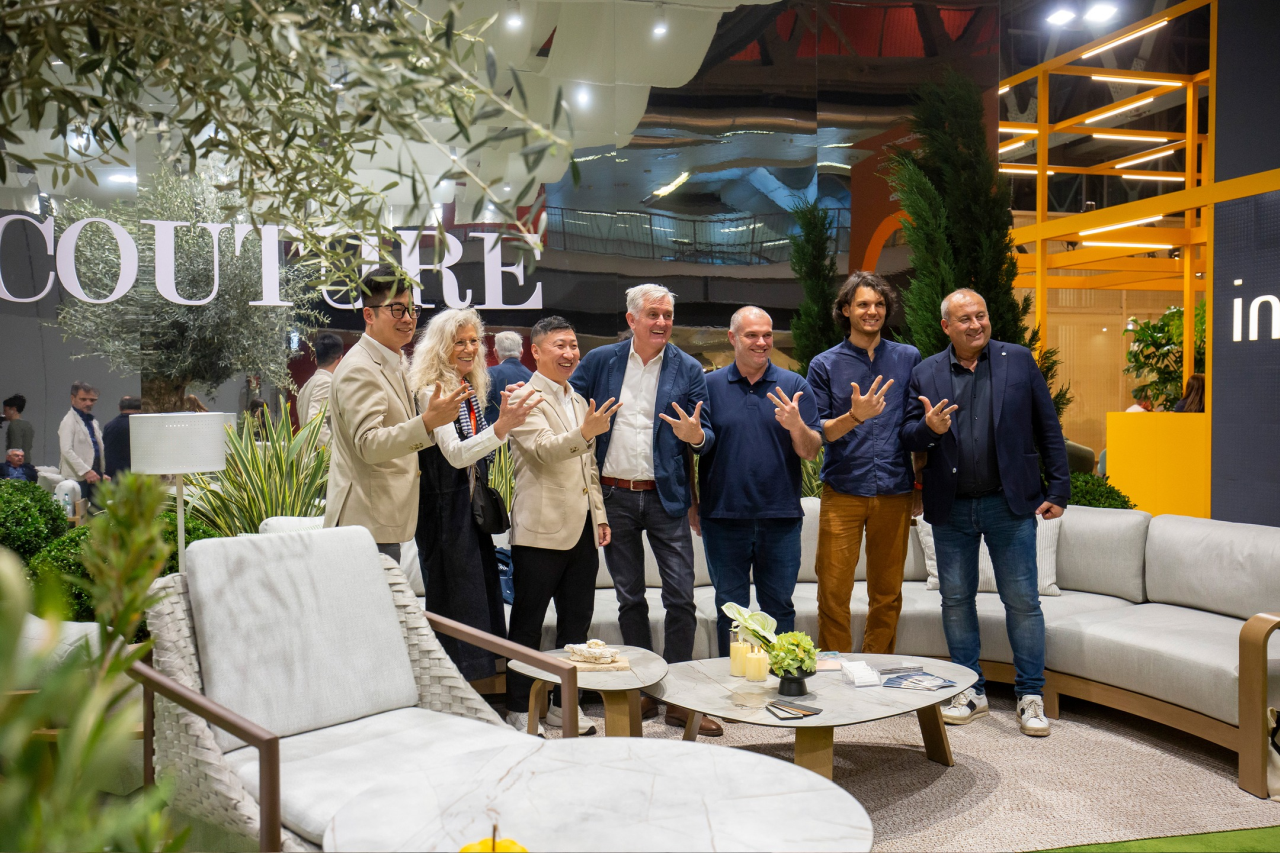
The thought is replicated by Gerald Schatz, CEO of German design brand Tojo Möbel GmbH, who states, “Being able to exchange ideas with many like-minded people in a small space over just a few days is a great boon. On a personal level and with direct contact with the exhibits, a much more intensive exchange is possible.”
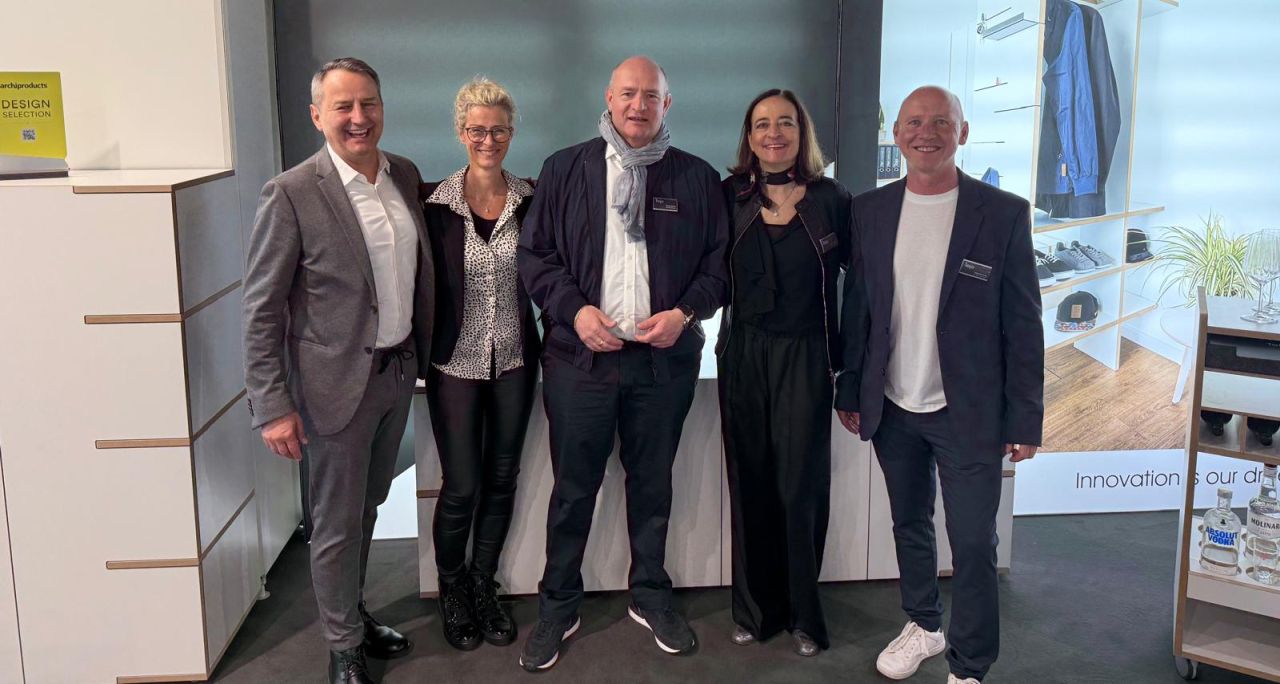
The views of Philippe Couture and Gerald Schatz are reflected in how major events continue to make room for new talent. Salone del Mobile runs its Satellite fair specifically for emerging designers. NYCxDesign partners with local institutions to host open studio tours, student showcases, and pop-up galleries. Melbourne Design Week holds its “100” exhibition each year to accommodate as many designers as possible. Within a matter of days, professionals who might otherwise never cross paths find themselves in the same room, brought together by shared curiosity.
Some brands go further, describing design events as a necessary pushback against digital culture. “While screens offer instant visibility, they lack the weight of materiality,” said Alexander Yushchenko, CEO of MIRT, a Ukrainian design studio, pointing to what fairs alone can offer, which is chance encounters and the raw, sensory experience of texture and scale. Especially for younger designers, this kind of physical exposure is the only way to truly test their creative instincts against reality.
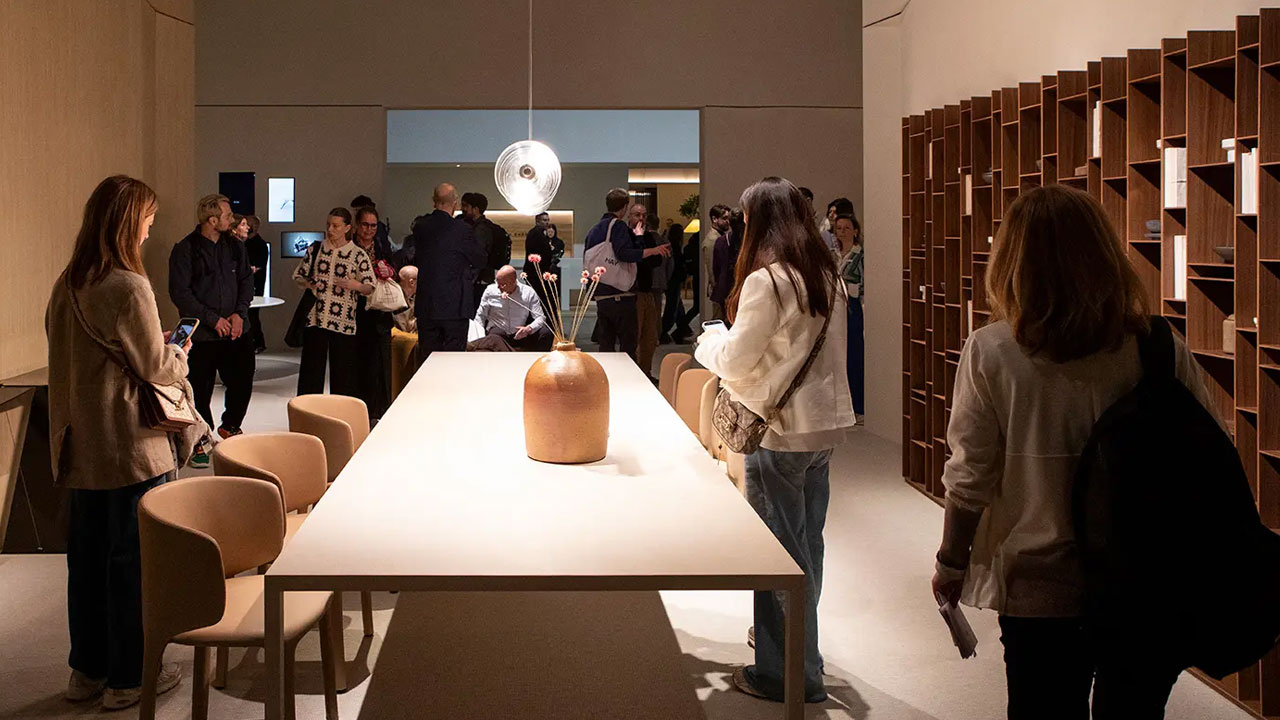
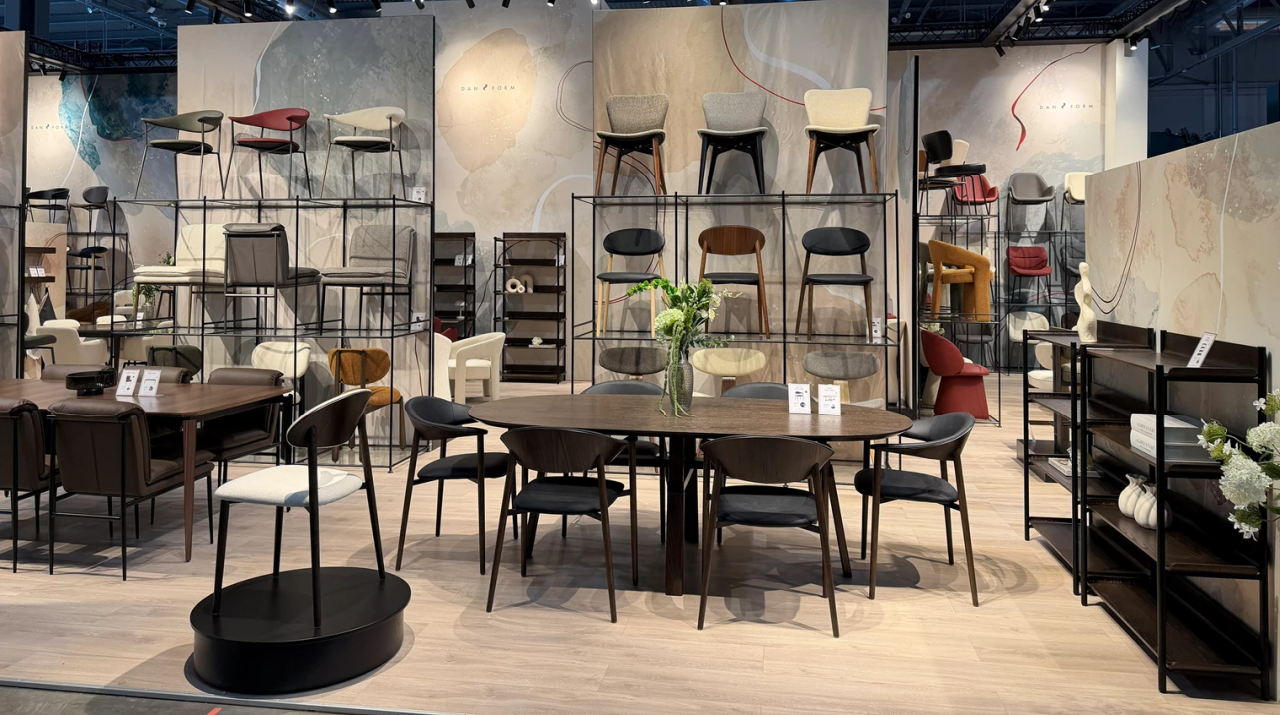
Sanne Protin, CEO of DAN-Form, a Danish furniture design brand, carries the same thought. “When you exhibit at a trade show like Salone del Mobile, you get the chance to talk to people from 68 different countries. It creates a buzz you simply do not experience anywhere else. Just walking through the aisles and hearing the crowd is something you can only get by being there.”
Roberta Meloni, CEO of Poltronova (iconic Italian furniture and design brand), holds a middle stance in this digital gathering and physical fairs dilemma. “Digital space allows us to be present everywhere, even where we cannot physically be,” she said. “Yet design relies on interaction. Space and objects come alive through people.” The risk of living entirely online, she argues, is that “presence becomes hollow.” “When we try to be everywhere, we risk being nowhere. Ideas travel across both worlds, but objects need a body,” Meloni comments.
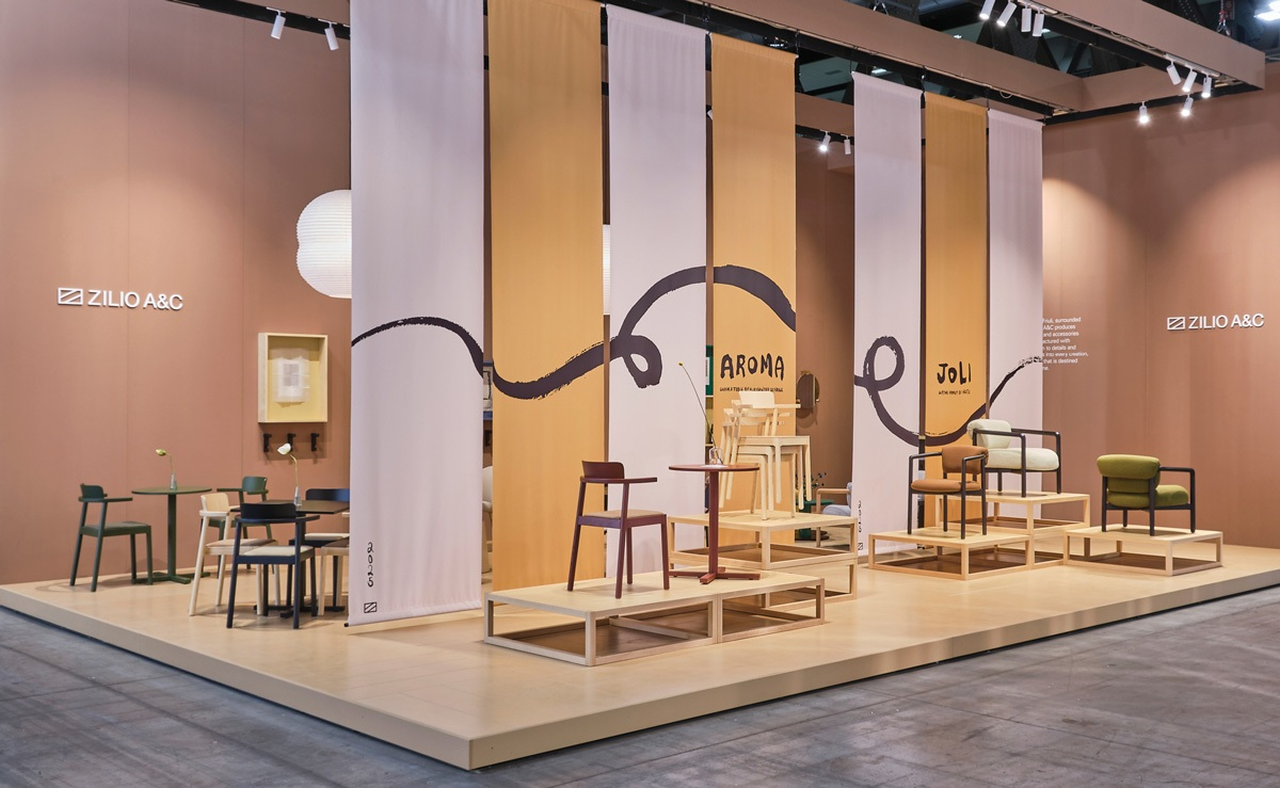
Even as design fairs grow with parties, installations, and spectacles across the city, some brands deliberately return to the Salone del Mobile’s original purpose. “Salone remains the stage where the product takes center stage,” said Carlo Zilio, CEO of Zilio A&C, an Italian furniture brand. “And since the product is what we make, this is where we want to engage with the design community, allowing people to touch, test, and truly understand objects in a way that only a real-life encounter can offer,” he adds.
Hearing all these opinions, we can safely conclude that digital tools have widened the reach of design in ways that were unimaginable a decade ago; they have yet not replaced the deeply human act of gathering in one place to look, touch, talk, and judge. Design, many here believe, still needs bodies in rooms. And for now, Milan remains one of the places where that need is most strongly felt.
Follow Homecrux on Google News!