If you’re a tech journalist, “launched” and “unveiled” are probably the two words you use most often. Despite being used interchangeably for years, the two words carry distinct meanings, and I couldn’t find a more fitting example to illustrate that difference than the recently launched Hisense XR10 projector.
I stress “launched” because the projector was unveiled at CES earlier this year, but it is only now that it has officially hit the market. To clarify, unveiling refers to the initial reveal of a product, while launching signifies its commercial release. With that distinction made, the XR10 is now available on Amazon for $5,997.
As is the case with most brands at CES, Hisense made bold claims about brightness, color performance, and stability. Whether the projector truly lives up to those claims is ultimately for users to decide. Interestingly, Hisense doesn’t appear to have sent review units out broadly, but early post-release impressions suggest the image quality and audio don’t just look good on a spec sheet; they hold up in real-world use as well.
From a technical standpoint, the XR 10 delivers up to a record-setting 6,000 ANSI lumens. This, as detailed in the company’s press release, is the “industry-widest 0.84–2.0:1 optical zoom and 4K Lossless lens shift (±130% vertical, ±46% horizontal) make setup effortless, projecting perfectly aligned images up to 300 inches, turning any wall into a truly cinematic canvas that adapts naturally to different room layouts.”
Another standout feature likely to become a talking point in upcoming reviews is the advanced liquid cooling system. Whereas most projectors rely on traditional, noisy internal fans, Hisense opted for a radiator-style liquid cooling system, allowing the XR10 to operate almost silently even at peak brightness. If you’ve ever sat through a movie with a fan-cooled projector humming in the background, you’ll immediately appreciate why this matters.
On the optics side, placement flexibility is made possible by an industry-first 17-element all-glass lens with hardware lens shift (±130% vertical, ±46% horizontal) and a 0.84–2.0:1 optical zoom. A quad-camera AI system with ToF sensors handles auto-focus and auto-correction, making it far easier to achieve a properly aligned picture than with most competing projectors in this class. For HDR, the XR10 supports Dolby Vision, HDR10+, HDR10, and HLG. Contrast is handled by a hardware IRIS lens system, delivering a 6,000:1 native contrast ratio alongside up to 60,000:1 dynamic contrast.
Audio hasn’t been overlooked, either. Hisense partnered with French audiophile company Devialet for the built-in 2.1-channel sound system, with the Opéra de Paris fine-tuning the sonic signature. The setup includes two 8W drivers and a 15W subwoofer, with Dolby Digital and DTS Virtual:X support for surround sound. On the software side, the XR10 runs Hisense’s VIDAA smart platform, with Netflix, Amazon Prime Video, Disney+, and Apple TV built in. Connectivity includes Wi-Fi 7, Bluetooth 5.4, HDMI 2.1, HDMI 2.0, USB 3.0, and Gigabit Ethernet.
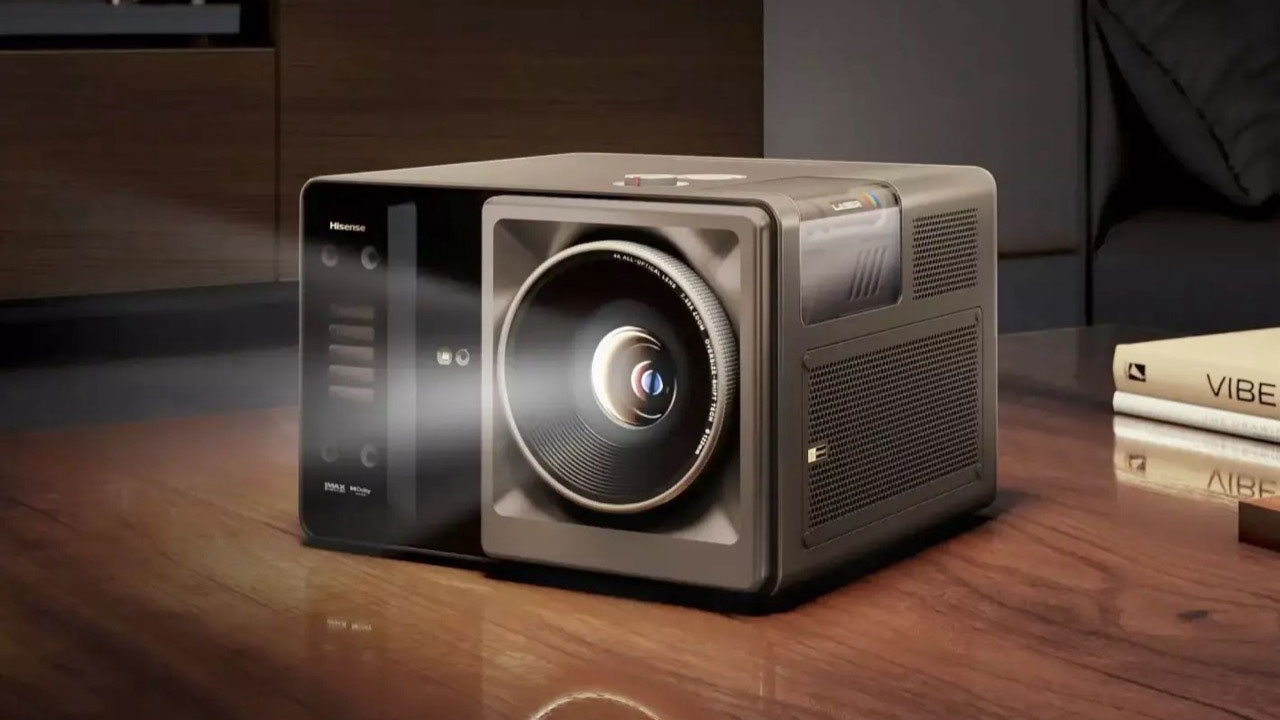
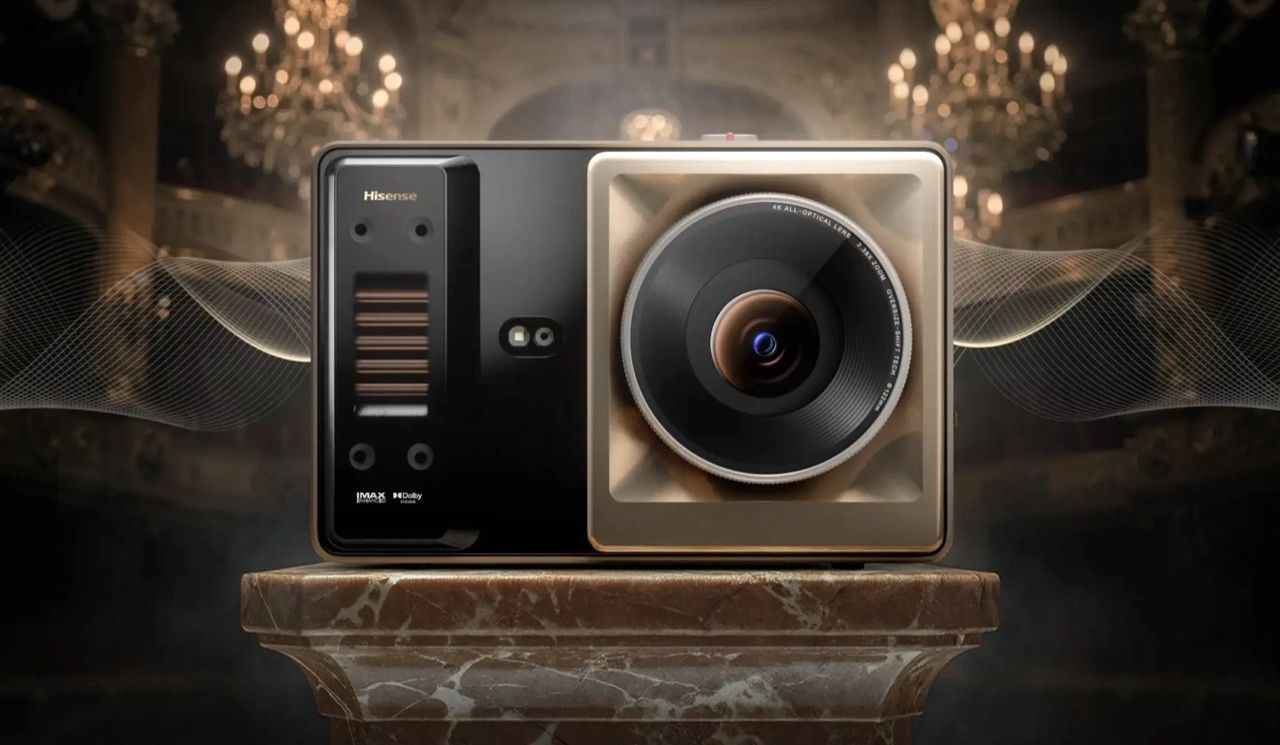
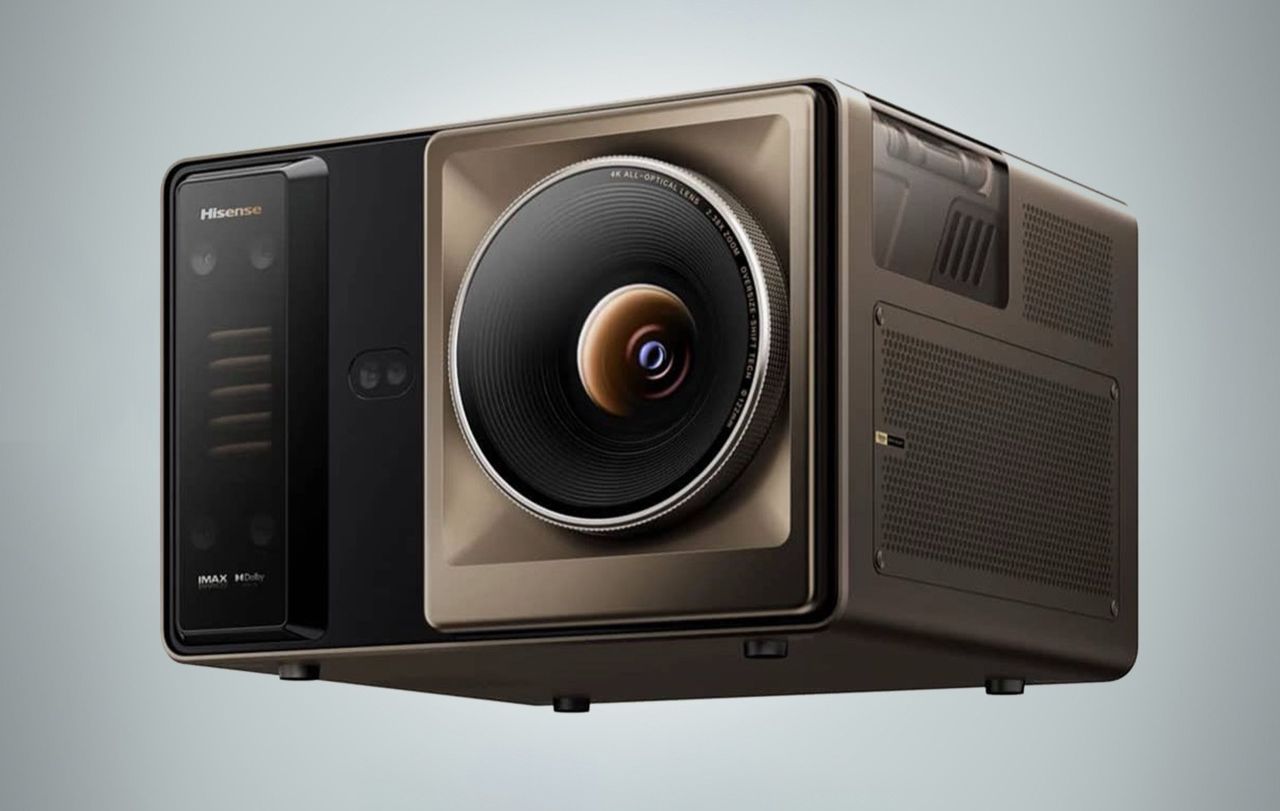
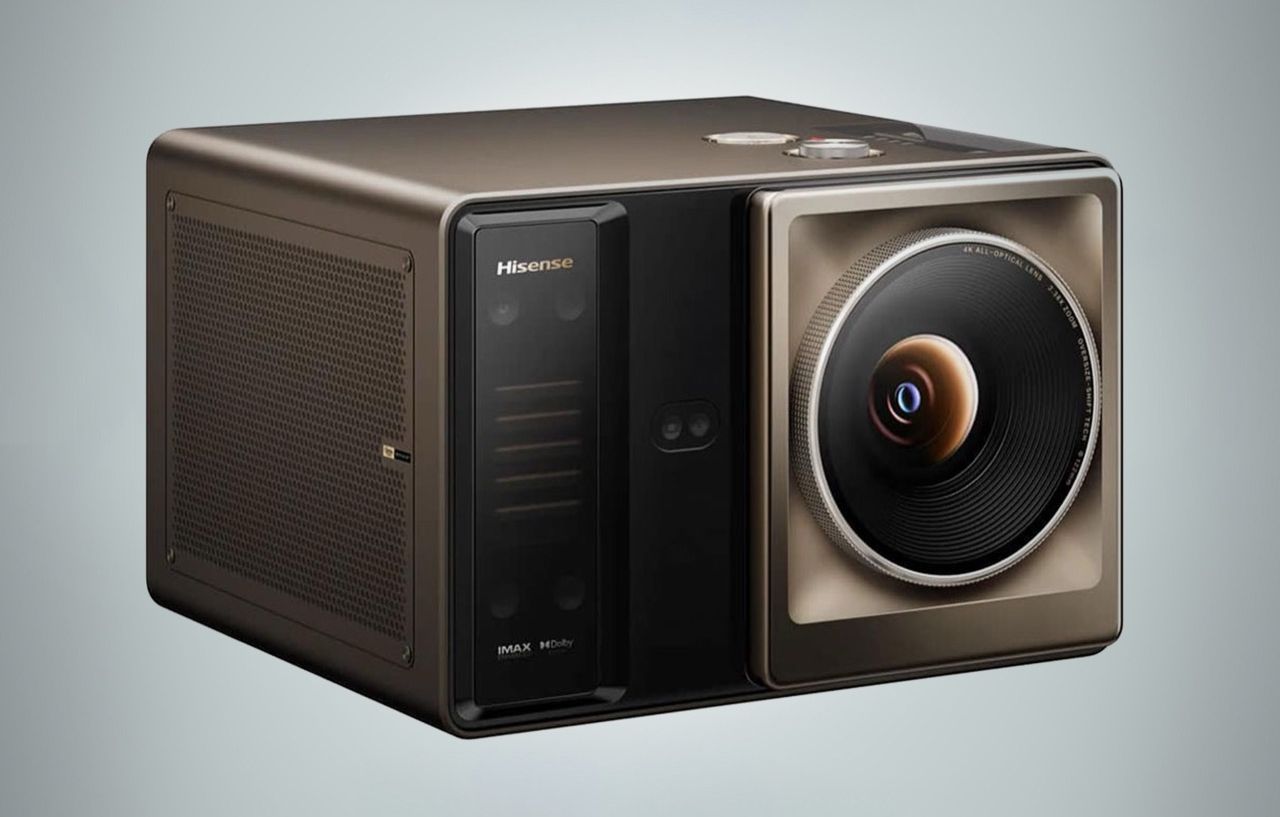
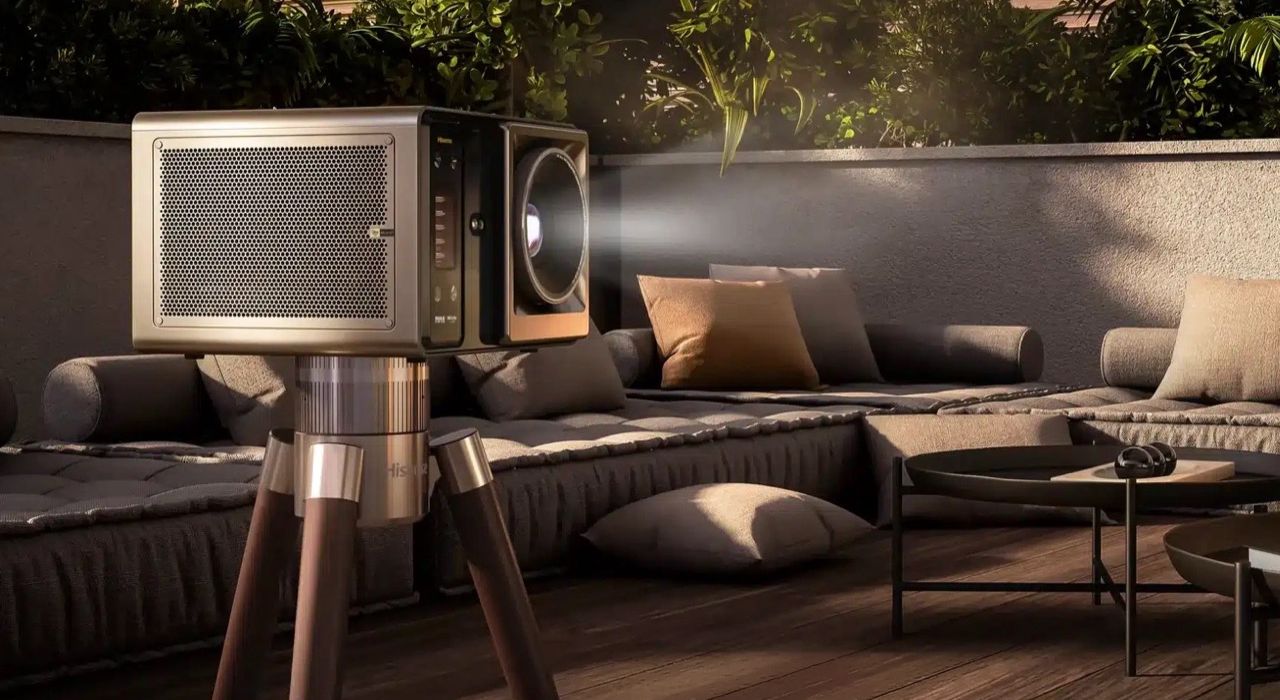
The design is another talking point altogether. When I first saw the Hisense XR10 in the CES 2026 embargo materials, I mistook it for a camera. The second time, I thought it was a microwave. Credit to Hisense’s design team for creating something that gives absolutely no visual indication of being a projector.
But here is the grim reality. The projector would cost you an arm and a leg. Currently listed at $5,997 on Amazon, effectively $6,000, it’s not a purchase most people will make on a whim. Buy it directly from Hisense’s website, and you’re looking at $7,000. That’s a significant investment by any measure, but for a projector that throws a 300-inch 4K image in near-total silence with Devialet-tuned audio built in, the value proposition is clearer than the price tag might initially suggest. With the unit now live on Amazon, buyers no longer have to wait. The only question is whether their wallets are ready.
Follow Homecrux on Google News!