The 2026 Clerkenwell Design Week turned out to be a center stage for designs from around the world. But what intrigued us the most were the origami-inspired lighting pieces, or in simpler words, looked like glowing art projects made out of paper. Large-scale hand-folded, origami-inspired structures transformed lighting from functional fixture to architectural focus at the 2026 Clerkenwell Design Week.
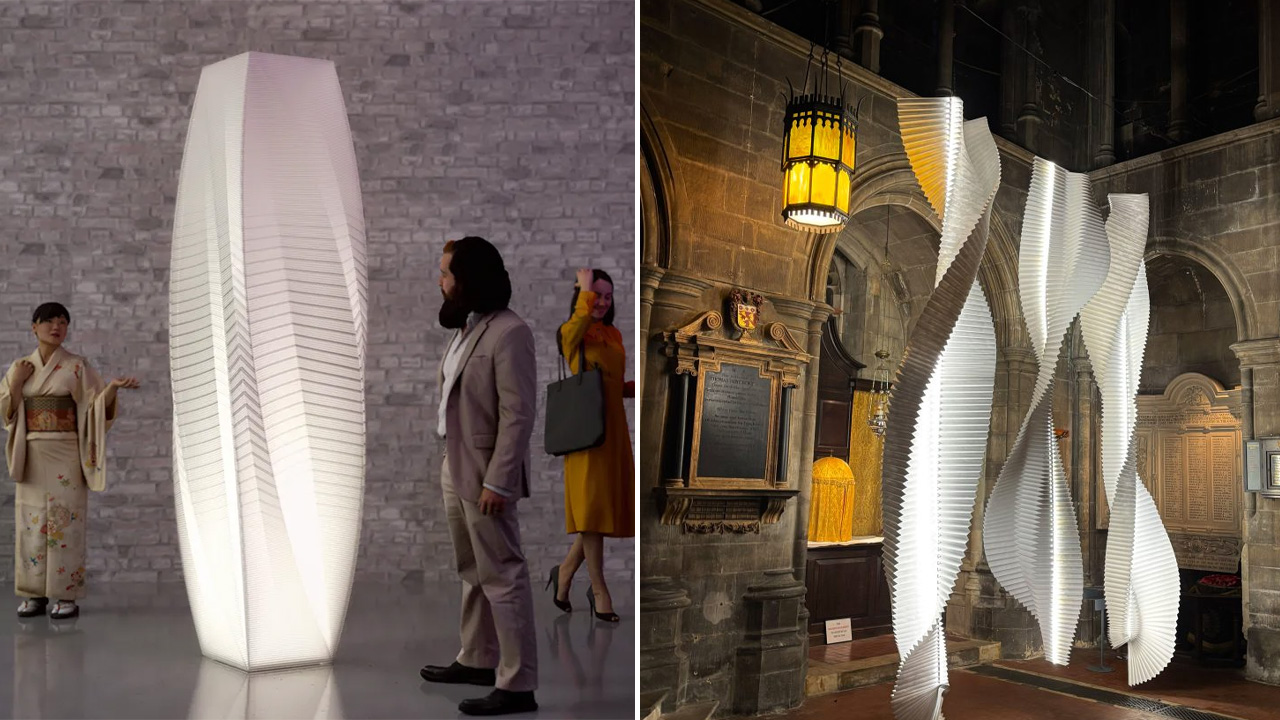
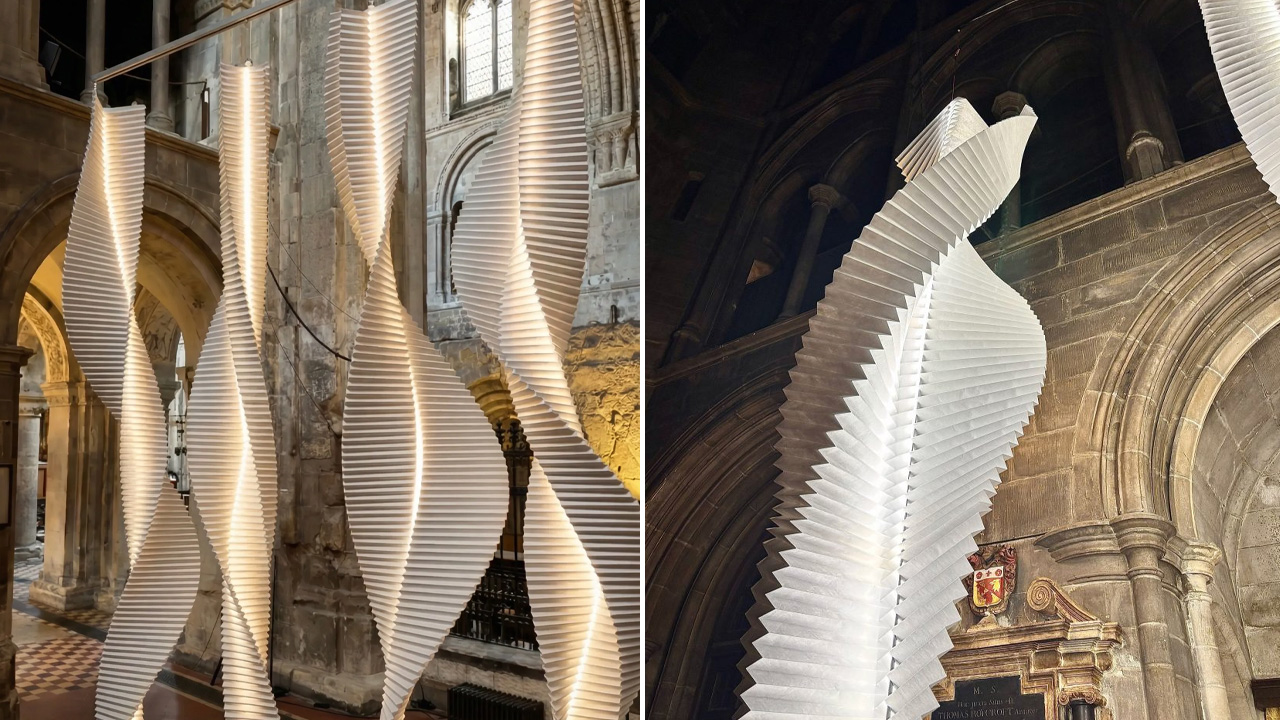
The heart of this trend is found in the design studio Fung+Bedford, which installed Resonance, four massive, four-meter-long lanterns suspended. It showcases the brand’s signature technique of turning monumental, hand-folded geometric paper art into immersive spatial experiences. It consists of four glowing, sculptural forms, each four meters long.
Every sculpture is hand-folded from a single continuous sheet of Tyvek up to eight meters long. To prevent the lightweight paper from sagging, the studio integrated custom LED lighting fixtures directly along the seams, doubling as structural support and a light source.
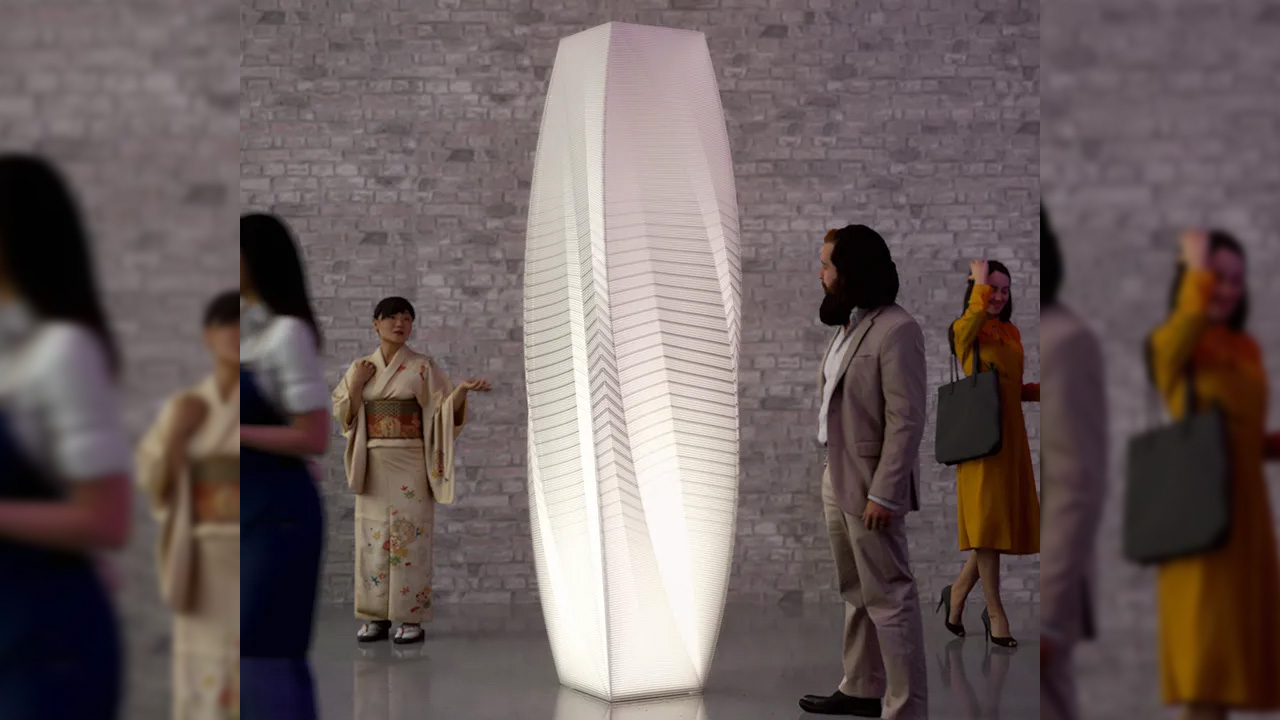
Just around the corner, Loom Light by MIM, a site-specific, 3D printed luminous sculpture, was showcased at the House of Detention. Designed in collaboration with AI Build and SEAM Design, the installation draws inspiration from Op Art, relying on geometric abstractions and patterns to create optical illusions of movement. It features a complex, fluid sculptural form made possible via algorithm-driven digital fabrication.
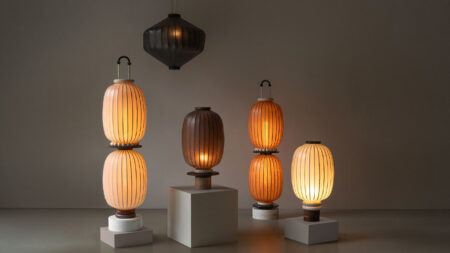
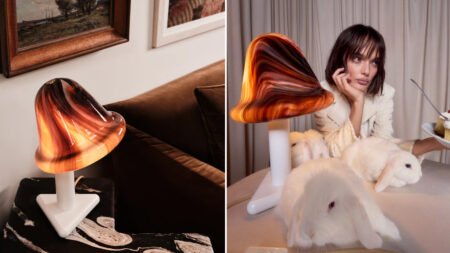
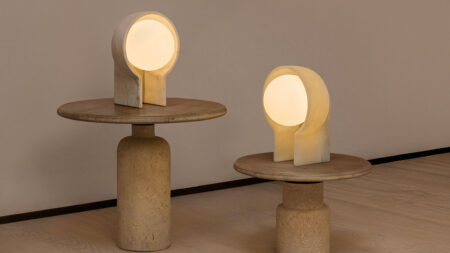
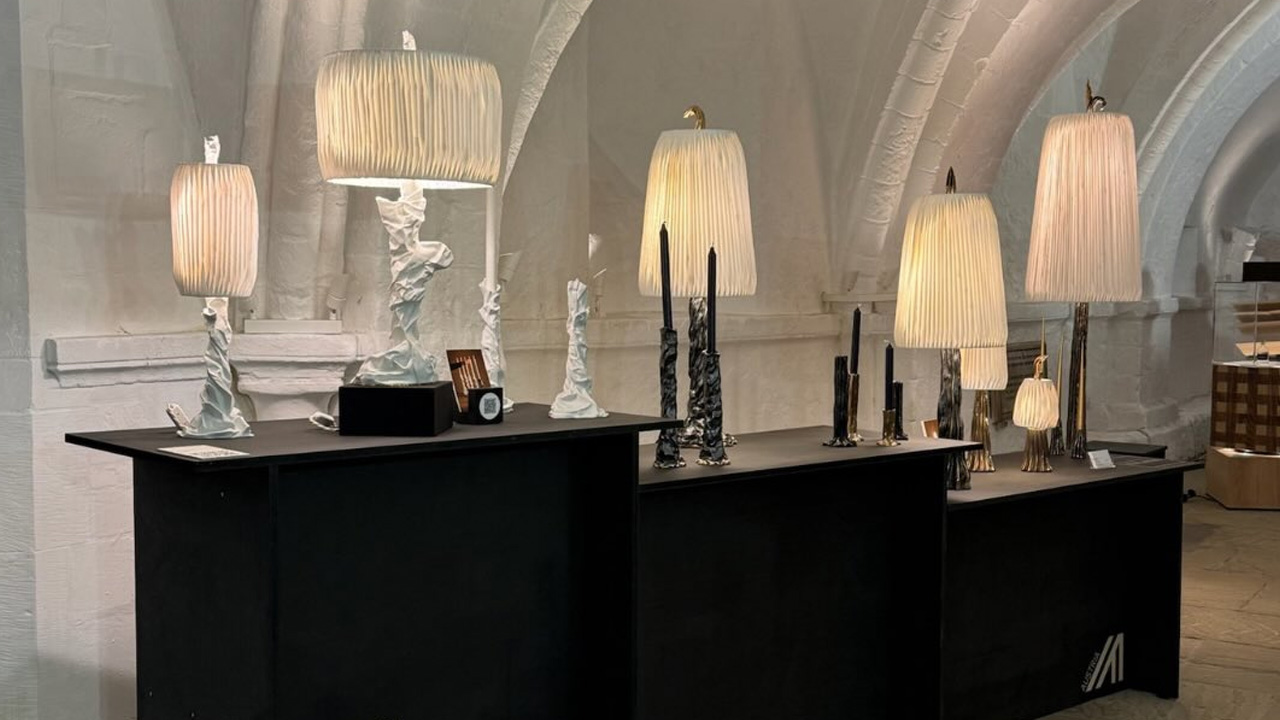
Bringing a more grounded, raw materiality to the conversation are the Surculus, Truncus, and Charta collections by Studio Palatin. Known for her deeply evocative, handmade lighting, designer Barbara Palatin-Doyle explores the delicate relationship between form and light through a highly tactile lens.
In Charta, the material focus returns to the pure essence of paper, using crisp, intentional folds to sculpt light, while Surculus and Truncus introduce branch-like, organic textures that ground the entire origami trend in something earthly. Where Tyvek offers synthetic resilience, Studio Palatin injects a fragile, poetic intimacy, reminding us of the human hands behind the design.
Ultimately, this trend at the fair is about creating spaces, letting us catch our breath. By replacing harsh, direct focal beams with weightless, ambient warmth, these designs bring a grounding humanity back into our built environments, inviting visitors to pause, look up, and feel at home.
Follow Homecrux on Google News!