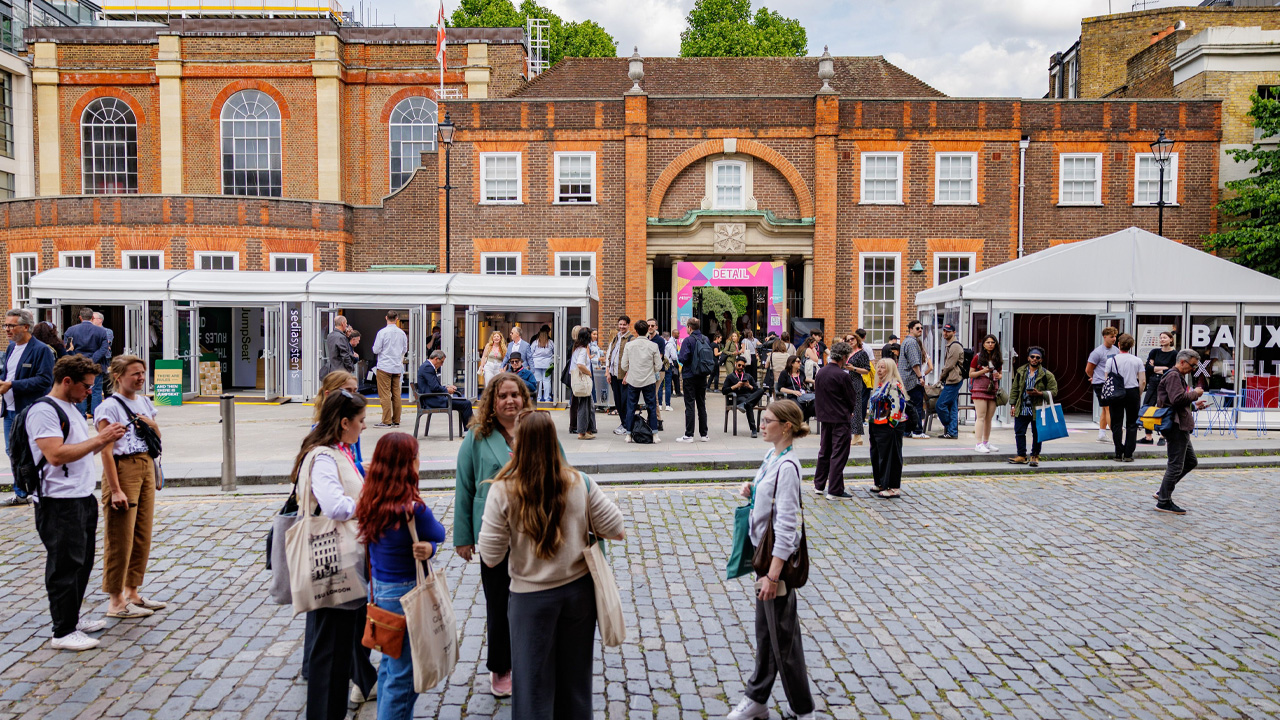
The famous, sun-dappled alleys of London’s EC1 postcode once again transform into an open-air theater to celebrate human ingenuity as Clerkenwell Design Week, 2026 edition, marks its 15th anniversary. It returns this year not just as a regular trade exhibition, but as a living, breathing sensory landscape where medieval cobblestones meet architectural and design visions from 19 through 21 May.
Visitors stepping off the train at Farringdon Station will immediately find themselves immersed in a sprawling urban festival filled with hundreds of brands across exhibition venues and showrooms. Whilst thinning the lines between private showrooms and public spaces, the event’s integral part remains the resident design showrooms, comprising talks, workshops, and product launches.
On your visit to the festival, which finds itself strategically placed on the global design calendar between Milan Design Week and 3 Days of Design, expect a vibrant, high-energy crowd of international architects, interior designers, and design enthusiasts. All tracing lines across the neighborhood, moving from product launches to lively panel discussions and courtyard parties over three days of high artistic experimentation.
Theme of Clerkenwell Design Week 2026
The overarching theme of the 2026 Clerkenwell Design Week centers around Design Interventions: Shaping Tomorrow’s Common Ground. This focus explores how physical design can alter daily routines to foster deeper human connections and civic responsibility.
This theme is brought to life through interactive public installations that require active participation rather than passive observation. An example is the BinSight Benches project scattered throughout the neighborhood’s public squares. These structural benches are constructed entirely from localized waste materials. They feature embedded QR codes that invite walkers to engage with public quizzes, effectively transforming an ordinary seat into an educational and philosophical pause point in the city.
What not to Miss
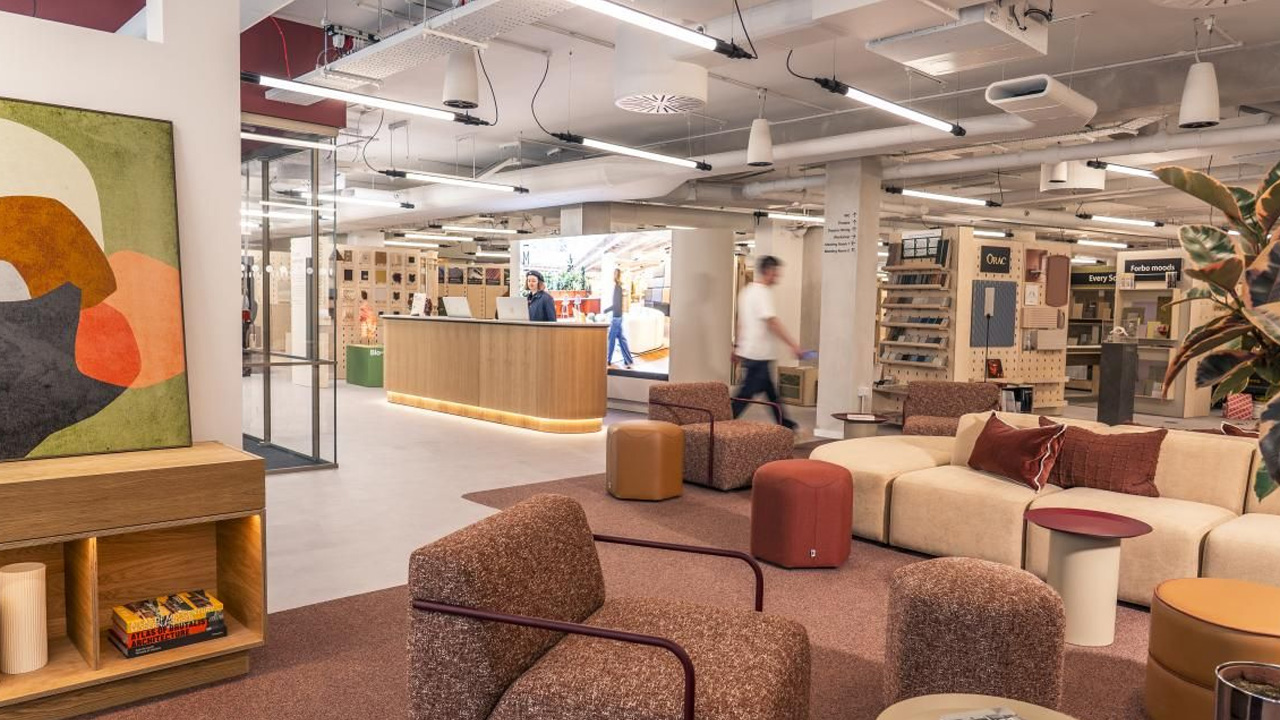
The heart of the festival beats within over a hundred permanent showrooms lining the streets, alongside the curated temporary pavilions hosting global design stalwarts.
Wilkhahn: Anchoring the commercial seating category, their showroom hosts the Journey of Dynamic Seating, an exhibition that treats ergonomic engineering with the grace of kinetic sculpture.
Muuto x Maharam: This vibrant cross-brand collaboration takes over a localized pop-up space. It pairs signature Scandinavian furniture silhouettes with expressive, richly textured textiles.
LA ERRERIA: Stepping outside traditional commercial showrooms, this studio commands the historic grounds of the Museum of the Order of St John with The Secret Garden. The installation features avant-garde furniture forms crafted entirely from vibrant, weather-resistant Spanish ceramic tiles.
Resonance by Fung+Bedford: The installation celebrates 10 years since the studio launched at Clerkenwell. The award-winning designer pair brings four folded and twisted architectural lanterns crafted from Tyvek to their installation, which exemplifies their mastery of origami-like structural folds.
Another Country and Goldfinger: Partnering to create sustainability-driven furniture, the two exhibit a craft-led office space at the event. They showcase the Work Series Three desk system by Another Country and Goldfinger’s room divider made from tree-cycled elm. Each of them will be GPS-stamped with the coordinates of where the original tree once stood.
Kettal: At the New flagship London showroom, a massive 600sqm space, Kettal will launch a U-Type Chair by Barber & Osgerby, along with the Eames Pavilion System by the Eames Office.
Takeaway
Another Country and Goldfinger peek toward sustainable design, but it’s not the only radical option to view. In fact, the Clerkenwell Design Week is giving eco-conscious design and net-zero tech a space to thrive. Sitting examples are the Volta Basin by Yves Béhar. It is not new, but it still holds enough relevance in 2026.
At Clerkenwell, Laufen will showcase its sculptural washbasin, envisioned by Yves Béhar. The Volta Basin reduces water consumption by 30 percent. It is made of durable Saphirkeramik and produced using zero-emission electric tunnel kiln technology.
Another highlight on show is the Éclos and Nomak surfaces, a major step toward eco-conscious kitchens and bathrooms. Created from a 100 percent crystalline silica-free composition and 50 percent recycled materials with a 3D integrated body design, Cosentino will debut this material at the event.
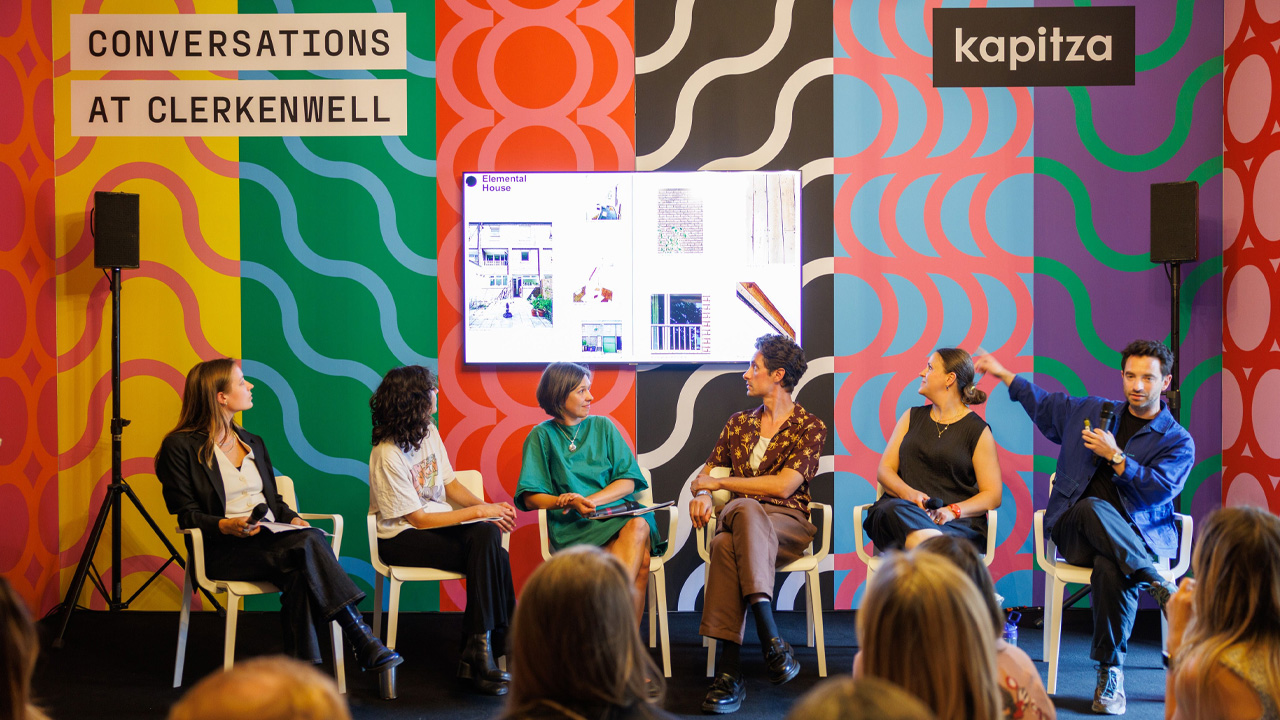
Environmental awareness is not apparent in materials and products alone. It will be part of a conversation as well. British retailer Mary Portas and design journalist Katie Treggiden will discuss the challenges of commercial interiors accepting reused and secondary materials as durable and integral parts of high-end design.
Follow Homecrux on Google News!