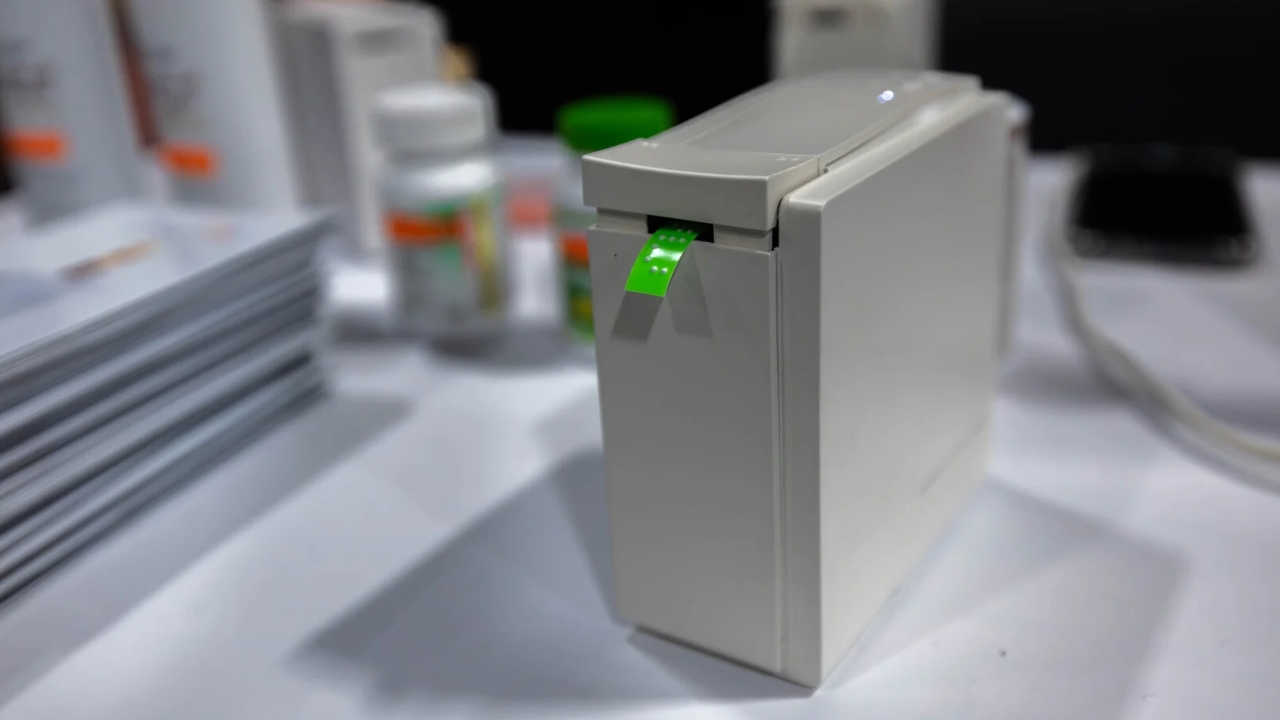
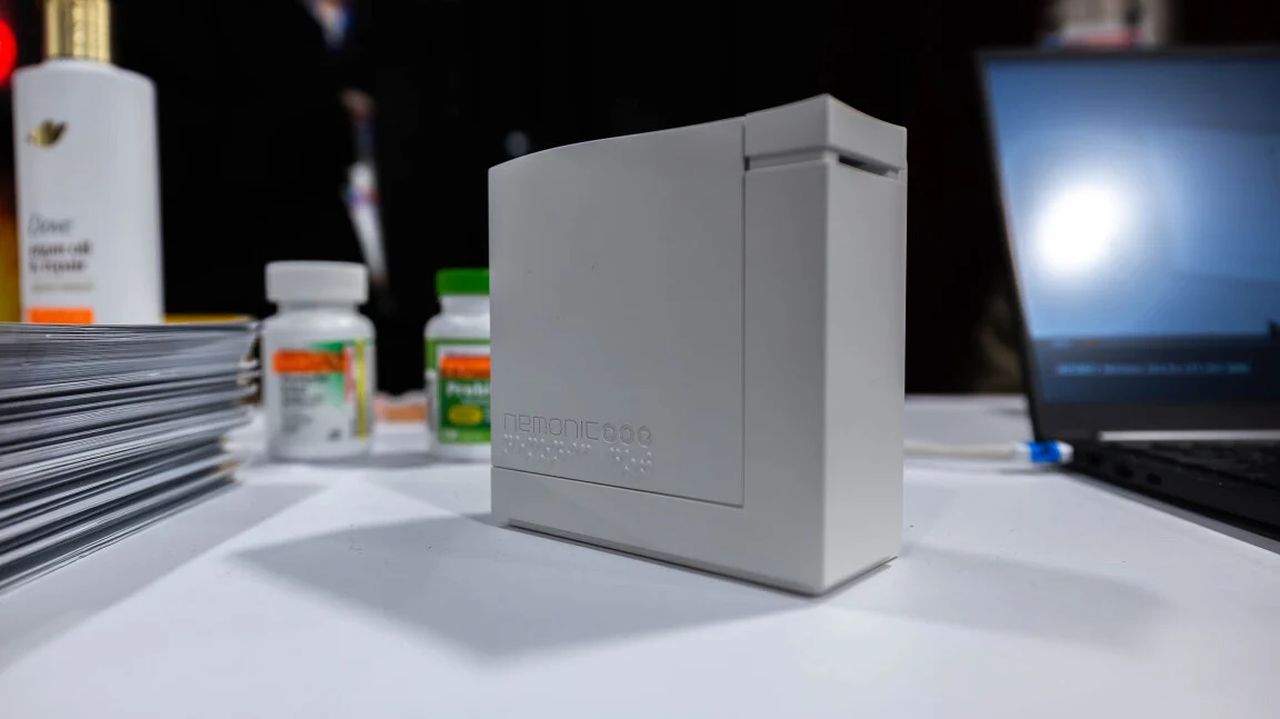
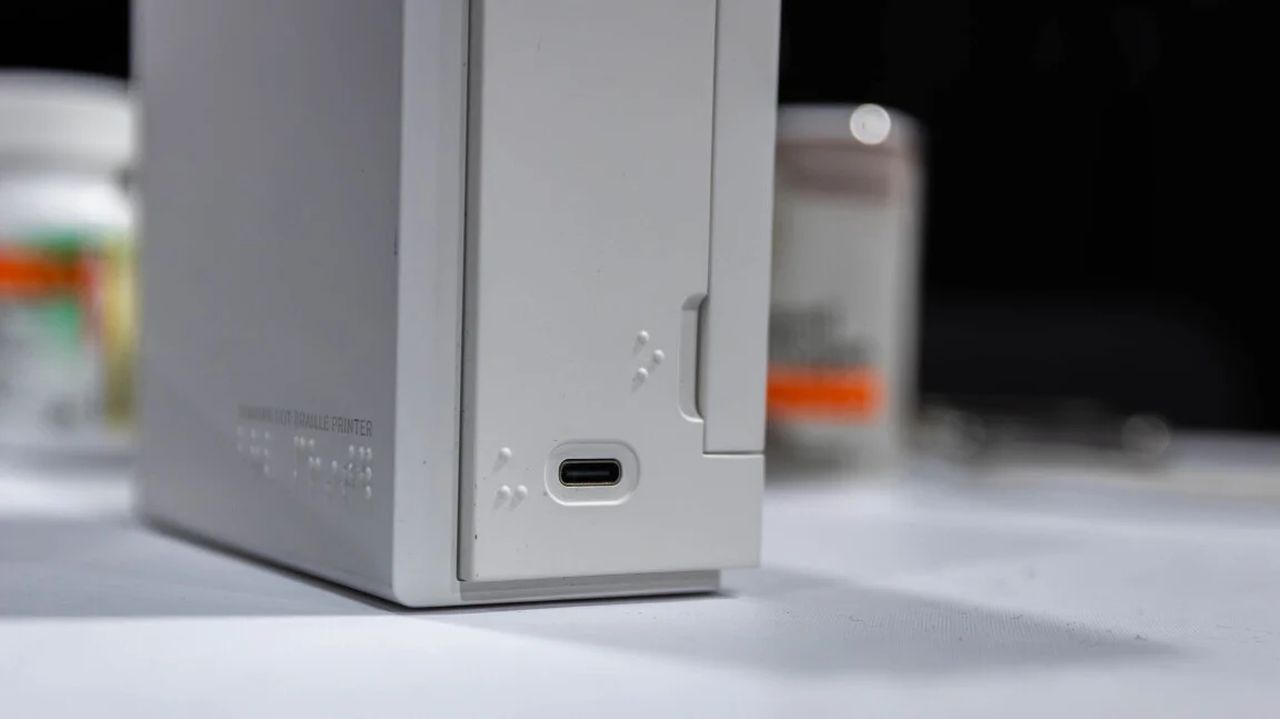
Innovations are meaningless if they can’t solve real-world issues. At CES 2026, Mangoslab presented technology that solves real problems, particularly for visually impaired people. You might have read or heard about a wide variety of modern printers, but Mangoslab introduced a Braille printer called the Nemonic Dot device, which is obviously different from conventional printers.
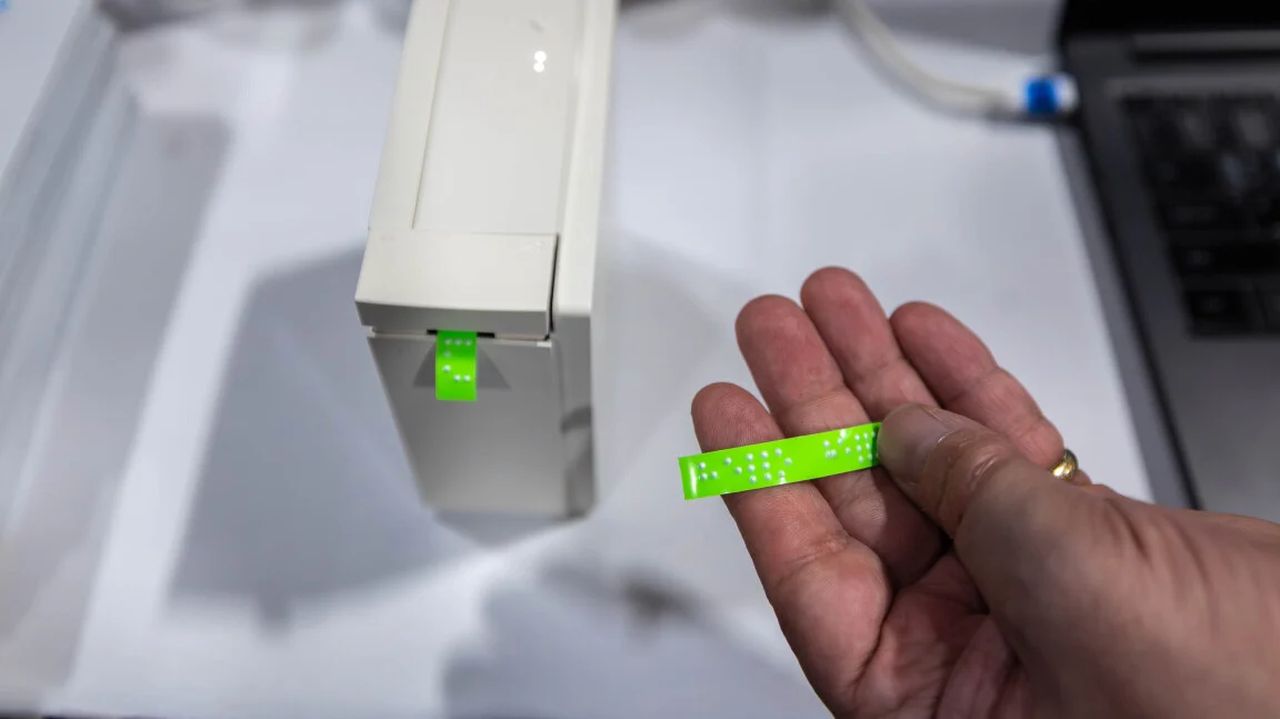
Kudos to the makers, they have materialized a useful product developed after years of research and development. It is a new speciality device that forays into the world of Braille labelling. The usual printers you see in the market use ink or toner, and these are well-established processes, but putting Braille dots on label media is challenging. The output must have raised dots that stand the test of time when they are subject to repeated finger swipes.
Braille is a unique language, and it is also different from most spoken languages. So the real challenge lies in translating the Braille language from the typical spoken ones. One must note here that there are six-dot and eight-dot Braille standards.
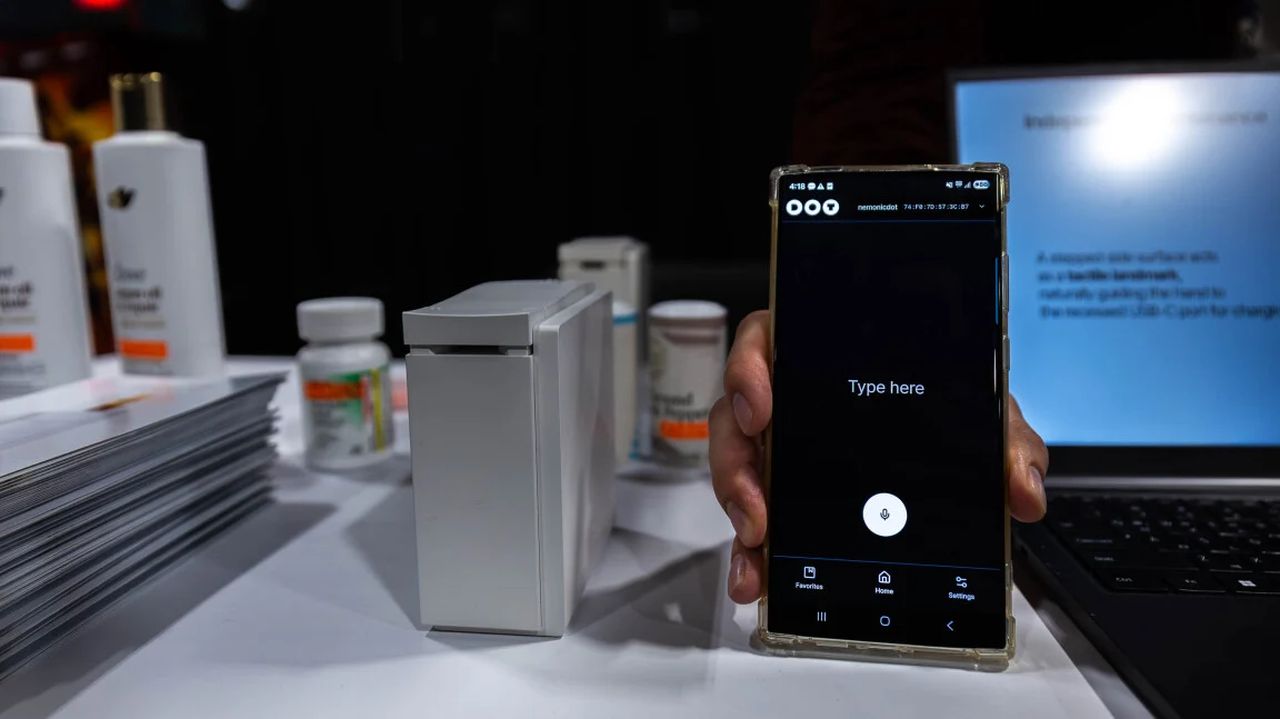
Mangoslab Nemonic Dot device bridges the gaps and certainly evolves as a true Braille label printer, which can be used in households to facilitate the visually impaired. It comes with support for app-based voice recognition and is able to create Braille labels using voice commands or spoken phrases. It can also change typed text into Braille labels, and that too from a variety of languages.
As per Mangoslab, Braille printing is not a new category, and there are several competitors in the market. But the costs of such printers are high, and a single one can cost more than $1,000. The common Braille printers may need a special Braille keyboard integrated into the body of the printer, so that input can be directed from the device only. Sometimes they employ a direct wired PC connection from where a person can type the desired label text using the accompanying software. The one with a Braille keyboard can’t be used by someone who doesn’t understand the unique language.
Also Read: AtomForm Palette 300 3D Printer Combines 12 Auto-Swapping Nozzles
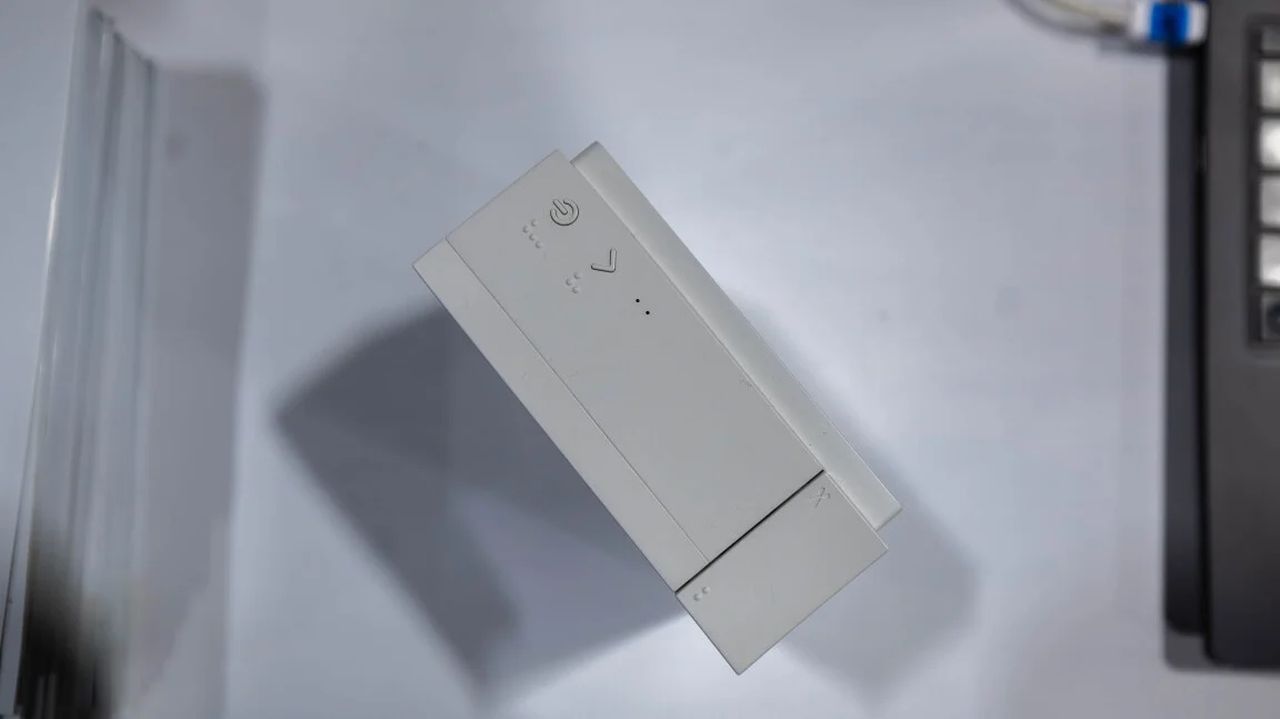
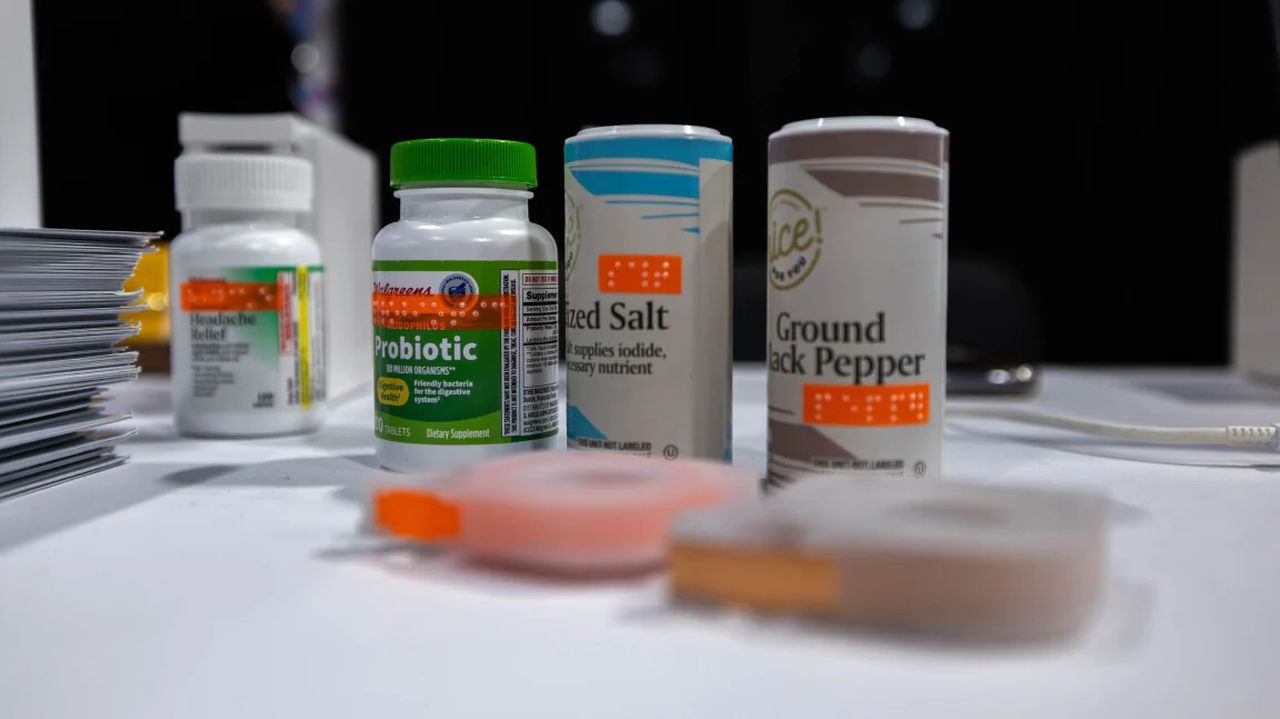
Anyone who doesn’t know Braille can also use the peripheral to print the labels. The compact printer is about 4.5 inches square and two inches thick, and it is portable enough to be used wirelessly. With the app, one can dictate a term and get it printed into Braille. For example, you can select ‘salt’ or ‘pepper’ typed into a label. Once it is done, the user needs to push a button on top of the printer that cuts the peel-and-stick strip. The Nemonic Pro eyes a price which remains under $1,000, so that Braille printing becomes economical.
So how does it benefit the users, who in this case would be visually impaired people? For instance, you can help a family member or friend by generating labels for food items mostly used in the kitchen, or the medications that they are supposed to take. There can be various use scenarios, like the switches for respective appliances could be labelled, and so on. Now that’s some useful tech that we have come across at CES this year.
Follow Homecrux on Google News!