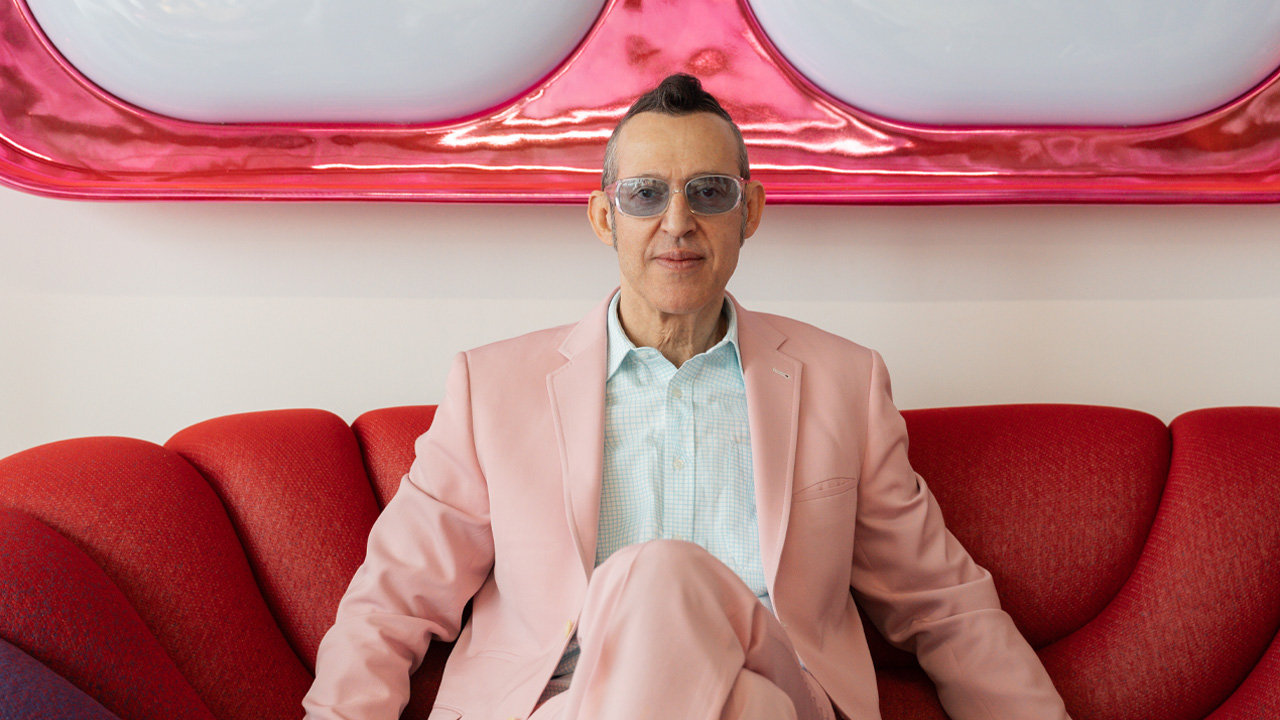
When I think of Karim Rashid and his designs, the first word that pops into mind is flamboyant. Both the creator and creation are bright, loud, and full of distinct personality, while being grounding, practical, and versatile at the same time. Rashid is a talent that comes once, maybe twice, in a generation. Through almost forty years in the industry now, he has seen change like none other. From the industrial age to the digital age, he has been through the major dramatic changes at the turn of the 20th and in the 21st century.
With the recent upheaval in the design landscape with generative AI, I reached out to Rashid, whose views may irk those who absolutely abhor the use of AI, but make a lot of sense. In this exclusive conversation, the Prince of Plastic shares his thoughts on where the design industry is headed with AI, his experience with bio-plastics, and how the young generation of designers can stay afloat in a world inundated with AI-generated creations.
The year has been rather eventful for the designer, not just professionally, but personally as well. After wrapping up this year’s Salone del Mobile, Rashid got married in Milan to Kiana Ahmadi. The bride and groom donned hot pink for their wedding wardrobe, and dare I say, the look was so Karim Rashid-coded.
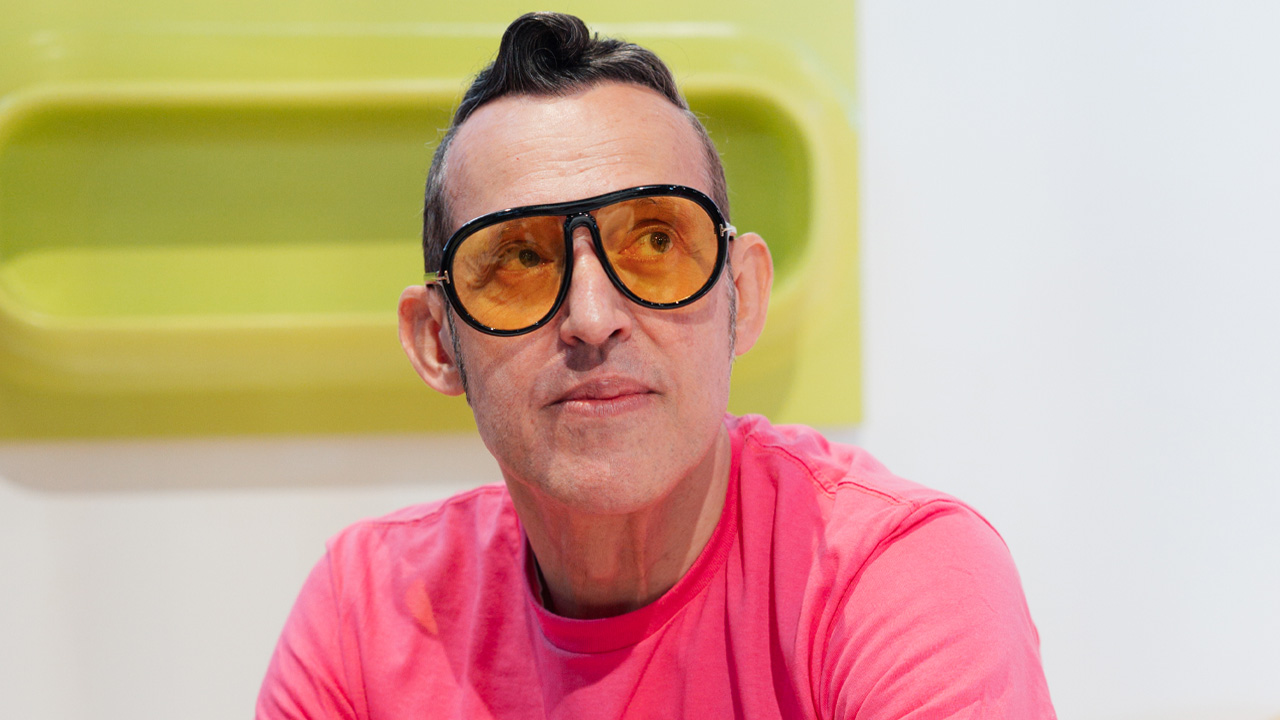
When asked about the choice of his wedding destination, Karim Rashid says, “Milan has been my second home for more than three decades. It is the global capital of design, where I have developed countless projects, collaborations, exhibitions, and friendships. It is a city that celebrates creativity and innovation while respecting culture and craftsmanship. My wife Kiana and I wanted a wedding that reflected beauty, creativity, and intimacy, and Milan offered the perfect setting. We were married near Milan at Castello Visconteo, a place that combines history with romance and elegance.”
In Milan, Rashid raised the curtain from his circular furniture collection for Polish brand LOOPE. The collection was distinguished by durable UV-stabilized polyethylene construction, where each element can be reprocessed multiple times, creating a closed material loop. This also marked a new chapter for the Prince of Plastic.
Rashid has loved plastic since his childhood, as he shared in an interview with Homecrux in 2020. For him, plastic isn’t just another material but the liveliest and most energetic one of all. The agility and versatility of the material allowed him to create super comfortable, lightweight stacking chairs “that can last 30 years and only cost $30.” Rashid believes “polymers can be sculptures, poetic, ergonomic, fluid, sensual, warm, high performing, and very accessible materials,” as evident from his vibrant portfolio.
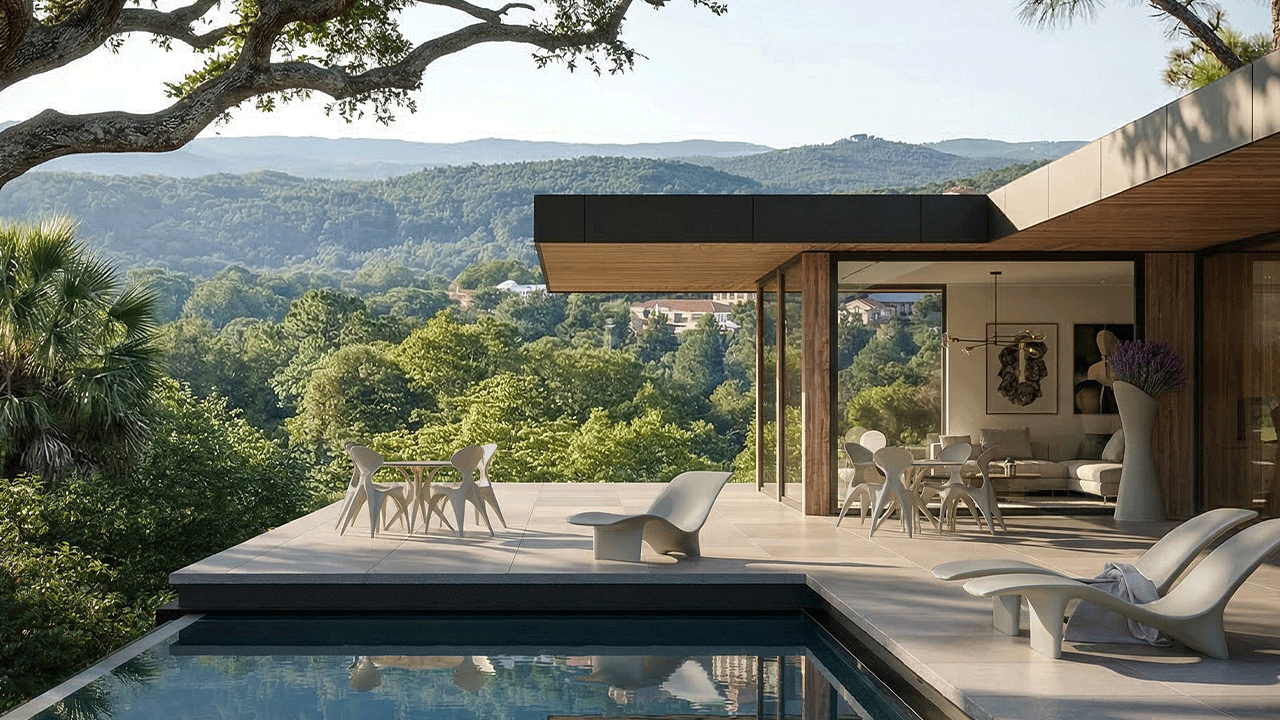
Of late, he has been expanding his portfolio beyond virgin material and exploring eco-friendly plastics as a preferred choice. “Sustainable materials are no longer compromises,” he says. Earlier, environmentally responsible materials often had limitations in durability, color, finish, or manufacturing capabilities. That is not the case at present. Today, with remarkable advances in recycled polymers, bio-based plastics, and circular production systems, there has been a new dawn of materials.
Talking about this new shift, he adds, “I believe materials will increasingly be designed for multiple life cycles rather than a single use. Designers will think not only about how products are manufactured but also how they are repaired, reused, disassembled, and recycled. Sustainability must become invisible, integrated into the DNA of products rather than treated as a marketing feature.”
During his previous conversation with Homecrux, the design world was very different. Six years down, the world has had to endure a global pandemic, multiple wars, AI evolution, and new material choices emerging. The socio-economic landscape has changed drastically, with severe impacts on the design industry.

Through Rashid’s lens, the world has become more complex, more connected, and yet more uncertain. He says, “We have witnessed geopolitical instability, environmental challenges, rapid technological shifts, and changing social behaviors. Design has become even more important because it helps us navigate complexity. Design is not about styling objects. Design is about improving life.
“The pandemic accelerated digital transformation, remote collaboration, and our relationship with technology. At the same time, people increasingly seek emotional experiences, well-being, community, and human connection. My perspective remains optimistic. Every challenge creates opportunities for designers to rethink systems, products, spaces, and experiences. Design should be emotional, functional, experiential, accessible, sustainable, and human-centered.”
With AI being used almost everywhere, my concerns for human creativity are genuine. Being an artist myself, I fear how artificial intelligence is progressing at the moment, with no checks or regulations. So naturally, I wanted to know Rashid’s views on it.
He echoed my concern while adding that every major technological revolution has created anxiety. “Photography challenged painting. Industrial production challenged craftsmanship. Digital tools transformed graphic design. AI is another transformational tool,” he shares.
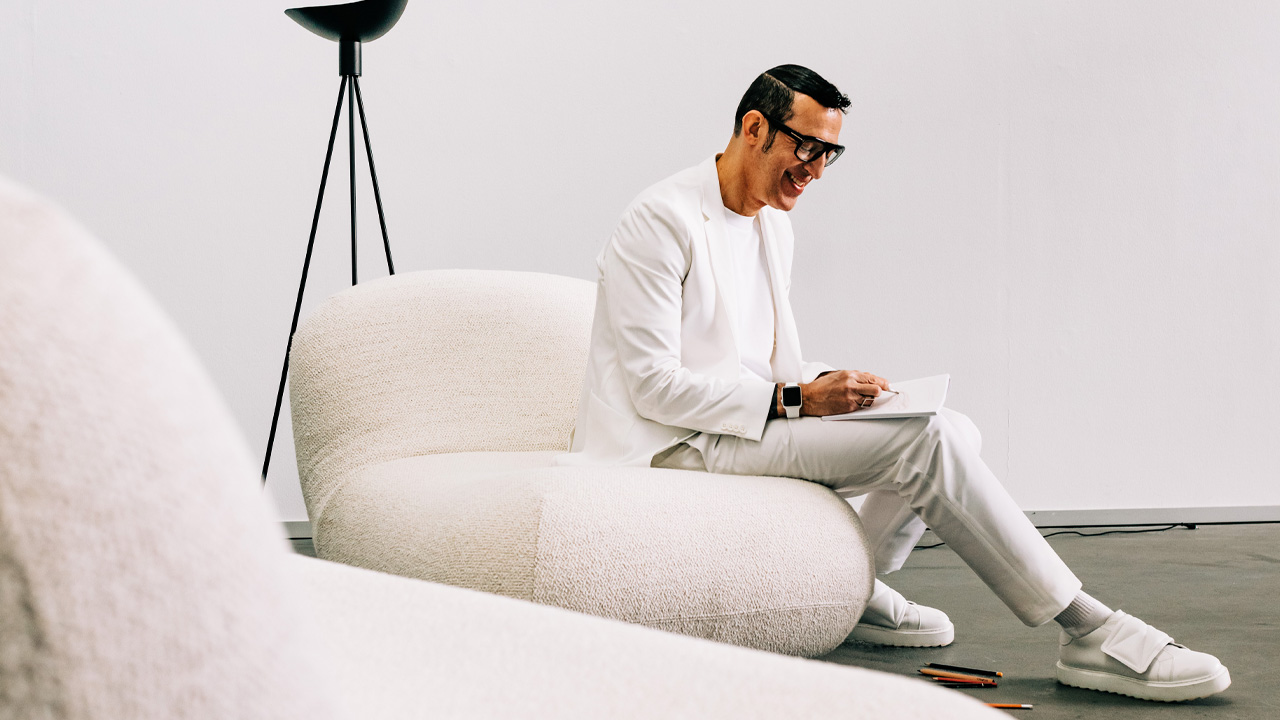
But Rashid is not one to fear change. He is rather the one to use it to his advantage without losing himself to the technological advancement. “I see AI as a powerful assistant rather than a replacement for human creativity. AI can generate options, accelerate research, analyze data, and help visualize ideas. However, it cannot replace human intuition, empathy, cultural understanding, lived experience, or the ability to imagine entirely new futures. Creativity is not simply producing images. Creativity is understanding human desires, dreams, emotions, and behaviors.”
His views on AI are something that most people have not even thought about. People have forgotten that it is merely a tool to be used to benefit yourself, not have it do your work, thinking, and tasks for you. Rashid believes, “The danger is not AI itself. The danger is becoming passive and allowing technology to replace critical thinking and originality.”
While he knows the perks of AI as an advanced tool, he also knows that there should be protections. Laws should be framed to prevent plagiarism and protect creative and intellectual property.
He echoes, “Designers, artists, writers, musicians, and creators deserve recognition and compensation for their work. Intellectual property laws must evolve alongside technology. The challenge is finding a balance between innovation and protection. We should encourage technological advancement while ensuring transparency regarding training data, authorship, attribution, and ownership. Creative industries depend on originality and innovation, and those values need safeguarding.”
With technological advancements, AI involvement in almost every industry, and material innovations, it is only natural to wonder where design is headed. Will it be overrun with AI, or will human creativity triumph? Rashid says that design will become more and more human. He believes that with an increase in automation, uniquely human qualities will become more valuable, more sought-after, and more cherished.
“Empathy, emotional intelligence, cultural understanding, ethics, storytelling, and imagination will define the most successful designers. AI may automate certain technical processes, but it cannot replace the human desire for meaning, beauty, identity, and experience. The future belongs to designers who combine technology with humanity. Design has always been about shaping the future, and that responsibility remains ours,” he says.
Understanding his assessment based on his experience, I’d say I have little doubt about it. Rashid has been in the industry for nearly four decades now. He has seen styles, trends, production techniques, and materials evolve over decades.
Reminiscing about the days gone by, he says, “When I began my career, production was slower, communication was slower, and access to information was limited. Today we live in an era of instant communication, global manufacturing, digital fabrication, and unprecedented access to knowledge.”
“Materials have evolved dramatically. We now have advanced composites, smart materials, sustainable polymers, digital manufacturing techniques, and highly sophisticated production technologies. Production has become more precise, efficient, and customizable.”
Rashid has never been particularly interested in following trends. “I believe the age of the mass trend is fading. Digital technology has empowered individuality. The future will be less about one dominant aesthetic and more about diverse expressions of identity. Designers should focus on creating meaningful, lasting solutions rather than chasing temporary fashions.”
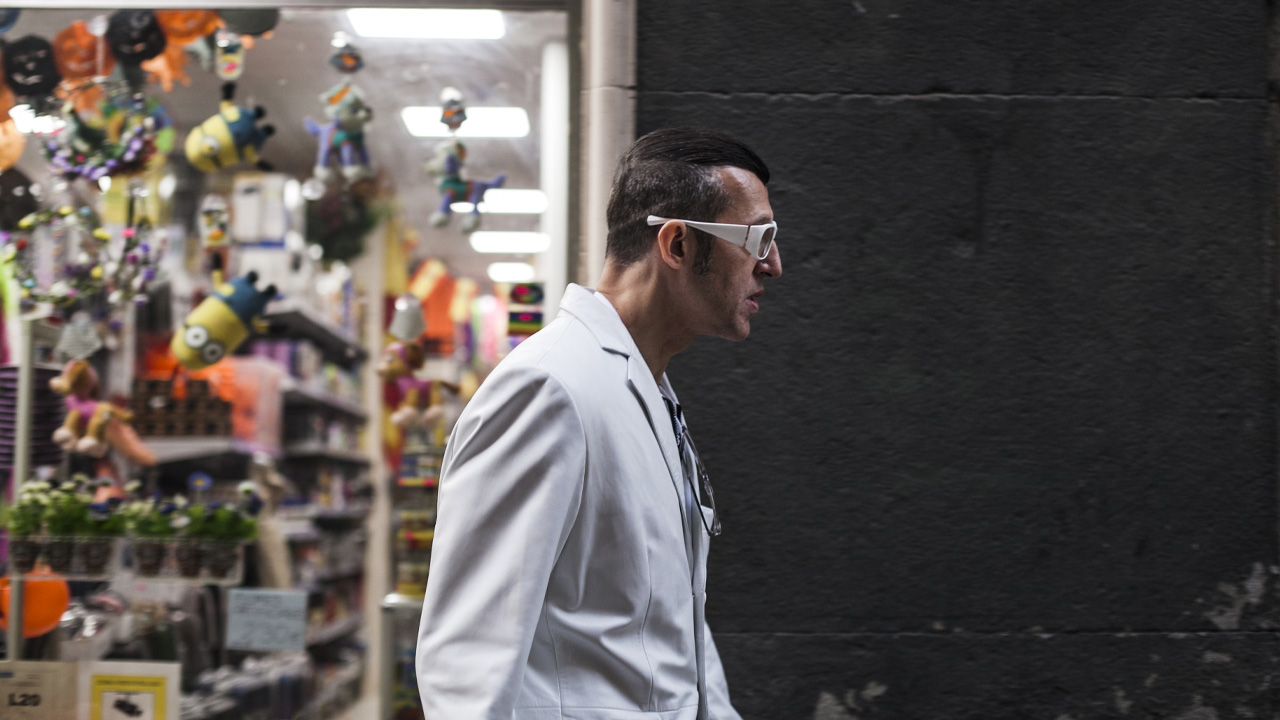
As for the new-age tools and materials, Rashid informs, the physical and digital realities merge seamlessly. He reckons that smart materials, additive manufacturing, robotics, responsive environments, advanced sustainable materials, and AI-assisted development will change the way industry designs and produces.
As Rashid says, there has been a shift from mass-produced hoarding to creating spaces that feel more personalized. In the coming months, furniture and interiors will become more adaptive, flexible, and responsive to human needs. That assessment is something I have seen in the past couple of years, and through this year’s interior design trends.
According to Rashid, the role of designers will expand. “Designers will not simply create objects. They will shape systems, services, experiences, behaviors, and relationships between people and technology. Design will become even more strategic and interdisciplinary.”
This puts the designer at the center of creation rather than the design itself. At this idea’s core is human-centric design, wherein each object is made, shaped, and draped in comfort, sensorial pleasure, and personalization. The notion is simple: people do not want lifeless things in their space; they want things that reflect their lifestyle, their emotions, and experiences; and designers intend to deliver on that demand.
This is something Rashid wants the young and aspiring designers to inculcate in their approach to design. “Be curious. Stay optimistic. Develop your own point of view and work hard. Leave the distractions and focus.”
Rashid’s advice is not to “spend your life copying what already exists. The world does not need another version of the past. It needs new ideas. Travel if possible. Read constantly. Learn about technology, psychology, sociology, art, science, and business. Great design exists at the intersection of many disciplines.”
But the most important piece of advice from Rashid is that design is not about objects. It is about people. A signature of civilization. “Every object, space, interface, service, and experience shapes human behavior. Your responsibility as a designer is to improve life, create value, inspire emotion, and contribute positively to the future.”
Needless to say, Rashid knows how to navigate the ever-evolving being that is the design world. He has mastered the art of using technological advancements to his advantage without losing an ounce of his creative flair, uniqueness, and flamboyance. His is a world of soft shapes, sensual creations, with no room for drab and dull. That is a world I want to live in.
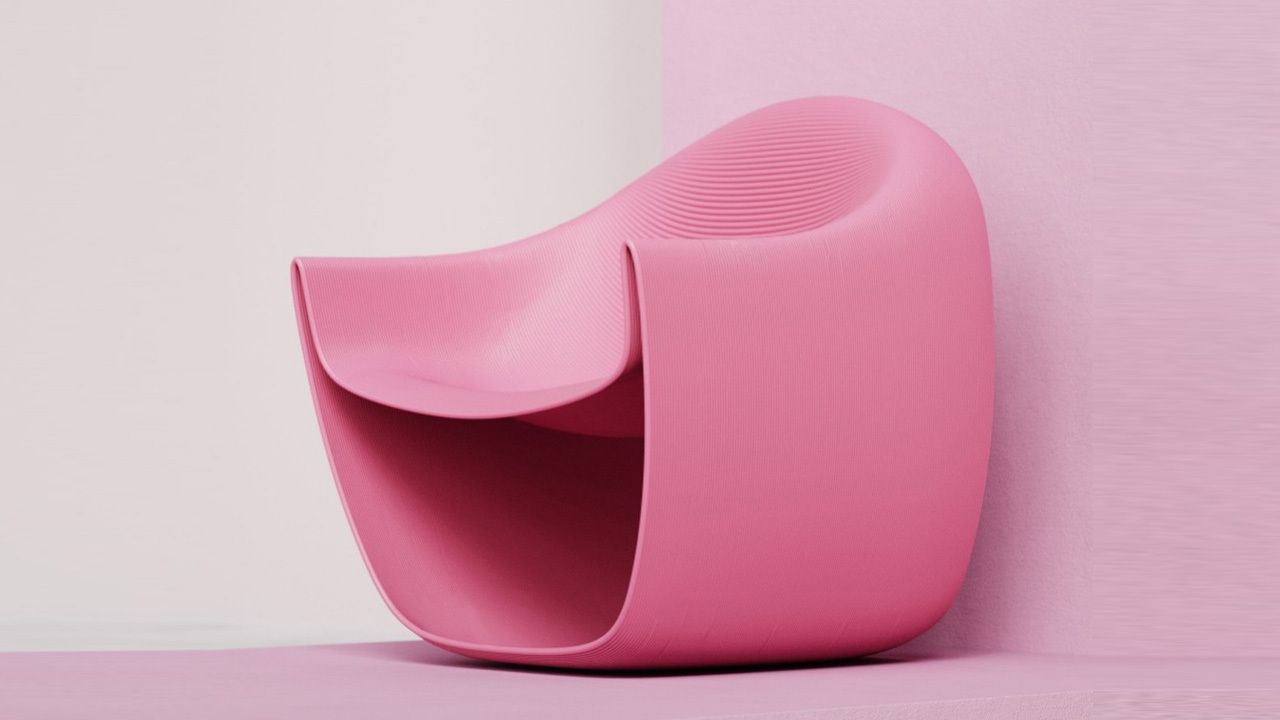
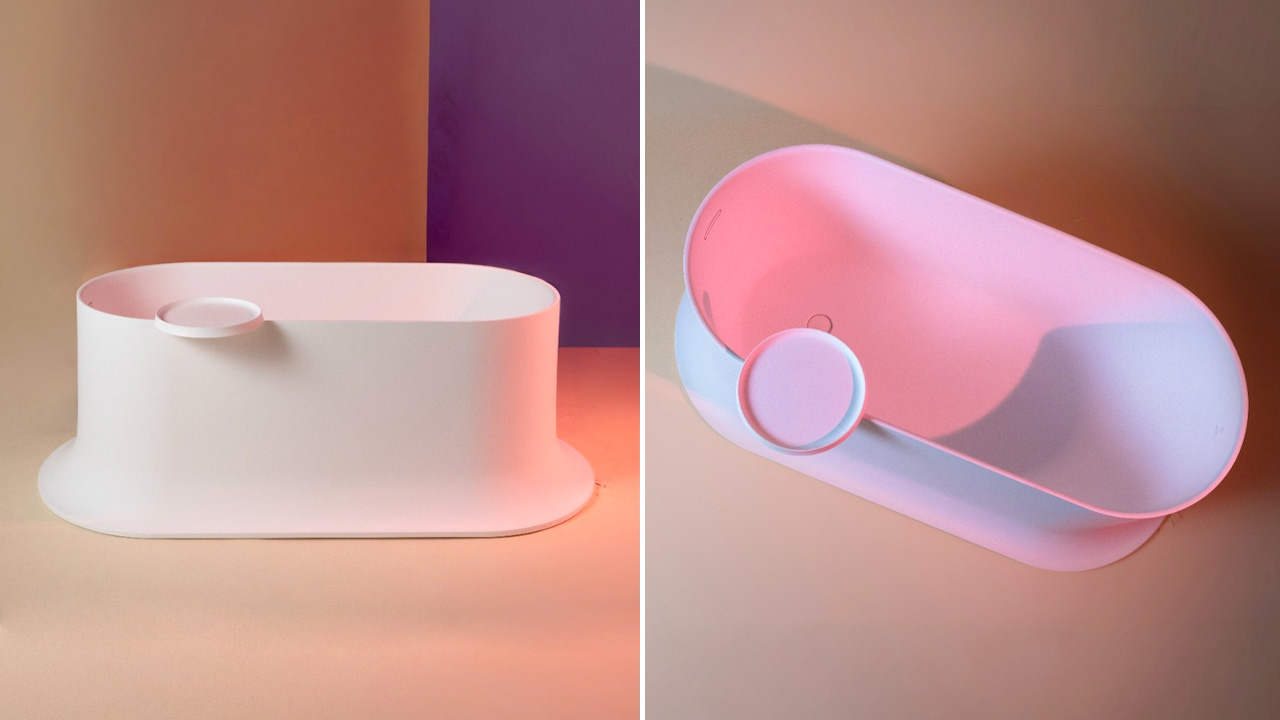
While he may not have been able to convince me to use AI, he does stand corrected that the danger is losing ourselves to technology, letting it replace critical thinking and originality. I cannot wait to see what Karim Rashid cooks up next. Will it be a hot pink chair like the Scoop, a sensually pastel bathtub like the Alba OB, or something absolutely unhinged that AI could never dream of? Rashid remains tight-lipped about it at the moment.
Follow Homecrux on Google News!