I’ve been covering smart home and wellness gadgets for Homecrux for quite a while now, and if there’s one category that consistently frustrates me, it’s sleep trackers. Don’t get me wrong, I am not against the idea of what a sleep tracker offers in principle, but I am not a particular fan of the form they’ve taken. For context, most are wearables: rings, watches, earbuds, or bands, which is what bothers me.
I don’t appreciate having a device in my ear, a ring that feels obtrusive, or a watch constantly buzzing with alerts while I’m trying to sleep. It’s not the technology itself I object to; it’s how intrusive the delivery has become. Modern sleep trackers aren’t just intrusive; they’re also uncomfortable and exorbitantly expensive.
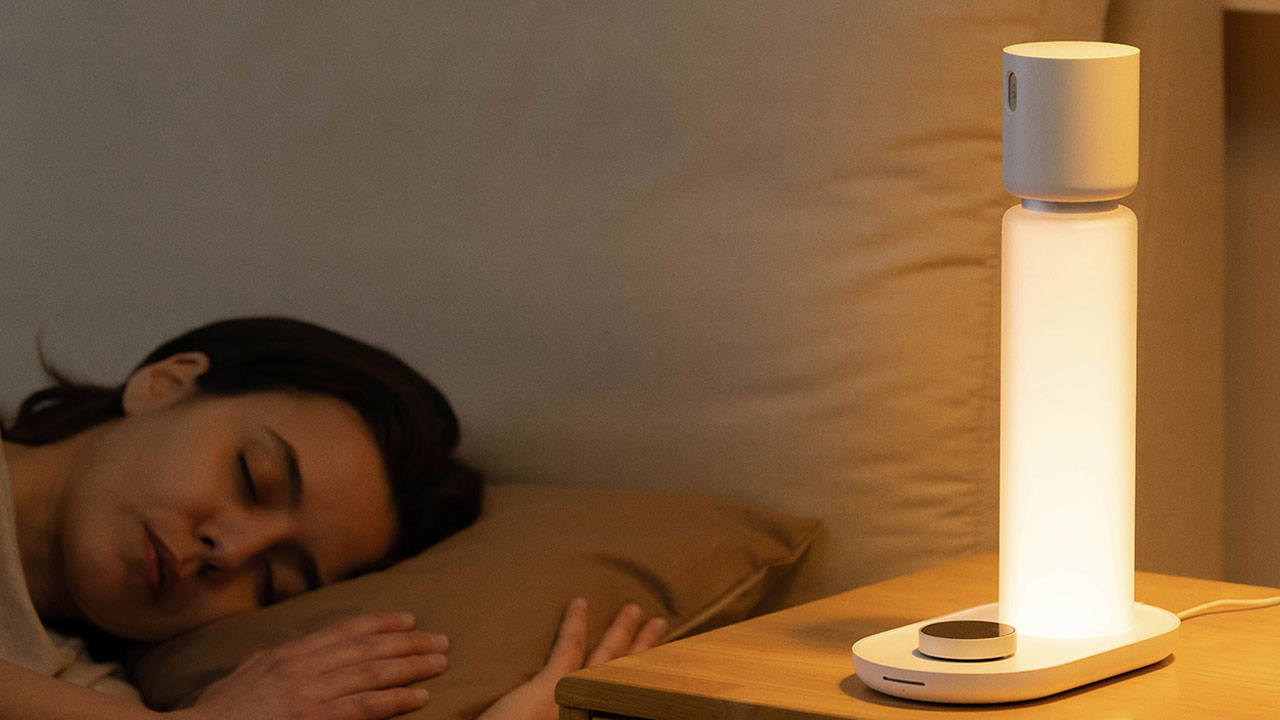
That’s where the Sleepal AI smart lamp from Sleepal, a Hong Kong-based startup, comes into the frame. First showcased at CES 2026, Sleepal AI Lamp is an elegant, contact-free sleep intelligence system that, according to the maker, “helps you understand and improve your rest naturally and comfortably.”
When the Sleepal team reached out and sent over their AI Lamp for review, I was genuinely curious to put their claims to the test. Unlike traditional sleep trackers, the Sleepal AI Lamp uses no bands, rings, or under-mattress sensors. I’ve been testing it in my own bedroom in Shimla for the past two weeks, through regular nights and a couple of particularly warm, restless ones, and I’m ready to share what I actually experienced.
Unboxing and Setup is Surprisingly Simple
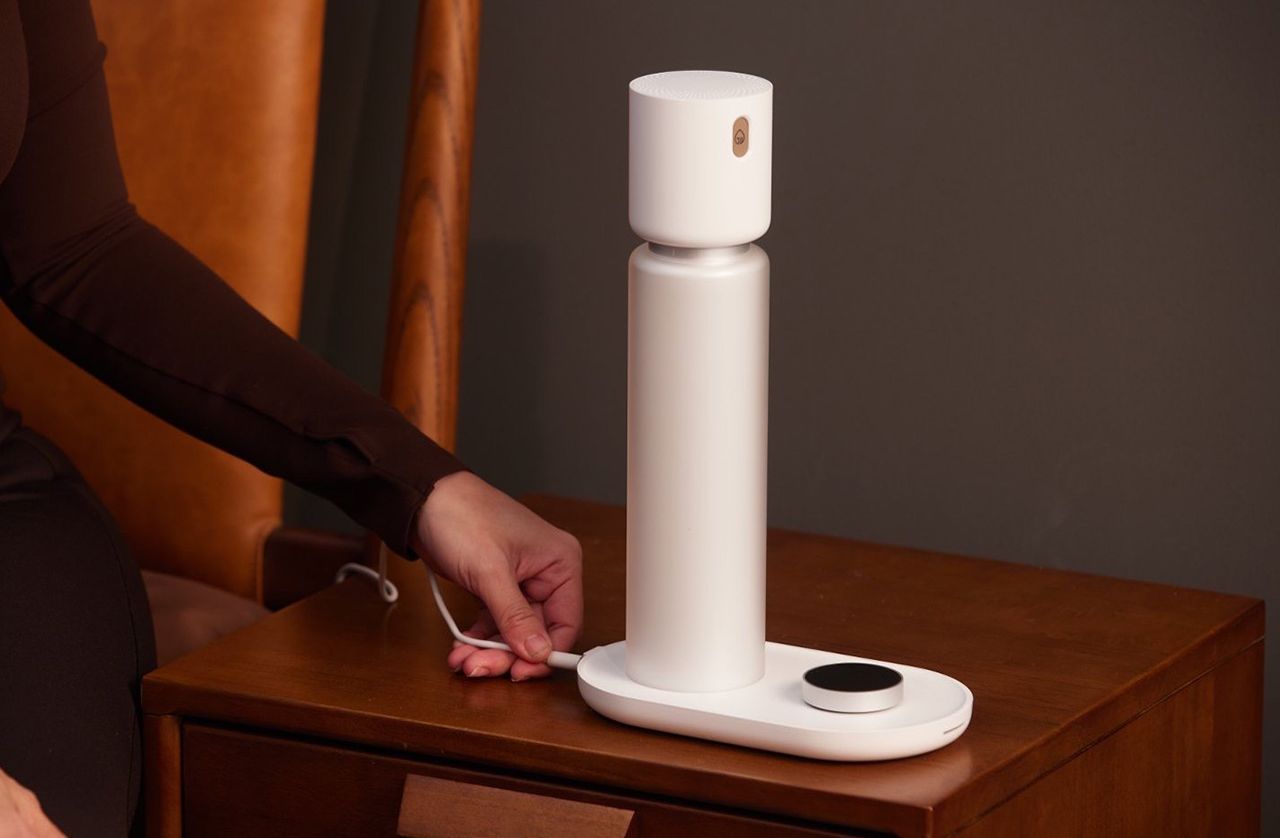
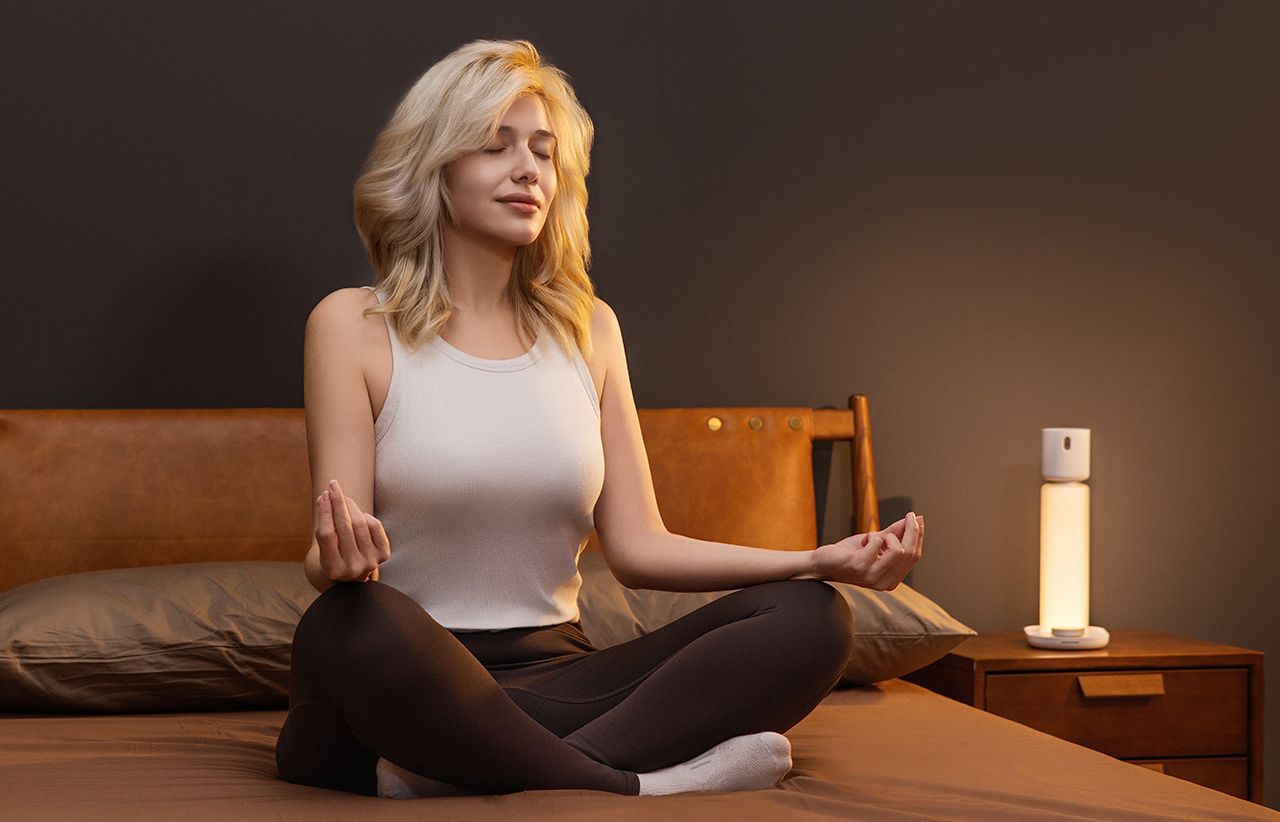
Everyone loves unboxing a new device, and I’m no different. But after the nightmare of setting up a SwitchBot S10, I was hoping this one wouldn’t be a similar ordeal. Thankfully, it wasn’t. The lamp arrived well-packaged, and my first impression was that it looked far nicer than most sleep gadgets. It has a clean, minimalist design with a matte finish that blends naturally into a bedroom. Honestly, it doesn’t even look like a sleep tracker. It rather looks like a lamp, something you’d genuinely want on your nightstand, and I did.
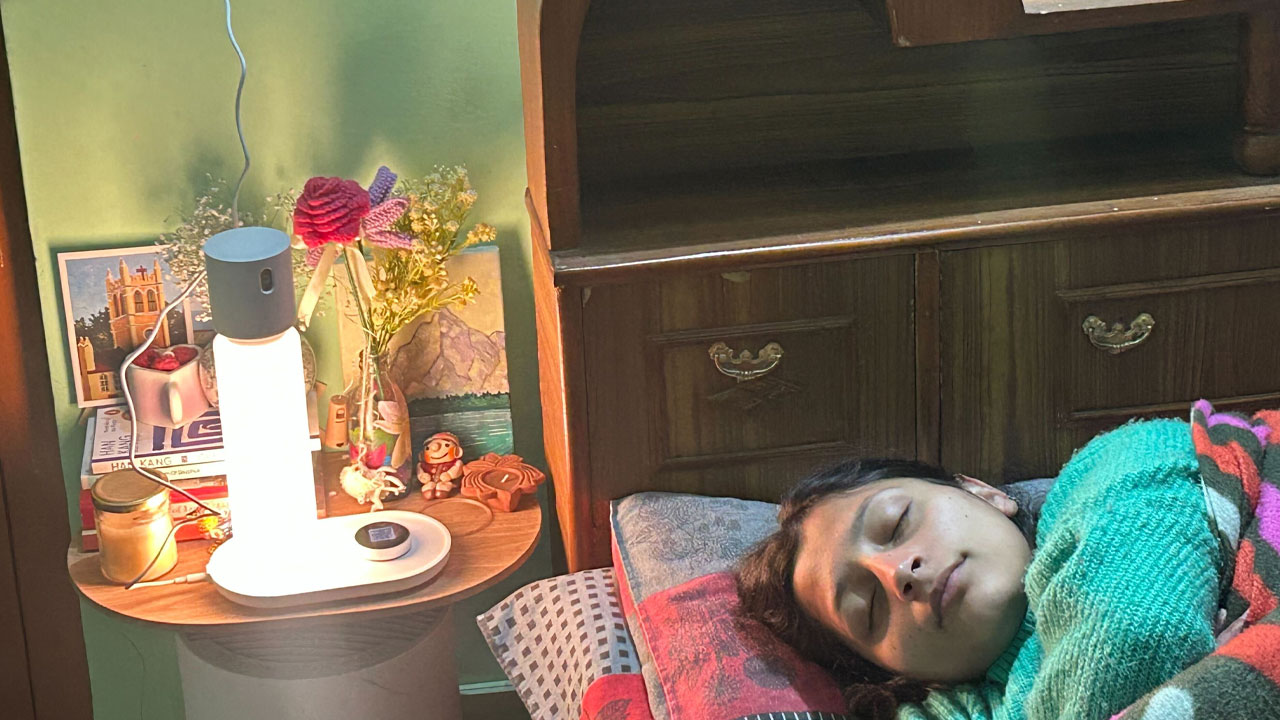
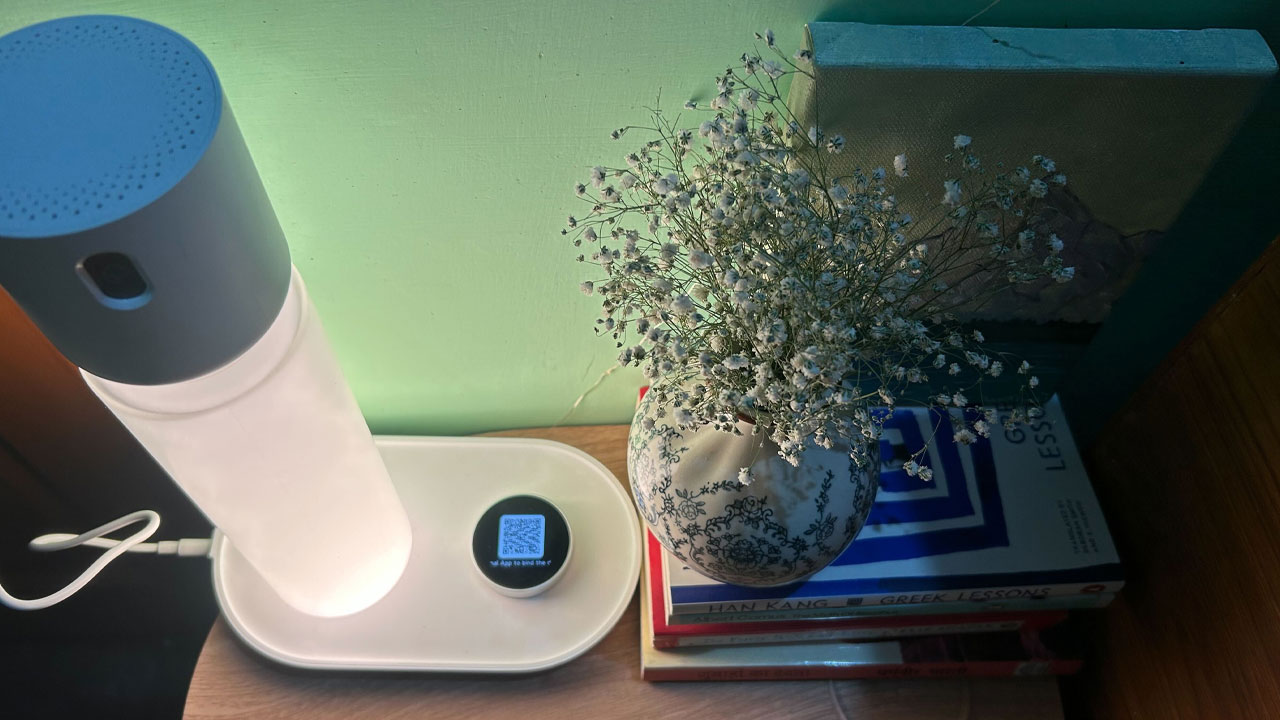
I charged it first, pressed the knob, and adjusted it until the light brightened and functioned as a normal lamp. The device then prompted me to install the app. I scanned the QR code on the base, plugged it in, and completed a quick calibration by lying in my normal sleeping position for a couple of minutes while the radar mapped the area. And that was it. No complicated instructions, no fussing under the mattress. Within five minutes, it was ready to go.
How It Tracks Sleep
The Sleepal AI Lamp uses a 60 GHz millimeter-wave radar sensor to detect tiny chest movements, breathing patterns, and heart signals right through your blanket and clothes. It also monitors the room’s temperature, humidity, noise, and light levels. All this information goes into an AI system trained on clinical sleep data to figure out your sleep stages (light, deep, REM), detect snoring, track posture changes, and give you an overall sleep score.
I also appreciate the day-night split approach the device encourages. My mother, for instance, wears her regular smartwatch during the day for step and activity tracking, then charges it at night while the Sleepal handles the sleep side. It feels like a smarter way to manage things, rather than overloading a single wearable with everything.
What Real-Time Reports Showed
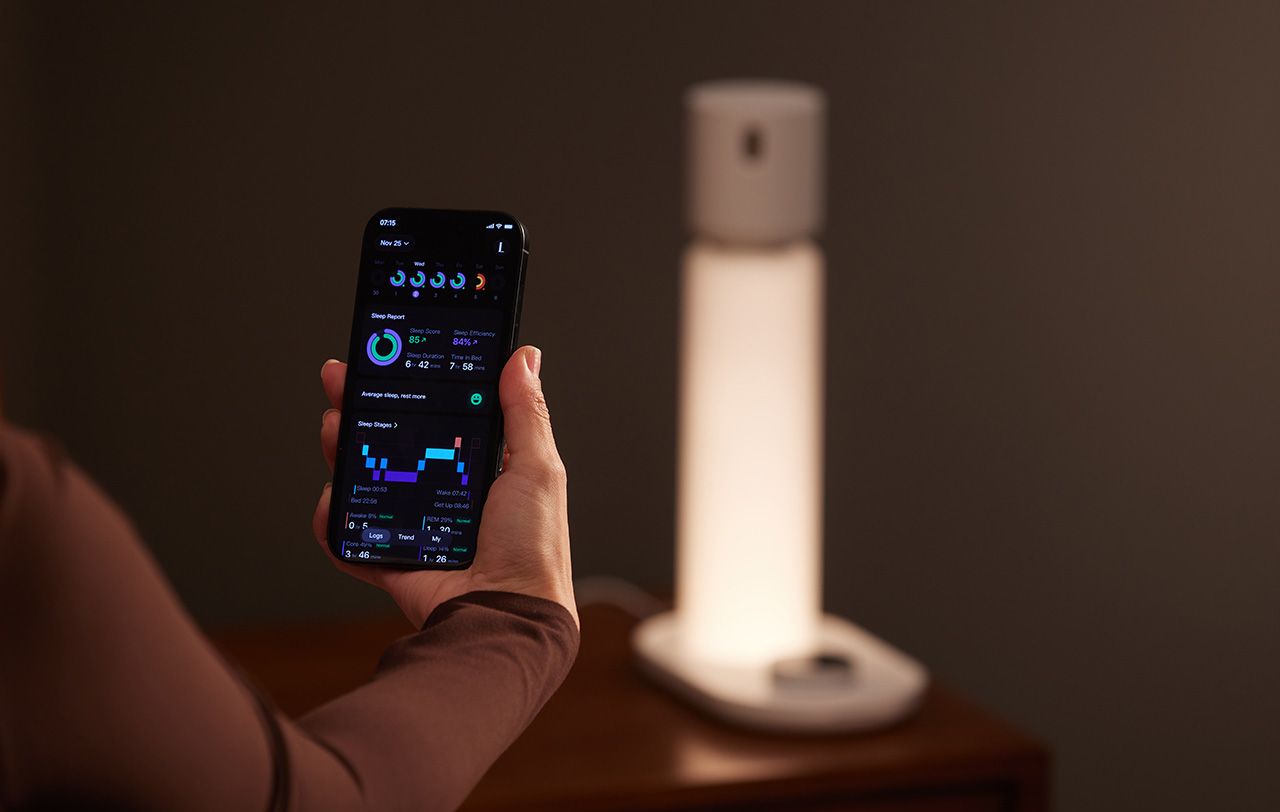
After using it every night, the morning reports have been more insightful than I expected. You get the standard metrics, total sleep time, efficiency, sleep score, and stage breakdown, but the real value comes from the contextual data. The timeline shows exactly how room conditions affected your sleep.
For example, on one weekend afternoon nap, the app clearly flagged more awakenings and lighter sleep right when the temperature climbed around 1 PM. On one night, it recorded notably better sleep, which made sense, since as someone from the mountains, I sleep best in cooler conditions. On yet another night, it detected increased snoring while I was lying on my back. These details helped me make small adjustments, like opening windows for better airflow and switching to a different pillow, and I could feel the improvement.
If you think this is just a lamp with a sleep-tracking add-on, you’d be underselling it. The device offers more than meets the eye. It features a wind-down mode that slowly dims the light while playing calming sounds; the rain and ocean tracks have become my favorites. If it senses you’re still awake, it can initiate gentle guided breathing exercises.
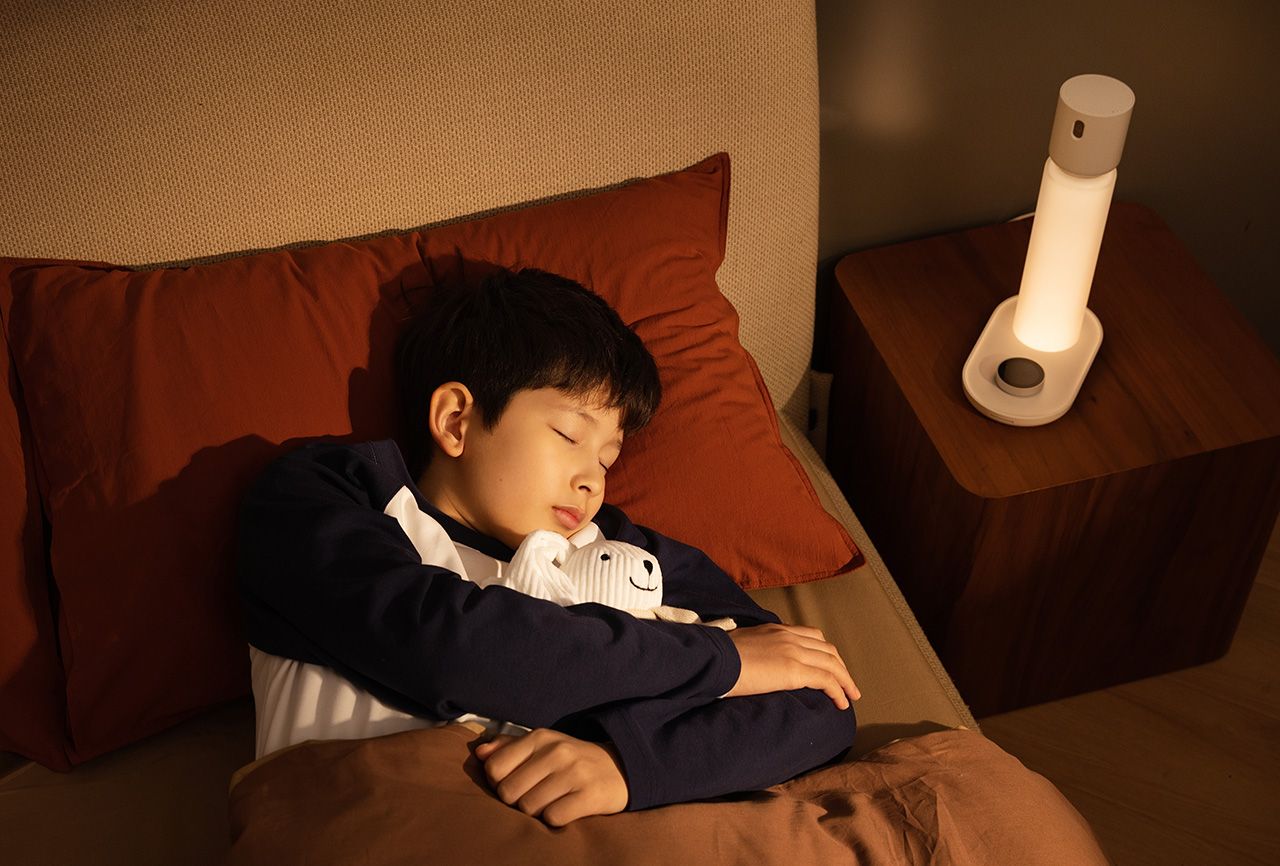
Another standout feature of the Sleepal AI lamp is the smart alarm. Rather than jolting you awake mid-deep sleep, the alarm waits for a lighter sleep stage before going off. And here’s the part I love most. If you don’t want to get up, you don’t need to reach for your phone or press any button; just roll over, and it stops snoozing. I consistently woke up feeling refreshed rather than groggy. The lamp also has a motion-activated night light that turns on softly when I get up during the night, without disturbing my wife.
What I Liked:
After two weeks of daily use, these things stood out for me:
- Finally sleeping without any device on my body feels liberating
- The environmental insights actually explain why certain nights are bad, which most trackers don’t do
- The wind-down routines and smart alarm have made my bedtime feel more relaxing
- It looks elegant and fits naturally in the bedroom
- Perfect for anyone who hates wearing trackers, parents, older family members, or couples who want non-intrusive monitoring
- I also like that it’s backed by real clinical studies; sleep expert Prof. Dr. Thomas Penzel has highlighted its strong potential for accurate, contactless sleep tracking
In all my time testing products for Homecrux, this is one of the few that feels like it solves a genuine everyday problem rather than adding complexity.
What I didn’t Like:
Honestly, it’s not perfect. Here are some of the pitfalls I discovered:
- The radar requires reasonably precise placement and calibration. If you frequently move the lamp or rearrange your bed setup, you may need to recalibrate
- Snoring and posture tracking worked well for me, but results may vary depending on body type or if you share a bed with a restless partner
- The device recognises who’s close to it, so if your dog accidentally sleeps closer to the device, Sleepal will take its sleeping patterns into consideration, which is funny to an extent
Since this is still heading into its Kickstarter launch, there is a chance that the engineering team may make some software support tweaks to address these issues.
Who is It For?
If you’re tired of wearing sleep trackers every night but still want useful data, Sleepal AI smart lamp is worth considering. It’s great for smart-home enthusiasts, light sleepers, athletes focused on recovery, or anyone wanting to understand their bedroom environment better. Even if you love your current wearable, the Sleepal works well alongside it by taking over the night shift comfortably so you can sleep like a baby.
It connects to Apple HomeKit, Home Assistant, Amazon Alexa, and Google Home for voice or remote controls. If you have noticed, there is a privacy button at the top that controls data collection by physically disconnecting sensors at the circuit level, just in case you don’t wish to.
Final Verdict
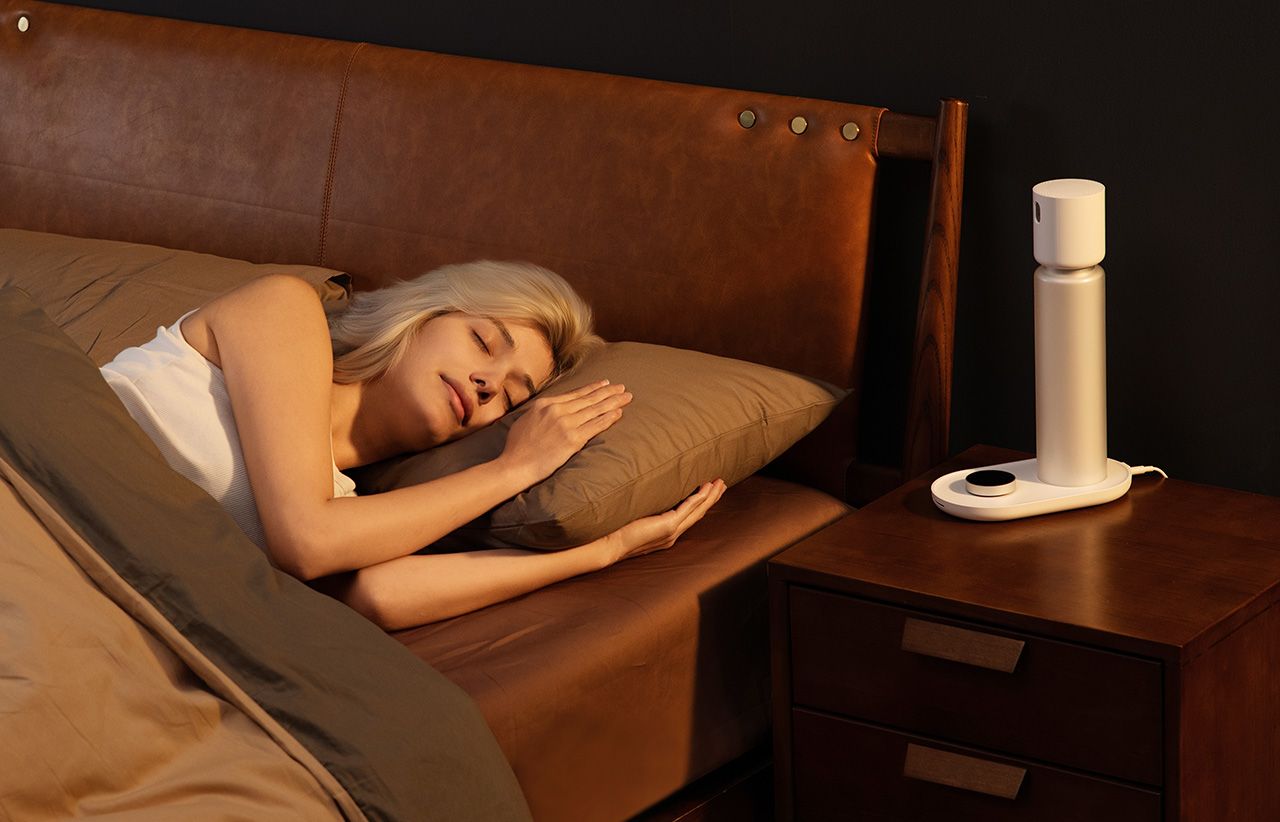
The Sleepal AI Lamp has earned a permanent spot on my nightstand. The company sent me the review unit, let me test it properly with real-life applications, and I can say it delivers on the promise of hassle-free, contact-free sleep tracking while also being a genuinely useful smart lamp. It’s not a medical device, but for everyday insights and building better sleep habits, it’s one of the more practical and thoughtful products I’ve seen.
Sleep is too important to keep struggling with uncomfortable wearables, and this lamp offers a refreshing alternative. If you’re frustrated with traditional sleep trackers or looking to upgrade your bedroom setup, reserve your Sleepal AI smart lamp on Kickstarter, where it’s listed at $299. By pre-ordering early, you can secure the best Early Bird price of $270.
Follow Homecrux on Google News!